What is white-label infused coffee?
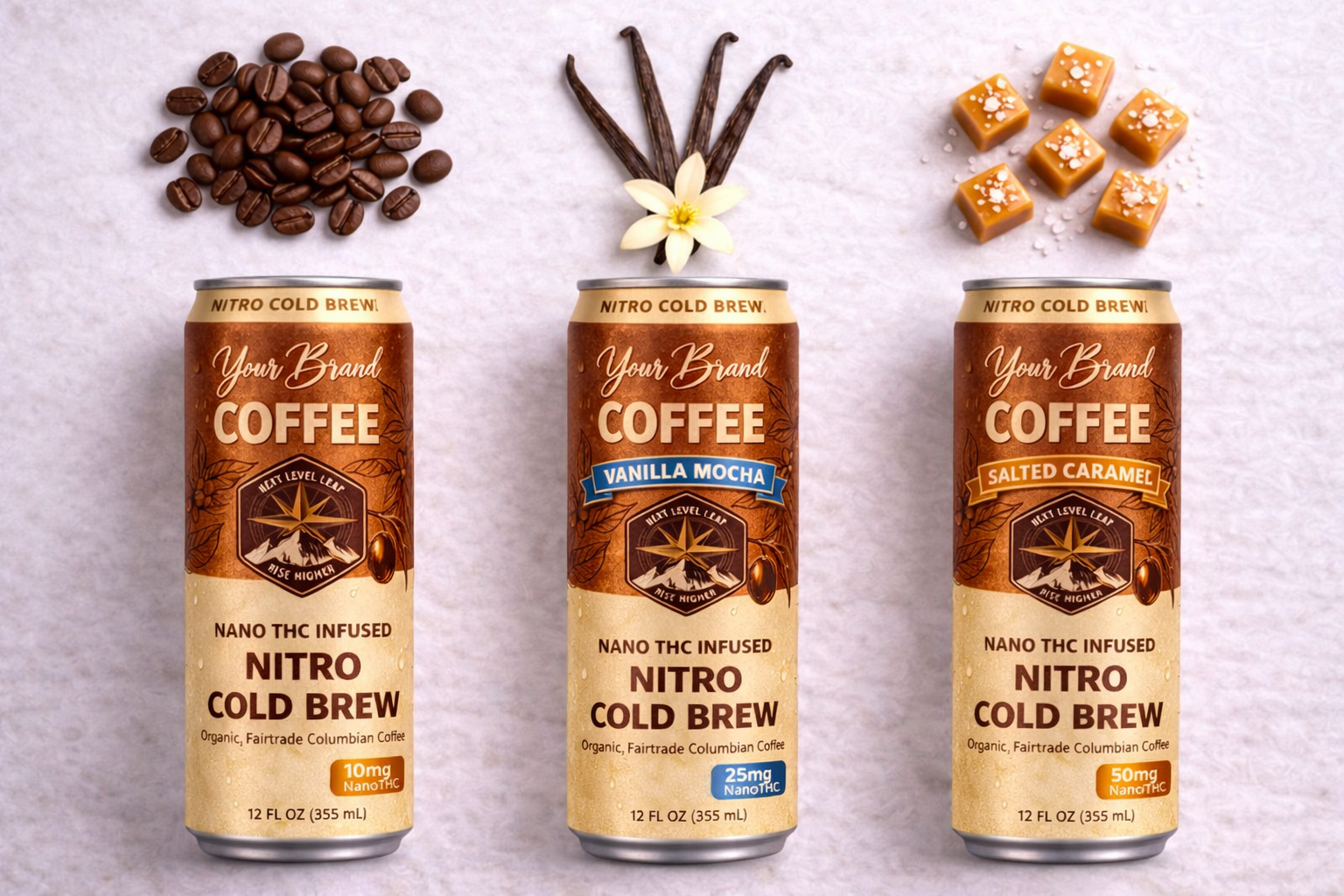
White-label infused coffee is a ready-to-drink coffee beverage made from an available formula and packaged under your brand. The approved project determines the coffee style, flavor, ingredients, packaging, production quantity, and any cannabinoid content.
Explore white-label coffee →Why might infused coffee be better than a generic THC beverage?
Coffee gives a brand a familiar beverage format, recognizable flavor, and a different use occasion from many sodas or seltzers. Whether it is the right choice depends on the customer, product concept, sales channel, and intended ingredients.
Can infused coffee be positioned as a premium product?
Yes. Nitro cold brew, thoughtful coffee sourcing, recognizable flavors, suitable packaging, and carefully selected ingredients can support a premium product. Specific sourcing, certifications, testing, and documentation must be confirmed for the approved project.
Compare coffee product positioning →What should founders learn first before launching an infused coffee brand?
Start with the customer, coffee style, flavor, proposed ingredients, number of products, expected production quantity, packaging, budget, and intended sales channel. Then decide whether an existing formula, a custom recipe, or a transferred formula makes the most sense.
Explore the coffee launch process →What should I do next if I want to explore an infused coffee concept?
Review the available coffee manufacturing, private-label, production quantity, and cost resources. Then share your desired coffee style, flavor, ingredients, expected order size, packaging needs, and timing to begin a project-specific conversation.
Discuss your coffee project →What types of coffee beverages can Next Level Leaf manufacture?
Projects may include ready-to-drink black coffee, nitro cold brew, flavored coffee, THC or CBD coffee, functional coffee, and coffee without cannabinoids. Available formats and ingredients depend on the approved formula and manufacturing requirements.
Review manufacturing capabilities →Can you manufacture coffee without THC?
Yes. A coffee project may be non-infused, include approved functional ingredients, or contain an agreed cannabinoid profile when appropriate for the product. The recipe and production requirements are evaluated for the specific project.
What is the minimum order quantity for infused coffee?
A common commercial starting point is approximately 1,200 cans per flavor-and-formula combination, equal to 50 cases of 24 cans. The actual minimum depends on the coffee, ingredients, packaging, number of products, and production requirements.
Explore coffee order quantities →Are smaller prototype coffee runs available?
A selective 360-can prototype run, equal to 15 cases of 24 cans, may be available for a qualified project. Prototype availability depends on the formula, packaging, production fit, and the purpose of the smaller run.
Can you manufacture large or recurring coffee orders?
Yes. Established brands, retailers, and distributors can discuss larger multi-pallet, recurring, and enterprise coffee programs. Orders of 50,000, 100,000, or 300,000 or more cans are evaluated against the formula, packaging, schedule, available capacity, and delivery requirements.
Discuss enterprise coffee production →What is the difference between white-label, private-label, and custom coffee?
White-label coffee generally starts with an available formula under your brand. Private-label projects can be shaped around your product and packaging requirements. Custom coffee development starts with a new recipe, ingredient combination, or a formula requiring additional review and development.
Can I use my own coffee formula or beans?
An existing coffee formula, selected beans, or another customer-controlled ingredient may be considered when it can be reviewed, sourced, and produced appropriately. Feasibility depends on the recipe, documentation, ingredient supply, packaging, and production requirements.
Discuss your existing formula →Which coffee flavors are available?
Available coffee directions may include Nitro Black, Vanilla Mocha, and Salted Caramel. Other flavors or a customer-specific coffee recipe can be evaluated based on the project, ingredient availability, and any required development work.
Can functional mushrooms or other ingredients be added?
Functional ingredients, including certain mushroom ingredients or cannabinoids, may be evaluated for a coffee project when they fit the approved recipe, ingredient documentation, production requirements, and intended product positioning.
Explore functional coffee ingredients →How much does infused coffee manufacturing cost?
Coffee production cost depends on the coffee base, flavor, selected ingredients, cannabinoid content when applicable, production quantity, packaging, testing, development work, and freight. Accurate pricing requires the details of the actual project.
Explore beverage production pricing →Does THC coffee need testing and documentation?
The applicable testing, certificates of analysis, product records, labeling, and other documentation should be evaluated against the specific coffee, ingredients, intended market, and agreed manufacturing scope.
How do coffee packaging and delivery work?
Packaging and delivery are determined by the approved can format, label or printed-can requirements, case configuration, order quantity, receiving location, and freight needs. Artwork and shipping details should be confirmed before their applicable production stages.
Explore the production process →Can retailers or distributors launch private-label coffee?
Yes. Retailers, distributors, existing coffee companies, and established beverage brands can explore private-label coffee, exclusive products, additional flavors, or recurring production based on their customer demand and sales channels.
Explore retailer-owned beverage programs →What happens after my first coffee production run?
After inventory is produced and delivered, the brand can review sell-through, customer feedback, reorder timing, additional flavors, new store placements, and whether a larger or recurring production program fits the business.
Explore delivery and repeat production →