

Start with who you are making the coffee for
When a brand starts comparing THC coffee and CBD coffee, it is easy to jump straight into ingredients. But that is not the best starting point.
Start with the customer. Are you making this for someone who is new to THC and wants something approachable? Are you making it for experienced cannabis consumers who want a stronger effect? Are you making it for coffee drinkers who are curious about cannabinoids but do not want to feel high?
Those are very different customers. They may all like coffee, but they are not buying the same experience.
The cannabinoid choice affects more than the formula. It affects who buys the product, how much they drink, how often they come back, how the retailer explains it, and what dose makes sense for your brand economics.
Three ways to build an infused coffee product
The right cannabinoid direction depends on who you are trying to reach and how you want the product to be used. A low-dose THC coffee, a CBD-only coffee, and a balanced THC+CBD coffee may all be valid ideas, but they attract different customers and create different business models.
THC Coffee
Best when you want coffee with the noticeable uplift and euphoria of THC.
- Good fit for adult-use markets
- Works well as an alcohol-alternative or social beverage
- Dose strategy matters because too much THC can reduce repeat use
- Low-dose options may be more approachable and sessionable
CBD Coffee
Best when you want a non-intoxicating cannabinoid coffee without the euphoria of THC.
- More approachable for THC-sensitive customers
- May fit wellness, lifestyle, or functional coffee positioning
- Can support higher cannabinoid serving sizes than THC
- Needs responsible language without medical or disease claims
THC + CBD Coffee
Best when you want a more balanced cannabinoid profile instead of THC by itself.
- Can work well in 1:1 or other ratio-based concepts
- May feel more balanced than a THC-only product
- Needs simple dosing and label language
- Best when your customer understands what the ratio means
Why THC coffee may be the best starting point for many brands
THC coffee is often the easiest infused coffee concept for customers to understand because the effect is obvious: it is coffee with THC. If the dose is right, the customer can enjoy the stimulation of coffee with the uplift and euphoria of hemp-derived THC.
The important decision is dose. A low-dose THC coffee may be more approachable for new or casual THC consumers. It may also be more sessionable, which matters if you want customers to drink the product more often and buy more units over time.
A higher-dose THC coffee may appeal to a more experienced cannabis customer, but it can also narrow the audience. If one can is too strong for the average customer, they may drink it less often, split the can, or avoid buying it again. That changes the economics of the product.
That is why THC coffee should not be planned only around what sounds exciting. It should be planned around the customer, the dose, the use occasion, and how often you expect the product to be consumed.
Dose strategy may be the most important decision
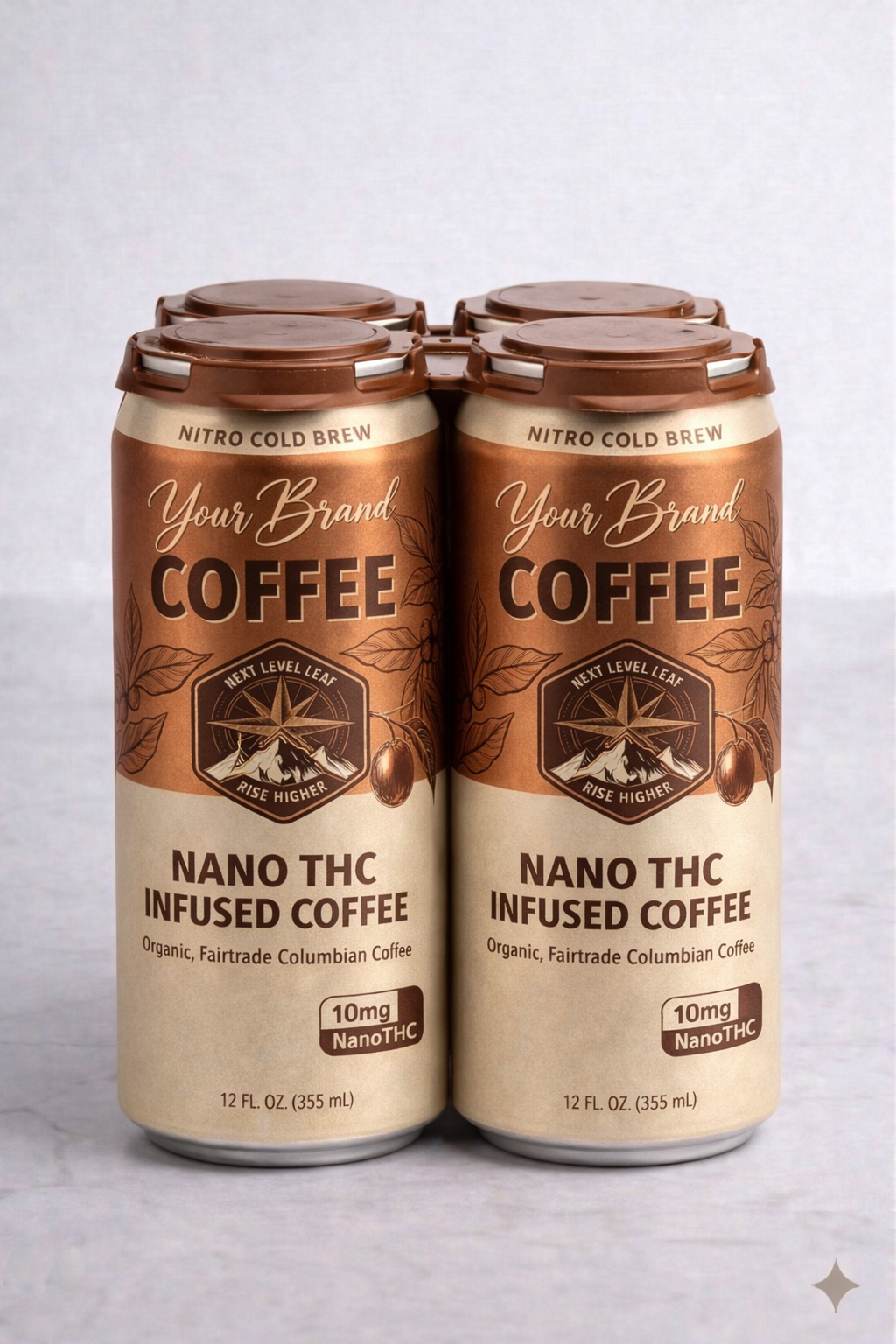
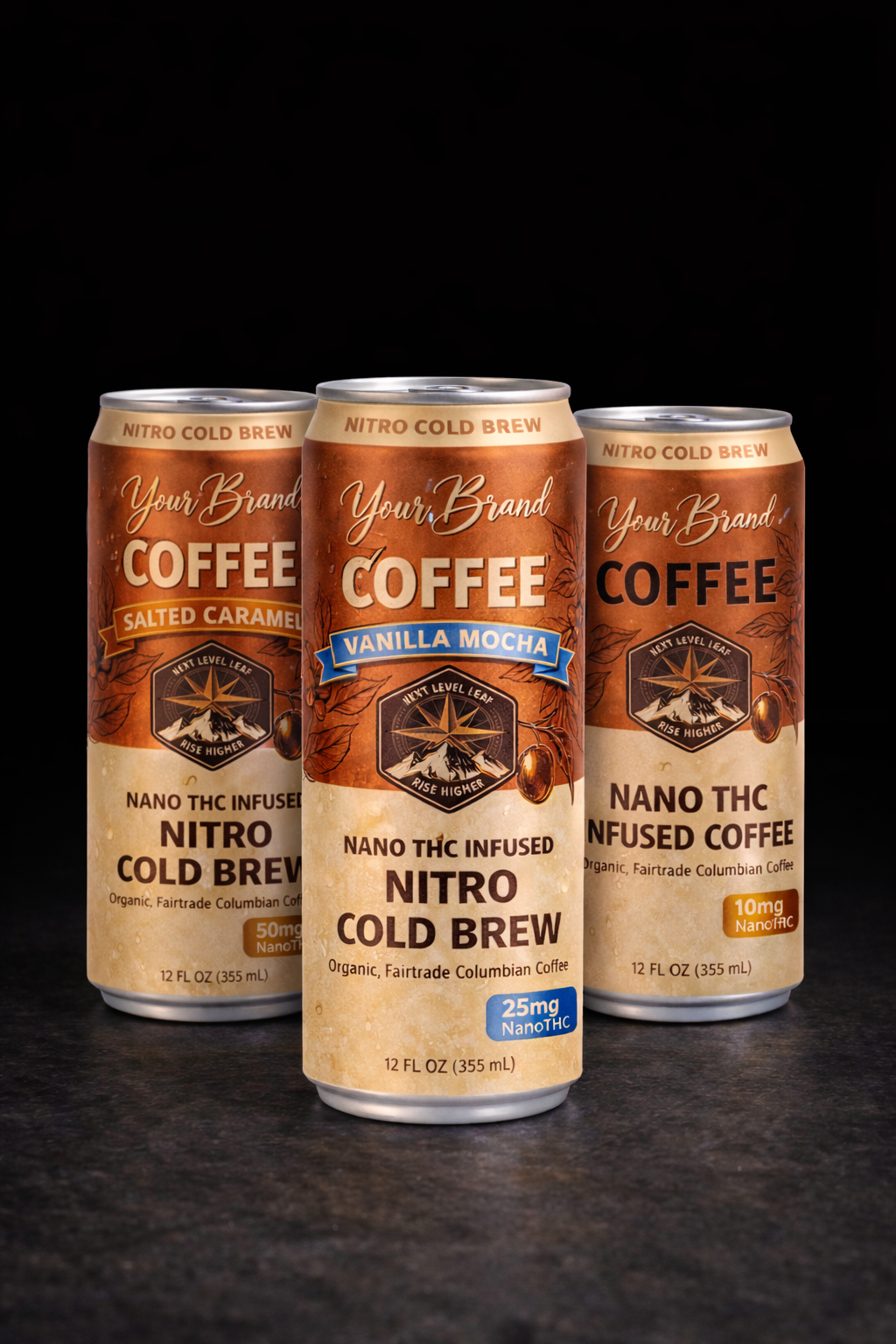
With THC coffee, dose can shape the entire business model. A 2mg, 5mg, 10mg, 25mg, or 50mg coffee is not just a different formula. It is a different customer, a different use occasion, and a different repeat-purchase pattern.
If you want a product that feels approachable, social, and easier to drink more often, lower-dose THC may make more sense. Many new or casual THC consumers can feel small amounts of THC, especially in a beverage format. That makes low-dose coffee a strong option for brands that want broader appeal.
If you are targeting experienced THC consumers, a higher-dose coffee may make sense, but that usually becomes a more niche product. The customer may buy it for stronger effects, but they may not drink it as frequently. That matters when you think about unit velocity and reorder potential.
For many brands, the best starting question is not “How much THC can we put in the can?” It is “What dose gives our target customer the best experience and the strongest reason to buy again?”
Low-dose THC coffee
Better for brands that want a more approachable, sessionable product. This may fit new THC consumers, alcohol-alternative customers, and buyers who want a lighter experience they can repeat more often.
Higher-dose THC coffee
Better for experienced THC consumers who want a stronger effect. This can be a valid niche, but it may reduce frequency of use and limit the size of the audience.
One dose option
Better when you want a simple launch, a cleaner label, and an easier retail explanation. This often makes sense for a first white-label run.
Multiple dose options
Better when you know your audience has different tolerance levels or you want to serve both new and experienced THC consumers with the same brand line.
Where CBD coffee fits
CBD coffee makes sense when you want a cannabinoid coffee without the euphoria of THC. That can be a good fit for customers who are curious about cannabinoids but do not want to feel high.
CBD may also fit better with certain wellness, lifestyle, or functional coffee concepts. The challenge is that the product still needs a clear reason to exist. You cannot depend on medical claims or exaggerated wellness language to sell the drink.
If you build a CBD coffee, the coffee itself has to be excellent. The flavor, packaging, ingredient story, and use occasion need to do the selling. CBD can support the concept, but it should not be the only reason the product exists.
When THC and CBD together may make more sense
A THC+CBD coffee may be the right direction if you want the noticeable effect of THC but also want a more balanced cannabinoid profile. For example, a 1:1 ratio can be easier to explain than a complicated multi-cannabinoid blend.
This can work well when your customer understands cannabinoid ratios or when your brand is built around a more intentional, formulated experience. But it should still be simple. If the front of the can needs too much explanation, the concept may be too complicated.
A THC+CBD coffee should clearly communicate the THC dose, the CBD dose, whether the product is intoxicating, and when the customer might use it.
Think about how often the customer will drink it
This is where product strategy and economics meet. If your coffee is low-dose and approachable, customers may be more likely to drink it repeatedly. If it is very high dose, it may become more of an occasional-use product.
Neither strategy is automatically wrong. But they are different businesses. A sessionable low-dose coffee may be built for broader reach and repeat purchase. A higher-dose coffee may be built for a smaller, more experienced audience that wants a stronger effect.
Before requesting a quote, it helps to decide which business you are building. Are you trying to sell a lot of units to a broader audience, or are you building a more niche product for experienced THC consumers?
The coffee experience still has to be excellent
Cannabinoids may get attention, but the coffee itself determines whether the customer comes back. If the product tastes thin, overly bitter, too sweet, poorly masked, or disconnected from the brand, the cannabinoid story will not save it.
That is why flavor and format matter. A black coffee, vanilla mocha, salted caramel, cold brew, and nitro cold brew do not feel like the same product. Each one creates a different customer expectation.
- Black coffee: a cleaner, lower-sweetness option for brands that want a simple coffee-forward product.
- Vanilla mocha: familiar, approachable, and easier for many customers to understand quickly.
- Salted caramel: more indulgent and premium, especially for brands that want a sweeter coffee profile.
- Nitro cold brew: a stronger fit for brands that want a smoother, more premium ready-to-drink coffee experience.
- Your own coffee: possible in some projects, depending on brew ratio, grind, volume, flavor goals, and production fit.
For a broader production overview, review How THC Coffee Is Made.
Compliance and testing need to be part of the product plan
THC coffee, CBD coffee, and THC+CBD coffee all need thoughtful compliance review. The exact path depends on target states, dose, ingredients, label claims, packaging, and sales channel.
The label should make the product easy to understand. Customers should not have to guess whether it contains THC, CBD, or both. They should not have to hunt for the dose. They should not be confused about whether the product is intoxicating.
Finished-product testing, full-panel documentation, batch-specific COAs, adult-oriented packaging, and clear disclosures can also make the product easier to discuss with retailers, distributors, and internal compliance reviewers.
For broader planning, review our Compliance page and State Resources.
What to decide before requesting a quote
Before we quote an infused coffee project, we need to understand the product strategy. You do not need to have every detail finalized, but you should have a working idea of who the product is for and what kind of experience you want to create.
- Are you targeting new THC consumers, experienced THC consumers, or CBD-focused customers?
- Do you want the product to be low-dose and sessionable or stronger and more niche?
- Do you want THC only, CBD only, or a THC+CBD ratio?
- What dose makes sense for your customer and your business model?
- Will you offer one dose or multiple dose options?
- Will the product be black coffee, flavored coffee, cold brew, or nitro cold brew?
- What states or retail channels are you planning to sell into?
- Do you already have label artwork or brand direction?
Once you have a basic direction, complete the White Label Information Request. The more clearly you describe the customer, dose, flavor, and launch goals, the more useful the quote conversation will be.
The simplest way to decide
Choose THC coffee if you want the uplift and euphoria of THC in a coffee format. Choose CBD coffee if you want a non-intoxicating cannabinoid coffee. Choose THC+CBD if you want the noticeable effect of THC with a more balanced cannabinoid profile.
Then think through dose, customer tolerance, repeat use, retail explanation, flavor, compliance, testing, and production fit. That is what turns a cannabinoid idea into a real beverage product.
If you are still comparing product directions, review Best Cannabinoids for Coffee if you want to compare cannabinoid options, Functional Ingredient Coffee Stacks if you are considering mushrooms, adaptogens, or nootropics, and Premium vs Budget THC Coffee if you are deciding how premium the product should feel.
When you are ready, complete the White Label Information Request. Share the coffee format, cannabinoid direction, target dose, flavor idea, packaging status, target states, and expected launch volume so we can help evaluate the right path.