

Start with the decision your customer needs you to make
If you are exploring infused coffee, begin with the customer and the shelf. Decide who should buy the product, where they will find it, what coffee experience they expect, and how clearly the can communicates the concept.
From there, choose the major product variables: black or flavored coffee, still or nitro, cannabinoid direction, dose, package format, and an established or custom formulation path.
If you are earlier in the journey, begin with the Infused Coffee Guide. If the concept is already defined, compare white-label and custom infused coffee or review the manufacturing process.
A strong first concept is usually specific enough to quote and simple enough to explain: coffee format, flavor, cannabinoid direction, dose, packaging, target volume, and sales channel.
Product direction 1: Black THC coffee
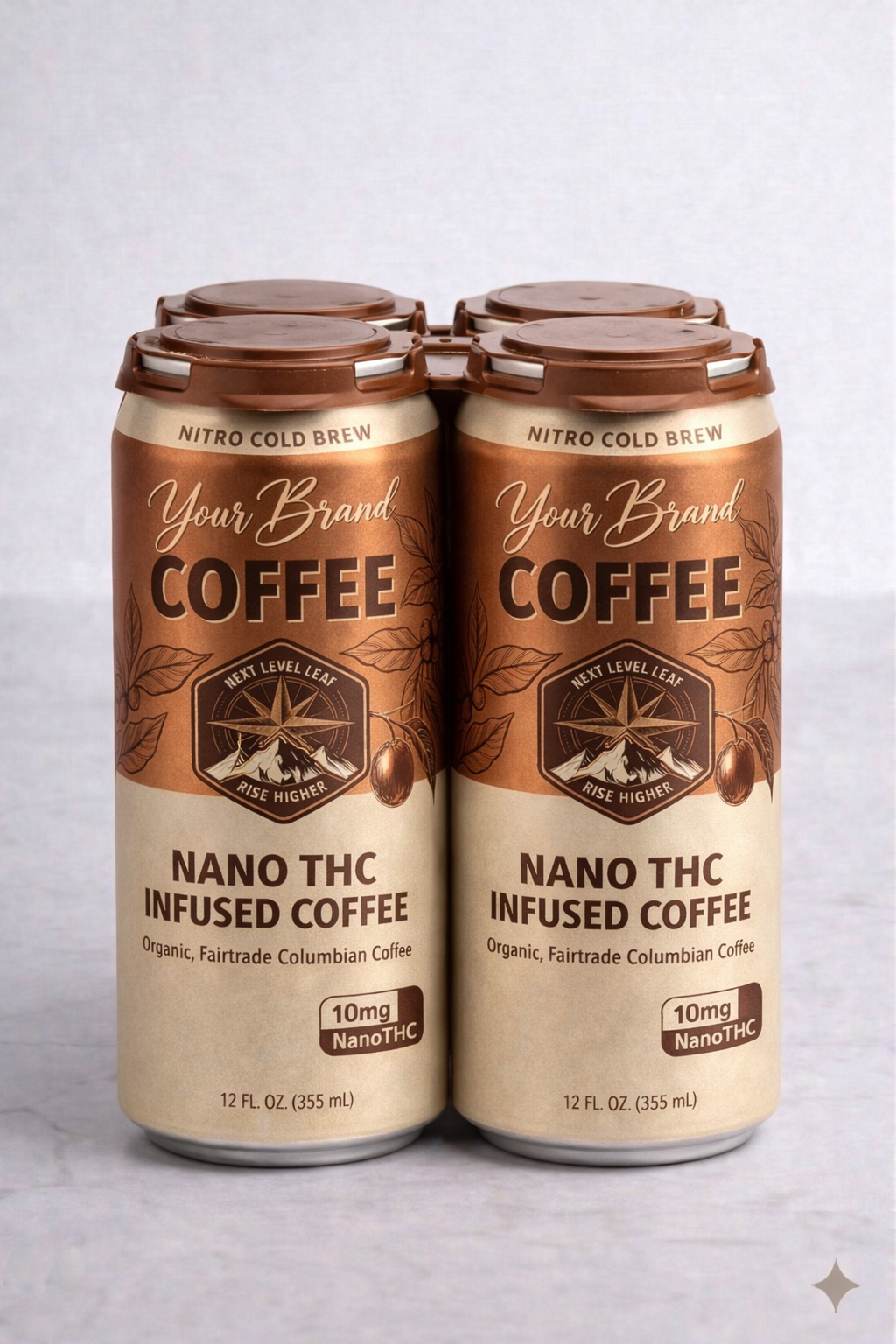
Black THC coffee is one of the cleanest starting points for an infused coffee brand. It keeps the product coffee-forward and avoids the impression that the beverage is trying to hide poor coffee behind sugar and flavoring.
This can be a strong fit if you want a more mature, premium, simple product. It may appeal to customers who already drink cold brew, nitro cold brew, black coffee, or lower-sugar ready-to-drink coffee.
The tradeoff is that black coffee gives you less room to hide formulation issues. The coffee quality, bitterness, cannabinoid input, mouthfeel, and finished flavor balance all matter.
Best fit
- Premium coffee brands
- Lower-sugar product lines
- Adult-use THC coffee concepts
- Brands that want a clean, mature product
Watch out for
- Thin coffee flavor
- Harsh bitterness
- Poor cannabinoid masking
- Packaging that does not support premium pricing
Product direction 2: Nitro THC cold brew
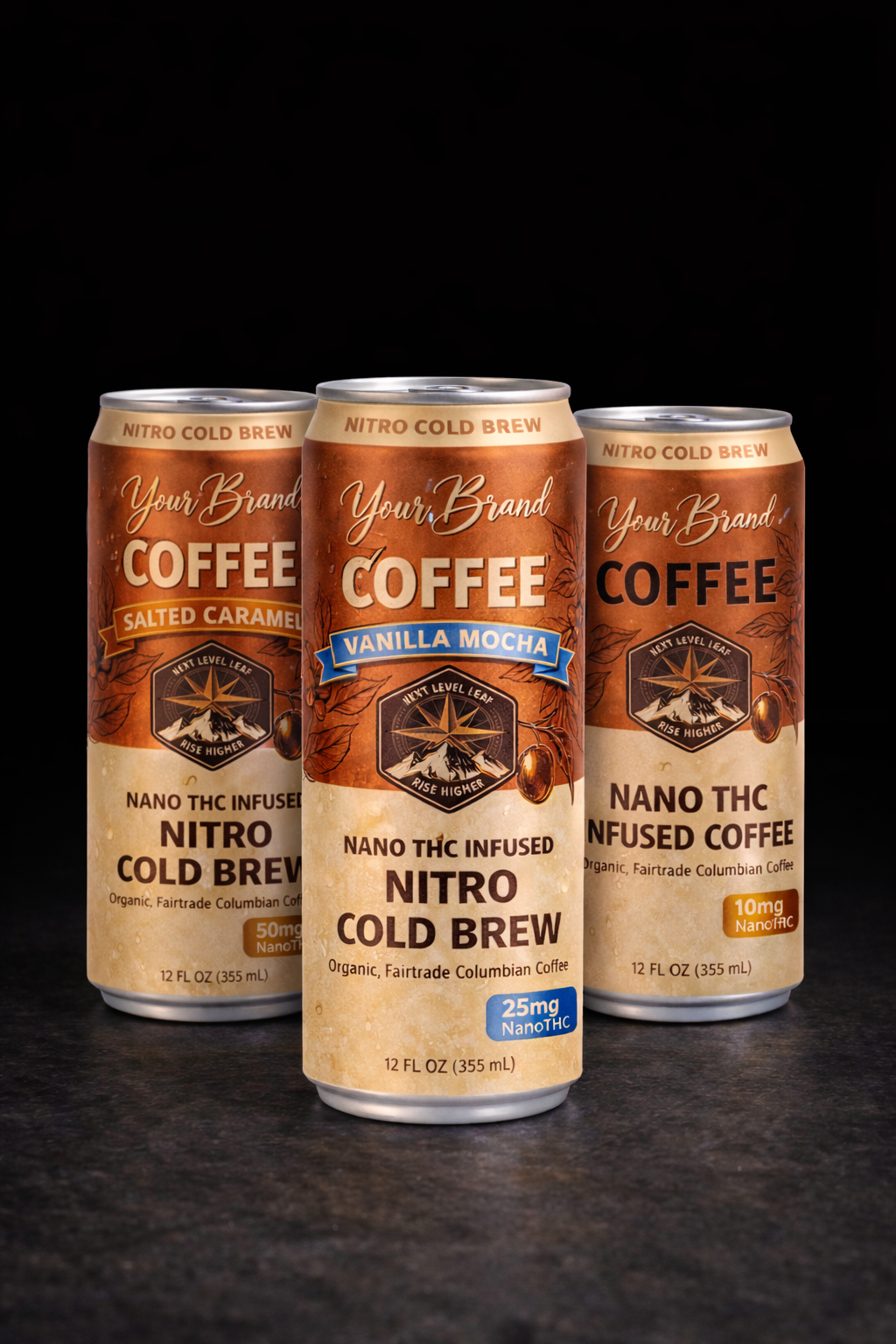
Nitro THC coffee can feel more premium because the format already signals a smoother, more crafted ready-to-drink coffee experience. If the goal is to create a product that feels elevated, nitro can make sense.
This direction is especially interesting for brands that want to compete with premium cold brew, craft beverages, or more adult-oriented ready-to-drink products.
Nitro is not just a production choice. It affects mouthfeel, product perception, pricing, and customer expectation. If the product says nitro, the experience needs to feel smooth and intentional.
For production context, review Nitro Cold Brew THC Coffee and How THC Coffee Is Made.
Product direction 3: Low-dose THC coffee
A lower-dose THC coffee may fit a brand that wants a more approachable entry point for customers who prefer smaller serving amounts.
Dose is a product and market decision. It affects the intended customer, label communication, sales channel, target states, and the way the product fits into a larger portfolio.
Compare the planned dose with the customer and channel before treating low dose or high dose as the default. The label should make the amount per can easy to understand.
Best fit
- New or casual THC consumers
- Broader retail audiences
- Sessionable beverage strategies
- Brands building an accessible entry point
Consider
- Whether one dose is enough for launch
- Whether multiple strengths make sense later
- Which doses fit your target channels
- How clearly the can communicates the amount
Product direction 4: Multiple THC strengths
Offering the same coffee in multiple THC strengths can be a smart idea when you want to serve different tolerance levels. For example, one customer may want a light low-dose coffee while another wants a stronger THC experience.
This can be a strong product-line strategy, but it adds complexity. Multiple strengths can mean more labels, more inventory planning, more SKU management, and more decisions for the customer.
For many first launches, one clear hero dose may be easier. Once you know what customers are buying, you can expand into additional strengths.
Product direction 5: Salted caramel or vanilla mocha THC coffee
Flavored THC coffee can be a strong direction when the goal is familiarity and approachability. Vanilla mocha and salted caramel are easy for customers to understand because they already know what those flavors should taste like.
This direction can work well for brands that want a more indulgent ready-to-drink coffee product. It can also help soften the edges of coffee bitterness and cannabinoid taste.
The caution is quality. A flavored coffee should not taste cheap, overly sweet, or artificial. If the flavor does not feel premium, the product can lose credibility quickly.
Product direction 6: THC+CBD coffee
A THC+CBD coffee may make sense when your brand wants both cannabinoids in one clearly labeled formula. A simple ratio, such as 1:1, is generally easier to explain than a complicated cannabinoid blend.
This can work when your customer understands cannabinoids or when your brand wants to position the product as more intentionally formulated.
The key is clarity. The can should clearly communicate the THC dose, the CBD dose, whether the product is intoxicating, and when the customer might use it.
THC+CBD can be a good product direction, but it should still be simple. If the customer has to study the label to understand the product, the concept may need to be tightened.
Product direction 7: CBD coffee
CBD coffee may make sense for brands that want a non-intoxicating cannabinoid coffee. This could fit a lifestyle, functional, or coffee-first product line.
The challenge is that CBD coffee needs a strong product reason beyond simply containing CBD. You cannot rely on medical claims or exaggerated wellness language. The coffee, flavor, packaging, and brand experience have to carry the product.
If you are deciding between THC, CBD, or THC+CBD, review THC vs CBD Coffee.
Product direction 8: Functional infused coffee
Functional coffee can include ingredients such as mushrooms, adaptogens, nootropics, or selected cannabinoids, subject to formulation review and the rules that apply to the finished product.
The risk is overbuilding the formula. If the product has caffeine, THC, CBD, mushrooms, adaptogens, nootropics, and several other ingredients, the customer may not know what they are buying.
Functional ingredients should sharpen the product story, not make it harder to explain.
Possible directions
- Coffee positioned around a clearly defined occasion
- Coffee with one carefully selected functional ingredient
- Coffee with a simple cannabinoid combination
- Mushroom coffee concepts
- Adaptogenic coffee concepts
Important question
Does each ingredient make the product more useful to the customer, or is it only making the formula look more complex?
If you are considering mushrooms, adaptogens, nootropics, or functional ingredient combinations, review Functional Ingredient Coffee Stacks.
Choose the production path that fits the concept
Product direction and production direction belong together. An established white-label coffee and flavor profile can be the most direct route when speed and simplicity matter. Custom development is a better fit when the brand needs a distinct coffee profile, flavor system, cannabinoid blend, functional ingredient plan, or package experience.
Established production path
- Start from an existing coffee and flavor direction
- Choose the cannabinoid dose and label plan
- Use approximately 1,200 cans per SKU as the standard commercial entry point
- Scale into larger and recurring runs as demand grows
Custom development path
- Build a distinct coffee, flavor, or ingredient system
- Plan research and development before production
- Confirm testing, packaging, labeling, and target markets
- Prepare the formula for commercial and larger-volume production
A selective 360-can prototype may be available for qualified projects that need an initial product-learning run. It is not the primary commercial program. The normal commercial starting point is approximately 1,200 cans per SKU, with support for larger and recurring orders.
Compare the routes in White Label vs Custom Infused Coffee, review pricing factors, or see the full manufacturing capabilities before requesting a quote.
How to choose the strongest starting point
Most brands should not try to launch every idea at once. A focused first product is usually easier to explain, quote, produce, and place within a clear sales strategy.
If your goal is a coffee-forward premium product, black coffee or nitro cold brew may be the best starting point. If your customer expects a familiar flavored coffee, vanilla mocha or salted caramel may make more sense. If your channel serves customers seeking smaller serving amounts, a lower-dose product may be worth evaluating.
The point is not to make the product less ambitious. The point is to make the first launch clear enough that customers understand it immediately.
What to send when you request a quote
You do not need every detail finalized before contacting us. The following information helps us evaluate the project and identify the remaining decisions.
The most helpful details are:
- The product direction you are considering
- Black coffee, nitro cold brew, flavored coffee, or another format
- THC, CBD, THC+CBD, or functional ingredients
- Target dose per can
- One dose or multiple strengths
- One hero SKU or a small lineup
- Target states or sales channels
- Packaging or label status
- Estimated launch quantity, including whether you are planning around 1,200 cans per SKU or a larger run
If you are still comparing directions, send the customer, coffee format, dose, flavor, and volume you are considering. We can identify which decisions must be completed before the project can move toward production.
The simplest recommendation
If you are building your first infused coffee product, start with a clean product direction. Black THC coffee, nitro THC cold brew, low-dose THC coffee, or a familiar flavored coffee can all make sense depending on your customer.
A focused first SKU can later expand into additional flavors, strengths, cannabinoid ratios, or functional ingredient concepts when the demand and production plan support that expansion.
If you are deciding how premium the product should feel, review Premium vs Budget THC Coffee. If you are choosing cannabinoids, review Best Cannabinoids for Coffee. If you are ready to start, complete the White Label Information Request.