

How THC Coffee Is Made for Commercial Beverage Brands
Learn how a coffee concept moves from coffee selection and flavor planning to cannabinoid infusion, testing, packaging, and commercial production.
Explore established coffee directions such as black, vanilla mocha, and salted caramel, along with project-specific brewing and formulation options. Plan around approximately 1,200 cans per SKU or discuss larger and recurring production programs.
THC coffee manufacturing combines a prepared coffee base, a defined flavor profile, a beverage-compatible cannabinoid ingredient, and a production plan that addresses testing, packaging, and labeling.
The exact process depends on the chosen coffee format, formula, cannabinoid amount, ingredient compatibility, order volume, and manufacturing capabilities. Established flavors and custom coffee concepts are evaluated according to the specific project.
Start with the coffee format
Start by choosing the coffee experience you want to create. The manufacturer can then evaluate the proposed coffee format, flavor direction, cannabinoid amount, packaging, and production volume as one complete project.
Regular brewed coffee
A brewed coffee concept starts with a coffee base and requires review of the finished formula, flavor, packaging, and manufacturing process.
Cold brew coffee
Cold brew uses a different extraction approach and must be evaluated for flavor, formulation, packaging, and finished-product requirements.
Nitro cold brew
Nitro cold brew combines a coffee base with a nitrogen-related production or packaging approach suited to the intended finished beverage.
Choose the coffee source
A coffee project can begin with an available manufacturing coffee base that fits the selected flavor, beverage format, cannabinoid plan, and finished product.
If your company already has a coffee brand, roast, or sourcing relationship, customer-supplied coffee may be evaluated for manufacturing suitability. The required amount depends on the coffee profile, brew ratio, can size, target yield, and number of finished cans.
Coffee-source decision: Start with an available production coffee base or ask whether your own coffee can be evaluated for the proposed formula and manufacturing run.
How regular brewed THC coffee is made
A brewed coffee manufacturing plan begins with the selected coffee source and the process appropriate for the finished product. The coffee base is then evaluated for flavor, cannabinoid incorporation, packaging, and production requirements.
Grind and brew
The coffee is ground and brewed at the planned ratio to create the desired strength, flavor, and yield.
Cool and prepare
The brewed coffee is prepared for blending so the finished beverage can be built around the intended flavor and dose.
Add flavor and emulsion
The selected flavor direction and cannabinoid emulsion are blended into the coffee base according to the production plan.
Can and document
The finished beverage is canned, coded, tested, documented, and prepared for shipment or launch.
How cold brew THC coffee is made
Cold brew uses a different coffee extraction approach from hot-brewed coffee. The selected coffee, extraction conditions, filtration, finished strength, and packaging all shape the final product.
A commercial cold brew project should be planned around coffee ratio, extraction time, filtration, flavor, cannabinoid input, packaging, testing, storage expectations, and appropriate product-specific safety controls.
| Decision | Why It Matters | Brand Impact |
|---|---|---|
| Coffee ratio | Determines how much coffee is needed for the batch and how strong the coffee base will be. | Affects cost, flavor strength, caffeine level, and finished yield. |
| Steep time | Cold brew depends on a longer extraction process than hot brewed coffee. | Can affect the finished coffee profile, body, and perceived bitterness. |
| Filtration | Removes grounds and helps prepare the beverage for blending and canning. | Affects clarity, mouthfeel, sediment, and product consistency. |
| Flavor and emulsion | The beverage must carry both coffee flavor and the cannabinoid input cleanly. | Helps determine whether the coffee, flavor, and cannabinoid components work together. |
How nitro infused cold brew is made
Nitro infused cold brew starts with a coffee base and adds a nitrogen-related production or packaging step intended to support the chosen nitro presentation.
The exact method depends on the available equipment, beverage formula, target coffee experience, canning approach, and packaging requirements. The manufacturing process should be confirmed for the specific project.
Plan the nitro coffee experience
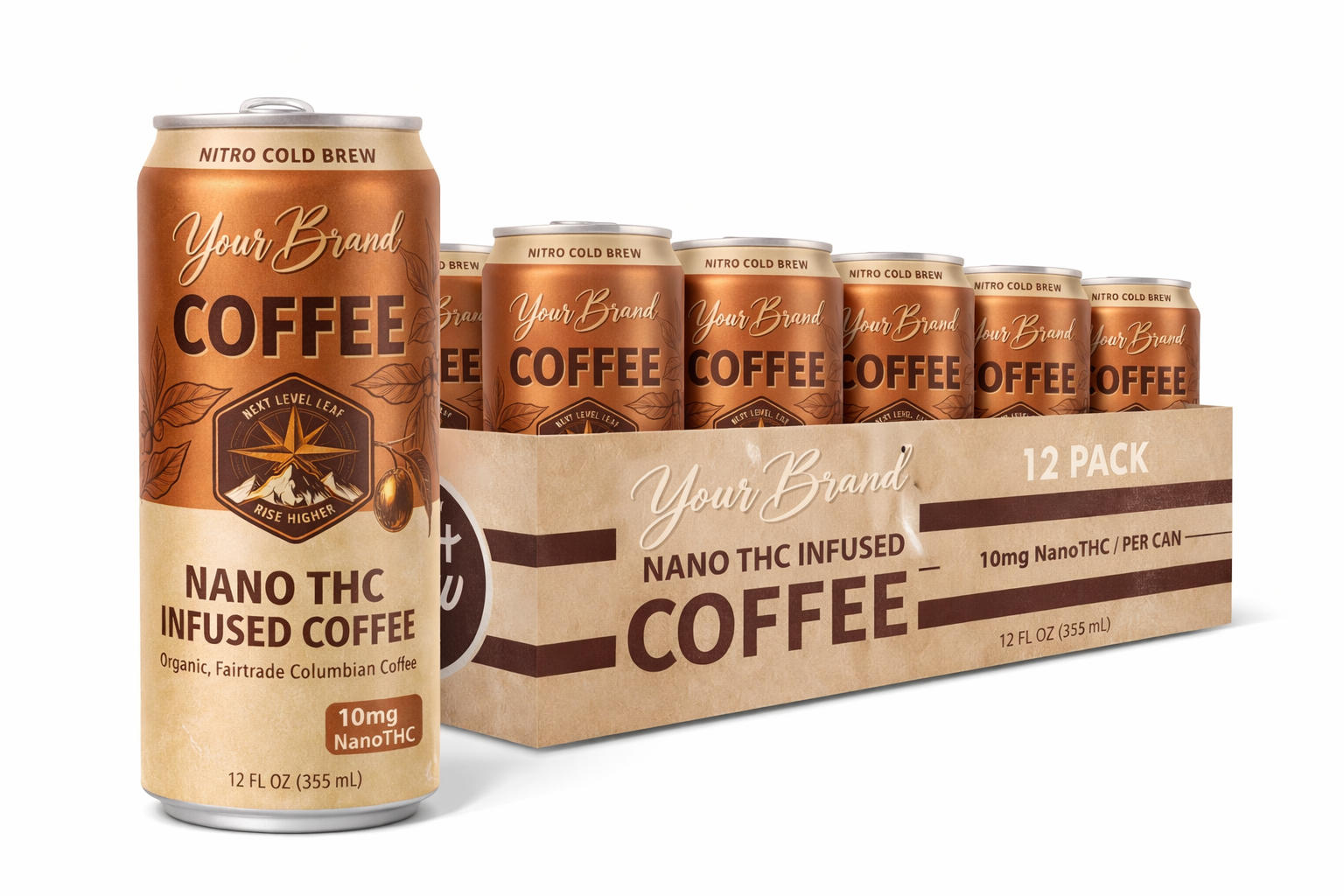
Nitro cold brew can provide a distinct coffee format for brands that want a clearly defined canned coffee presentation.
The production plan has to account for the cold brew base, nitrogen handling, emulsion blending, canning process, finished-product testing, and packaging presentation.
Choose the flavor direction
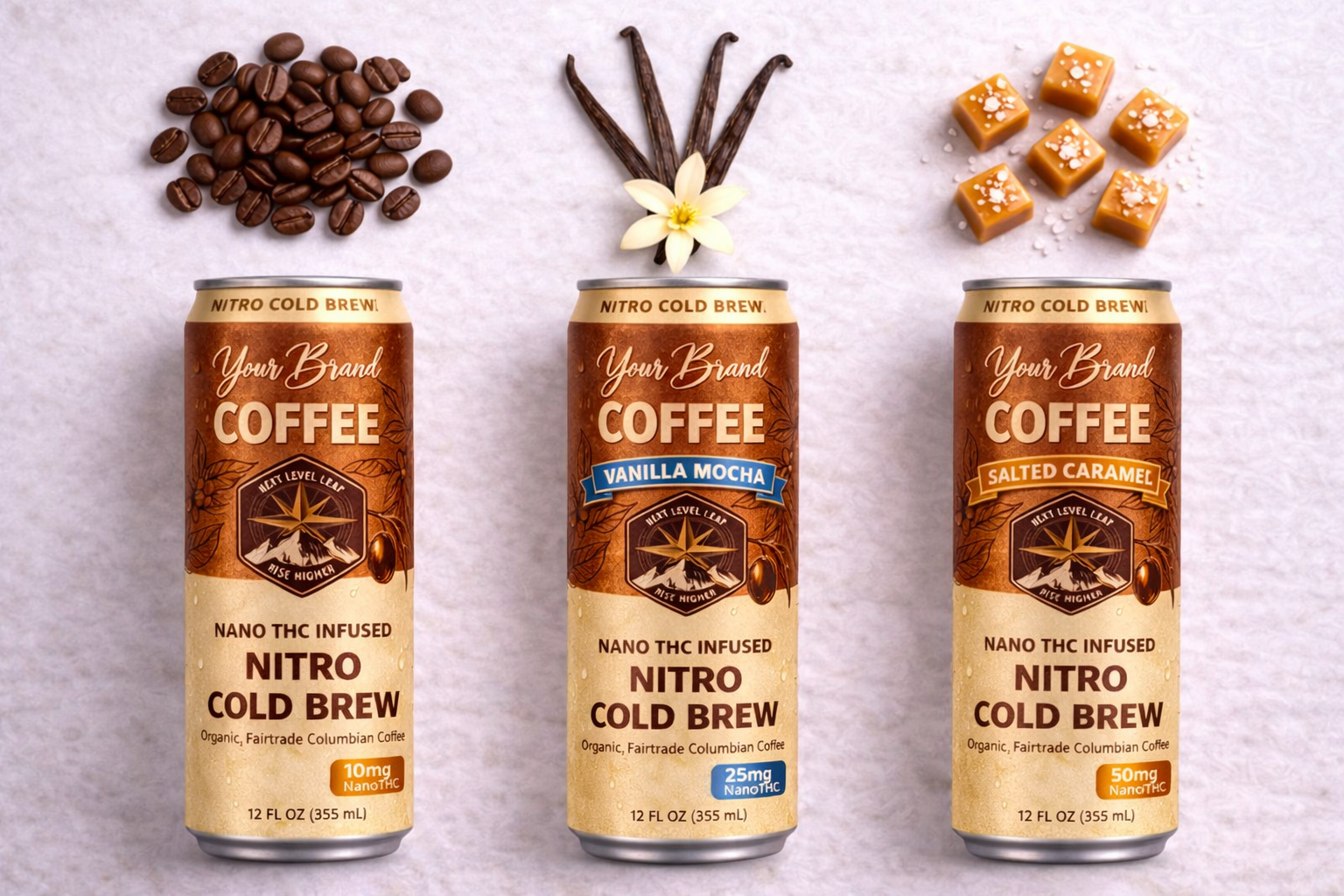
Established coffee flavor directions include black, vanilla mocha, and salted caramel. Final availability depends on the chosen coffee format, formula, packaging, and production requirements.
Black coffee
Best for brands that want a clean coffee-forward product with minimal flavor distraction and a more traditional coffee identity.
Vanilla mocha
Best for brands that want a familiar flavored coffee profile with chocolate, vanilla, and a more indulgent consumer expectation.
Salted caramel
A recognizable flavored coffee direction for brands that want a distinct and easy-to-explain taste profile.
For more flavor planning, review Best Flavors for Infused Coffee.
How the cannabinoid emulsion is added
THC does not readily mix with water on its own, so an infused coffee project requires a cannabinoid ingredient designed for the finished beverage. The manufacturer evaluates how that ingredient fits the coffee base, flavor system, target amount per can, and production method.
Cannabinoid incorporation should be planned alongside consistency, flavor, stability, finished-product testing, batch documentation, and labeling. The specific emulsion or other beverage-compatible input depends on the finished project formula.
Manufacturing consideration: Evaluate the cannabinoid input alongside coffee strength, flavor, sweetness, can size, target serving amount, intended markets, and finished-product testing.
General process from idea to finished cans
You do not need to know every technical detail before requesting a quote. These steps show how a coffee concept becomes a defined production project.
Define the product
Choose the coffee format, established flavor or custom direction, target customer, and intended sales channel.
Plan coffee and dose
Identify the coffee source, can size, cannabinoid direction, target amount per can, packaging, and order volume.
Brew and blend
The manufacturer prepares the coffee base and evaluates flavor, cannabinoid incorporation, formulation, and production requirements.
Can and test
The finished beverage moves through the project-specific canning, testing, labeling, documentation, and delivery plan.
Infused and non-infused coffee options
Some brands may want to evaluate non-infused coffee alongside infused products. A mixed lineup can be considered when the coffee format, product formulas, packaging, and manufacturing plan support that approach.
Non-infused coffee, THC coffee, CBD coffee, or other proposed cannabinoid concepts each require review based on the intended product, target markets, ingredient availability, labeling, and manufacturing requirements.
Food safety, process controls, and shelf-life planning
Canned coffee requires responsible process planning. Cold brew, nitro cold brew, and canned ready-to-drink coffee are not the same as a fresh cup served immediately in a coffee shop. Production should account for pH, process controls, packaging format, storage expectations, and the appropriate safety plan for the final product.
Work with a manufacturing partner that can evaluate the actual beverage, required documentation, packaging, testing, storage expectations, and production scale.
Build around the finished beverage
The process should match the actual product: regular brew, cold brew, nitro cold brew, infused, non-infused, flavored, or black.
Use batch-specific records
Professional production should support lot traceability, finished-product testing, and COA documentation where applicable.
Make the product easier to trust
Clear labels, testing records, and production documentation help buyers evaluate the finished product.
Choose the right production path and order volume
A white-label coffee project can begin with an established coffee and flavor direction, while a custom project may require additional formulation work for a distinct coffee source, flavor system, cannabinoid blend, functional ingredient, or packaging plan.
White-label coffee
Start with an existing coffee direction such as black, vanilla mocha, or salted caramel when the profile fits your brand.
Custom formulation
Evaluate a distinct coffee source, flavor, cannabinoid combination, or functional ingredient as a project-specific formula.
Commercial production
Plan around approximately 1,200 cans per SKU or discuss larger and recurring production programs based on demand.
Approximately 1,200 cans per SKU is the standard commercial starting point. Larger and recurring orders can be planned for established brands and expanding programs. A selective 360-can prototype may be considered for qualified projects when an initial product-learning run is appropriate.
Compare white-label and custom coffee development, review coffee production quantities, or explore manufacturing capabilities.
What to prepare before requesting a quote
You do not need every answer before reaching out. The following details help define the coffee, flavor, formulation, packaging, and production requirements.
- Preferred format: regular brew, cold brew, or nitro cold brew.
- Preferred flavor: black, vanilla mocha, salted caramel, or custom.
- Whether the project should use an available manufacturing coffee base or evaluate customer-supplied coffee.
- Target can size and estimated production volume, including whether you need a first commercial run or a larger recurring program.
- Desired THC, CBD, or other cannabinoid dose per can, if infused.
- Target states and sales channels.
- Packaging status, label direction, and brand assets.
- Timeline for samples, production, retail launch, or events.
THC Coffee Manufacturer
Learn what to look for in a manufacturing partner for infused coffee production.
Review manufacturer guide →White-Label THC Coffee
Explore the white-label path for launching infused coffee under your brand.
Explore white label →THC Coffee Pricing
Understand the factors that influence cost, MOQ, packaging, testing, and finished cans.
Review pricing →Where to go next
If you are still comparing concepts, start with the infused coffee hub or review coffee brand examples. If you already know the preferred format, flavor, ingredient direction, and production volume, request a project-specific manufacturing quote.
Infused Coffee
Explore the broader infused coffee opportunity, product formats, and launch strategy.
Explore coffee hub →THC Coffee Shelf Life
Understand shelf-life planning, packaging, process controls, and product stability.
Review shelf life →Beverage Manufacturing
See how Next Level Leaf supports white-label and private-label infused beverage projects.
Explore manufacturing →THC Beverage Formulation
Review the broader formulation logic behind water-compatible infused beverages.
Explore formulation →Compliance Approach
Review documentation, testing, and responsible production standards for infused beverages.
Review compliance →Request a Manufacturing Quote
Share your coffee format, flavor, ingredient direction, packaging, and target production volume.
Request a quote →Frequently asked questions
Ready to plan your THC coffee manufacturing run?
Share your coffee format, flavor, cannabinoid direction, packaging, target volume, and whether you need a first commercial run or a larger recurring production program.