

How THC Beverages Are Made
Start with the complete path from drink idea and ingredients to finished-product testing and production.
Explore this guideBuild an infused beverage around the flavor, ingredients, customer experience, and production quantities your brand actually needs.
Updated August 25, 2026. Next Level Leaf helps new and established brands develop beverages for commercial starting orders around 1,200 cans per product, larger retail and distributor programs, and recurring production.
THC beverage formulation is the process of creating an infused drink that brings together the right beverage type, flavor, hemp-derived ingredients, cannabinoid amount, packaging, finished-product testing, and manufacturing requirements. A good formula should make sense for your customer and remain practical to produce as demand grows.
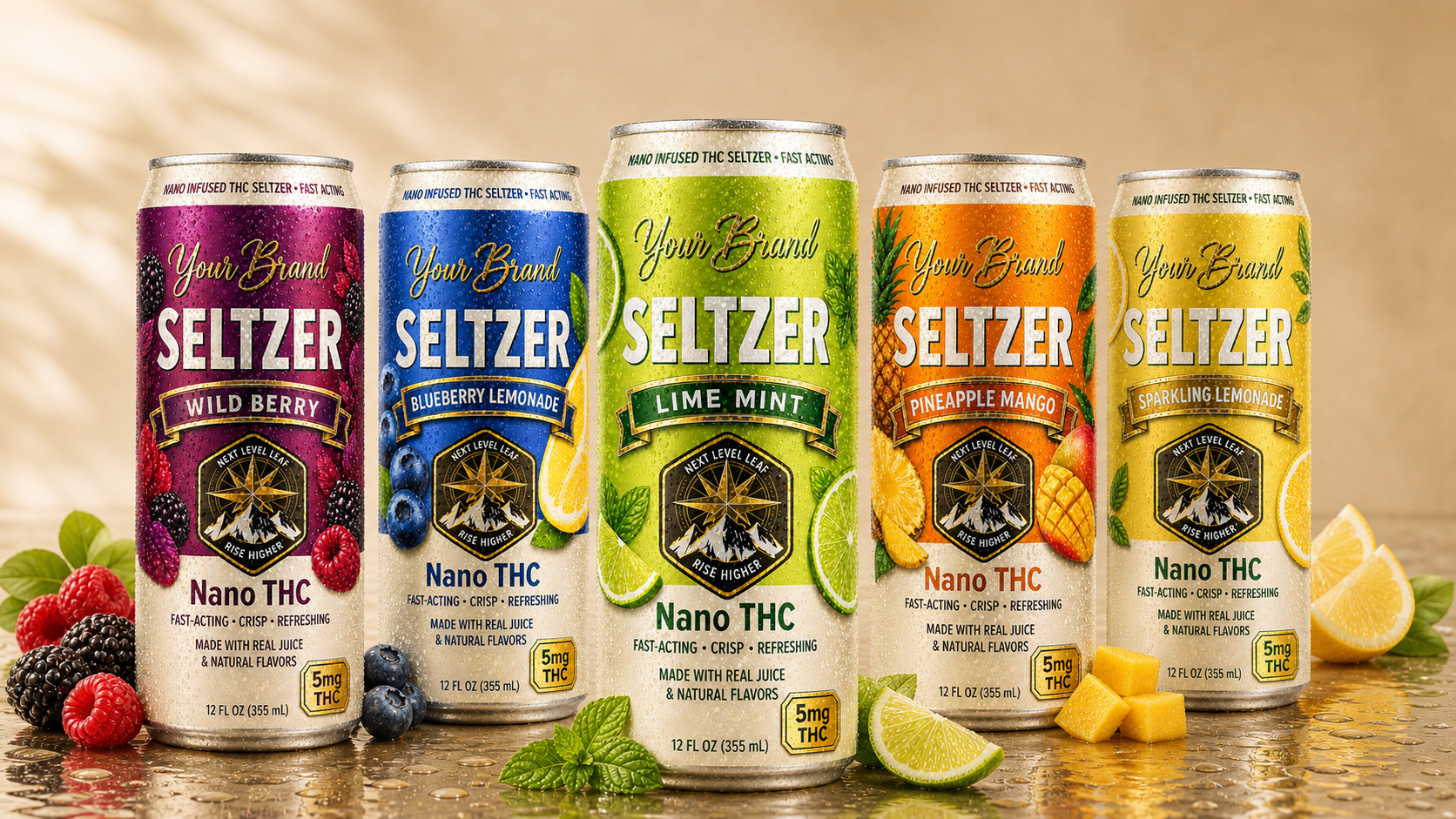
The best formulation choices depend on who will buy the beverage, what it should taste like, and where you plan to sell it.
Start with a drink customers can understand and a reason they would choose it again.
The finished drink should be practical to package, test, manufacture, and produce again.
These guides explain beverage production, ingredients, taste, cannabinoid delivery, finished-product consistency, and common development mistakes.
Start with the complete path from drink idea and ingredients to finished-product testing and production.
Explore this guideCompare hemp-derived THC, CBD, CBG, CBN, and other suitable ingredients for your beverage.
Explore this guideLearn how nanoemulsions help distribute oil-based cannabinoid ingredients through a beverage.
Explore this guideUnderstand the differences between emulsion options without confusing technical terms with guaranteed results.
Explore this guideSee what water-compatible and water-dispersible cannabinoid ingredients mean for real beverage production.
Explore this guideExplore why the drink, ingredients, person, and other factors can influence how quickly an experience begins.
Explore this guideUnderstand the factors that may influence cannabinoid absorption without relying on unsupported promises.
Explore this guideLearn how beverage format, flavor, sweetness, and ingredients influence the taste of an infused drink.
Explore this guideSee why ingredient compatibility, packaging, storage, and testing matter after production.
Explore this guideIdentify common product decisions that can create flavor, packaging, consistency, or manufacturing problems.
Explore this guideThe beverage format influences flavor, sweetness, ingredient choices, packaging, and what customers expect from the finished drink.
Build a light, refreshing beverage around familiar fruit flavors and a clear product concept.
Learn moreCreate a social drink inspired by recognizable cocktail flavors without relying on alcohol.
Learn moreExplore cold brew, nitro coffee, flavor options, and functional ingredients for coffee drinkers.
Learn moreConsider juices, lemonades, and other approachable drink formats built around flavor.
Learn moreSodas, teas, lemonades, and other infused drinks can also be developed around a specific customer or product idea. The right approach depends on the recipe, ingredients, intended markets, and production needs.
The right ingredients should fit the drink, the intended customer, and the markets where the product may be sold.
Depending on the product and intended market, a beverage may include hemp-derived THC, CBD, CBG, CBN, or other appropriate cannabinoids. The amount per serving should make sense for the beverage and be supported by finished-product testing.
Learn more about cannabinoid selection and review relevant state resources when planning your intended markets.
Terms like nanoemulsion, fast onset, water-soluble, and bioavailability can describe real formulation considerations, but none guarantees a specific result by itself.
The final beverage still needs to be considered in terms of taste, ingredient compatibility, mixing, packaging, finished-product testing, and the actual customer experience.
Next Level Leaf works with new and established brands that need commercial production, larger orders, retail or distributor programs, and recurring supply.
Approximately 1,200 cans per SKU, or 50 cases of 24, is the normal commercial starting point. Each flavor, formula, or cannabinoid amount is a separate product.
Established brands can plan larger orders, multiple products, wider distribution, and inventory for retail or wholesale customers.
As customer demand grows, the product can be produced again with the beverage, packaging, and order quantities your business needs.
A selective 360-can prototype may be available for qualified projects when the formula, packaging, and production requirements support it. Approximately 1,200 cans per SKU remains the normal commercial starting point.
Choose the next resource based on the product you want to create, the support you need, and the customers you plan to serve.
Create a more distinctive beverage with product-specific flavor, ingredients, and packaging.
Learn moreExplore hemp-derived beverage development for your intended customers and markets.
Learn moreConnect the finished recipe with production, packaging, testing, and commercial order sizes.
Learn moreCompare hemp-derived beverage production, manufacturing options, and room to grow.
Learn moreFind production and packaging support for an existing recipe or a defined beverage concept.
Learn moreBring together your product idea, target customer, business model, and launch planning.
Learn moreUnderstand commercial starting orders, larger production needs, and selective prototypes.
Learn moreExplore branded drinks for retail stores, established customer bases, and multiple locations.
Learn moreConsider beverages for distributor relationships, wholesale accounts, and repeat demand.
Learn moreReview beverage formats, manufacturing support, and options for established brands.
Learn moreUnderstand how formulation, ingredients, packaging, testing, and order size affect cost.
Learn moreFollow the steps from early product discussion through beverage manufacturing.
Learn moreTell us about your drink idea, the flavors and ingredients you are considering, and the production quantities your business needs. We can help you find the right next step.