


What Is Nano THC?
Nano THC is a way to carry THC in very small oil droplets so it can spread more evenly throughout a water-based drink.
For beverage brands, the important questions are whether the finished drink tastes good, stays consistent, fits the intended experience, and can be produced at the right scale.
Nano THC is not a different kind of THC. It describes a delivery system that helps oil-based THC disperse through a beverage.
A well-matched system may help improve consistency, appearance, flavor, or absorption, but the results depend on the complete recipe rather than the word "nano" alone.
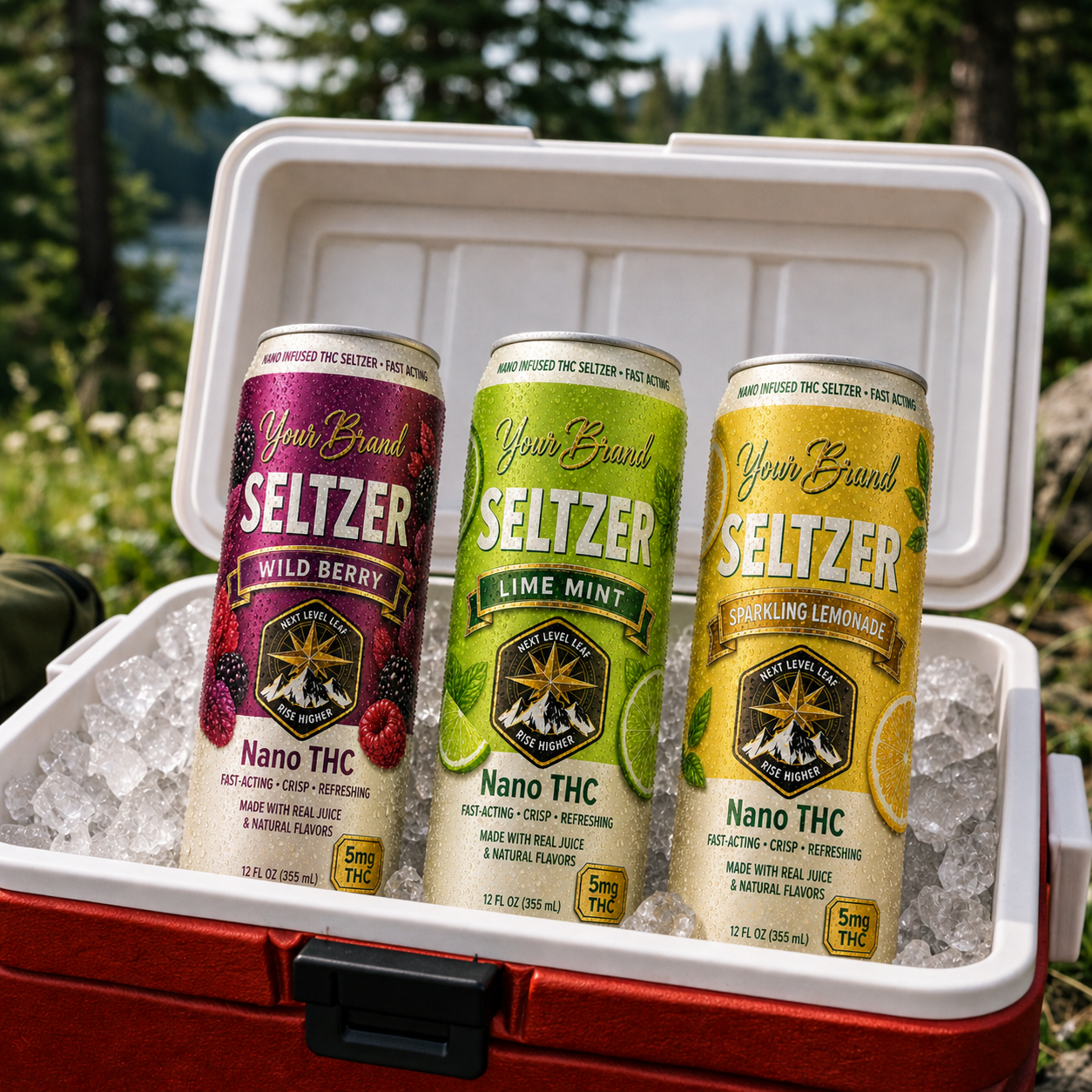
What does nano THC mean in a beverage?
THC naturally mixes with oil, not water. Since most beverages are mostly water, a manufacturer needs a way to keep the cannabinoid spread throughout the drink instead of floating, separating, or collecting unevenly.
A nanoemulsion breaks cannabinoid-containing oil into very small droplets and helps those droplets stay distributed in the beverage. The THC itself does not become a new ingredient or a different cannabinoid.
The simple version: Nano THC usually means regular THC carried in a system designed to mix more evenly into a drink.
Why does THC need help mixing into water?
Adding raw cannabinoid oil directly to a water-based beverage can create an oily layer, visible separation, a harsh taste, or inconsistent amounts from one serving to the next.
An appropriate emulsion can help address several practical problems:
- More even distribution: The THC is spread through the beverage instead of collecting in one area.
- More consistent potency: A stable formula supports more reliable testing of the finished drink.
- Better appearance: Depending on the recipe, the beverage may look clearer or more consistent.
- Smoother taste and texture: The right system can reduce noticeable oiliness or bitterness.
- Less separation: A compatible formula may better withstand normal handling, storage, and shipping.
None of these results is automatic. The delivery system has to work with the actual flavor, dose, ingredients, package, and production conditions.
Is nano THC actually water-soluble?
Usually, no. THC remains oil-soluble even when it is used in a nanoemulsion. The small oil droplets are simply carried throughout the water-based drink.
Water-dispersible THC is often a more accurate description than "water-soluble THC." The difference matters because a supplier can use popular marketing language without proving that the ingredient performs well in your finished beverage.
For a closer explanation, read how water-dispersible THC works in beverages.
How are nano THC emulsions made?
A manufacturer combines cannabinoid-containing oil with ingredients that help it disperse through water. Processing then reduces the oil into smaller droplets and helps keep those droplets distributed.
- The cannabinoid ingredient is combined with a suitable carrier and stabilizing ingredients.
- The oil and water components are mixed together.
- Processing equipment reduces the oil into smaller droplets.
- The ingredient is evaluated for consistency and compatibility with the beverage recipe.
- The finished drink is checked for taste, appearance, potency, and stability.
Brands do not need to choose equipment themselves. The useful question is whether the final drink stays consistent when it is produced, packaged, and stored.
Does smaller droplet size always mean a better drink?
No. Smaller droplets can be useful, but they do not guarantee a better product. A published food-science review describes nanoemulsions as commonly having droplet diameters around 20 to 200 nanometers, although the definition can vary. Read the published nanoemulsion review.
The more important consideration is how the entire beverage performs:
- Does the THC stay evenly distributed?
- Does the drink taste the way the brand intends?
- Does the appearance match the product concept?
- Does the finished beverage test at the intended potency?
- Does the formula stay consistent after packaging and storage?
For a direct comparison between different ingredient systems, see nano THC versus conventional emulsions.
Does nano THC work faster?
Some nanoemulsifying systems may help cannabinoids absorb more quickly than certain oil-based products. However, the outcome depends on the specific ingredient, the complete beverage, the dose, whether food was consumed, and the individual.
A 2025 human crossover study compared one self-nanoemulsifying THC and CBD product with oil-based drops. The study observed differences in absorption, but it did not prove that every nano THC beverage works the same way or reaches a specific onset time. Review the published human study.
A responsible brand should not promise that every customer will feel the effect within a fixed number of minutes. Learn more about how fast-onset THC works.
Will nano THC make a beverage clear?
It may help, but the cannabinoid ingredient is only one part of the formula. Flavor oils, juice, sweeteners, colors, tea, coffee, carbonation, and the amount of THC can all affect the final appearance.
Seltzers and flavored water
A brand seeking a clean, transparent appearance may want to test the cannabinoid system with the exact flavor and intended dose.
Sodas, juices, and coffee
For drinks that are naturally darker or less transparent, flavor, potency, stability, and cost may matter more than perfect clarity.
Can nano THC change the taste of a drink?
Yes. The cannabinoid amount, carrier ingredients, flavor profile, and beverage format can all influence taste and mouthfeel.
A bold soda, juice, or coffee can sometimes handle a more noticeable cannabinoid ingredient than a lightly flavored seltzer. The right choice depends on how the actual beverage tastes at the intended dose.
Explore custom THC beverage formulation for more on developing a recipe around your product goals.
What types of drinks can use nano THC?
Nano THC can be considered for several beverage formats, but the best ingredient system depends on the full recipe.
Infused seltzers
Compare lighter flavors, carbonation, clarity, and different cannabinoid amounts.
Explore infused seltzers →Infused mocktails
Build a cocktail-inspired drink around flavor, appearance, and the intended experience.
Explore infused mocktails →Infused coffee
Consider coffee flavor, bitterness, ingredient compatibility, and ready-to-drink formats.
Explore infused coffee →How should a nano THC beverage be tested?
The cannabinoid supplier may provide information about its ingredient, but that does not replace testing the actual drink customers will receive.
Review the cannabinoid
Check the ingredient strength, supplier information, storage guidance, and available certificate of analysis.
Evaluate the beverage
Check flavor, appearance, acidity, carbonation when relevant, and how the ingredient performs at the intended dose.
Confirm consistency
Plan appropriate finished-product potency testing, batch records, and stability review for the product and market.
A certificate of analysis, often called a COA, documents testing results for an ingredient or finished product. Required testing depends on the product and where it will be sold.
Learn more about beverage stability and shelf life and common formulation mistakes.
Can a nano THC beverage scale into larger production?
Yes. A common first commercial order starts around 1,200 cans per flavor and dose. Established brands can discuss larger orders, multiple pallets, recurring production, and programs that match their expected demand.
A selective 360-can prototype may be available for a qualified project when testing a beverage before a larger order makes sense. It is not the standard commercial production size.
The goal is not simply to create a promising sample. The finished formula also needs to hold up when it moves into commercial production and future repeat orders.
See beverage manufacturing pricing, learn how THC beverages are made, or explore THC beverage manufacturing.
How does nano THC relate to bioavailability?
Bioavailability describes how much of a compound becomes available to the body after it is consumed. Some delivery systems may affect absorption, but a technical ingredient description does not prove the same result in every finished drink.
A useful discussion should focus on the actual product, the evidence available for that system, and what can be communicated responsibly to customers.
For a more detailed explanation, read about bioavailability in THC beverages.
Choose the beverage first. Start with the flavor, dose, appearance, customer experience, and order size you want. Then select the cannabinoid system that performs well in that specific drink.
Research behind the explanation
These published sources provide background on food-grade nanoemulsions and one human study of a specific cannabinoid delivery system. They do not establish a universal onset time or prove identical results in every beverage.
Food-science review of nanoemulsions
Human study of a self-nanoemulsifying THC and CBD product
Frequently asked questions
Continue exploring your beverage options
Choose the next question that matters most for your drink.
THC beverage formulation
Explore cannabinoid ingredients, flavor, stability, and beverage development.
Visit the formulation hub →Nano THC vs. emulsion
Compare ingredient systems, appearance, flavor, onset, and production considerations.
Compare your options →Beverage manufacturing
Move from product questions to commercial beverage production.
Explore manufacturing →Ready to create an infused beverage?
Tell us the type of drink you want to make, the THC or CBD amount, your preferred flavor, and your expected order size. We can help you evaluate the product and plan the right production run.