


How Fast-Onset THC Works
Some THC beverages use ingredient systems designed to help cannabinoids absorb differently than conventional oil-based products.
The important question is how the finished drink performs, not whether a supplier uses the word "nano" or promises a specific number of minutes.
A fast-onset THC beverage typically uses a delivery system that helps oil-based cannabinoids spread throughout a water-based drink. Some systems may affect absorption, but timing depends on the actual recipe, dose, individual, and other conditions. No single onset window applies to every beverage or consumer.
What does fast onset mean in a THC beverage?
Fast onset describes the possibility that someone notices the effects of a THC beverage sooner than they might after consuming some conventional oil-based products. It does not mean every person will respond at the same speed.
Three different parts of the experience are often confused:
When someone first notices an effect
This can vary based on the beverage, the dose, food intake, and the individual.
When the experience feels strongest
The strongest part of the experience may occur later than the first noticeable effect.
How long the experience continues
Duration depends on several factors and should not be confused with onset.
Why can some THC drinks work differently from edibles?
THC naturally mixes with oil, while most beverages are primarily water. Adding cannabinoid oil directly to a drink can create separation, an oily taste, and inconsistent amounts throughout the product.
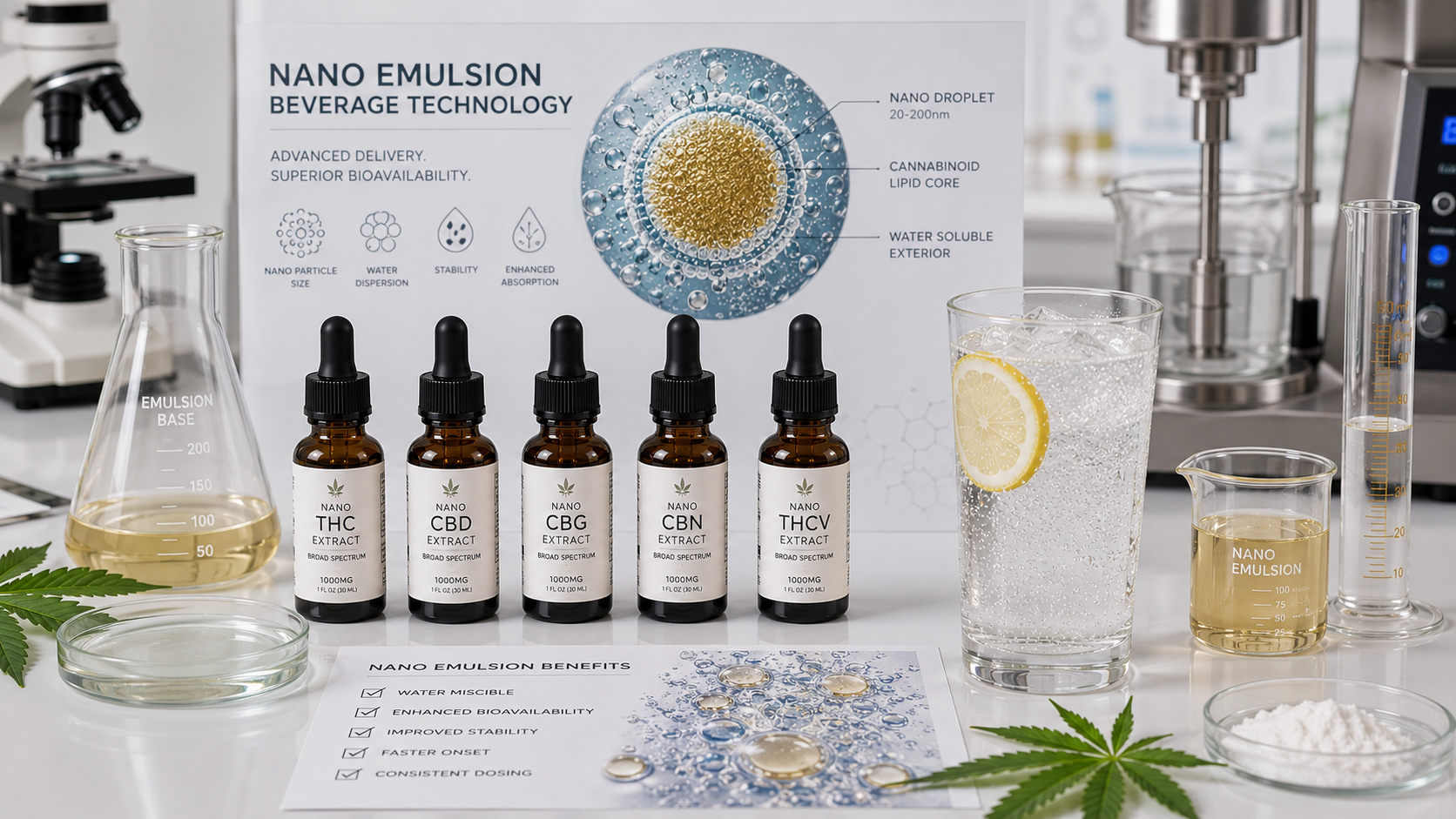
An emulsion breaks cannabinoid-containing oil into droplets that can remain spread through the drink. A nanoemulsion uses smaller droplets, which may influence how a specific ingredient system performs.
Published human research has found that certain emulsifying systems can change cannabinoid absorption compared with specific oil-based products. That does not mean every THC drink has the same result.
Learn more about what nano THC is and how nanoemulsions compare with conventional emulsions.
How do THC beverages compare with conventional edibles?
| What to compare | THC beverage | Conventional oil-based edible |
|---|---|---|
| How THC is carried | An emulsion or similar ingredient system may help cannabinoids stay distributed throughout a drink. | THC is often carried in oil, fat, or a solid food product. |
| Onset expectations | Some systems may support different absorption, but actual timing depends on the finished product and the individual. | Timing can vary based on the recipe, dose, digestion, food intake, and the individual. |
| Product experience | Often designed around measured sipping, flavor, and a familiar beverage occasion. | Often designed around a food format and a different consumption occasion. |
| What should be tested | Flavor, appearance, consistent potency, packaging, and stability of the finished beverage. | Potency, distribution, serving size, and consistency of the finished edible. |
Do THC beverages bypass digestion or the liver?
No. A swallowed THC beverage still moves through the digestive system and is subject to metabolism. The delivery system may influence absorption, but that does not mean the drink completely bypasses digestion or the liver.
A clearer description is that some ingredient systems may help cannabinoids become available differently than certain conventional oil-based products.
Is fast-onset THC always nano THC?
No. Fast onset describes an experience a brand may want to explore. Nanoemulsion describes one possible way to distribute cannabinoids throughout a drink.
A beverage can use a nanoemulsion and still have poor flavor, visible separation, inconsistent potency, or other problems. A useful evaluation looks at the entire formula rather than the smallest droplet size or a marketing label.
See how water-dispersible THC works for more on the difference between ingredient terminology and finished-product performance.
What affects how quickly a THC beverage is noticed?
How the THC is carried
The cannabinoid ingredient, droplet distribution, and how well the system matches the recipe can affect the result.
What else is in the drink
Flavor, acidity, sweeteners, carbonation, coffee, tea, and other ingredients can influence how a beverage performs.
The amount of THC per can
A lower-dose beverage and a stronger drink can create different experiences even when the same ingredient system is used.
Food intake and sensitivity
Whether someone has eaten, prior experience with THC, metabolism, and individual sensitivity can all affect the experience.
How the product holds up
A beverage should remain consistent through normal packaging, shipping, storage, and its intended shelf life.
How the drink is manufactured
Mixing, filling, ingredient compatibility, and consistency from can to can all matter as production increases.
What does human research actually show?
A systematic review of oral cannabis and THC research found that absorption can vary significantly. Additional human studies have compared specific emulsifying systems with particular oil-based products and observed differences in cannabinoid exposure or absorption.
These studies are useful background, but they do not establish a universal onset time for every THC beverage. A measurement in the bloodstream is also not the same as the moment a person first notices an effect.
What the evidence can support: The delivery system may affect how a specific cannabinoid product is absorbed. What the evidence cannot support is assuming every drink will work in a fixed number of minutes.
For a closer look at how cannabinoids become available to the body, read about bioavailability in THC beverages.
Why does onset matter to a beverage brand?
The intended experience can influence how a drink is positioned, when someone chooses to use it, and what the customer expects from the product.
A more understandable product
A clearly labeled dose and straightforward explanation can help customers understand what they are buying.
A format people recognize
Seltzers, sodas, mocktails, and coffee drinks can fit different flavors, occasions, and customer preferences.
Claims that match the product
Specific timing promises should be supported by evidence for the actual beverage and appropriate review.
What should be checked before commercial production?
The ingredient supplier is only one part of the picture. A finished drink also has to taste right, remain consistent, and fit the package and order size you need.
- Product format: Decide whether the drink is a seltzer, soda, lemonade, coffee, mocktail, or another beverage.
- THC amount: Identify the intended cannabinoid amount per serving and per container.
- Flavor and appearance: Check whether the ingredient system works with the actual recipe.
- Finished-product testing: Confirm appropriate potency testing and documentation for the market.
- Packaging and storage: Consider how the beverage behaves after it is canned, shipped, and stored.
- Expected demand: Choose an order size that fits the business rather than the smallest possible run.
Explore custom THC beverage formulation or learn more about beverage stability and shelf life.
Can fast-onset THC beverages scale into larger orders?
Yes. A common first commercial order starts around 1,200 cans per flavor and dose. Larger brands can discuss multiple pallets, recurring production, and programs built around their expected demand.
A selective 360-can prototype may be available for a qualified project when evaluating a beverage before a larger commercial run makes sense. It is not the standard production order.
Whether the project starts with a commercial launch or an established brand planning larger recurring orders, the formula should maintain consistent taste, appearance, and potency as production increases.
Learn how THC beverages are made, explore THC beverage manufacturing, or review beverage manufacturing pricing.
Start with the drink you want to make. Choose the flavor, cannabinoid amount, appearance, intended experience, and order size first. Then evaluate the ingredient system that works in the actual beverage.
Frequently asked questions
Continue exploring your beverage options
Choose the next question that matters most for your drink.
Ready to develop a better THC beverage?
Tell us the type of drink you want to make, the intended THC or CBD amount, your preferred flavor, and your expected order size. We can help you evaluate the product and plan the right commercial production run.