When is custom THC beverage formulation necessary?
Custom development is appropriate when the desired product cannot be created through an available white-label or private-label platform without meaningful technical work.
How the formulation process works
Describe your beverage
Discuss your customer, beverage format, flavor, ingredients, cannabinoid amount, packaging, order volume, and timing.
Choose the right direction
Explore which beverage base, ingredients, packaging, and production approach fit your product idea.
Plan development
Discuss the formulation work, sample needs, product goals, project-specific pricing, and expected next steps.
Develop the formula
Build the initial beverage around its base, flavor, sweetness, cannabinoid amount, and functional ingredients.
Tasting and revisions
Compare samples, discuss the taste and appearance, and refine the beverage around the experience your customers expect.
Select the final direction
Identify the preferred flavor, ingredients, cannabinoid amount, packaging, and production needs.
Plan manufacturing
Coordinate ingredients, packaging, product testing, order volume, production timing, and delivery.
Produce and grow
Launch your beverage, supply larger retail or distributor programs, and plan future orders around demand.
What should you tell us about your beverage idea?
Start with the decisions that shape your customer experience and the kind of beverage your brand wants to produce.
- Target customer, use occasion, brand promise, sales channel, and reference products
- Beverage format, package size, carbonation, sweetness, acidity, color, clarity, texture, and mouthfeel
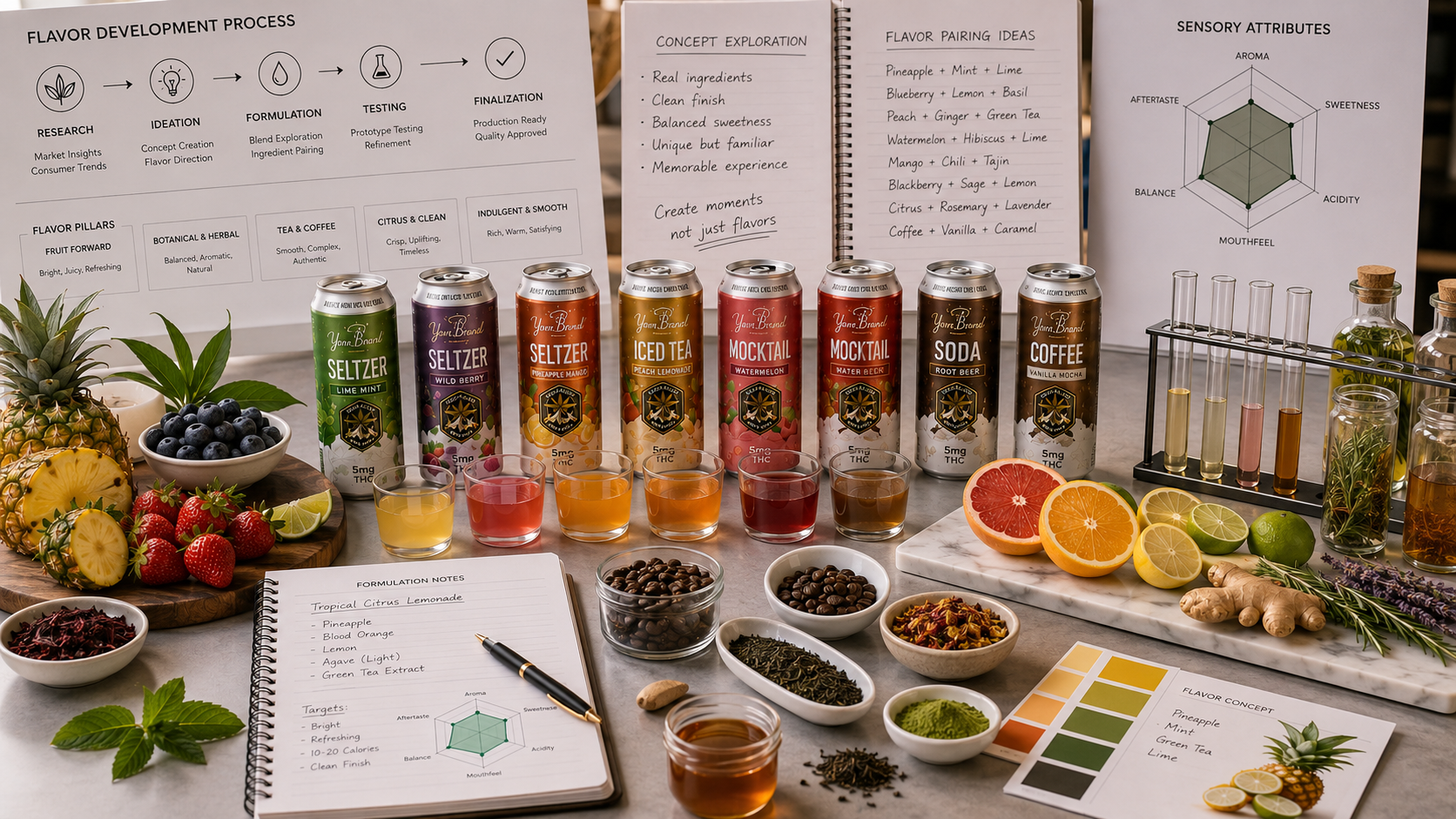
- Flavor direction, intensity, finish, aftertaste, fruit or botanical preferences, and ingredients to avoid
- THC dose, serving structure, onset expectations, and desired CBD, CBG, CBN, THCV, or other cannabinoid inputs
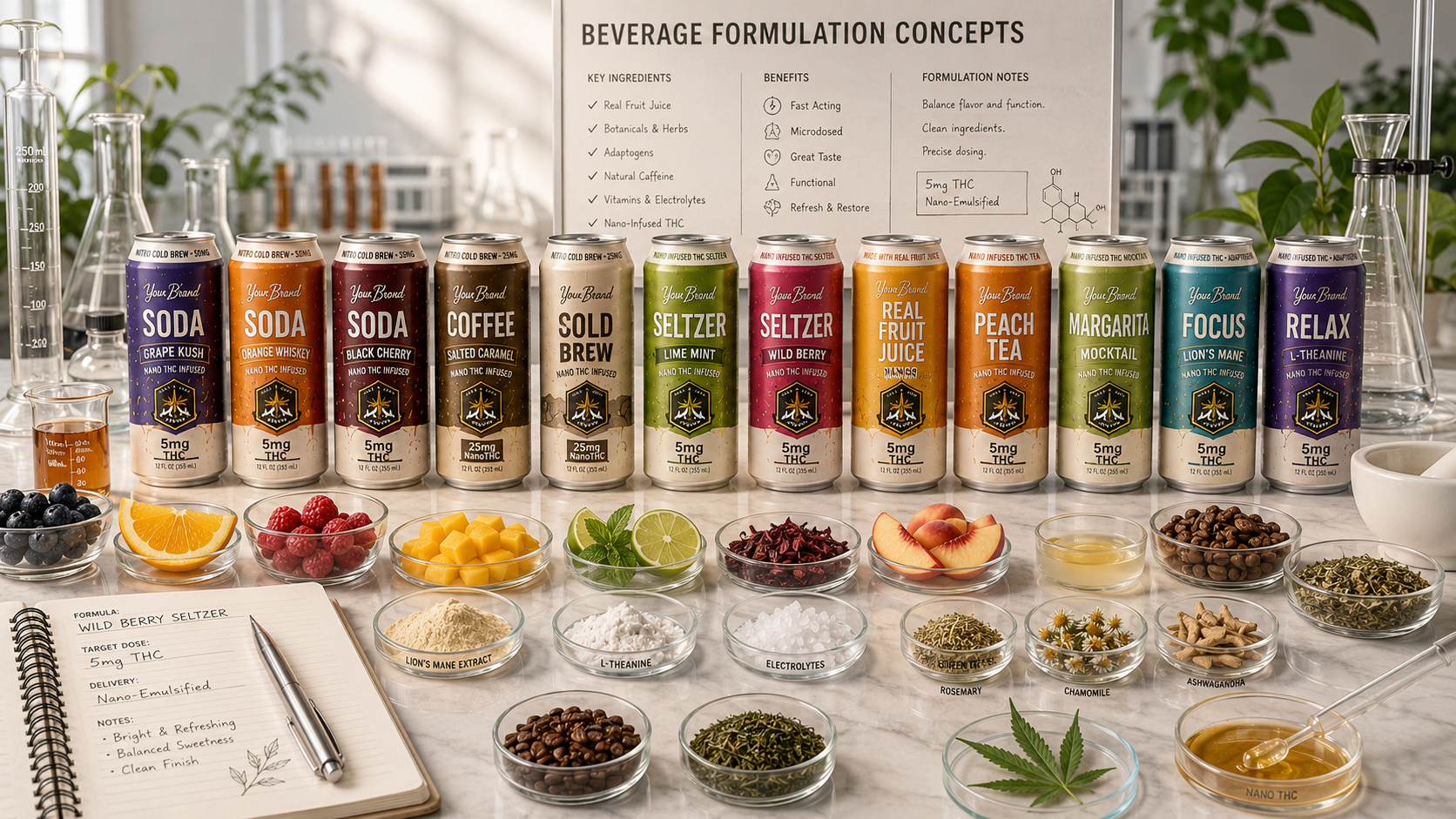
- Caffeine, mushrooms, adaptogens, nootropics, electrolytes, vitamins, minerals, fruit, sweeteners, or other functional ingredients
- Target states, label claims, required certifications, allergens, dietary preferences, and quality expectations
- Desired SKU count, budget, prototype goal, first commercial quantity, target price, timeline, and freight destination
How are flavor and sensory targets developed?
“Make it taste good” is not a complete development direction. The team needs a shared description of what the product should taste, smell, look, and feel like.
Primary flavor, secondary notes, intensity, authenticity, finish, bitterness, and reference products.
Guides ingredient selection and gives tasting feedback a common standard.
Sugar level, sweetener type, tartness, pH direction, balance, and lingering sweetness.
Shapes drinkability, flavor expression, preservation, calories, and customer expectations.
Clarity, haze, color, sediment, pulp, foam, and natural variation.
Must fit the brand promise, package, process, and consumer expectations.
Body, carbonation, creaminess, astringency, viscosity, nitrogen, and finish.
Separates a thin or unfinished sample from a coherent beverage experience.
Bitterness, aroma, emulsion character, dose, flavor masking, and aftertaste.
The infusion system must work inside the complete sensory profile.
How are THC dose and cannabinoid systems selected?
The dose should be selected before the flavor system is finalized because cannabinoid input can affect ingredient cost, bitterness, aroma, clarity, serving structure, testing, target-market fit, and customer expectations.
Seltzer-style products are generally best suited to lower or moderate doses, often in the 5–25 mg range. Higher-dose products can be more practical in flavor-forward sodas, juices, or lemonades where the formula has more ability to manage cannabinoid sensory impact.
How are functional ingredients evaluated?
A functional ingredient must do more than look attractive on the label. It must be compatible with the beverage, taste acceptable at the intended amount, remain stable enough for the product, fit the process, be available from a documented source, and support responsible customer-facing language.
Caffeine and nootropics
Dose, bitterness, solubility, interactions with flavor, serving language, and the intended use occasion must be defined together.
Mushrooms and adaptogens
Extract type, supplier documentation, taste, color, sediment, cost, dose, and label strategy affect feasibility.
Electrolytes and minerals
Mineral character, saltiness, clarity, interactions, pH, sweetness, and customer expectations need to be balanced.
Juice, puree and real fruit
Fruit percentage, pulp, color, acidity, processing, preservation, sourcing, seasonality, and stability can change the production path.
Vitamins and specialty nutrients
Stability, overage, taste, light sensitivity, process loss, claims, and analytical testing may need evaluation.
Sugar and alternative sweeteners
Sweetener choice affects calories, flavor, body, aftertaste, label expectations, preservation, and cost.
What does custom formulation cost?
Development pricing is specific to your beverage
Pricing depends on the formula, flavor work, ingredients, number of products, sample needs, packaging, product testing, and overall complexity.
Your quote should explain how formulation, ingredients, packaging, product testing, production, and freight apply to the specific beverage. Explore the pricing overview or request a product-specific quote.
Review THC Beverage Manufacturing Cost for the full project and landed-cost framework.
How should tasting rounds and revisions be managed?
What should be defined before commercial production?
- Defined ingredients, suppliers, product codes, specifications, and acceptable substitutions
- Batch quantities, order of addition, mixing, temperature, carbonation, processing, and filling assumptions
- Target dose, potency tolerances, pH, sensory specifications, appearance, and quality criteria
- Package size, closure, decoration, case pack, coding, and process compatibility
- Ingredient availability, minimum purchases, lead times, storage, and commercial cost
- Testing plan, finished-product COA, release requirements, traceability, and documentation
- Scale-up plan, first-run quantity, expected loss, samples, freight, receiving, and reorder timing
How do packaging and process affect the formula?
The formula and package cannot be developed independently. Carbonation, nitrogen, heat, cold-fill requirements, light exposure, oxygen, can lining, label application, package size, and filling equipment can all affect the finished product.
How are stability and shelf life evaluated?
Shelf life is product-specific. Many ready-to-drink programs target approximately 12 months, but no formula should be assigned a shelf life solely because another beverage reached that target.
What testing and documentation should be planned?
- Finished-product potency and batch-specific COA
- Microbiological or process testing where required
- pH, specifications, quality checks, fill and package review
- Stability or shelf-life evaluation appropriate to the product
- Ingredient specifications, supplier documentation, allergen records, and traceability
- Target-state label, serving, potency, warning, registration, or testing requirements
Who owns the formula and can it be transferred?
Ownership and transferability should be defined before development begins. Custom work may include customer-specific specifications, but the project can also rely on pre-existing manufacturing knowledge, flavor systems, emulsions, suppliers, processing methods, or platform technology that remain shared.
The written scope should address formula ownership, exclusivity, customer documentation, confidentiality, transfer rights, permitted substitutions, future revisions, and what happens if the product moves to another facility.
When is a custom concept not feasible?
The ingredients may be incompatible, unstable, poor tasting, insoluble, undocumented, or unavailable at commercial scale.
Remove, replace, reduce, or reformulate the ingredient system.
The concept may require equipment, temperature, filling, nitrogen, dairy, aseptic, or package capabilities outside the production program.
Change the format or identify a different production path.
The formula, dose, package, testing, or MOQ may create a landed cost the intended channel cannot support.
Simplify the formula, reduce SKUs, change dose or package, or revise price and channel strategy.
The dose, claims, package, ingredients, or target states may create avoidable launch restrictions.
Redefine the target market and product specification before development continues.
The product may contain many ideas without a clear buyer, occasion, price point, or reason to reorder.
Strengthen the commercial brief before funding technical development.
What happens after your beverage formula is developed?
Once the beverage direction is established, the next step is planning the ingredients, packaging, product testing, order volume, production schedule, and delivery requirements.
Approximately 1,200 cans per SKU, or 50 cases of 24, is the normal commercial starting point. Larger orders, multiple SKUs, retail and distributor programs, and recurring production can be planned around your business needs. A selective 360-can prototype may be available for qualified projects.
What should you provide for a custom beverage quote?
Start with the beverage your customers actually want
Share your product idea, preferred flavor, ingredients, packaging, expected order volume, and the customer experience you want to create.
Request a Custom Beverage Quote