THC Beverage Opportunities for Distributors and Wholesalers
Distributors and wholesalers can evaluate THC beverages differently than a single brand because they already understand accounts, case movement, retail placement, and channel demand.
A house-brand or private-label THC beverage can give a distributor a way to test category demand, support retail partners, and create a product platform instead of only carrying outside brands.
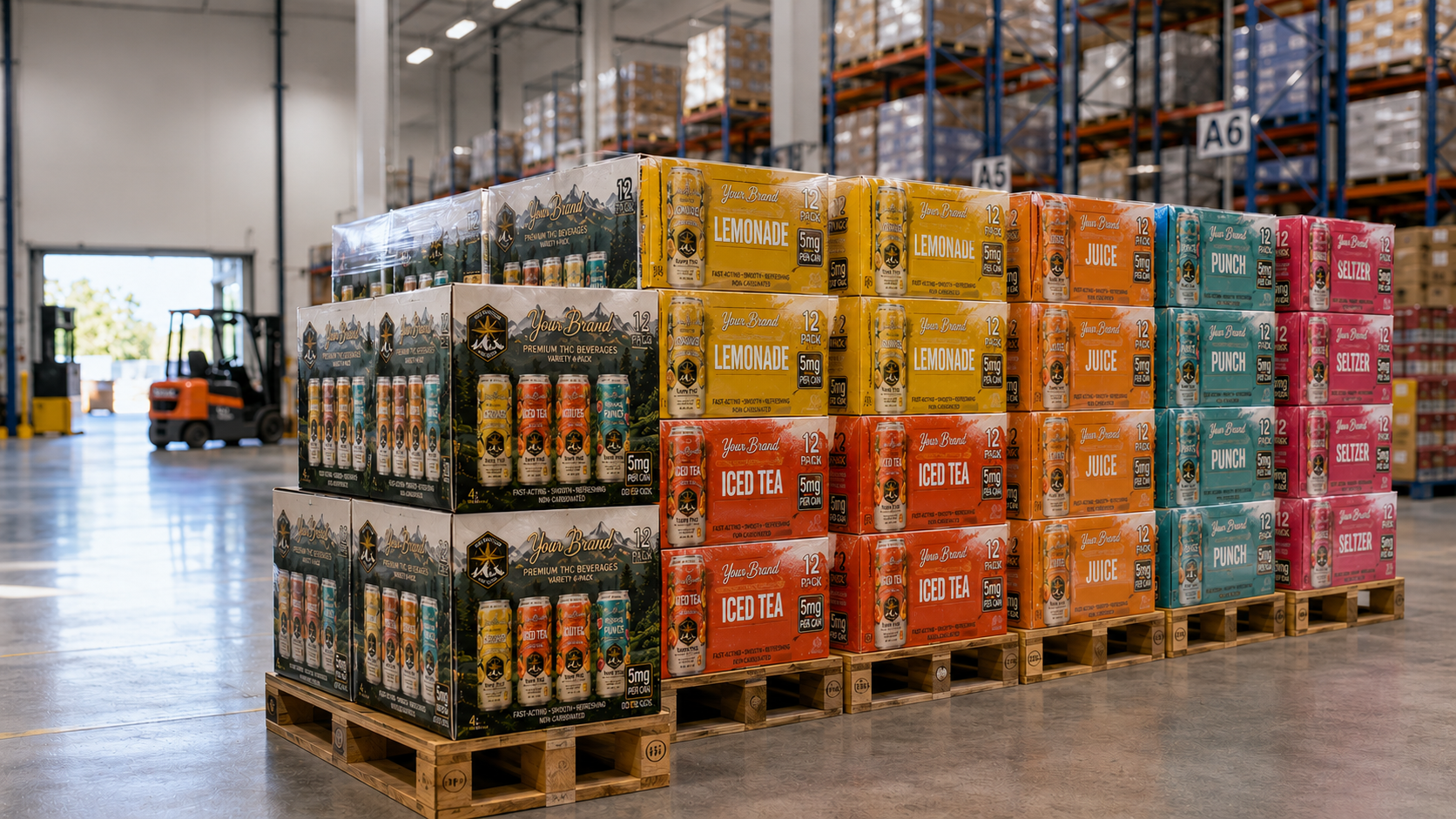
THC beverage distributors and wholesalers may have a strong opportunity when they already serve retailers that are asking for adult-use hemp beverages, alcohol alternatives, or low-dose canned drinks. A private-label or house-brand beverage can help a distributor test demand across accounts, but it needs careful planning around state rules, product format, case movement, documentation, pricing, and retail readiness.
Best starting formats
Route-friendly canned seltzers, sodas, mocktails, teas, and real-fruit drinks with clear flavor and dose.
Distributor advantage
Account relationships, category feedback, route structure, and retail buyer insight can make product planning more practical.
Key tradeoff
Higher upside can come with more complexity around state rules, retailer education, inventory planning, and channel documentation.
Why distributors may have a different advantage
A distributor often sees demand before a manufacturer does. Retailers ask questions, buyers test categories, and accounts notice which products are getting attention. That makes a distributor well positioned to identify where a THC beverage could fit.
Instead of waiting for outside brands to solve the category, some distributors may explore a house-brand or private-label beverage that matches their accounts, routes, and market knowledge.
House-brand strategy for THC beverages
A distributor house brand should be simple enough to sell across accounts. The product needs a clear flavor, clear dose, clean packaging, responsible documentation, and a price structure that can work through the channel.
The goal is not to create the most complicated beverage. The goal is to create a product that buyers understand, retailers can merchandise, and sales reps can explain without confusion.
Practical planning note: The best first product is usually not the most complicated one. It is the product your customer can understand quickly, your channel can sell responsibly, and your first production run can support realistically.
What distributors need before scoping a product
Distributors should clarify target retail channels, target states, expected case volume, product format, dose, flavor direction, margin requirements, and documentation expectations. The first run should match realistic account interest, not just category excitement.
If a distributor has a few committed or likely retail accounts, that can make product planning more grounded. It helps define the can format, case quantity, flavor count, and launch plan.
Responsible distribution and documentation
THC beverages should be supported with batch-specific COAs, clear THC disclosure, adult-use retail expectations, and state-aware distribution planning. Some states and channels may be more workable than others.
This is not legal advice. The practical takeaway is that distribution is not only a logistics question. It is also a compliance, documentation, and retail-trust question.
What to prepare before requesting a quote
Bring the practical details you already know: beverage type, target dose, flavor direction, number of SKUs, preferred can size, target state or states, expected first order size, label status, and where the product will be sold.
If some details are still unclear, that is normal. A good quote conversation can help narrow the path, but it is easier to scope MOQ, pricing, timeline, and production needs when the business opportunity is clearly defined.
Related paths
Explore connected resources for product planning, manufacturing, compliance, pricing, and the next step toward a quote.
Frequently asked questions
Ready to explore a THC beverage opportunity?
Share the business type, target customer, beverage format, dose direction, flavor ideas, target states, and first-run goals. We can help you think through the next practical step.