THC Beverage Business Opportunities
If you already operate a business, the real question is not only how to make a THC beverage. It is whether a THC beverage makes sense for your customer, channel, and brand.
Explore private-label and white-label THC beverage opportunities for retailers, liquor stores, breweries, distributors, hospitality operators, wellness cafés, specialty retailers, events, and other business types.
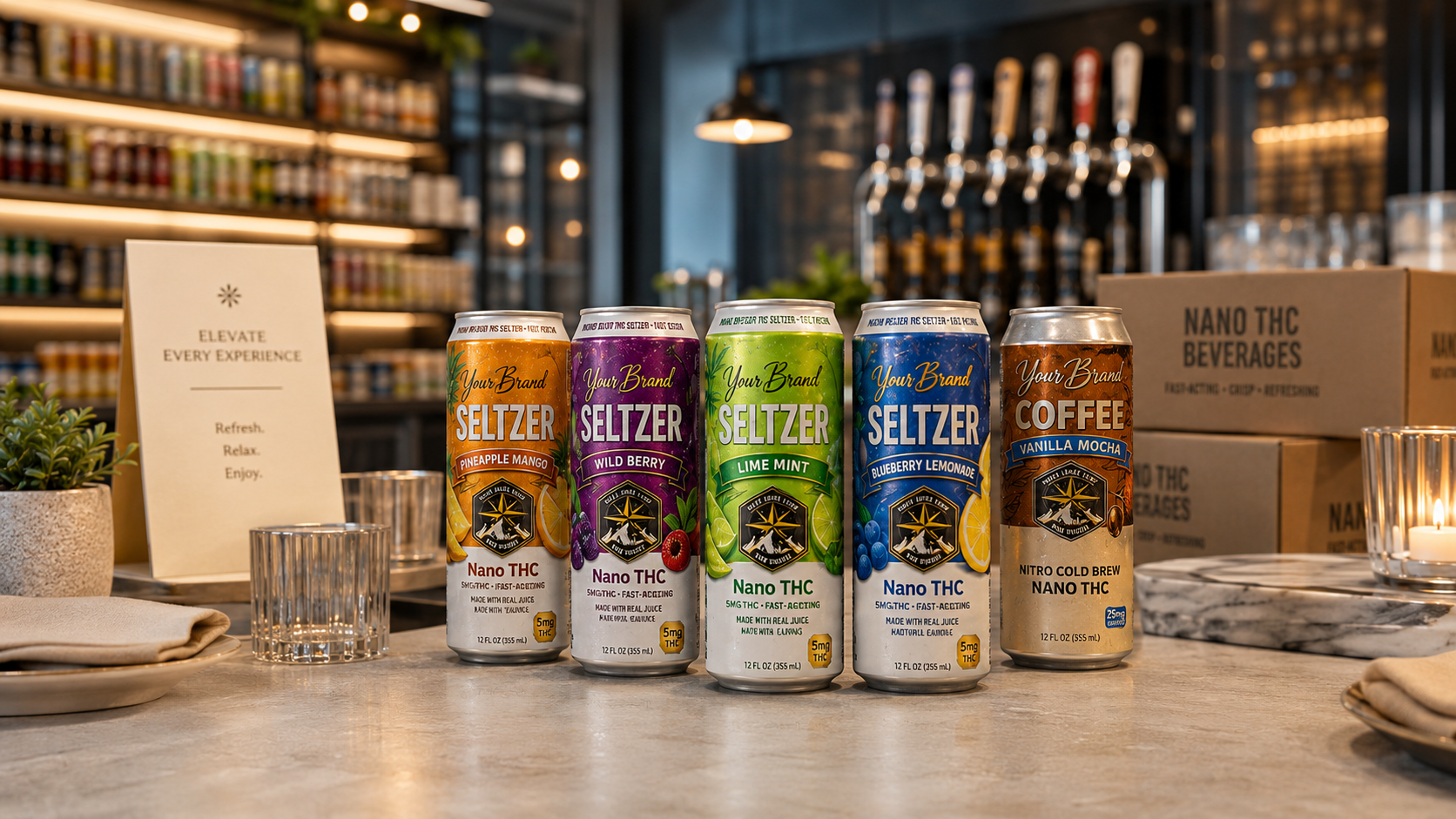
THC beverage business opportunities are strongest when the product connects to an existing customer, sales channel, or adult-use occasion. A retailer, brewery, distributor, restaurant, hotel, wellness café, or creator brand may already have the audience and trust needed to test a low-dose beverage concept.
Explore business opportunity pages
Use these pages to think through which THC beverage format, dose, flavor direction, retail channel, and launch path may fit each business type.
Private Label THC Beverages for Retailers
Retailer-owned or store-brand beverage planning for THC drinks.
Read the guide → Core PageTHC Beverages for Liquor Stores
Alcohol alternative and cooler-strategy planning for liquor store operators.
Read the guide → Core PageTHC Beverages for Breweries
Brewery-adjacent opportunities for seltzers, mocktails, and non-alcoholic adult beverages.
Read the guide → Core PageTHC Beverages for Distributors & Wholesalers
House-brand and wholesale opportunities for route-ready THC beverage products.
Read the guide → Core PageTHC Beverages for Grocery & Big Box Retailers
Mainstream retail planning for compliant low-dose hemp beverage programs.
Read the guide → Core PageTHC Beverages for Beverage Companies
How existing beverage companies can extend into hemp-derived THC drinks.
Read the guide → Broad OpportunityRestaurants & Bars
Hospitality and alcohol-alternative beverage planning for restaurants and bars.
Read the guide → Broad OpportunityCoffee Shops & Roasters
Coffee-adjacent THC beverage ideas for cafés and roasters.
Read the guide → Broad OpportunityConvenience Stores
Grab-and-go retail opportunities for c-stores and route-based accounts.
Read the guide → Broad OpportunityEvents & Venues
THC beverage opportunities for event, entertainment, and venue operators.
Read the guide → Broad OpportunityWineries, Distilleries & Alcohol Brands
Adult-beverage brands evaluating hemp-derived alternatives and brand extensions.
Read the guide → HospitalityHotels, Resorts & Spas
Premium guest-experience beverage opportunities for hospitality operators.
Read the guide → HospitalityHotel / Resort THC Beverages
Private-label hotel and resort beverage concepts for adult guests.
Read the guide → RetailSpecialty Food Markets
Premium retail cooler opportunities for specialty food stores and gourmet markets.
Read the guide → RetailSpecialty Retailer THC Beverages
Private-label beverage concepts for niche retailers and premium stores.
Read the guide → WellnessJuice Bars & Wellness Cafes
Low-dose THC beverage ideas for wellness cafés and juice bars.
Read the guide → WellnessWellness Brand THC Beverages
Responsible THC beverage planning for wellness-adjacent brands.
Read the guide → Niche ChannelPrivate Clubs
Member-focused adult beverage opportunities for private clubs.
Read the guide → Niche ChannelTourism & Destination Brands
Regional and destination-branded THC beverage opportunities.
Read the guide → Niche ChannelCelebrity & Creator Brands
Audience-led THC beverage opportunities for creators and lifestyle brands.
Read the guide → High-Intent DetailLiquor Store Private Label THC Drinks
Private-label planning for liquor store-owned THC beverage lines.
Read the guide → High-Intent DetailBrewery THC Seltzer
THC seltzer opportunities specifically for brewery operators.
Read the guide → High-Intent DetailDistributor House Brand THC Beverage
House-brand planning for distributors and wholesalers.
Read the guide → High-Intent DetailGrocery Store Hemp THC Beverages
Mainstream retail planning for grocery-store hemp THC beverages.
Read the guide → High-Intent DetailRestaurants THC Mocktails
Mocktail-style THC beverage ideas for restaurant operators.
Read the guide → High-Intent DetailBars THC Drinks
Alcohol-alternative THC drink planning for bar operators.
Read the guide → High-Intent DetailEvent Venue THC Drinks
Venue-specific THC drink planning for concerts, events, festivals, and hospitality activations.
Read the guide → High-Intent DetailC-Store THC Drinks
Grab-and-go THC beverage opportunities for convenience stores.
Read the guide →Start with the business model, not only the beverage
A THC beverage idea becomes easier to evaluate when it is tied to a real business model. A liquor store may need a 5mg or 10mg cooler item that feels like an adult alternative to beer or hard seltzer. A brewery may need a beverage that fits its existing brand voice and taproom audience. A distributor may need a route-ready SKU that can be offered to multiple retail accounts.
That is why this section is organized around business types. The question is not only what drink should we make? It is what drink makes sense for this customer, this channel, this market, and this first production run?
Responsible launch considerations
THC beverage rules vary by state, and low-dose hemp-derived beverages should be built with adult-use positioning, dose clarity, COAs, responsible labeling, and retailer-ready documentation in mind. This is not legal advice, but it is practical category planning.
For many operators, the stronger approach is not to chase the highest dose or the loudest label. It is to build a product that can earn customer trust, fit the channel, and look credible as the category becomes more mature.
Related paths
Explore connected resources for product planning, manufacturing, compliance, pricing, and the next step toward a quote.
Frequently asked questions
Ready to explore a THC beverage opportunity?
Share the business type, target customer, beverage format, dose direction, flavor ideas, target states, and first-run goals. We can help you think through the next practical step.