

Co-packing and white-label answer different questions
Beverage founders often ask whether they need a co-packer or a white-label manufacturer. In practice, a white-label beverage is usually still produced by a co-packer or contract manufacturer. The real difference is the starting point of the product.
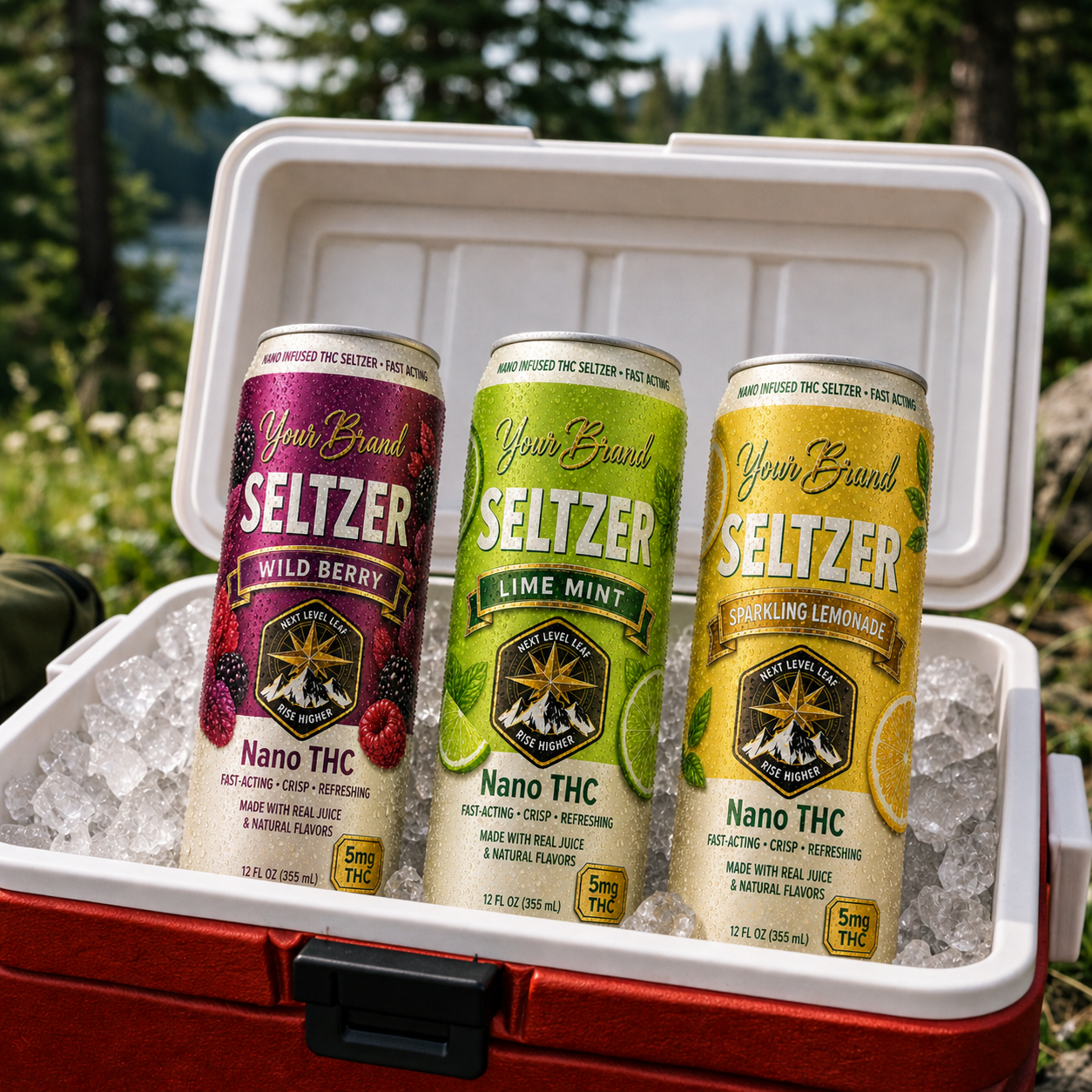
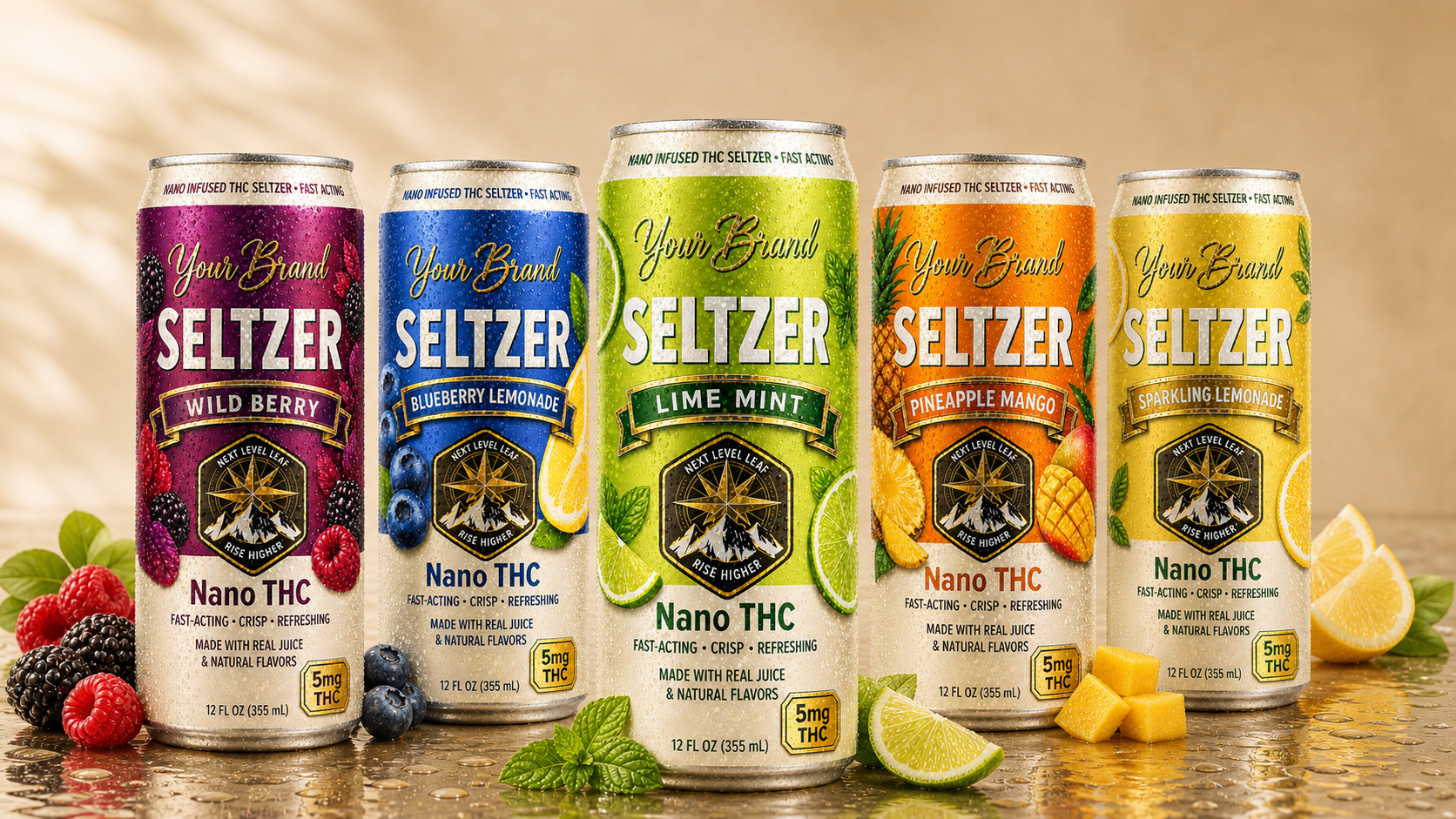
An established white-label beverage can give your brand a clear starting point for flavor, cannabinoid amount, packaging, and production. A custom beverage may require additional work on ingredients, flavor, packaging, testing, and the final production plan.
Co-packing
An outside facility manufactures, fills, packages, codes, and prepares the finished beverage for release or distribution.
White-label
An established beverage profile is available for your branding, with product and packaging choices that depend on the project.
Private-label
Often used like white-label, but it may imply a retailer-owned brand, additional customization, or a more exclusive product arrangement.
Custom formulation
A distinct beverage is developed around your preferred flavor, cannabinoid amount, ingredients, and customer experience.
Founder takeaway: Ask which product-development path the co-packer supports, what is included in each path, and who owns the resulting formula. Do not assume that every manufacturer uses “white-label,” “private-label,” or “custom” in the same way.
Four practical paths into THC beverage manufacturing
Most projects fit one of four starting points. The same manufacturing facility may support several of them, but the quote, responsibilities, lead time, and ownership can be very different.
| Path | Starting point | Brand control | Development work | Best fit |
|---|---|---|---|---|
| Established white-label beverage | An established formula or menu is already available. | Brand, artwork, selected flavor, dose, and available packaging choices. | Lowest when the existing product is used without material changes. | Fast validation, first launches, retailer tests, events, or founders prioritizing speed and lower complexity. |
| Customized white/private-label | An established beverage base is adapted to fit the project. | More control over dose, sweetness, flavor direction, cannabinoid blend, or selected functional ingredients. | Moderate; even a small change may require bench work, testing, or a new production specification. | Brands seeking differentiation without starting every formulation decision from zero. |
| Custom formulation + co-packing | The brand has a product concept but needs a finished formula. | Highest control over flavor, cannabinoid profile, sweetener, nutrition, mouthfeel, functional ingredients, and product experience. | Highest; includes R&D, sourcing, trials, validation, documentation, and scale-up. | Brands whose competitive advantage depends on a distinctive formula or consumer experience. |
| Formula transfer + co-packing | The brand already owns or controls a validated formula and wants a manufacturing partner. | High, subject to the facility’s equipment, ingredient, safety, process, and packaging capabilities. | Focused on feasibility, scale-up, sourcing, process translation, testing, and commercial validation. | Existing products changing manufacturers, increasing capacity, or moving from pilot to commercial production. |
Which path fits your current level of product readiness?
You know the customer and occasion, but not the formula
Compare established beverage options with your product concept. A white-label path may reduce the amount of formulation work needed to get started.
You know the flavor, dose, format, and target states
A customized base or custom formulation may fit. The manufacturer can evaluate which requested changes are simple selections and which create a new development project.
You have a bench formula, ingredient list, or prior sample
Discuss whether your existing formula can be adapted to the manufacturer's equipment, ingredients, packaging, and production process.
You are moving production or preparing to scale
Provide the complete formula, process, specifications, COAs, packaging, test methods, current production history, and known issues so the new facility can assess transfer risk.
When white-label is the smarter business decision
White-label is not automatically generic or low quality. It can be a disciplined way to test whether the market wants the product before the brand invests in a fully custom system.
- Speed matters: the beverage framework is already closer to production.
- The first goal is validation: you need sales, customer feedback, buyer reactions, and reorder evidence.
- The available product already fits: the dose, flavor, format, ingredient profile, and target states align with the brand.
- You want fewer early variables: reducing R&D and sourcing complexity can keep the team focused on packaging, distribution, and selling.
- You want to protect capital: a focused launch can reduce the cost of learning compared with an overbuilt first portfolio.
The tradeoffs of white-label
The brand may have less control over the base formula, ingredient substitutions, exclusivity, nutritional profile, sweetness, flavor intensity, packaging formats, or future formula transfer. Multiple brands may use the same or a similar beverage base. Those tradeoffs are acceptable when the product and commercial advantages still support the brand’s positioning.
When custom formulation is worth the additional work
A custom path makes sense when the beverage itself is the reason customers will choose the brand. That may include a unique flavor architecture, cannabinoid ratio, functional ingredient stack, nutritional profile, sweetness strategy, texture, coffee or tea system, real-fruit positioning, or performance target.
Customization is also important when an existing white-label menu cannot satisfy the target market, label requirements, dietary positioning, package format, ingredient restrictions, or consumer promise. In that situation, forcing the product into an available base may create a faster launch but a weaker brand.
How much can be changed before white-label becomes custom?
There is no universal line. Some manufacturers allow a defined menu of doses, flavors, sweeteners, cannabinoid blends, functional ingredients, and packaging options. Others treat almost any change as new formulation work.
A change that sounds small commercially may be significant technically. Increasing cannabinoid dose can affect flavor and input use level. Changing sweetener can alter body and aftertaste. Adding juice, minerals, mushrooms, adaptogens, nootropics, or botanicals can change pH, haze, stability, processing, label declarations, claims, and testing.
The quote should state whether each requested change is an available selection, a controlled customization, or a custom R&D project.
Formula ownership, exclusivity, and transfer rights
Formula rights can matter more than the terminology used to describe the project. Before paying for development, clarify what the brand receives and what it can do with the formula later.
- Base-formula ownershipDoes the manufacturer own the white-label base, or is it licensed from another formulator or ingredient supplier?
- Custom-work ownershipDoes the brand own the new formula, share ownership, receive exclusivity, or only have the right to buy the finished beverage?
- Transfer rightsCan the formula be produced elsewhere if the relationship ends, capacity changes, or the brand needs a second facility?
- ExclusivityIs any exclusivity based on flavor, formula, channel, geography, customer, or minimum purchase commitments?
- Ingredient changesHow will ingredient, supplier, or product changes be communicated to the brand?
- Confidentiality and documentationWhich formula, process, specification, test method, and supplier records will the brand receive?
Who is responsible for what?
A useful production plan makes clear what your brand handles, what the manufacturer handles, and which product details need to be discussed together.
Commercial and market decisions
Target customers, brand positioning, sales channels, label artwork, order volume, delivery needs, and the plan for selling the finished beverage.
Beverage manufacturing
Product feasibility, ingredients, batching, filling, packaging, production records, lot identification, and the testing included in the project.
Product and delivery details
Flavor, cannabinoid amount, ingredients, packaging, testing, production timing, freight, storage, and the expected delivery plan.
How packaging changes the path, MOQ, and timeline
Packaging can drive the project as much as the beverage. Pressure-sensitive labels may support a more flexible first run, while sleeves, digital printing, printed cans, cartons, and custom components can introduce separate minimums, setup costs, proofing, and lead times.
Ask who provides the cans, labels, trays, cartons, and other packaging, and whether any materials require their own minimum order. A beverage production minimum and a packaging minimum are not always the same.
How the paths affect cost and timeline
| Cost or timing driver | Established white-label beverage | Customized or custom path |
|---|---|---|
| R&D | Often lower when the existing beverage profile fits the product. | Higher when bench work, ingredients, sensory rounds, revisions, or scale-up are required. |
| Ingredients | Often more predictable when familiar ingredients are already used in production. | New suppliers, minimums, lead times, substitutions, or qualification may be required. |
| Packaging | Fastest when the product fits standard cans, labels, trays, and case configurations. | Custom components, printed cans, sleeves, cartons, or bottle formats may control the schedule. |
| Testing and validation | The base may have production history, but the branded finished product still needs the agreed testing and release process. | May require compatibility, potency, sensory, stability, packaging, process, and finished-product validation. |
| Information needed for pricing | Higher when the menu, dose, package, and quantity are selected. | Depends on how clearly the product brief, formula, ownership, ingredients, packaging, and acceptance criteria are defined. |
Choose the right commercial order and production scale
Approximately 1,200 cans per SKU, or 50 cases of 24, is the normal commercial starting point. This gives a brand inventory for initial accounts, product samples, customer feedback, and reorder planning. A selective 360-can prototype may be available for qualified projects that need an initial product-evaluation run.
Established brands, retailers, and distributors can plan larger orders, multiple SKUs, and recurring production around actual customer demand, packaging, delivery requirements, and inventory needs.
Review THC beverage MOQ, beverage pricing, and scaling production before deciding how much inventory the launch should carry.
Quality, testing, and compliance do not disappear with white-label
An established beverage can reduce formulation work, but each project still needs a clear plan for product testing, batch documentation, packaging, labeling, storage, and freight. Ask which testing and documentation are included in your specific quote.
The manufacturer should be able to explain its production and documentation process. The brand should confirm that the product, dose, package, label, claims, and sales channel fit each target state. Review beverage quality control and the State Resources hub as part of launch planning.
What a useful manufacturing quote should make clear
- Product pathWhite-label, customized base, custom formulation, or formula transfer.
- Formula scopeFlavor, dose, cannabinoid inputs, sweeteners, functional ingredients, nutrition, and acceptance criteria.
- OwnershipFormula rights, exclusivity, transfer rights, confidentiality, substitutions, and change control.
- PackagingCan or bottle, size, labels or decoration, trays, cartons, sourcing, proofs, minimums, and storage.
- Quantity and pricingPrototype quantity, production MOQ, unit cost, setup, R&D, testing, packaging, freight, and other project charges.
- ScheduleDependencies, ingredient lead times, artwork deadlines, testing, production window, and release timing.
- Testing and documentationAny product testing, batch records, certificates of analysis, and documentation included in the quote.
- LogisticsCase pack, pallet configuration, storage, pickup, freight, delivery conditions, and remaining components.
What should you prepare before requesting a quote?
- Beverage format and whether it is still, sparkling, coffee, tea, soda, seltzer, lemonade, juice, mocktail, or functional.
- Current formula status: product concept, established beverage profile, customized base, sample formula, or existing commercial product.
- Target flavor, sweetness, cannabinoid dose and ratio, functional ingredients, dietary requirements, and desired sensory experience.
- Can or bottle size, decoration method, artwork status, case pack, and any custom secondary packaging.
- Target states, channels, serving structure, claims, and planned launch sequence.
- Number of SKUs, prototype needs, first-run quantity, growth forecast, and desired launch date.
- Formula ownership, exclusivity, transfer, ingredient sourcing, testing, and documentation expectations.
- Shipping destination, receiving conditions, storage needs, and preferred freight plan.
Common mistakes when comparing co-packers and white-label programs
- Treating the terms as standardized: two manufacturers may use the same label for very different scopes.
- Comparing only the per-can price: R&D, ingredients, testing, packaging, setup, freight, storage, and leftover components can change the true project cost.
- Ignoring formula rights: paying for development does not automatically mean the brand owns or can transfer the formula.
- Assuming one change is simple: a new dose, sweetener, ingredient, or package can create a new formula and validation path.
- Over-customizing the first lineup: too many SKUs multiply artwork, packaging, ingredient, testing, production, and inventory decisions.
- Starting without target states: dose, ingredients, serving structure, package, label, and channel need a market context.
- Choosing speed over product fit: a fast launch is not an advantage if the available beverage does not support the brand promise.
Choose the path that fits your customer. An established beverage may be the right starting point when your advantage is your brand, audience, or sales channel. Custom formulation can make sense when a distinct flavor, ingredient combination, or product experience is essential.