White-label infused & functional beverage manufacturing
Built for brands, visionaries, and industry leaders.
White-Label • Co-Packing • Packaging • Production Planning

THC Beverage Manufacturing

Manufacturing is where a beverage concept becomes a real commercial product. This page helps founders understand how white-label beverage production works, what co-packing actually means, and how to think more clearly about MOQ, packaging, and launch readiness.

If you are trying to bring a beverage to market without building your own facility, this category is designed to help you understand the most practical production path.

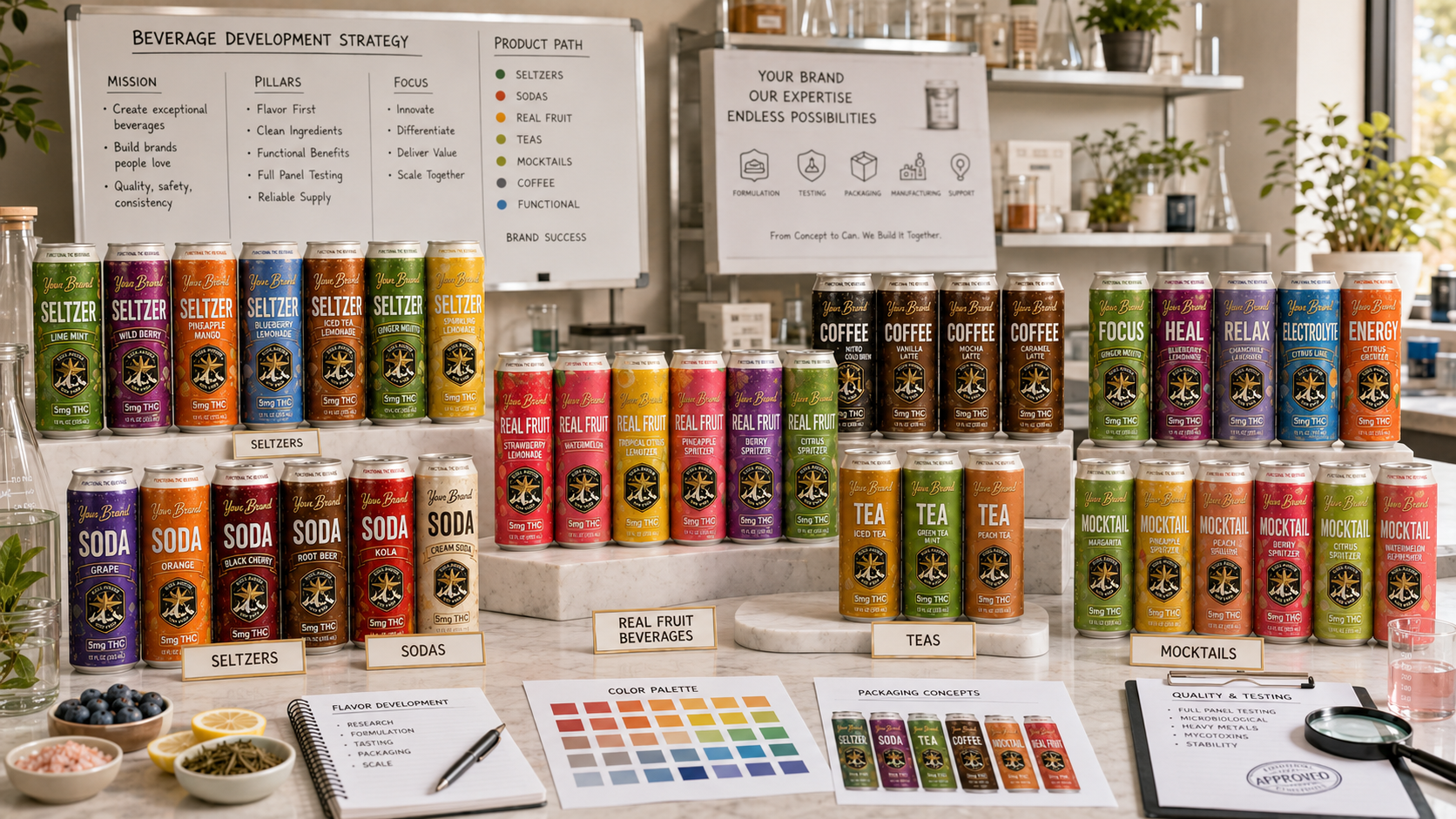
white-label THC beverage manufacturing lineup with multiple infused seltzer cans

A strong manufacturing path helps connect your concept, formula, packaging, testing, COAs, MOQ, and finished inventory plan.

THC beverage manufacturing is not just about finding someone who can fill cans. It is about choosing a production path that supports your concept, fits your budget, protects your quality, and gives your brand a realistic way to get finished inventory into the market.

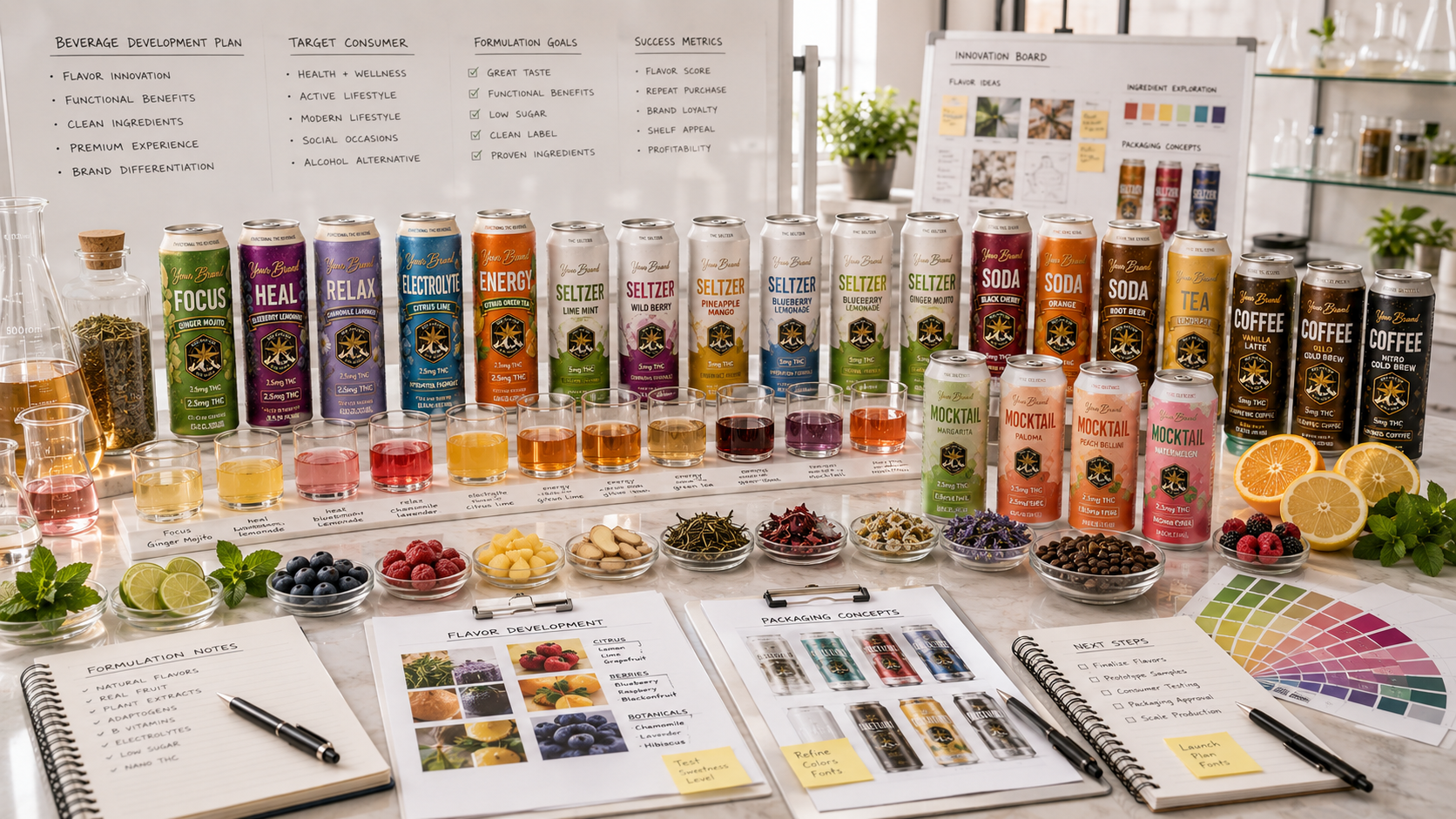
ready-to-drink THC beverage cans in cooler for white-label beverage manufacturing planning
The manufacturing conversation becomes much more useful when your beverage format, dose, packaging, and launch plan are clear enough to scope.

What this category covers

The manufacturing decisions founders need to get right

This category is here to help founders understand how production works in the real world, so they can make better decisions before committing to packaging, order size, or launch timelines.

White-label vs custom production

One of the first decisions is whether to move faster with a proven white-label path or take on more development complexity with a custom concept.

  • Why white-label can reduce friction
  • When custom development makes sense
  • How each path affects speed to market
  • Why early-stage brands often do better with focus

MOQ and first-run planning

Minimum order quantity shapes risk, inventory, cost structure, and how practical your first production run really is.

  • Why MOQ is a manufacturing reality
  • How MOQ affects startup exposure
  • What a sensible first run looks like
  • Why not all “small runs” are equally useful

Packaging and production readiness

Manufacturing does not begin with the filler line. It begins with making sure the product, packaging, and launch plan are aligned well enough to move into production cleanly.

  • Can format and label readiness
  • Why packaging affects perceived quality
  • How production and packaging connect
  • Why founders need to think operationally early

Production that can actually scale

A founder needs more than a concept. They need a manufacturing path that can support repeat production, commercial consistency, and future expansion.

  • Consistency matters as much as creativity
  • Why repeatability protects the brand
  • How scalable production supports growth
  • Why the right partner matters

Manufacturing guides

Explore the production decisions behind a stronger launch

Use these guides to go deeper on the major manufacturing decisions that affect speed to market, first-run planning, quality, documentation, and future scale.

Production path

Co-packing vs white-label

Compare the production paths available to beverage founders so you can decide whether your brand needs white-label speed, private-label control, co-packing support, or custom formulation.

Production flow

Beverage production process

See how a THC beverage moves from product definition and formulation into packaging, production scheduling, filling, testing, COAs, and finished inventory.

Growth planning

Scaling production

Think through pilot runs, reorders, larger production volumes, inventory risk, unit economics, and how to avoid scaling before the product has enough market feedback.

Documentation

Beverage quality control

Understand how ingredient review, production checks, finished-product testing, COAs, batch documentation, packaging review, and issue tracking support a more credible brand.

If you are not sure which production path fits your project, start by defining the beverage format, target dose, packaging status, and launch quantity. Those details usually make the best path much clearer.

Why this matters to founders

Manufacturing should make the launch easier, not harder

The goal is not just to produce a beverage. It is to launch something real, repeatable, and commercially viable without getting trapped in unnecessary operational drag.

Protect quality and brand credibility

Your manufacturing path affects taste, consistency, packaging execution, testing, documentation, and the overall professionalism of the finished product. That shapes how the brand is perceived from the first can forward.

Quote readiness

What to clarify before you request a manufacturing quote

You do not need every answer finalized. But the quote conversation gets much more useful when the product direction is specific enough to evaluate.

Step 1

Choose the format

Is this a seltzer, soda, tea, coffee, mocktail, still fruit drink, functional beverage, or something else?

Step 2

Define the dose

Clarify the target THC, CBD, CBG, CBN, or other cannabinoid dose per can or serving.

Step 3

Review packaging

Know whether you are using labels, printed cans, shrink sleeves, bottles, trays, cases, or other packaging.

Step 4

Request a quote

Share the product concept, target states, estimated volume, and timeline so the project can be scoped properly.

Related launch resources

Connect manufacturing with formulation, format, and launch planning

Manufacturing works best when it is connected to formulation, product category, compliance documentation, and quote readiness.

FAQ

Questions about THC beverage manufacturing

These answers help founders understand the production path before they request a quote.

THC beverage manufacturing is the process of turning an infused drink concept into a finished, packaged, tested, and documented beverage that can be sold, reordered, and scaled.
White-label production usually uses a more production-ready beverage framework that can be branded for your company. Co-packing usually means a manufacturer produces a more defined product or formula for your brand.
MOQ is affected by beverage format, can or bottle size, ingredients, cannabinoid dose, packaging, labeling, testing, production setup, and whether the project uses a house formula or custom development.
Prepare the product format, flavor direction, target cannabinoid dose, can or bottle preference, packaging status, target states, expected launch quantity, timeline, and whether you want a white-label, private-label, co-packing, or custom formulation path.
A strong manufacturing strategy can support multiple formats over time, but each product format has different production, ingredient, packaging, testing, and stability considerations. Seltzers, sodas, teas, coffees, mocktails, and functional beverages should each be scoped around their own product requirements.

Ready to turn your beverage concept into finished inventory?

If you are evaluating a white-label production path, first-run planning, or the most practical way to launch a real beverage brand, the next step is to share what you want to build.