

THC Soda Manufacturing for Flavor-Forward Beverage Brands
Launch a branded THC soda with an established house formula, develop a custom soda, or bring a production-ready formula you already have.
We can produce an initial commercial run of about 1,200 cans per SKU, then keep producing as demand grows, from repeat multi-pallet orders to 100,000+ can programs. We can also help with packaging, testing, COAs, freight, and reorders.
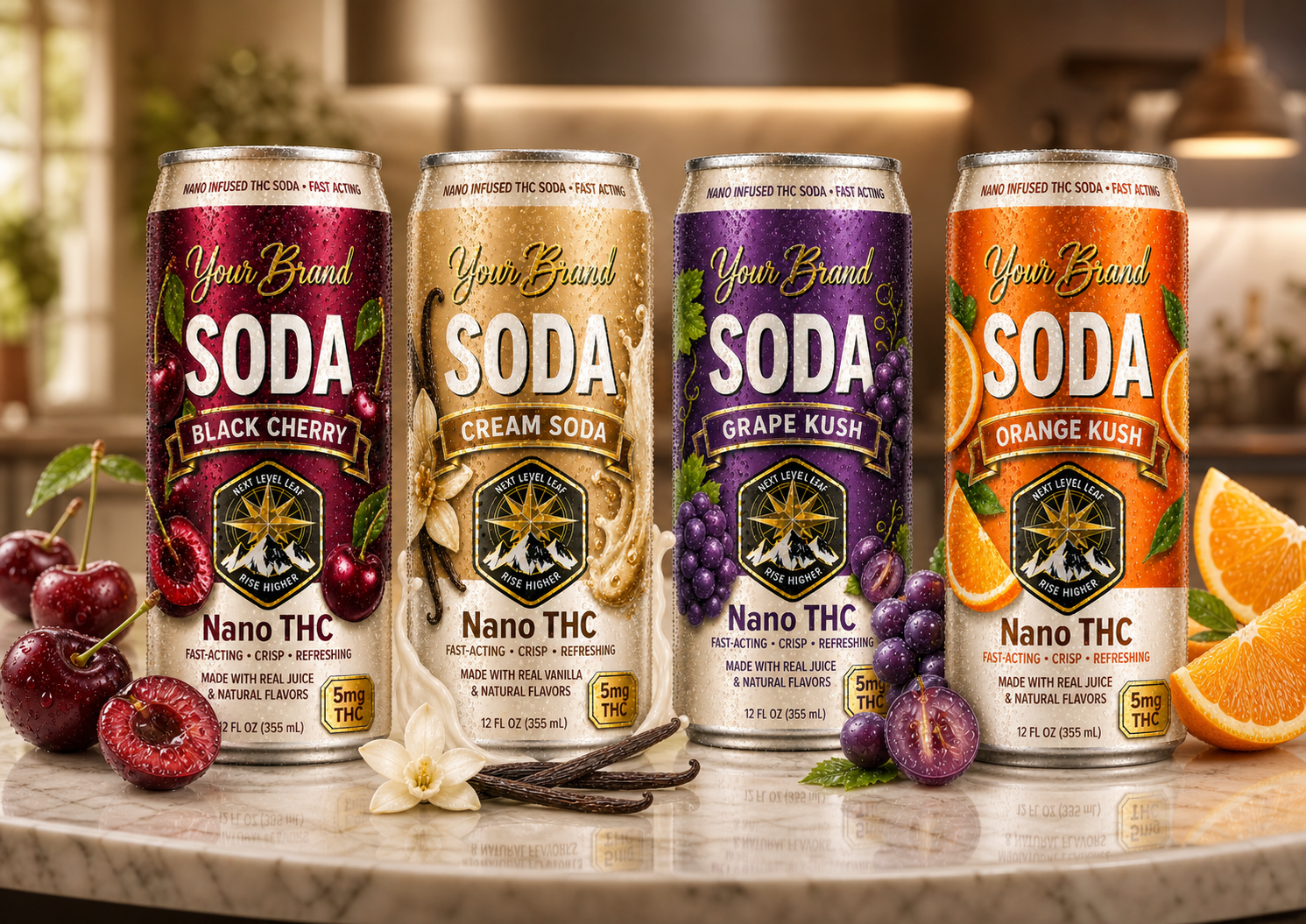
THC soda gives you a familiar beverage format with bold flavor, recognizable shelf appeal, and more room for flavor masking than a very light sparkling drink. Our current house soda flavors include Orange, Root Beer, Diet Cola, Cola, Black Cherry, Grape, Cream Soda, Citrus Burst, and Lemon-Lime. If you want something different, we can develop a custom soda.
Most commercial orders start at about 1,200 cans per SKU. If you want to test the product first, a 360-can prototype may also be available. From there, we can move into repeat orders, multiple pallets, and much larger runs as sales grow.
Three ways we can make your THC soda
You do not need a finished recipe before you contact us. You can start with one of our house sodas, create something custom, or bring us a formula you already have.
Start with a house soda formula
Choose one of our established soda flavors and make it your own with your dose, cannabinoid profile, packaging, branding, and other product details.
Develop a custom soda
If you want a flavor or formula outside our house options, we can develop it around the taste, sweetness, cannabinoids, and functional ingredients you want.
Bring a production-ready formula
Already have a production-ready formula? Send us the formula and specifications and we can review what is needed to manufacture it, package it, test it, and produce the quantity you need.
Available house soda flavors
These flavors give you a faster way to launch because the base beverage work is already done. We confirm the exact formula and availability when we quote the project.
Orange
Bright, familiar citrus soda with strong consumer recognition.
Root Beer
Rich, nostalgic root beer with a flavor customers already recognize.
Diet Cola
A diet-cola option for brands that want that familiar cola taste.
Cola
Classic cola flavor with broad recognition.
Black Cherry
Bold black cherry with a richer fruit flavor.
Grape
Bold, nostalgic flavor that works naturally in a full-bodied soda format.
Cream Soda
Smooth vanilla-forward profile with classic soda character.
Citrus Burst
Brighter, more intense citrus for a bolder soda.
Lemon-Lime
Crisp, familiar lemon-lime with a lighter finish.
See what the soda line can look like
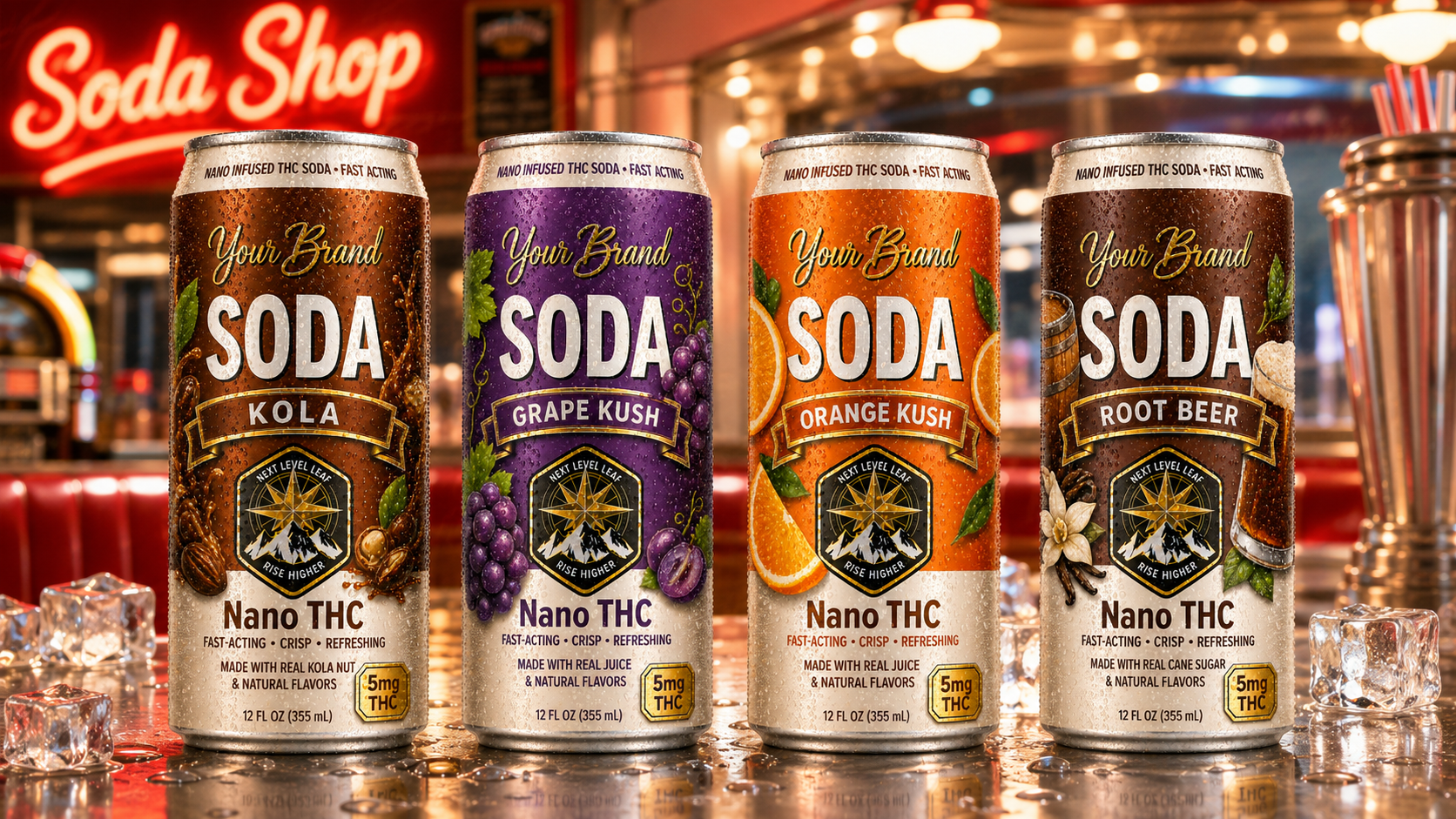
These images show several of the familiar flavors that can make up a branded THC soda line.
 Classic
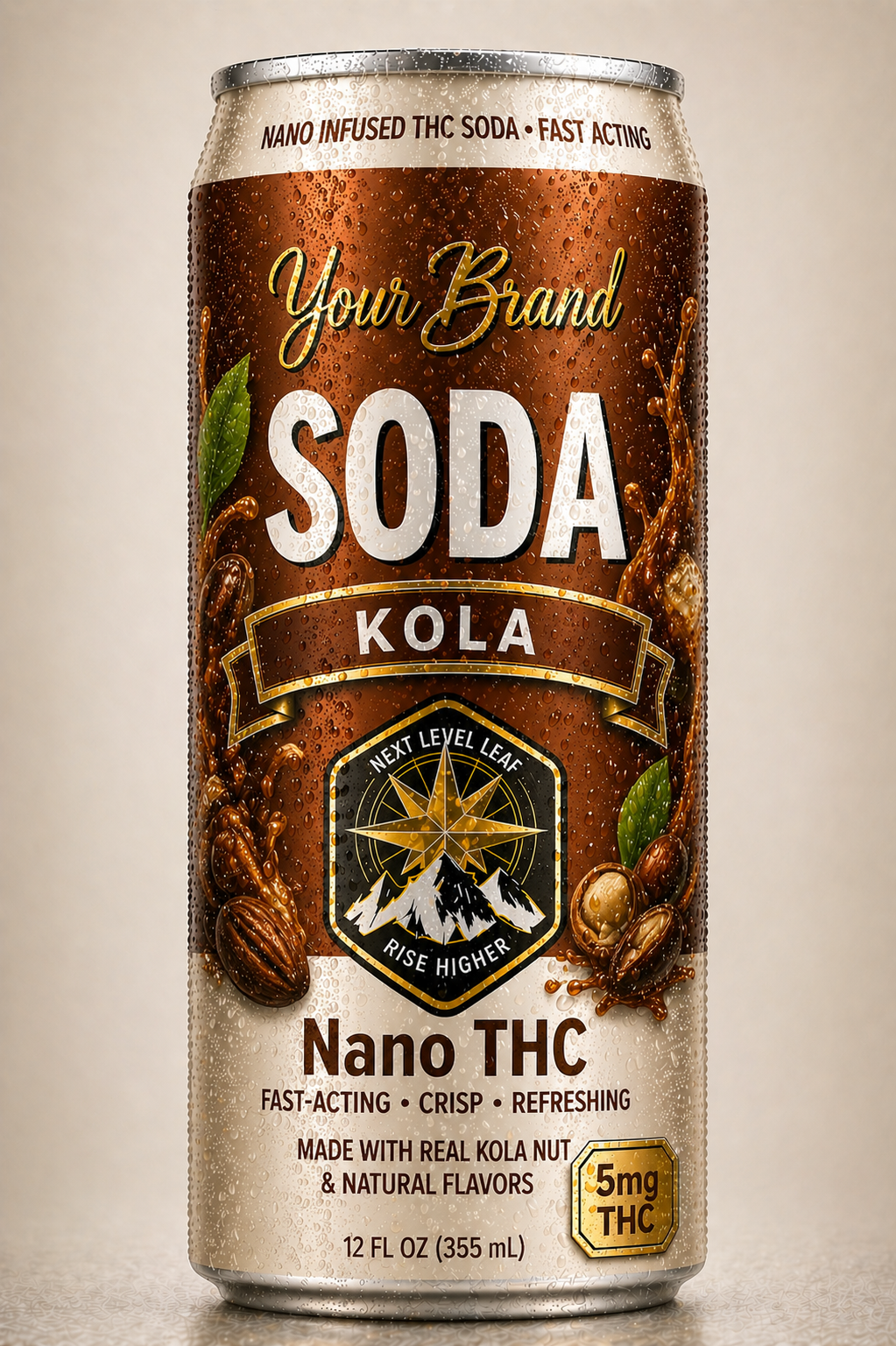
Cola
Classic cola flavor that gives the lineup a familiar anchor.
 Bright
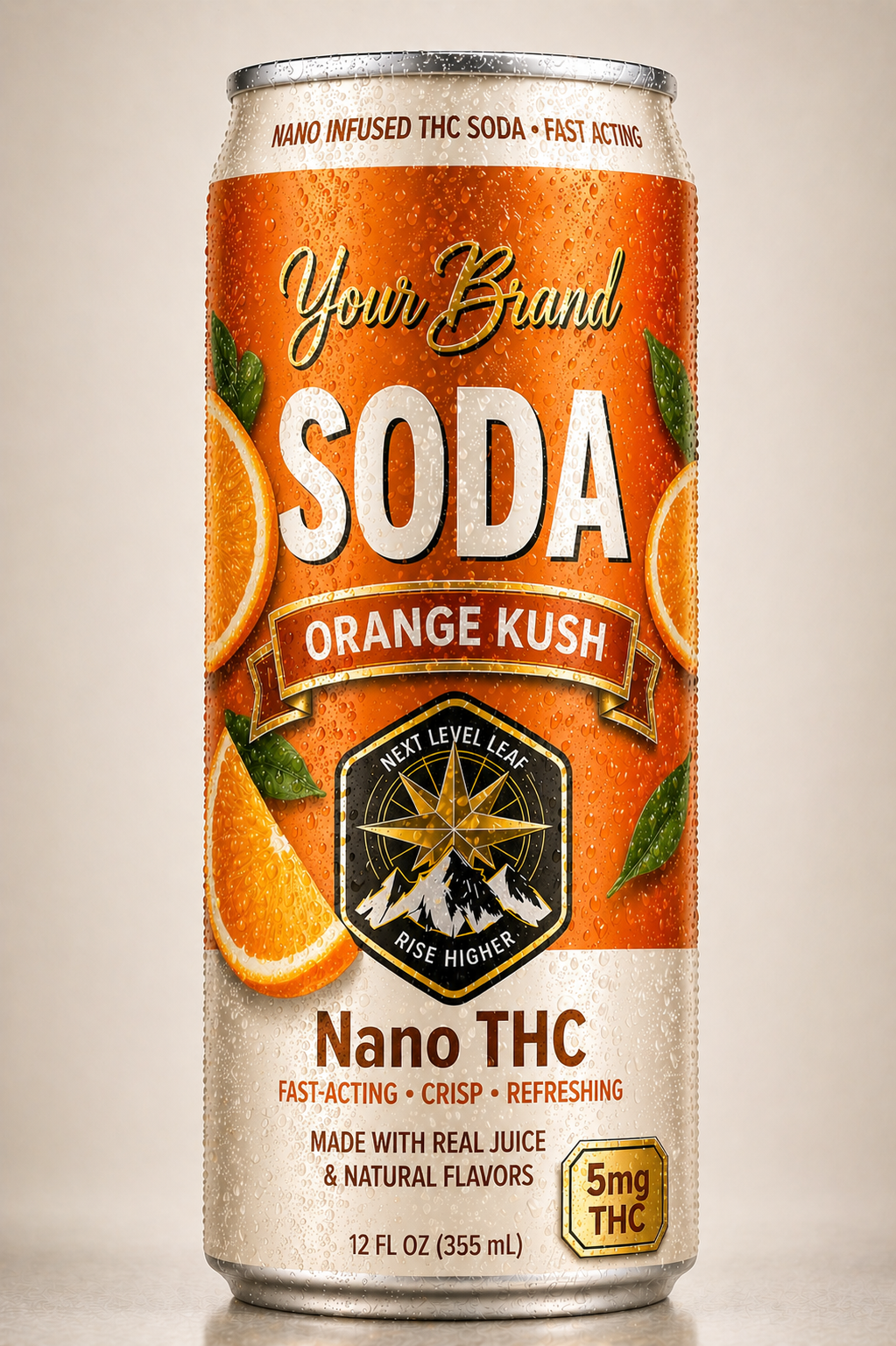
Orange
Bold citrus flavor that communicates quickly on shelf and in a cooler.
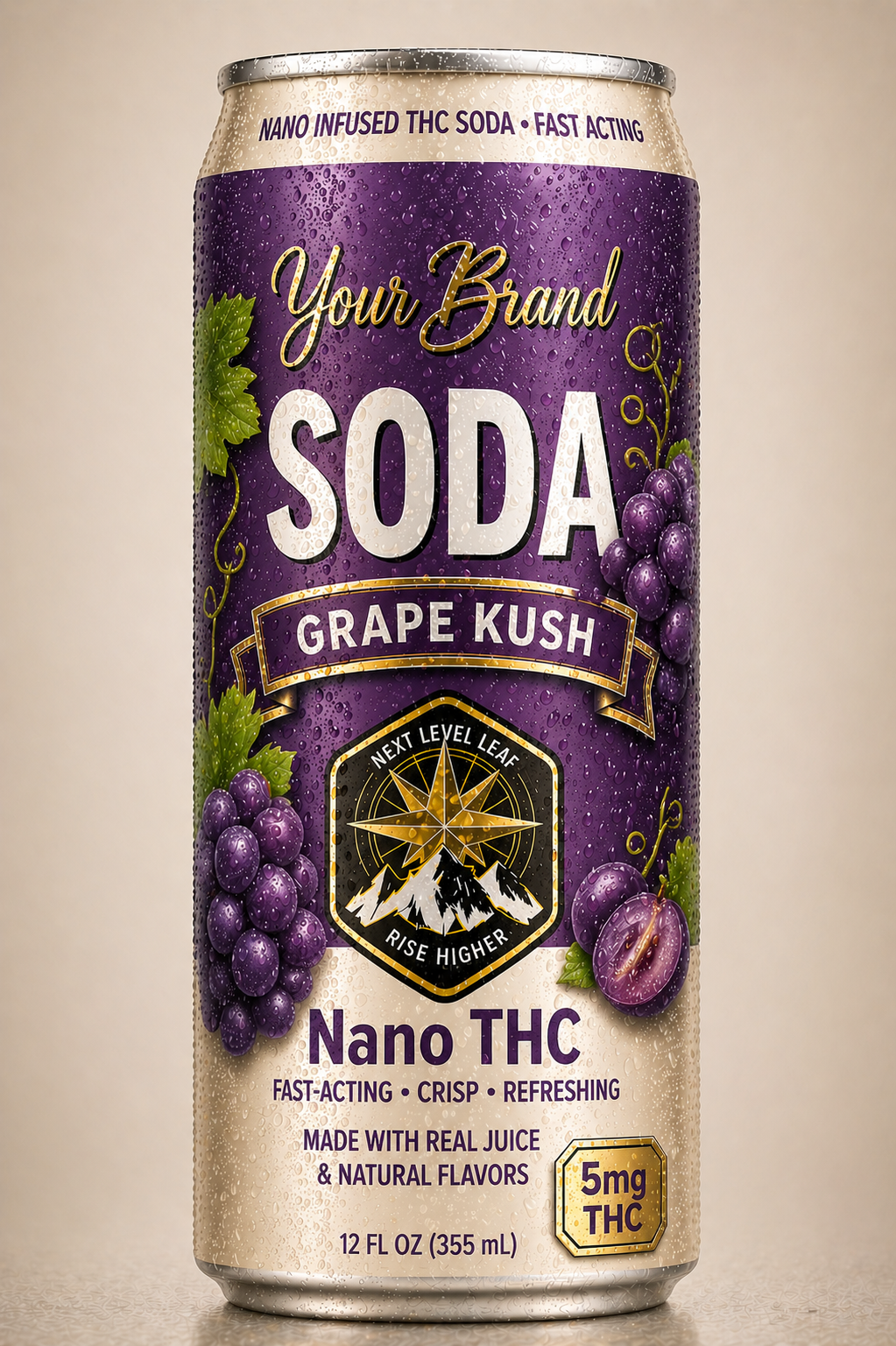 Bold
BoldGrape
Nostalgic, full-flavor soda with plenty of personality.
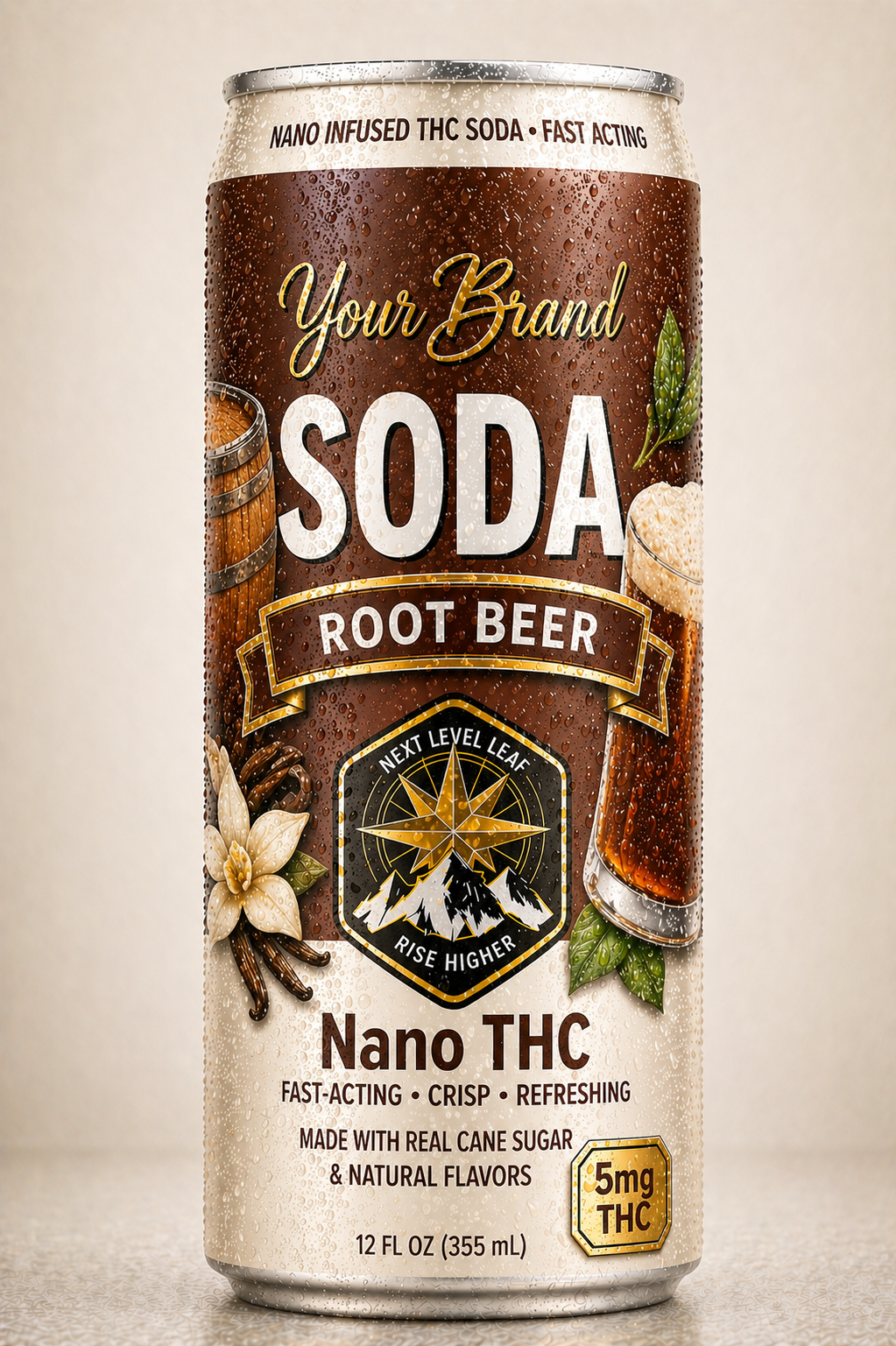 Rich
RichRoot Beer
Distinctive root beer flavor with a richer, more adult soda feel.
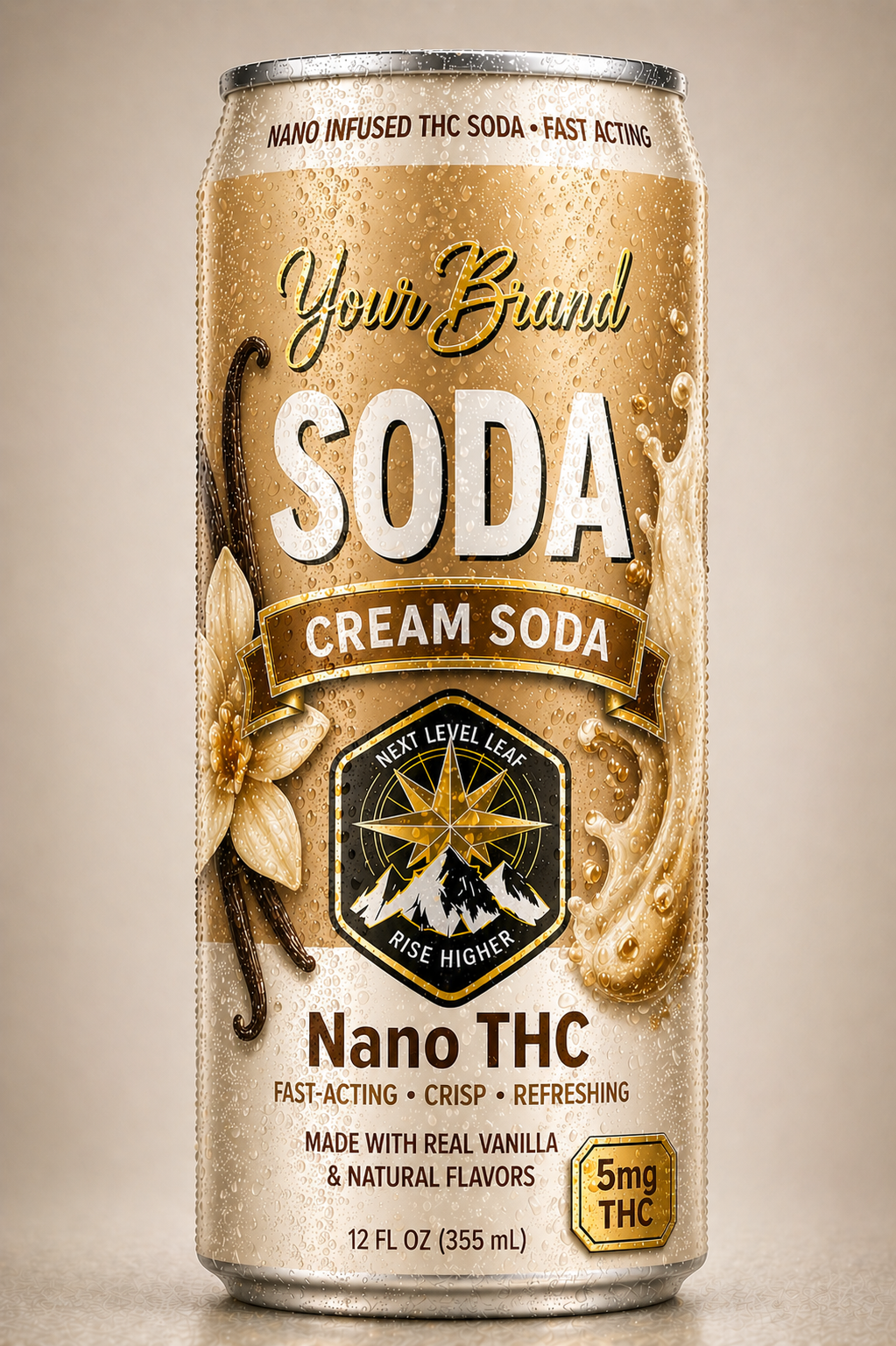 Smooth
Cream Soda
Smooth vanilla-forward cream soda with broad nostalgic appeal.
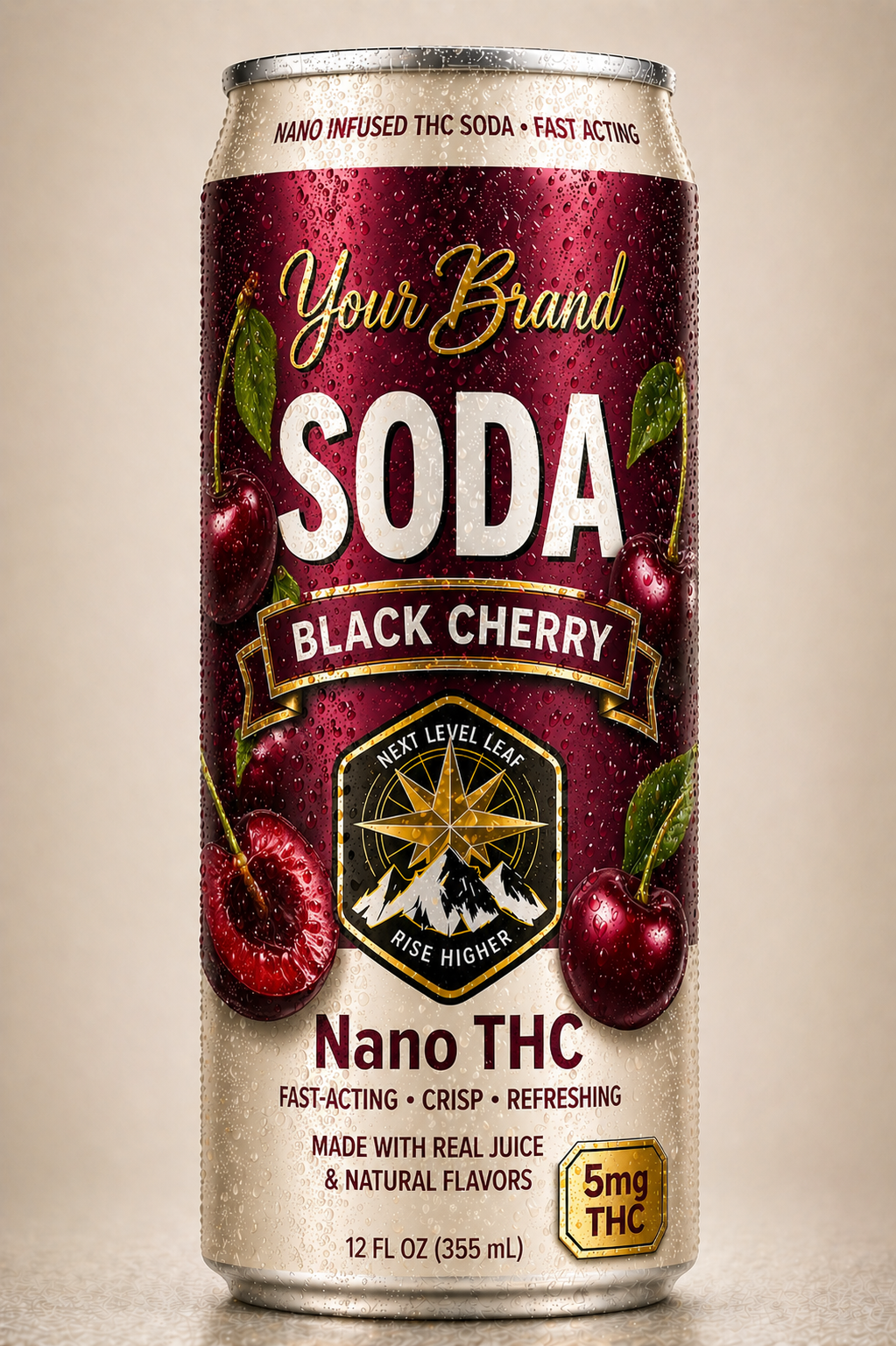 Fruit-forward
Black Cherry
Bold black cherry that feels familiar but a little more distinctive.
Why choose soda instead of seltzer or a mocktail?
Soda is usually fuller, sweeter, and more flavor-forward than seltzer, while still feeling more familiar and straightforward than a cocktail-inspired mocktail.
| Format | Best fit | Typical experience | Main product decision |
|---|---|---|---|
| THC soda | Bold flavors, retail recognition, nostalgia, stronger flavor masking | Familiar, full-bodied, flavor-forward | How sweet, bold, and classic should the product feel? |
| THC seltzer | Light, crisp, social sipping | Clean, refreshing, modern | How light and minimal should the beverage be? |
| THC mocktail | Cocktail-inspired alcohol alternative | Adult, premium, occasion-driven | What drinking occasion should the product own? |
Compare adjacent formats in Infused Seltzers, Seltzer vs. Soda THC, and Infused Mocktails.
What can be customized?
Starting with a house formula does not mean simply putting your label on the exact same product. Depending on the beverage, we can adjust things such as dose, cannabinoid profile, sweetness, packaging, branding, and selected functional ingredients. If you want a larger formula change, we can move into custom development.
Cannabinoid profile
Choose the THC dose and any selected cannabinoids you want to include.
Flavor and sweetness
Use one of our established flavors or develop a different flavor if you want something more specific.
Labels or printed cans
Pressure-sensitive labels are usually the fastest and most flexible option for an initial run. Printed cans are also available when the volume and timing make sense.
Make it look and feel like your brand
Use your own branding, flavor names, and package design so the finished soda feels like your product, not ours.
Start at the volume that makes sense, then scale
360 cans
A 15-case prototype may be available if you want to test the soda before a full commercial run.
1,200 cans per SKU
Our common first commercial run is 1,200 cans per SKU, or 50 cases of 24.
Multi-pallet to 100,000+
As sales grow, we can move into repeat orders, multiple pallets, and larger programs of 100,000+ cans.
What happens before we make your soda
Once you know which soda you want to make, we confirm the details needed to put it into production.
Confirm the formula, packaging, and order details
Before production, we confirm the formula, quantity, can and label choice, artwork, testing, and shipping destination.
Pressure-sensitive labels are usually the fastest and most flexible option for an initial commercial run. Printed cans are also available when the volume and timing make sense.
What we need to quote a THC soda project
You do not need finished artwork or every detail finalized. The fastest way to get useful pricing is to share the product information that actually changes the manufacturing quote.
Product details
Tell us the flavor you want, the THC or cannabinoid amount per can, and whether you want to use a house formula, develop something custom, or provide your own formula.
Order details
Tell us how many cans you want per flavor, whether you have a packaging preference, when you would like to produce, and where the finished product is shipping.
Most commercial orders start at about 1,200 cans per SKU. If you want to start smaller, tell us. A 360-can prototype may be an option.
Core THC soda resources
THC Soda Manufacturing
See how THC soda moves through formulation, packaging, production, testing, and commercial manufacturing.
Explore manufacturing →White-Label THC Soda
See how an established soda formula can become a beverage sold under your brand.
Explore white-label soda →Best THC Soda Flavors
Compare the available soda flavors and decide which ones fit your brand.
Explore soda flavors →Beverage Pricing
Understand how formula, ingredients, quantity, packaging, testing, and freight affect the quote.
Review pricing →Custom Formulation
Use custom development when you want a flavor or ingredient combination that is not part of our house formulas.
Explore formulation →Request a THC Soda Quote
Share the flavor, dose, quantity, packaging, timing, and shipping destination for your project.
Discuss your soda →Frequently asked questions
Ready to put your THC soda into production?
Tell us which flavor you want, how many milligrams per can, how many cans per flavor, where it needs to ship, and whether you want a house formula, custom development, or to use your own formula. We can take it from there.
Want to see more THC beverage insights from Next Level Leaf in Google?
Add Next Level Leaf as a Preferred Source so our newest soda manufacturing guides, beverage launch resources, and market updates are easier to find in supported Google Search and AI experiences.
Your Google source preferences stay under your control and can be changed at any time.