

White-Label THC Soda for Retail-Ready Beverage Brands
White-label THC soda gives founders a faster path to launch a familiar, flavor-forward infused beverage without starting every production decision from scratch.
This guide explains how beverage brands can use white-label or private-label soda manufacturing to launch cola, orange, grape, root beer, cream soda, black cherry, and other soda-style THC drinks with clearer planning around flavor, dose, packaging, testing, COAs, MOQ, and quote readiness.
White-label THC soda is a soda-style infused beverage that can be produced under your brand using a more production-ready formulation and manufacturing pathway.
For founders, this can reduce launch friction by helping the project start from proven beverage architecture instead of a fully custom R&D blank slate. The key decisions are flavor direction, THC dose, can size, packaging, target states, testing, COAs, MOQ, timeline, and whether the product should stay white-label or move toward more private-label customization.
Why white-label THC soda can be a strong starting point
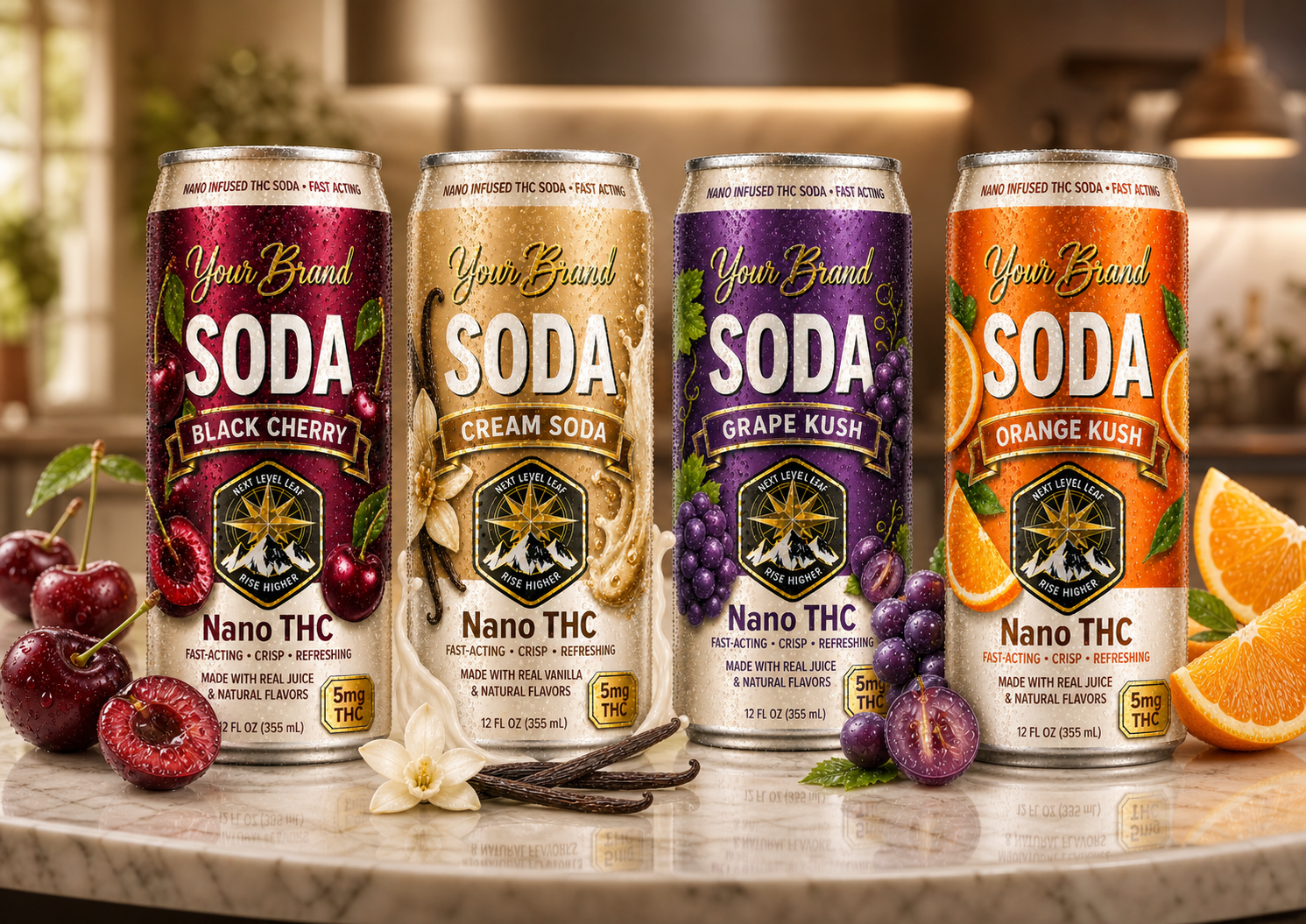
Soda is one of the easiest beverage formats for consumers to recognize quickly. That makes it a practical format for founders who want a THC beverage that feels familiar, flavorful, and retail-ready from the first impression.
White-label soda can be especially useful when the goal is to test a product family, validate demand, build retail relationships, or create a faster first production run before investing in more complex custom development.
Faster launch path
Starting with a more production-ready soda path can reduce the complexity of getting to a quote and first run.
Easy to understand
Cola, orange, grape, root beer, cream soda, and black cherry are familiar formats that do not require much explanation.
Built for bold taste
Soda’s stronger flavor architecture can support cannabinoid flavor balancing better than very light sparkling beverages.
Test before scaling
A founder can use an initial white-label run to learn what customers reorder before investing in larger custom development.
White-label vs private-label vs custom soda development
These terms often overlap, but the strategic difference matters. A founder should choose the path that matches the desired level of speed, control, uniqueness, and launch risk.
| Path | Best Fit | Founder Advantage | Tradeoff |
|---|---|---|---|
| White-label THC soda | Brands that want a faster path using familiar soda-style options. | Lower launch friction and faster quote readiness. | Less uniqueness than a fully custom flavor system. |
| Private-label THC soda | Brands that want more control over flavor, dose, packaging, or positioning. | Balanced speed and customization. | May require more planning and iteration than pure white-label. |
| Custom THC soda | Brands that need a proprietary flavor, special sweetener system, functional stack, or unique format. | Highest differentiation potential. | More R&D time, cost, and development risk. |
Flavor directions that fit white-label THC soda
White-label THC soda works best when the flavor is easy to understand, commercially familiar, and strong enough to support the infused beverage experience. That is why classic soda profiles are often a smart starting point.
Kola / Cola
A familiar anchor flavor with broad recognition and mainstream soda logic.
Orange Soda
A citrus-forward flavor that communicates quickly and feels immediately understandable.
Grape Soda
A nostalgic fruit-forward option with strong flavor identity and shelf impact.
Root Beer
A classic spiced profile that can feel more distinctive and craft-oriented.
Cream Soda
A softer vanilla-forward profile that supports a nostalgic adult soda experience.
Black Cherry
A darker fruit profile that can feel bold, premium, and adult-oriented.
What needs to be decided before a white-label soda quote
A good quote depends on product clarity. The manufacturer needs to understand the beverage concept, dose, packaging path, sales geography, and expected volume before pricing can be scoped responsibly.
Choose the flavor family
Start with one or more soda directions such as cola, orange, grape, root beer, cream soda, or black cherry.
Define the dose
Clarify the intended THC amount per can and whether the product should feel low-dose, moderate-dose, or market-specific.
Map the market
Identify target states, retail channels, and whether the beverage needs to align with specific state expectations.
Prepare the brand assets
Know whether you already have labels, can design, brand guidelines, and packaging direction or need help shaping them.
Founder takeaway: White-label does not mean generic. A smart white-label soda launch still needs disciplined flavor selection, clear adult-oriented packaging, batch-specific documentation, finished-product testing, and a sales strategy that fits the intended market.
How white-label THC soda supports faster market testing
One of the strongest reasons to choose a white-label soda path is speed to real customer feedback. Instead of spending months trying to perfect a proprietary formula before learning whether the market wants it, a founder can start with a more familiar format and test the core assumptions.
The first launch can help answer practical questions: Which flavor gets the best response? Does the dose match the customer? Does the packaging communicate clearly? Are retailers interested? Does the product reorder? Those answers can shape whether the next step should be a larger run, a second flavor, a private-label refinement, or a custom R&D project.
Build for the cooler and the buyer
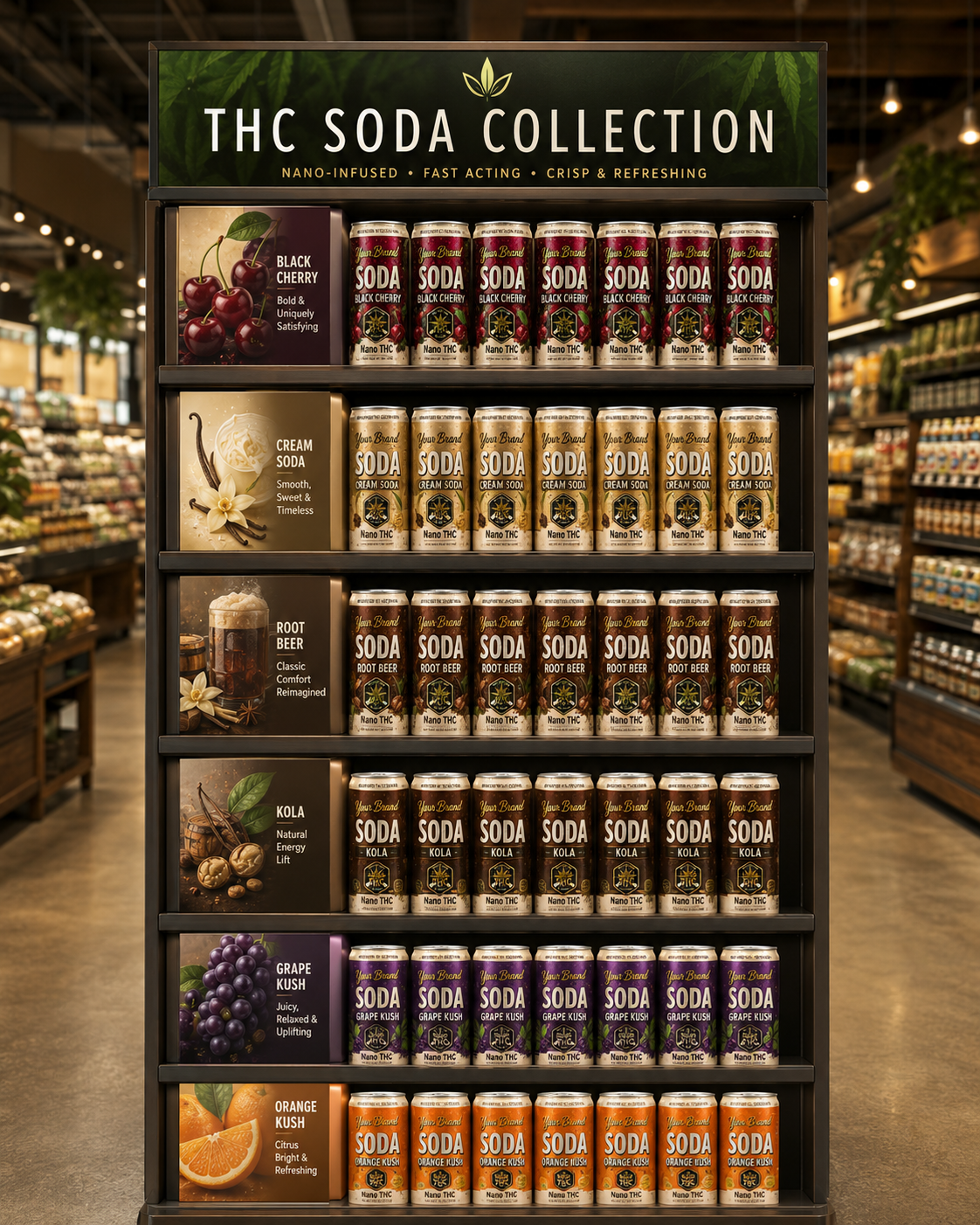
A white-label THC soda should not only taste good. It should be easy for a retailer, distributor, or buyer to understand. The flavor, dose, label, COA workflow, and adult-oriented packaging should all work together.
The goal is a product that can be sampled, explained, displayed, reordered, and expanded into a broader flavor lineup over time.
Testing, COAs, and documentation still matter
White-label manufacturing should never mean weak documentation. Serious infused beverage brands need finished-product testing, batch-specific COAs, lot traceability, and packaging that communicates the product clearly and responsibly.
- Finished-product testing: supports dose verification and brand confidence.
- Batch-specific COAs: help retailers and buyers evaluate the finished product.
- Lot traceability: supports professional production standards and future scale.
- Adult-oriented packaging: helps the product feel credible and responsible.
- Clear THC disclosure: helps customers and buyers quickly understand the serving size.
For broader planning, review the Next Level Leaf compliance approach and the state resources hub.
When white-label soda is the right path
White-label THC soda is usually a strong fit when the founder wants to move from concept to market validation quickly, especially if the product can be built around a familiar soda flavor family.
You want speed
You want to launch or quote faster rather than spend months in custom flavor development.
You want classic flavors
Your brand can start with cola, grape, orange, root beer, cream soda, black cherry, or a similar familiar soda direction.
You want market feedback
You want to learn what customers and retailers respond to before investing in a fully custom product family.
When private-label or custom development may be better
White-label is not always the right answer. A private-label or custom path may make more sense when the product must own a highly specific flavor identity, special ingredient stack, sugar target, functional positioning, or proprietary beverage experience.
The best path is not always the fastest path. The right decision depends on the brand’s launch goals, budget, timeline, desired differentiation, and market strategy.
MOQ, cost, and quote readiness
The cost of a white-label THC soda depends on the dose, can size, ingredient costs, packaging, testing, freight, production quantity, and how much customization is required. A cleaner product brief usually leads to a more useful quote.
Before requesting a quote, prepare:
- Preferred soda flavor or flavor family.
- Desired THC dose per can.
- Target states and sales channels.
- Can size and packaging status.
- Estimated order quantity or launch goal.
- Timeline and any event, retail, or seasonal deadline.
- Whether the project should be white-label, private-label, or custom developed.
THC Soda Manufacturing
Understand the production path behind white-label and private-label soda launches.
Review manufacturing →THC Beverage MOQ
Learn how launch volume affects pricing, inventory, and first-run planning.
Understand MOQ →Request a Quote
Share your soda direction so the project can be scoped around dose, flavor, packaging, testing, and timing.
Complete the form →Where to go next
If you are still comparing beverage formats, start with the soda hub and adjacent formulation resources. If your product direction is clear, the next step is to complete the White Label Information Request so the project can be scoped around MOQ, cost, flavor, packaging, testing, COAs, and production timing.
Infused Sodas
Explore the broader THC soda format, flavor directions, retail positioning, and launch strategy.
Explore soda hub →Flavor Masking THC
Understand why bold soda flavors can help support a more balanced infused beverage experience.
Review formulation →Beverage Manufacturing
See how Next Level Leaf supports white-label and private-label infused beverage projects.
Explore manufacturing →Infused Seltzers
Compare soda against a cleaner, lighter, sparkling beverage format.
Explore seltzers →Infused Mocktails
Compare soda against a cocktail-inspired alcohol-alternative format.
Explore mocktails →White Label Information Request
Move from idea to a quote-ready soda manufacturing conversation.
Complete the form →Frequently asked questions
Ready to explore a white-label THC soda?
Share your soda concept and we’ll help you think through flavor, dose, packaging, testing, COAs, MOQ, pricing, and production timing.