

THC Soda Manufacturing for Flavor-Forward Beverage Brands
THC soda manufacturing turns a familiar beverage format into a retail-ready infused product by aligning flavor, dose, cannabinoid delivery, carbonation, packaging, testing, COAs, MOQ, and production timing.
This guide helps founders understand how cola, orange, grape, root beer, cream soda, black cherry, and other soda-style concepts move from product idea to white-label or private-label manufacturing.
THC soda manufacturing is the process of producing soda-style infused beverages with a water-compatible cannabinoid input, flavor-forward formulation, controlled carbonation, finished-product testing, batch-specific COAs, and retail-ready packaging.
For brands, soda can be a strong white-label or private-label format because it is familiar, bold, recognizable, and naturally suited to flavors that consumers already understand.
Why soda manufacturing is different from a basic seltzer launch
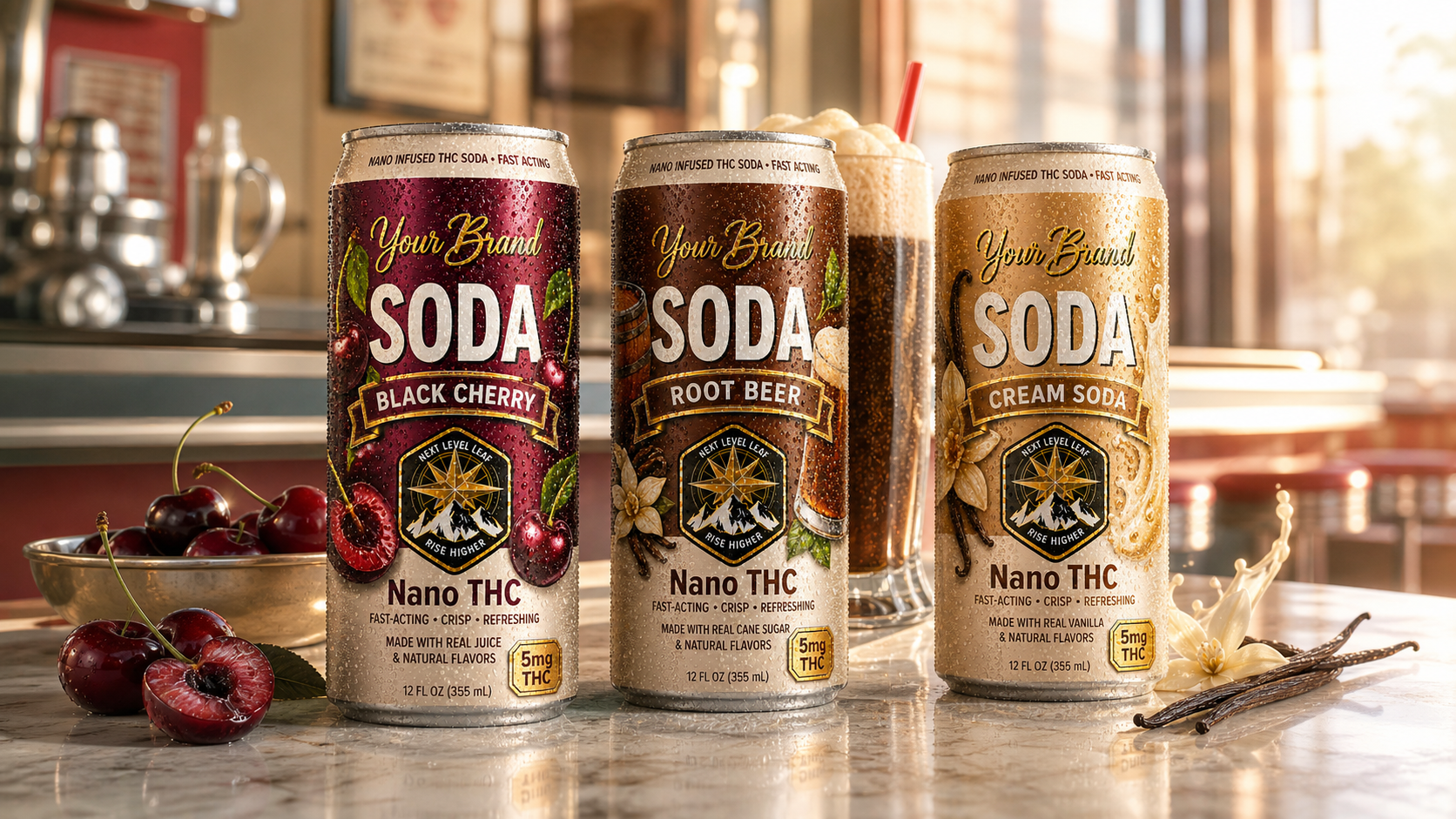
Soda is not just carbonated water with flavor. A strong THC soda needs the mouthfeel, sweetness, aroma, and flavor intensity that consumers expect from a classic soda-style beverage while still supporting reliable cannabinoid delivery and finished-product documentation.
Seltzers often win on clean refreshment. Sodas win on familiarity, flavor intensity, nostalgia, and retail cooler impact. That makes the manufacturing plan different from the start.
Bolder flavor architecture
Soda gives more room for cola, orange, grape, root beer, cream soda, black cherry, and other recognizable flavor systems.
Fuller drinking experience
The product should feel like a polished soda, not a thin sparkling drink with a sweet flavor added.
Instant recognition
Strong soda concepts can be easier for shoppers to understand quickly in coolers and retail displays.
The THC soda manufacturing process
A founder does not need to understand every production detail before requesting a quote, but it helps to understand the major decisions that shape the project.
Define the product
Choose flavor direction, dose, can size, target states, launch quantity, sales channel, and white-label vs custom path.
Plan formulation
Align sweetness, acidity, flavor intensity, carbonation, cannabinoid input, and finished beverage experience.
Prepare production
Confirm packaging, label direction, ingredients, testing requirements, COA workflow, MOQ, and production timing.
Produce and document
Batch, carbonate, fill, test, package, document, and prepare the finished product for shipment or launch.
Flavor-first soda manufacturing
THC sodas usually need stronger flavor architecture than seltzers. That is an advantage when the brand wants a product with clear consumer recognition, but it also means the formula has to be intentionally built.
The flavor has to support the cannabinoid input, sweetness system, carbonation level, aroma, and finish. A soda can be nostalgic, premium, bold, or modern, but it should never feel like an unfinished flavor base.
- Kola / cola: familiar anchor flavor with broad recognition and classic soda logic.
- Orange: bright, citrus-forward, high-recognition, and easy to understand on shelf.
- Grape: bold, nostalgic, fruit-forward, and useful for stronger flavor identity.
- Root beer: rich, spiced, classic, and more distinctive than many fruit soda directions.
- Cream soda: smooth, vanilla-forward, softer, and nostalgic.
- Black cherry: bold, premium, darker fruit profile with strong adult beverage potential.
For a broader flavor strategy, review the Infused Sodas hub and the formulation guide on Flavor Masking THC.
Cannabinoid delivery and water-compatible THC
THC is naturally oil-soluble, so THC soda manufacturing requires a cannabinoid input designed for beverages. The delivery system should support dispersion, dose consistency, finished-product testing, and the drinking experience.
Water-soluble or nano-emulsified THC inputs are often used in beverage applications because they can help integrate cannabinoids into a drinkable format. The right choice depends on the project, dose, flavor system, target market, and desired consumer experience.
Founder takeaway: Soda’s bolder flavor can help support flavor masking, but the cannabinoid delivery system still matters. A good soda flavor cannot make up for poor input quality, inconsistent dosing, or weak documentation.
For more background, read Water-Soluble THC Explained, What Is Nano THC?, and Bioavailability in THC Drinks.
Carbonation, sweetness, and mouthfeel
Soda manufacturing depends on the relationship between flavor, sweetness, acidity, carbonation, and mouthfeel. A product can have a great concept and still fail if it feels thin, overly sweet, flat, harsh, or disconnected from what consumers expect from soda.
| Manufacturing Decision | Why It Matters | Brand Impact |
|---|---|---|
| Carbonation level | Affects mouthfeel, aroma release, perception of sweetness, and overall refreshment. | Can make the soda feel crisp, creamy, sharp, or flat depending on execution. |
| Sweetness system | Shapes the first impression, flavor intensity, and finish. | Determines whether the product feels classic, modern, premium, or overly heavy. |
| Acidity | Balances sweetness and supports fruit or cola-style flavor brightness. | Helps the drink feel finished rather than syrupy or dull. |
| Cannabinoid input | Influences dispersion, flavor, testing, and consistency. | Supports a more professional finished product and more reliable consumer experience. |
| Packaging | Protects the product and communicates flavor, dose, and adult positioning. | Determines shelf impact and buyer confidence. |
For related planning, review Carbonation Strategy and Beverage Stability and Shelf Life.
Build for the cooler, not just the formula
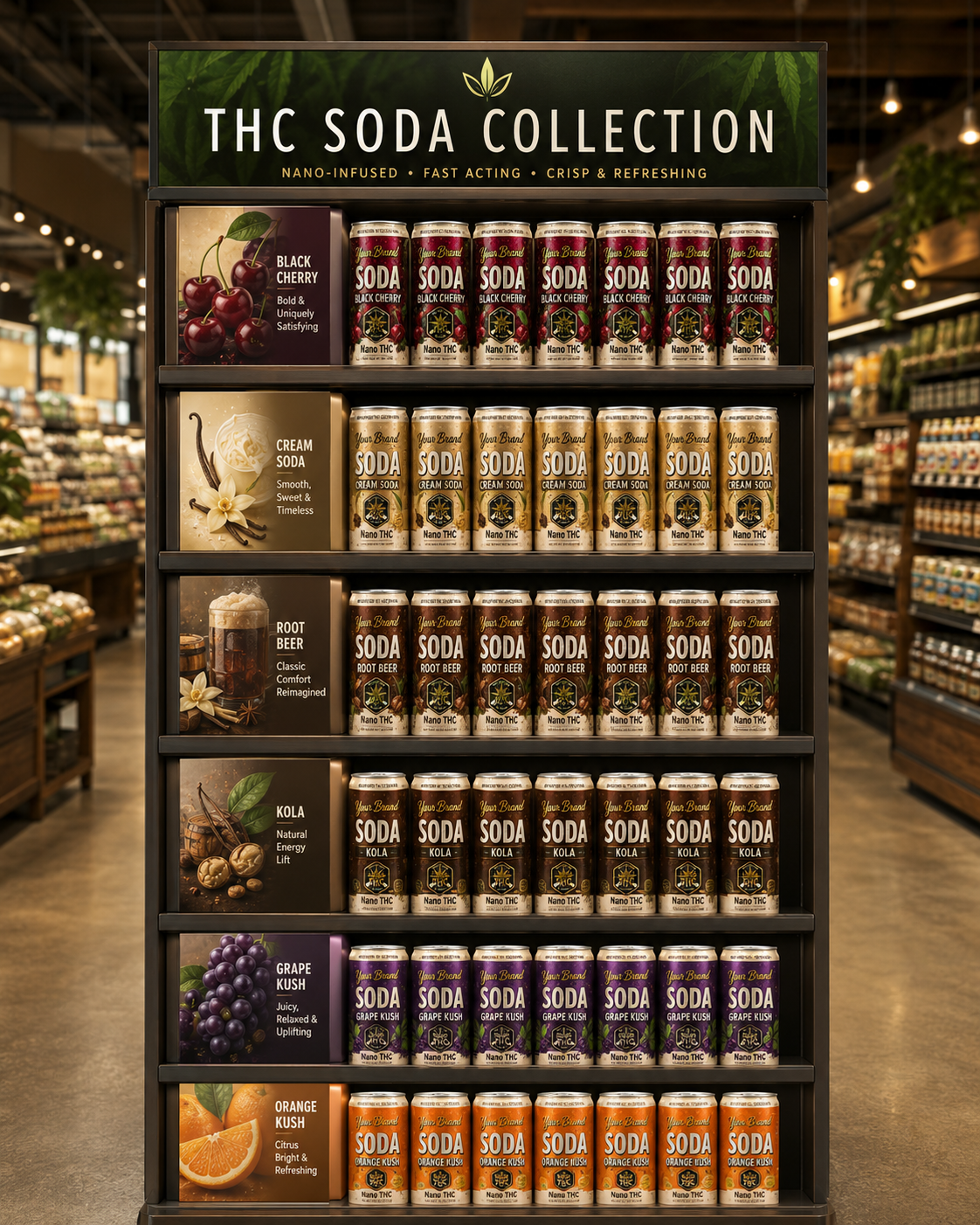
THC soda manufacturing should be planned around the real launch environment. That means the can needs to communicate quickly, the flavor needs to match consumer expectations, and the documentation needs to support retailer confidence.
For founders, the product is not only a beverage. It is a retail-ready brand asset that should be easy to sample, explain, sell, reorder, and expand.
White-label vs private-label vs custom THC soda manufacturing
Not every soda brand needs full custom R&D to start. The right manufacturing path depends on how unique the product needs to be, how quickly the brand wants to launch, and how much risk the founder wants to take before market feedback.
Fastest path
Best when the brand wants a proven beverage architecture, faster launch planning, and a clear path to first production.
Balanced path
Best when the brand wants more control over flavor, dose, label, packaging, and market positioning while staying efficient.
Most flexible path
Best when the product needs a proprietary flavor, special sweetener system, unique ingredient stack, or unusual format.
Testing, COAs, and documentation
Finished-product testing and batch-specific COAs are essential for serious THC soda manufacturing. Retailers, distributors, and brand partners need to see that the finished beverage is professionally produced, documented, and traceable.
- Finished-product potency testing.
- Batch-specific COAs.
- Lot traceability.
- Adult-oriented labeling and warning language where appropriate.
- Consistent dose presentation on packaging.
- Documentation that supports retailer and buyer confidence.
For broader planning, review the Compliance Approach and State Resources.
MOQ, cost, and quote readiness
THC soda manufacturing cost depends on dose, ingredients, flavor complexity, packaging, can size, testing, freight, and production quantity. The best way to get a useful quote is to provide enough information to scope the project clearly.
Before requesting a quote, prepare:
- Preferred soda flavor or flavor family.
- Desired THC dose per can.
- Target states and sales channels.
- Can size and packaging status.
- Estimated order quantity or launch goal.
- Timeline and any retail, event, or seasonal deadline.
- White-label, private-label, or custom development preference.
Cost to Start
Understand the budget drivers behind THC beverage launches.
Review costs →THC Beverage MOQ
Learn how production quantity affects pricing, inventory, and launch risk.
Understand MOQ →Launch Checklist
Organize your product details before requesting a quote.
Use checklist →Where to go next
If you are still comparing formats, start with the soda hub and adjacent beverage pages. If your product direction is clear, move into the quote request so the project can be scoped.
Infused Sodas
Explore the broader soda strategy, flavor lineup, and format positioning.
Explore soda hub →Seltzer vs Soda THC
Compare two major carbonated THC beverage formats.
Compare formats →Infused Mocktails
Compare cocktail-inspired alcohol-alternative beverages.
Explore mocktails →THC Beverage Formulation
Understand the science and practical decisions behind infused drinks.
Explore formulation →Beverage Manufacturing
See how Next Level Leaf supports white-label and private-label beverage projects.
Explore manufacturing →Request a Quote
Share your soda direction so the project can be scoped.
Complete the form →Frequently asked questions
Ready to explore THC soda manufacturing?
Share your soda concept and we’ll help you think through flavor, dose, cannabinoid delivery, packaging, testing, COAs, MOQ, pricing, and production timing.