

THC Seltzer Carbonation Strategy
Carbonation is one of the defining features of a THC seltzer. It shapes refreshment, aroma, flavor lift, mouthfeel, packaging performance, and the way the consumer experiences the drink.
For beverage founders, carbonation should be treated as a formulation decision, not an afterthought. The right bubble profile can make a THC seltzer feel crisp and premium. The wrong one can make it harsh, flat, unstable, or difficult to manufacture consistently.
THC seltzer carbonation strategy is the process of choosing the right level and style of bubbles for an infused beverage. Carbonation affects mouthfeel, flavor perception, aroma release, refreshment, packaging pressure, stability, shelf life, and how polished the product feels to the consumer.
Why carbonation matters in THC seltzers
Carbonation is one of the main reasons seltzers feel refreshing. The bubbles add lift, texture, aroma release, and a clean finish. In a THC seltzer, carbonation also helps the product feel familiar to consumers who already understand sparkling waters, hard seltzers, and canned ready-to-drink beverages.
But carbonation is not just sensory. It affects packaging, production, pressure, shelf life, and how the cannabinoid system behaves in the finished drink. That makes it a strategic manufacturing variable.
Carbonation changes how flavor is perceived
Bubbles can make a beverage feel brighter, sharper, and more aromatic. This can be a major advantage for THC seltzers because light carbonation can help flavors feel crisp and fresh.
However, carbonation can also expose weaknesses in the formula. If the cannabinoid input is bitter, the acid balance is harsh, or the flavor profile is too thin, carbonation may make those problems more noticeable.
For that reason, carbonation strategy should be developed alongside flavor strategy. If you are building seltzers, read flavor masking THC in beverages as part of the same planning process.
Founder takeaway: Carbonation can make a THC seltzer feel premium and refreshing, but it cannot rescue a weak flavor system or poor cannabinoid input.
How carbonation affects mouthfeel
Mouthfeel is the physical sensation of the drink. In seltzers, carbonation provides structure. It can make the beverage feel crisp, light, bright, and refreshing.
The right carbonation level depends on what the brand wants the product to feel like:
Softer and easy-drinking
Useful for gentle, sessionable, low-dose seltzers where approachability matters more than sharpness.
Balanced and familiar
Often a strong middle-ground for mainstream seltzer positioning and broad consumer appeal.
Crisp and energetic
Can feel bright and premium, but may become sharp or harsh if the flavor system is not balanced.
Carbonation and cannabinoid delivery
Carbonation does not replace the need for a strong cannabinoid delivery system. THC is naturally oil-soluble, while seltzers are water-based. The cannabinoid input still needs to disperse evenly and remain stable in the finished product.
Many modern THC seltzers use water-compatible or nano-emulsified cannabinoid systems to support consistency, onset expectations, and more even distribution. Carbonation must be compatible with that system.
Start with water-soluble THC explained and nano vs emulsion if you are still evaluating cannabinoid inputs.
Carbonation and low-dose THC drink strategy
Carbonation is especially important in low-dose THC drinks because the product is often positioned around social, refreshing, and repeatable drinking occasions. A 2.5mg or 5mg seltzer should feel easy to choose, easy to drink, and easy to understand.
Bubbles help support that experience by making the drink feel light and occasion-based rather than heavy or edible-like. This is one reason low-dose THC seltzers can work well as alcohol alternatives.
For related dose strategy, read low-dose THC drinks.
Carbonation and packaging pressure
Carbonated beverages place pressure demands on packaging. A THC seltzer must be packaged in a format that can handle the carbonation level, storage conditions, shipping environment, and intended shelf life.
Cans are commonly used because they are familiar, scalable, and strong for carbonated beverages. But the can, liner, seam, fill process, and storage plan all need to support the liquid inside.
- Too little carbonation can make the drink feel flat or less premium.
- Too much carbonation can create foam, sharpness, pressure concerns, or sensory imbalance.
- Inconsistent carbonation can make the brand feel less professional from can to can.
Carbonation and shelf life
Carbonation has to hold up through production, storage, shipping, and retail handling. A seltzer that feels crisp during early sampling may not feel the same after weeks or months if carbonation loss, packaging issues, or ingredient interactions occur.
Shelf-life planning should evaluate carbonation alongside flavor stability, cannabinoid distribution, pH, packaging compatibility, and finished-product testing.
For the broader stability framework, read THC beverage stability and shelf life.
Commercial read: Carbonation is part of quality perception. A crisp, consistent THC seltzer feels more professionally manufactured and easier to trust.
Flavor styles that work well with carbonation
Carbonation pairs well with flavors that benefit from brightness and lift. Seltzer flavors often work best when they are easy to understand quickly, refreshing, and clean enough for repeat purchase.
Strong carbonation-friendly directions include:
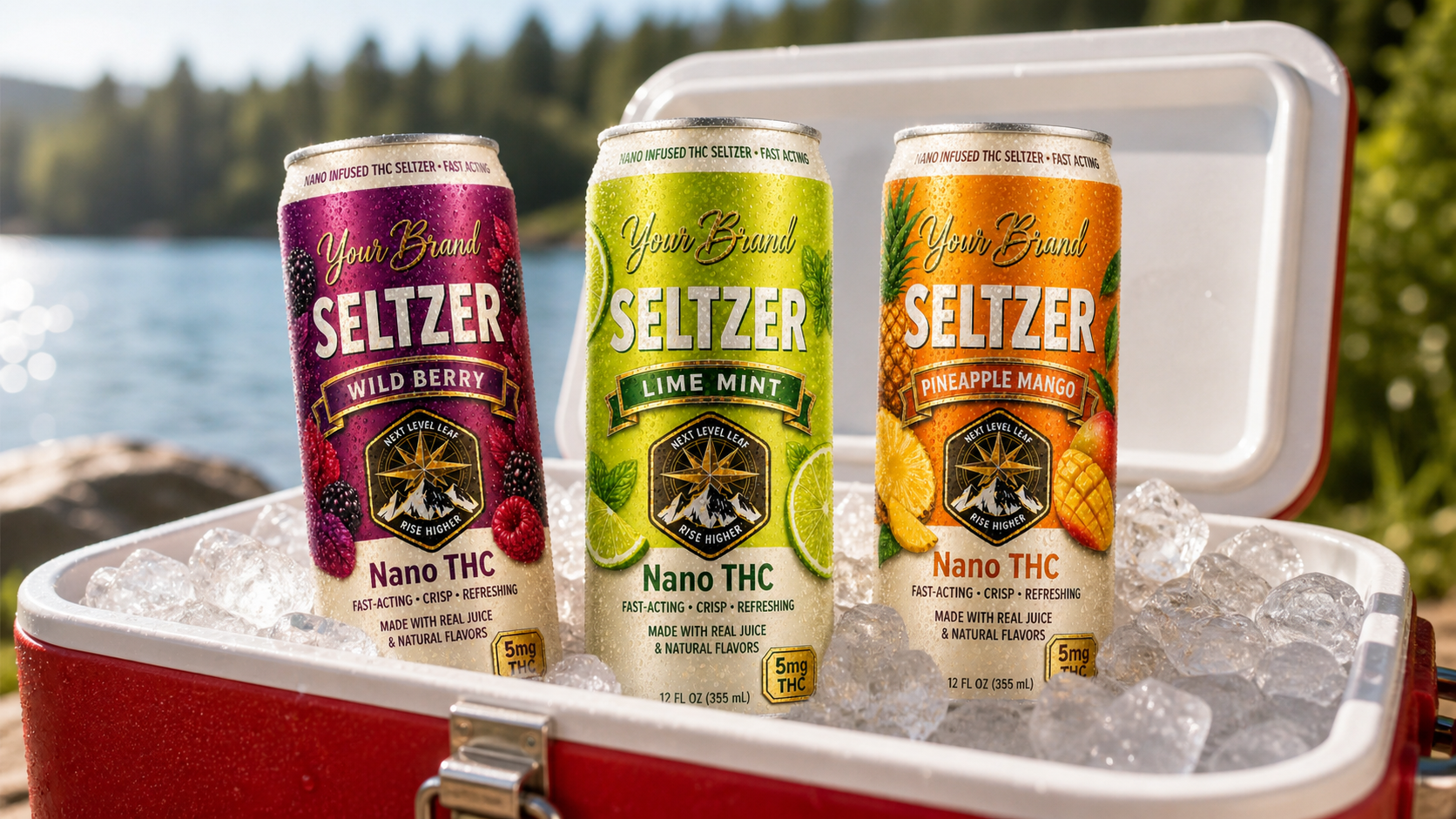
- Lime mint: crisp, refreshing, and alcohol-alternative friendly.
- Sparkling lemonade: bright, citrus-forward, and approachable.
- Pineapple mango: tropical, expressive, and more flavorful.
- Wild berry: familiar, colorful, and retail-friendly.
- Blueberry lemonade: fruit-forward with citrus support.
- Iced tea lemonade: familiar, balanced, and less purely sparkling-water driven.
Questions founders should ask before choosing carbonation level
Before manufacturing a carbonated THC beverage, founders should think through the product experience and the production realities together.
- Should the drink feel soft, balanced, or sharply carbonated?
- Does the carbonation level support the flavor profile?
- Does it make cannabinoid bitterness more noticeable?
- Is the can format appropriate for the pressure level?
- How will carbonation hold up over storage and distribution?
- Does the product need to feel sessionable or more intense?
- Is the carbonation level consistent with the brand’s price point and positioning?
Common carbonation strategy mistakes
Carbonation mistakes can make a THC seltzer feel unfinished even when the dose and flavor idea are strong.
- Treating carbonation as an afterthought. It should be part of the formulation plan from the beginning.
- Overcarbonating a delicate flavor. Too much sharpness can make bitterness or acid harshness stand out.
- Undercarbonating a premium seltzer. Flatness can make the product feel less refreshing and less polished.
- Ignoring packaging pressure. The package has to fit the liquid and production process.
- Skipping shelf-life review. Carbonation should remain consistent enough through the product’s intended life.
- Failing to test finished product consistency. The final can is what the customer experiences.
How carbonation connects to THC seltzer manufacturing
Carbonation strategy connects directly to formulation, flavor, cannabinoid delivery, packaging, stability, and manufacturing execution. A strong THC seltzer does not just have bubbles. It has the right bubble profile for the dose, flavor, customer, and channel.
If you are developing a THC seltzer, start with the full product goal and work backward into carbonation, formulation, packaging, and testing.
You can explore beverage manufacturing here, read the full guide to THC seltzer manufacturing, or return to the infused seltzers hub.
Related seltzer and formulation guides
Infused Seltzers
Start with the seltzer hub and explore why THC seltzers are one of the strongest beverage opportunities.
Visit the seltzer hub →THC Seltzer Manufacturing
Learn how THC seltzers are formulated, carbonated, tested, packaged, and produced.
Explore manufacturing →Low-Dose THC Drinks
Understand how 2.5mg, 5mg, and approachable THC beverages can support social drinking occasions.
Explore low-dose drinks →Flavor Masking THC
Learn how light beverages can be built around cannabinoid bitterness and off-notes.
Explore flavor masking →Stability & Shelf Life
Understand how finished beverages hold up through storage, distribution, and retail handling.
Explore stability →Water-Soluble THC
Learn why water-compatible cannabinoid systems matter in carbonated infused drinks.
Explore water-soluble THC →Frequently asked questions
Ready to build a crisp, polished THC seltzer?
Share your product idea and we’ll help you think through carbonation, flavor, dose, cannabinoid delivery, packaging, testing, stability, MOQ, and production strategy.