


THC Seltzer Manufacturing
THC seltzers are one of the clearest product opportunities in the infused beverage market because they are familiar, low-dose friendly, refreshing, and easy for consumers to understand.
Manufacturing a strong THC seltzer requires more than carbonation and cannabinoids. The product needs clean flavor, water-compatible THC, stable dosing, shelf-life planning, packaging, testing, and a clear route to market.
THC seltzer manufacturing is the process of producing a carbonated, water-based infused beverage using a stable, water-compatible cannabinoid system. A production-ready THC seltzer needs clean flavor, consistent dosing, carbonation control, emulsion stability, appropriate packaging, finished-product testing, batch documentation, and a launch strategy that fits the brand’s target market.
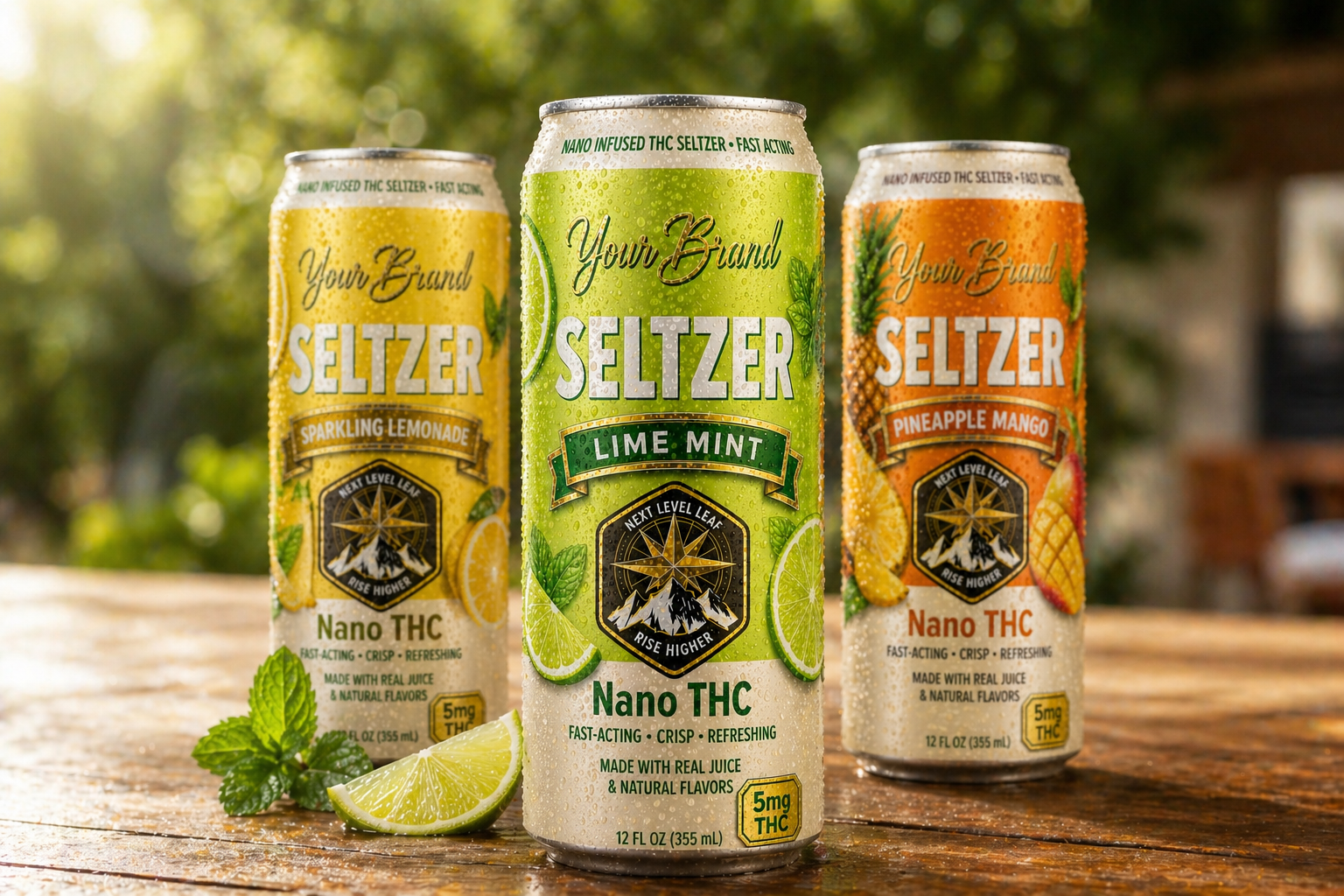
Why THC seltzers are a strong beverage opportunity
Seltzers have become one of the most natural entry points for THC beverage brands. They are light, familiar, portable, and easy to position as an alcohol alternative, social beverage, or low-dose functional refreshment.
For founders, the appeal is clear: a THC seltzer can be premium without being complicated. It can fit retail coolers, social occasions, wellness-adjacent branding, and moderate-dose consumption patterns.
But the simplicity of the consumer experience creates pressure on the formulation. A clean seltzer has very little room to hide bitterness, instability, or poor cannabinoid inputs.
How THC seltzers are manufactured
THC seltzer manufacturing typically starts with the product strategy: dose, flavor, target customer, carbonation level, can size, compliance expectations, and launch channel. Once the product direction is clear, formulation and production decisions can be aligned around that goal.
The core production system usually includes:
- Water base: the foundation of the finished beverage.
- Water-compatible THC system: commonly an emulsion or nano-emulsion designed for beverage use.
- Flavor system: natural or compliant flavor direction built around the cannabinoid input.
- Acidity and sweetness strategy: used to balance taste, mouthfeel, and refreshment.
- Carbonation: the bubbles, pressure, and drinking sensation that define the seltzer format.
- Packaging: usually cans, labels, cases, and palletization for commercial handling.
- Testing and COAs: finished-product documentation for potency and quality confidence.
For the broader process behind infused drinks, read how THC beverages are made.
Founder takeaway: A THC seltzer should be built like a beverage first and an infused product second. The cannabinoid experience matters, but taste, consistency, shelf life, and brand fit drive repeat purchase.
The formulation challenge: THC does not naturally mix with water
THC is naturally oil-soluble, while seltzer is water-based. That means the cannabinoid system must be designed to disperse consistently inside a carbonated beverage.
Most commercial THC seltzers use some form of water-compatible cannabinoid input. This may involve traditional emulsions, nano-emulsions, or other beverage-ready delivery systems.
The goal is not just to get THC into the can. The goal is to create a seltzer that doses consistently, tastes clean, remains stable, and gives the customer a predictable experience.
Start with water-soluble THC explained and nano vs emulsion in THC beverages for the core formulation background.
Nano-emulsion and fast onset positioning
Many THC seltzers are positioned around faster onset because nano-emulsified or water-compatible THC systems can disperse more evenly in a liquid format. This can help the beverage feel different from many traditional edibles.
However, founders should communicate responsibly. Onset can vary based on dose, formulation, food intake, tolerance, and individual physiology. The stronger strategy is to build around a clear and repeatable beverage experience, not exaggerated timing claims.
For deeper context, read how fast onset THC works and bioavailability in THC drinks.
Dose strategy for THC seltzers
Dose architecture is one of the most important commercial decisions in THC seltzer manufacturing. Seltzers are often consumed in social, repeatable, refreshing contexts, so moderate dosing can be a strategic advantage.
Common dose directions include:
2.5mg per can
Approachable, sessionable, and useful for consumers who want a light social beverage experience.
5mg per can
A common low-dose strategy for alcohol-alternative positioning and repeatable drinking occasions.
10mg per can
Can work for more experienced consumers, depending on brand positioning, market rules, and customer expectations.
Higher-dose products may also have a role, but seltzers often perform best when the dose matches the drinking occasion. More THC is not automatically better if the product is intended to be refreshing, social, and repeatable.
Flavor development for THC seltzers
Seltzers are clean beverages, which makes flavor development both important and difficult. There is less sweetness, body, or intensity to hide cannabinoid bitterness or emulsion character.
Good THC seltzer flavor development usually considers:
- Flavor clarity: the profile should be easy to understand quickly.
- Cannabinoid masking: bitterness and off-notes need to be controlled without making the drink heavy.
- Acidity: enough brightness to feel refreshing, but not so much that stability or taste suffers.
- Aroma: top notes help shape the first impression of the beverage.
- Carbonation fit: bubbles can lift flavor but may also expose harshness if the formula is weak.
For more detail, read flavor masking THC in beverages.
Carbonation strategy
Carbonation is central to the seltzer experience. It affects mouthfeel, aroma release, flavor perception, packaging pressure, and how refreshing the product feels.
A THC seltzer should not feel flat, harsh, foamy, overly sharp, or unstable. The carbonation level should support the flavor and cannabinoid system rather than fight against it.
Carbonation also influences production and packaging. The manufacturer must account for filling conditions, can pressure, storage, and how the beverage behaves over time.
Stability and shelf life
Stability is one of the biggest differences between a good sample and a production-ready THC seltzer. A beverage can taste great on day one but still fail if it separates, loses carbonation, develops bitterness, changes appearance, or tests inconsistently after storage.
Stability planning should include:
- Emulsion stability and cannabinoid distribution.
- Potency consistency across the finished beverage.
- Flavor and aroma performance over time.
- pH, carbonation, and ingredient compatibility.
- Packaging performance during storage and distribution.
For the full breakdown, read THC beverage stability and shelf life.
Commercial read: Seltzers are simple on the shelf but unforgiving in formulation. Clean taste, stable bubbles, consistent THC distribution, and reliable testing are what make the product feel professionally manufactured.
Packaging THC seltzers
Cans are a natural packaging format for THC seltzers because they are familiar to consumers, scalable for production, and easy to merchandise. The package still needs to support the beverage chemistry, carbonation level, label requirements, and distribution plan.
Important packaging considerations include:
- Can size: 12oz sleek cans are common, but the best format depends on the product and channel.
- Label design: must support brand identity while remaining adult-oriented and compliance-aware.
- Case configuration: should match retail, wholesale, and shipping expectations.
- Storage guidance: should reflect the actual stability and handling requirements of the product.
Testing, COAs, and documentation
Testing is essential for THC seltzer manufacturing because the finished beverage needs to match the intended dose and support retailer-ready documentation.
A serious THC seltzer program should think beyond basic input documentation. Finished-product testing and batch-specific COAs help support trust, traceability, and professional sales conversations.
- Potency testing helps confirm cannabinoid levels.
- Batch-specific COAs support traceability.
- Full-panel documentation can strengthen retailer and distributor confidence.
- Compliance-aware labeling helps support state-by-state market planning.
If you are planning a broader state strategy, visit the state resources hub and the compliance page.
White-label THC seltzer manufacturing
White-label THC seltzer manufacturing can help founders move faster by starting from proven production systems, house flavor directions, established processes, and known packaging pathways.
This can be especially useful for brands that want to enter the THC beverage market without building a custom formula from zero. A white-label pathway may allow the brand to focus on positioning, design, compliance review, sales, and distribution while still launching a polished beverage.
Custom development may still make sense for brands with a distinct flavor concept, functional ingredient stack, special dose strategy, or unique market position.
What founders should clarify before requesting a quote
The more clearly the product is scoped, the more useful a manufacturing quote becomes. Before requesting a THC seltzer quote, founders should be ready to discuss:
- Target dose per can.
- Flavor direction or house flavor preference.
- Carbonated seltzer vs soda, lemonade, tea, or mocktail direction.
- Can size and packaging expectations.
- Launch state or region.
- Target customer and sales channel.
- White-label vs custom formulation needs.
- Testing, COA, and compliance documentation expectations.
- MOQ and budget range.
Common THC seltzer manufacturing mistakes
THC seltzers are attractive, but they are also easy to underestimate. Common mistakes include:
- Choosing the THC input without testing it in the finished seltzer.
- Using flavors that are too delicate to cover cannabinoid bitterness.
- Ignoring carbonation and packaging compatibility.
- Picking a dose before defining the customer and use occasion.
- Skipping shelf-life and stability planning.
- Relying on input COAs instead of finished-product documentation.
For a deeper list of pitfalls, read THC beverage formulation mistakes to avoid.
How this connects to beverage manufacturing
THC seltzer manufacturing sits at the intersection of formulation, beverage production, compliance documentation, packaging, and brand strategy. A strong product is not just infused. It is built to taste clean, dose consistently, hold up over time, and support the channel where it will be sold.
If you are ready to explore a THC seltzer or broader infused beverage line, you can explore beverage manufacturing here or return to the infused seltzers hub.
Related seltzer and formulation guides
Infused Seltzers
Start with the seltzer hub and explore why THC seltzers are one of the strongest beverage opportunities.
Visit the seltzer hub →THC Beverage Formulation
Understand the formulation systems behind modern infused drinks.
Explore formulation →Water-Soluble THC
Learn why water-compatible cannabinoid systems matter in seltzers and other beverages.
Explore water-soluble THC →Flavor Masking THC
Learn how clean beverages can be built around cannabinoid bitterness and off-notes.
Explore flavor masking →Stability & Shelf Life
Understand how finished beverages hold up through storage, distribution, and retail handling.
Explore stability →Infused Coffee
Compare another high-interest THC beverage format with different flavor and positioning advantages.
Explore infused coffee →Frequently asked questions
Ready to explore white-label THC seltzer manufacturing?
Share your product idea and we’ll help you think through dose, flavor, carbonation, cannabinoid delivery, packaging, testing, compliance, MOQ, and production strategy.