White-label infused & functional beverage manufacturing
Built for brands, visionaries, and industry leaders.
Formulation • Stability • Shelf Life Strategy

THC Beverage Stability & Shelf Life

A THC beverage has to do more than taste good in the first sample. It has to remain consistent, stable, safe, and commercially credible through production, storage, shipping, and retail handling.

Stability and shelf life affect potency consistency, flavor, appearance, carbonation, packaging performance, testing, and the customer’s trust in the product. For founders, this is where formulation becomes a real manufacturing strategy.

THC beverage stability means the finished drink remains consistent over its intended shelf life. A stable THC beverage should maintain appropriate cannabinoid dispersion, potency, flavor, appearance, carbonation, pH, packaging performance, and microbial control without separation, major flavor drift, or unreliable dosing.

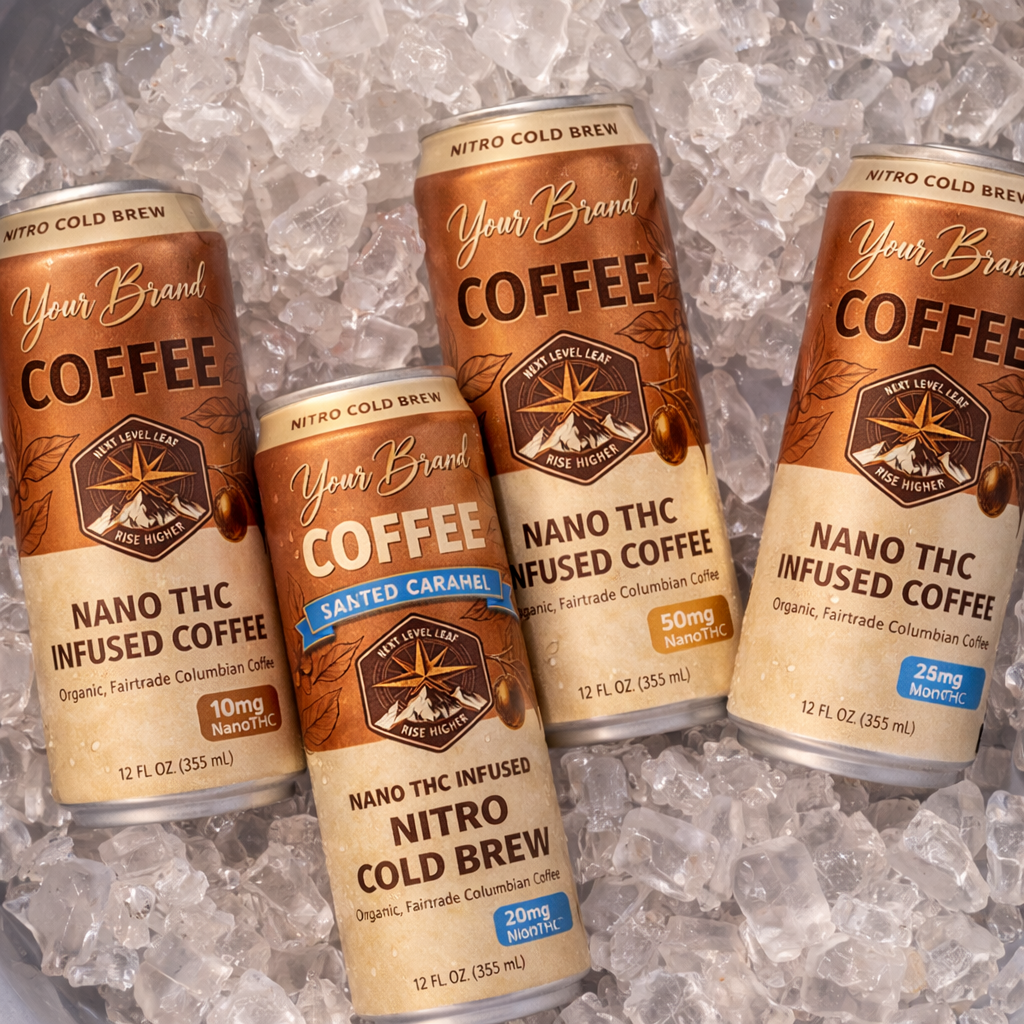
Infused beverage cans on ice representing THC beverage shelf life and stability planning
Stability planning helps a THC beverage stay consistent beyond the first sample, through production, distribution, storage, and retail presentation.

What does stability mean in a THC beverage?

Stability means the beverage performs as intended over time. For a THC drink, that includes more than flavor. It includes cannabinoid dispersion, potency consistency, appearance, pH, carbonation, package integrity, microbial control, and the overall consumer experience.

A beverage that looks and tastes good immediately after production may still fail if it separates, loses flavor quality, loses carbonation, drifts in potency, or becomes visually unappealing during storage and distribution.

Why shelf life matters for founders

Shelf life is the bridge between a good concept and a product that can be sold confidently. Retailers, distributors, and customers expect a beverage to maintain quality after it leaves the manufacturer.

For founders, shelf life affects:

  • Retail readiness: Can the product sit in inventory and still perform?
  • Distribution confidence: Can the drink survive shipping and storage conditions?
  • Brand reputation: Will customers have a consistent experience?
  • Testing strategy: Can finished-product potency and quality be documented?
  • Financial planning: Can the brand manage production, inventory, and sell-through timelines?

Founder takeaway: A great THC beverage is not just a great benchtop sample. It is a product that can be produced, stored, shipped, displayed, opened, consumed, and trusted.

The core stability challenge: cannabinoids in water

THC is naturally oil-soluble, while beverages are water-based. That makes the cannabinoid delivery system one of the most important stability decisions in the product.

If the THC input is not properly formulated for the beverage, the drink can separate, dose unevenly, develop off-notes, or create an inconsistent experience. This is why modern THC beverages often rely on emulsions, nano-emulsions, or other water-compatible cannabinoid systems.

For the foundation, read water-soluble THC explained and nano vs emulsion in THC beverages.

Common signs of poor THC beverage stability

Stability problems can show up in several ways. Some are obvious to the customer. Others are only discovered through testing, storage observation, or quality review.

  • Visible separation: oil rings, sediment, clouding, or layers forming in the container.
  • Potency inconsistency: uneven THC distribution or unexpected cannabinoid test results.
  • Flavor drift: the drink tastes different after weeks or months of storage.
  • Color change: fading, browning, clouding, or visual instability.
  • Carbonation loss: the product becomes flat or inconsistent in mouthfeel.
  • Packaging issues: can integrity, liner compatibility, pressure, leakage, or storage problems.
  • Microbial concerns: spoilage risk if pH, process, or preservation strategy is not appropriate.

What affects THC beverage shelf life?

Shelf life is not determined by one ingredient. It is the result of how the entire beverage system performs together.

Cannabinoids

Emulsion stability

The THC delivery system needs to remain evenly dispersed without separation or potency inconsistency.

Beverage chemistry

pH and acidity

The beverage’s pH can affect flavor, preservation strategy, ingredient compatibility, and production requirements.

Flavor

Flavor drift

Sweetness, aroma, acidity, botanicals, coffee notes, and cannabinoids can change or interact over time.

Packaging

Can and liner fit

Packaging must be compatible with the beverage chemistry, carbonation level, storage conditions, and shelf-life goals.

Production

Process control

Mixing, filling, carbonation, sanitation, temperature, and QA controls all affect finished-product stability.

Distribution

Storage and handling

Heat, light, time, movement, and retail handling can all influence how a beverage performs after production.

Stability in carbonated THC beverages

Carbonated THC beverages such as seltzers, sodas, sparkling lemonades, and mocktails have additional stability considerations. Carbonation affects mouthfeel, pressure, packaging, flavor perception, and production handling.

A carbonated beverage needs the cannabinoid system to remain compatible with bubbles, acidity, flavor compounds, and can pressure. Clean seltzers can be especially demanding because there is less flavor intensity to hide off-notes or instability.

This is why the infused seltzer category is such an important test of formulation discipline. A clean, stable seltzer requires strong cannabinoid input selection, flavor work, and production control.

Stability in THC coffee and functional beverages

Coffee, tea, and functional beverages bring their own stability challenges. These formats may include natural acids, roasted notes, tannins, proteins, minerals, sweeteners, botanicals, adaptogens, or functional ingredients that interact with flavor and appearance over time.

THC coffee can be especially interesting because coffee already has bitterness, aroma, body, and ritual value. Those characteristics can support a premium product, but they also require careful formulation and shelf-life planning.

If you are exploring coffee formats, visit the infused coffee hub for related strategy, pricing, compliance, and shelf-life considerations.

Potency consistency and finished-product testing

Stability is not only about whether the drink looks good. A THC beverage also needs to support consistent potency. The cannabinoid content should be appropriately distributed and verifiable in the finished product.

Finished-product testing helps validate that the beverage matches its intended dose and supports batch-specific documentation. For commercial brands, this can be important for retailer confidence, distributor conversations, compliance planning, and customer trust.

  • Potency testing helps verify cannabinoid levels in the finished beverage.
  • Batch-specific COAs help support traceability and documentation.
  • Stability review can help identify whether potency changes or distribution issues occur over time.
  • Full-panel documentation can strengthen brand credibility and retail readiness.

Commercial read: Finished-product testing is not just a compliance checkbox. It is part of proving that the beverage performs the way the brand says it does.

Flavor stability and sensory quality

Flavor stability is a major part of shelf life. A THC beverage may taste excellent during early samples but change over time due to oxidation, ingredient interactions, temperature exposure, carbonation changes, or cannabinoid input effects.

Flavor drift can be subtle or obvious. The drink may become flatter, harsher, more bitter, less aromatic, more acidic, or visually less appealing. In premium beverages, even small changes can affect the customer’s willingness to repurchase.

For THC drinks, flavor stability should be considered alongside THC flavor masking, because cannabinoid bitterness or off-notes may become more noticeable as the beverage changes over time.

Packaging and shelf-life strategy

Packaging is part of formulation. The same liquid can perform differently depending on whether it is canned, bottled, carbonated, non-carbonated, stored cold, shelf-stable, or distributed through warm retail channels.

Cans are common for THC beverages because they are familiar, scalable, and strong for many beverage categories. But the packaging still has to fit the beverage chemistry, carbonation level, regulatory expectations, label needs, and distribution path.

  • Can format: size, liner, pressure tolerance, and compatibility with the liquid.
  • Labeling: ingredient, cannabinoid, warning, and compliance information.
  • Storage expectations: refrigerated, ambient, or controlled handling requirements.
  • Distribution path: direct-to-retail, wholesale, distributor, or regional launch strategy.

How founders should approach shelf-life claims

Shelf-life claims should be grounded in the actual product, not generic assumptions. A beverage’s shelf life depends on formulation, processing, packaging, storage, and testing. A claim that is reasonable for one beverage may not be appropriate for another.

The smart approach is to build with a clear target, test the finished beverage, observe performance over time, and align production and distribution with what the product can realistically support.

Questions to ask before production

Before moving a THC beverage into production, founders should ask practical questions about stability and shelf life.

  • Is the cannabinoid system stable in this exact beverage format?
  • Has the finished beverage been evaluated for separation or visual change?
  • How will potency be tested in the finished product?
  • What pH and process controls are being used?
  • Does the beverage require refrigeration or ambient storage?
  • How does the flavor perform over time?
  • Is the packaging compatible with the product?
  • What documentation will be available for retailers or distributors?

Common THC beverage stability mistakes

Many beverage projects run into problems because stability is treated as a late-stage issue. It should be part of product strategy from the beginning.

  • Choosing a THC input before defining the beverage format. The input should fit the product, not the other way around.
  • Assuming a good first sample means the product is production-ready. Shelf life requires time, testing, and observation.
  • Ignoring packaging compatibility. The liquid and package must work together.
  • Skipping finished-product potency testing. The finished can or bottle is what matters commercially.
  • Overlooking distribution realities. Heat, storage time, and handling can affect performance after production.

We cover more founder-level pitfalls in THC beverage formulation mistakes to avoid.

How stability connects to beverage manufacturing

Stability is where formulation, production, packaging, testing, and commercialization come together. A product that is stable enough for a local pilot may not be ready for regional distribution. A beverage that works in one format may need modification for another.

The right manufacturing approach starts with the product goal: beverage type, dose, flavor profile, packaging, sales channel, storage conditions, and launch timeline. From there, the cannabinoid system, formulation, testing, and production plan should support that goal.

If you are evaluating a THC beverage concept, you can explore beverage manufacturing here or return to the broader THC beverage formulation hub.

Frequently asked questions

Stability in a THC beverage means the finished drink remains consistent over time. That includes cannabinoid dispersion, potency, flavor, appearance, carbonation, pH, packaging performance, and microbial control.
Shelf life matters because THC drinks need to perform after production, shipping, storage, and retail handling. A beverage that tastes good in an early sample still needs to maintain flavor, potency, appearance, and safety expectations over time.
Separation can happen when the cannabinoid emulsion is not compatible with the beverage matrix, pH, carbonation, flavor system, packaging, or storage conditions. Poor droplet stability and ingredient interactions can also contribute.
Brands commonly evaluate stability by monitoring finished beverages over time for potency, visual separation, flavor changes, pH, carbonation, microbial stability, packaging integrity, and sensory performance. The exact plan depends on the beverage type and distribution goals.
Founders should ask whether the cannabinoid system is stable in the intended beverage, whether the pH and packaging are appropriate, how potency will be verified, what shelf-life assumptions are being made, and how finished-product testing and COA documentation will be handled.

Ready to build a THC beverage that can hold up beyond the first sample?

Share your product idea and we’ll help you think through formulation, shelf life, cannabinoid delivery, flavor, packaging, testing, and production strategy.