


Bioavailability in THC Drinks: What Matters?
Bioavailability describes how much THC reaches the bloodstream after a product is consumed. It is not the same as onset, intensity, or product quality.
For a beverage brand, the practical goal is a drink that delivers the intended amount consistently, tastes good, stays stable, and can be produced at the right scale.
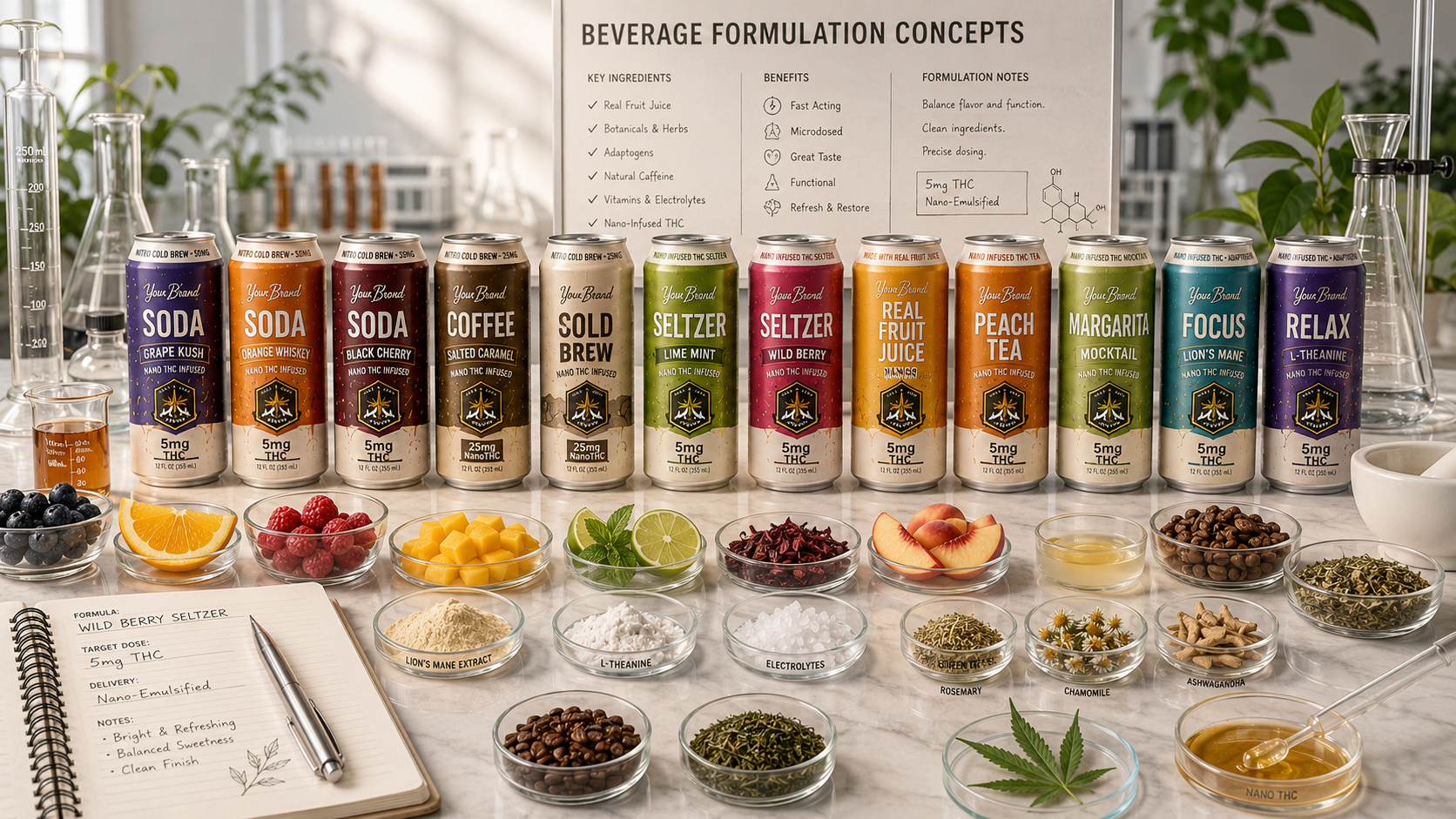
Bioavailability tells us how much THC becomes available to the body, not how quickly someone feels it. The cannabinoid delivery system can matter, but so can the dose, finished recipe, food intake, individual response, production quality, and stability of the packaged drink.
The simple framework
Three measurements that answer different questions
Scientific studies often report three measurements. Brands do not need to use this language with customers, but understanding the difference helps prevent exaggerated claims.
How much becomes available over time
Researchers often estimate the total amount present in the bloodstream across the study period. This is closely related to bioavailability.
The highest measured level
The peak level describes one point in the concentration curve. It does not tell you the entire experience by itself.
When that peak is measured
Time to peak describes the absorption pattern. It is not the same as the first moment a person notices an effect.
The important distinction: Bioavailability asks how much becomes available. Onset asks when someone first notices an effect. Peak asks when the measured concentration reaches its highest level.
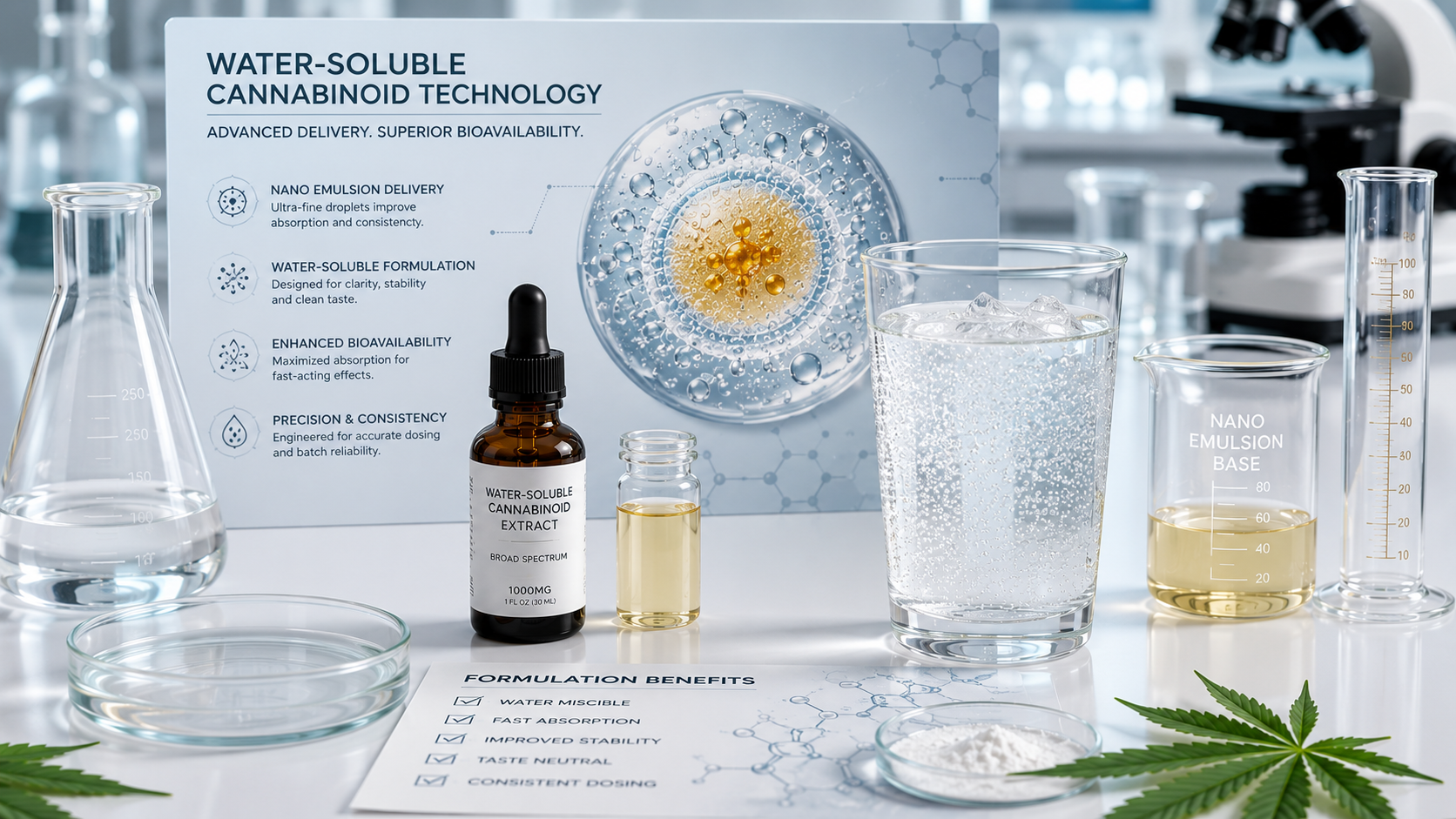
Why is THC difficult to use in a drink?
THC naturally mixes with oil, while most beverages are mostly water. Adding cannabinoid oil directly to a drink can cause separation, inconsistent distribution, an oily texture, or unwanted flavor.
An emulsion can help distribute the cannabinoid throughout the beverage. Some systems use very small droplets, but the word "nano" alone does not prove better absorption, faster onset, or a stable finished drink.
Read what nano THC means or compare nano THC and conventional emulsions.
Bioavailability, onset, and stability are related but different
How much THC reaches the bloodstream over time.
It helps explain exposure, not the full customer experience.
When a person first notices an effect.
It varies across products and people and should not be promised without appropriate evidence.
Whether the beverage maintains consistent appearance, flavor, and potency over time.
A delivery system cannot help the customer if the packaged drink does not remain consistent.
One formula can perform well in one area and poorly in another. Faster absorption does not automatically prove greater total exposure, and physical stability does not prove faster onset.
What does human research show?
Human studies have compared specific cannabinoid delivery systems with specific oil-based products. Some found differences in peak concentration, total exposure, or time to peak.
Nanoemulsion compared with MCT oil
A randomized study of 32 participants compared one oral delivery system containing THC and CBD with a medium-chain triglyceride oil product. The researchers reported differences in several absorption measurements. This was a study of one proprietary system, not every nanoemulsion or canned beverage.
Self-emulsifying powder compared with oil drops
A crossover study of 14 participants compared a self-emulsifying THC and CBD powder with commercial oil drops. The tested powder changed several absorption measurements, but the study did not evaluate every beverage ingredient or recipe.
What the studies can support: A delivery system may change how a specific cannabinoid product is absorbed. They do not prove that every THC drink has the same bioavailability or onset.
Can food change THC absorption?
Yes. A human study of THC capsules found differences between fed and fasted conditions. A high-fat meal delayed time to peak while increasing overall exposure in that capsule study.
The study did not test a commercial THC beverage, so it should not be turned into a universal drinking instruction or timing promise. It does show why food state and the individual can influence oral cannabinoid research. Review the fed-versus-fasted study.
Can two drinks with the same THC amount feel different?
Yes. Two beverages can contain the same labeled THC amount while differing in ingredient system, recipe, drinking speed, stability, food intake, and individual response.
The labeled milligrams remain essential. Bioavailability does not make potency labeling less important. It simply helps explain why the same number does not describe every part of the experience.
For more on the timing question, see how fast-onset THC works.
What affects THC beverage performance?
Delivery system
Different oil, emulsion, and nanoemulsion systems can perform differently.
Finished recipe
Acidity, sweeteners, flavors, carbonation, coffee, tea, and other ingredients matter.
THC amount
The cannabinoid amount per serving and container helps shape the intended product.
Production
Mixing, processing, filling, and consistency from can to can can affect the result.
Stability
The drink should maintain appropriate flavor, appearance, and potency after packaging.
Food intake
Fed or fasted conditions can influence oral cannabinoid absorption.
Individual response
Sensitivity, tolerance, metabolism, and other personal factors can change the experience.
Evidence
Product claims should match the actual ingredient or finished beverage studied.
How does beverage format change the formulation?
Light flavor and visible clarity
A lightly flavored seltzer can make bitterness, haze, separation, or oily texture easier to notice.
Stronger flavor and color
Richer flavors may provide more room for the cannabinoid ingredient, but the complete drink still needs to be tested.
Acidity and ingredient interactions
Roast, caffeine, tea compounds, sweetness, and processing can affect formulation decisions.
More ingredients to balance
Botanicals, minerals, juice, and other functional ingredients can add flavor and compatibility considerations.
What should a brand ask before choosing a THC ingredient?
- What is in the cannabinoid ingredient, and what documentation is available?
- How does it affect flavor, color, clarity, and texture at the intended dose?
- Does it work with the actual acidity, carbonation, coffee, tea, juice, or functional ingredients?
- What testing is appropriate for the finished product and target market?
- How will the packaged drink be checked for consistency over time?
- Does any absorption or onset claim come from this exact product or from unrelated research?
Explore custom THC beverage formulation and beverage stability and shelf life.
Can the formula scale into commercial production?
Yes. A common first commercial order starts around 1,200 cans per flavor and dose. Established brands can discuss multiple pallets, recurring production, and programs built around their expected demand.
A selective 360-can prototype may be available for a qualified project when testing the beverage before a larger order makes sense. It is not the standard production size.
Whether a brand is launching its first product or expanding an established line, the formula should maintain consistent flavor, appearance, and potency as production grows.
Learn how THC beverages are made, explore THC beverage manufacturing, or review beverage manufacturing pricing.
Build the drink around the customer experience. Start with the beverage format, flavor, THC amount, appearance, expected demand, and evidence you can support. Then select the ingredient system that works in the actual product.
Continue exploring your formulation
Move from absorption science into ingredient selection, stability, manufacturing, and commercial planning.
Frequently asked questions
Ready to develop a consistent THC beverage?
Tell us the type of drink you want to make, the intended cannabinoid amount, your preferred flavor, and your expected order size. We can help you evaluate the formula and plan commercial production.