

Choose the right THC ingredient
The ingredient should fit the drink, intended dosage, flavor, and production process.
Your drink needs to taste like a beverage people actually want to buy, not a product they have to tolerate because it contains THC.
Learn why some THC ingredients create bitterness or aftertaste, how different beverage formats change the equation, and what to consider before choosing your flavor.
Updated August 25, 2026
THC flavor masking is about building a balanced beverage around the actual cannabinoid ingredient. Bitterness, earthy notes, aftertaste, and texture can come from the THC ingredient, its carriers, or how everything interacts in the finished drink. The right approach depends on the beverage, flavor, dosage, and complete formula.
A customer might try a THC drink because the concept sounds interesting. Whether they buy it again often comes down to the experience of drinking it.
If the product tastes overly bitter, oily, medicinal, or unfinished, an otherwise promising beverage can struggle to earn repeat purchases. A better approach starts with a flavor people would enjoy even before the THC is part of the conversation.
A THC drink still has to compete as a beverage. The goal is not to cover up an unpleasant product. It is to create a complete drink where the flavor, THC ingredient, and customer experience fit together.
THC itself is not always the only reason a drink tastes off. Flavor challenges can come from several parts of the formula.
Start with water-soluble THC explained to understand how beverage-ready THC ingredients work.
Good flavor development is usually about balancing several parts of the beverage rather than relying on one ingredient to solve everything.
The ingredient should fit the drink, intended dosage, flavor, and production process.
Sweetness may soften bitterness, but too much can make the beverage feel heavy or distract from the intended flavor.
Citrus and other acidic notes can brighten a drink, but they still need to work with the complete formula.
Fruit, coffee, citrus, spice, and other aromas can help create a more complete and recognizable beverage experience.
Carbonation, body, creaminess, and mouthfeel can influence how bitterness or aftertaste is noticed.
A flavor should be evaluated with the actual THC ingredient at the intended dosage, not just in the uninfused base.
There is no single best format. The right choice depends on the customer you want to reach, the flavor experience you want to create, and how the THC ingredient performs.
Seltzers are light, familiar, and refreshing, but their clean profile leaves less room to hide bitterness or aftertaste. The THC ingredient, carbonation, sweetness, acidity, and flavor all need to work together.
Profiles such as blueberry lemonade, pineapple mango, wild berry, or lime mint show how a more recognizable flavor direction can support a light beverage without assuming every formula will perform the same way.
Explore the infused seltzer learning hub for more on this category.
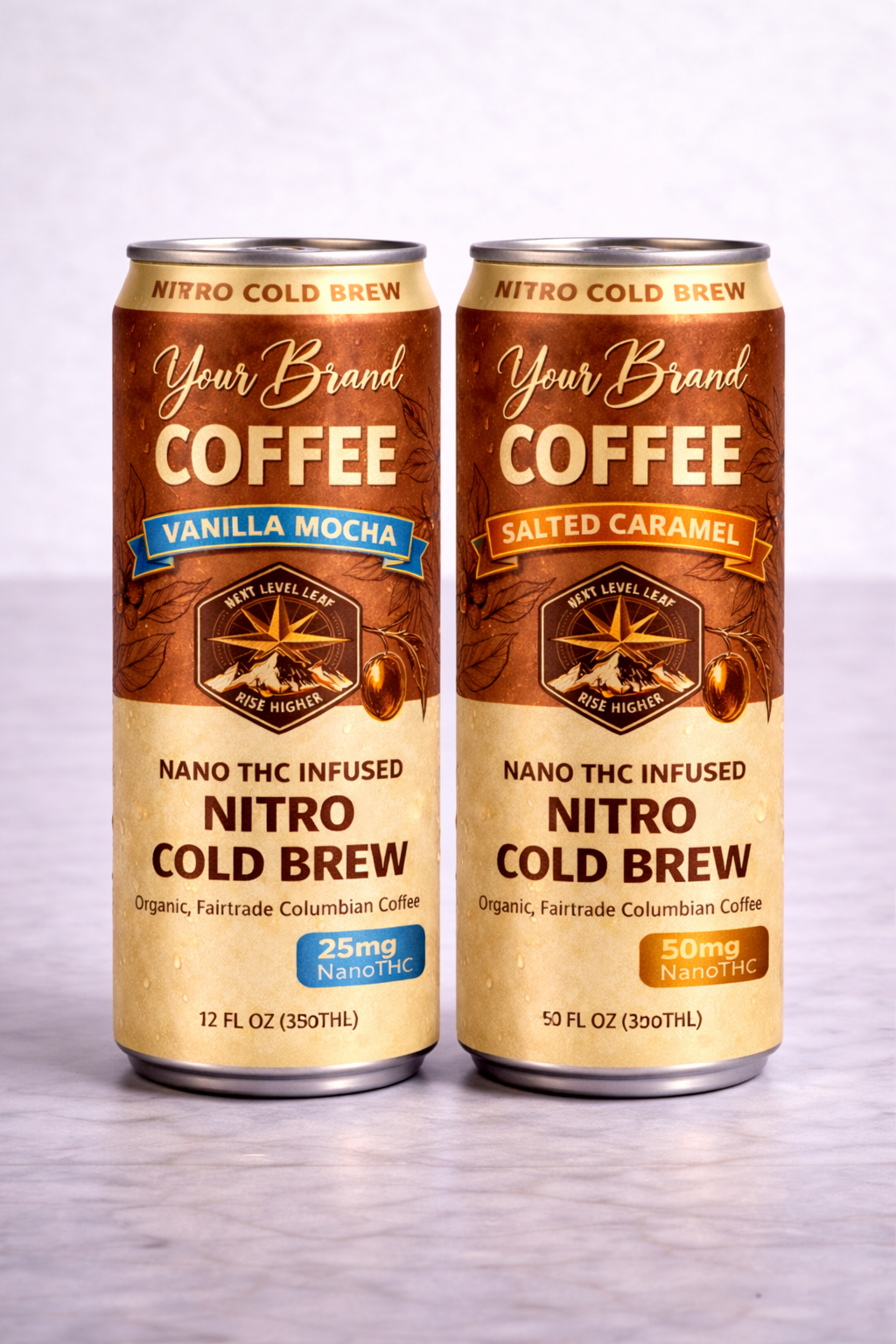
Coffee already has aroma, roasted character, and some natural bitterness. That can give the beverage more room to integrate the taste of a THC ingredient, although the complete drink still needs to be balanced.
Vanilla mocha, salted caramel, and black coffee are different starting points, each with its own flavor and formulation considerations.
Visit the infused coffee learning hub to explore coffee-specific product ideas.
A fuller-flavored soda, citrus lemonade, or layered mocktail may provide more room to balance an unwanted note. Orange, grape, root beer, ginger, fruit, and citrus profiles can create different possibilities depending on the complete formula.
Tea, botanicals, mushrooms, adaptogens, and other functional ingredients may bring their own flavor characteristics. Those ingredients should be considered together rather than added one at a time without tasting the finished product.
It can. Increasing the amount of a THC ingredient may increase the amount of carrier, emulsifier, or other compounds added to the drink. Depending on the formula, that can make bitterness, aroma, or aftertaste more noticeable.
A 5 mg drink, a 10 mg drink, and a 25 mg drink may not taste identical even when they use the same flavor concept. That does not mean one dose is automatically better. It means the flavor should be evaluated at the actual intended dosage.
Explore THC beverage bioavailability and how fast-onset THC works for related formulation considerations.
No. Nano THC describes a delivery approach. It does not promise a specific flavor, a neutral aftertaste, or a finished beverage that automatically tastes better.
The THC ingredient can still contain carriers or emulsifiers that affect taste, and the full formula still determines the result. Compare nano THC and other emulsion approaches.
A lower-sugar beverage may be possible, but less sweetness can make unwanted notes easier to notice. That makes ingredient quality, flavor selection, aroma, acidity, and the complete beverage especially important.
There is no need to assume a good THC drink has to be overly sweet. The better question is how to build the flavor profile around the product you actually want to sell.
A drink that tastes balanced as a fresh sample may change during storage. Aroma can fade, carbonation can shift, or a previously subtle aftertaste may become more noticeable.
Flavor is only one piece of product quality. A good-tasting drink does not automatically establish food safety, shelf life, or finished-product potency. Those areas require their own appropriate evaluation.
Read THC beverage stability and shelf life for the next part of the product-development picture.
Continue with THC beverage formulation mistakes to avoid.
A common commercial starting point is approximately 1,200 cans per flavor and dose. That gives brands a practical way to introduce a finished product and build a foundation for future growth.
Next Level Leaf also works with brands planning larger orders, multi-pallet programs, recurring production, and expanding product lines. Your formula, packaging, expected demand, and distribution plans help determine the right approach.
For qualified projects, a selective prototype of approximately 360 cans may also be possible.
Learn about custom THC beverage formulation, THC beverage manufacturing, and beverage manufacturing pricing.
Explore ingredients, dosage, flavor, stability, and manufacturing considerations.
Understand the ingredientLearn how water-dispersible THC ingredients fit into a beverage formula.
Think beyond the first sampleSee how packaging, storage, safety, and product quality connect.
Understand what different delivery approaches may mean for the finished drink.
Explore a product categoryReview coffee flavors, beverage concepts, and commercial manufacturing considerations.
Move toward productionExplore a production approach that fits your beverage and expected order volume.
Tell us what you want to make, the flavors you are considering, your target THC dosage, expected order volume, and where you plan to sell it.