

Infused Mocktails
Infused mocktails give beverage brands a premium way to enter the alcohol-alternative market with cocktail-inspired flavors, adult presentation, and a more elevated drinking experience.
This hub connects the full mocktail launch path: THC mocktail brand strategy, THC mocktail manufacturing, ready-to-drink mocktails, non-alcoholic THC drinks, bar replacement beverages, best flavor directions, THC spritzers, adjacent THC soda positioning, and quote readiness.
Infused mocktails are non-alcoholic, cocktail-inspired beverages formulated for adult drinking occasions without alcohol. They can be built with hemp-derived THC, CBD, minor cannabinoids, functional ingredients, or a clean THC-only strategy depending on the brand, target states, flavor profile, and customer occasion.
The strongest mocktail brands are not built around THC alone. They are built around a clear occasion, an adult flavor system, reliable manufacturing, finished-product COAs, and packaging that feels ready for retail coolers, events, and modern alcohol-alternative consumers.
Why infused mocktails deserve their own beverage category
Infused mocktails are not just another version of seltzer. They can create a more premium, cocktail-inspired experience for consumers who want something that feels social, elevated, and adult without alcohol.
A seltzer often wins on crisp refreshment. A soda often wins on nostalgia and bold flavor. A mocktail can win on occasion: dinner, nightlife, social gatherings, alcohol replacement, retail coolers, events, or premium non-alcoholic menus.
The commercial opportunity behind THC mocktails
Consumers are increasingly open to beverage alternatives that feel intentional and adult. THC mocktails can give brands a way to participate in the non-alcoholic and alcohol-alternative movement while offering a more distinct flavor story than a basic sparkling drink.
Strong mocktail concepts can support:
- Premium adult beverage positioning.
- Low-dose or moderate-dose THC experiences.
- Social occasions where alcohol would traditionally appear.
- Flavor-forward retail sets and seasonal launches.
- Hospitality, events, and bar-replacement beverage strategies.
- White-label and private-label launch paths for brands that want speed and market validation.
Founder takeaway: Infused mocktails are strongest when they are built around a drinking occasion, not just a flavor. The product should feel like a real alternative to something the customer already understands.
The built mocktail cluster
These pages now form the core internal-linking structure for the Infused Mocktails silo. The hub should route founders into the page that matches their current decision: brand concept, manufacturing, flavor, non-alcoholic positioning, RTD format, bar replacement strategy, spritzer-style product development, or adjacent format comparison.
THC Mocktail Brand
How to position, plan, and launch a premium THC mocktail brand around occasion, flavor, dose, packaging, and quote readiness.
Build the brand →THC Mocktail Manufacturing
How cocktail-inspired infused beverages move from concept to production, including flavor, dosing, testing, COAs, and packaging.
Explore manufacturing →Non-Alcoholic THC Drinks
How THC beverages fit into the sober-curious, alcohol-alternative, and modern adult beverage movement.
Explore the category →Ready-to-Drink THC Mocktails
Why canned RTD formats can simplify premium mocktail launches and make the product easier to sample, sell, and scale.
Explore RTD mocktails →Bar Replacement Drinks
How infused mocktails can support social occasions, events, and adult beverage rituals without traditional alcohol.
Explore bar replacement →Best Flavors for THC Mocktails
Flavor directions that support adult, premium, cocktail-inspired beverage positioning and retail-ready product lines.
Explore flavors →THC Spritzers
A lighter, premium format that sits between clean seltzers and full mocktails for alcohol-alternative brands.
Explore spritzers →Infused Sodas
A flavor-forward adjacent format for brands that want nostalgia, stronger retail recognition, and bolder soda-style flavor architecture.
Explore sodas →White Label Information Request
Share your product direction so the project can be scoped around format, dose, flavor, MOQ, testing, COAs, and production timing.
Complete the form →Mocktails vs seltzers vs sodas
Seltzers, sodas, spritzers, and mocktails can all work as THC beverage formats, but they solve different consumer problems.
Clean and refreshing
Best for low-dose, crisp, light, premium, and alcohol-alternative positioning.
Light and premium
Best for citrus, botanical, social, aperitif-style, and sparkling adult beverage concepts.
Bold and nostalgic
Best for flavor-forward, familiar, sweeter, and more indulgent beverage experiences.
Layered and occasion-driven
Best for cocktail-inspired, adult, premium, and social drinking occasions without alcohol.
For related format strategy, read THC seltzer vs THC soda, the infused seltzers hub, the infused sodas hub, and THC spritzers.
What makes a THC mocktail different?
A strong THC mocktail usually has more flavor architecture than a basic seltzer. It may use citrus, botanicals, fruit, spice, bitters-style notes, sweetness, acidity, and aroma to create a cocktail-inspired experience.
The goal is not to mimic alcohol directly. The goal is to create a beverage that fills a similar social and sensory role while remaining non-alcoholic and infused.
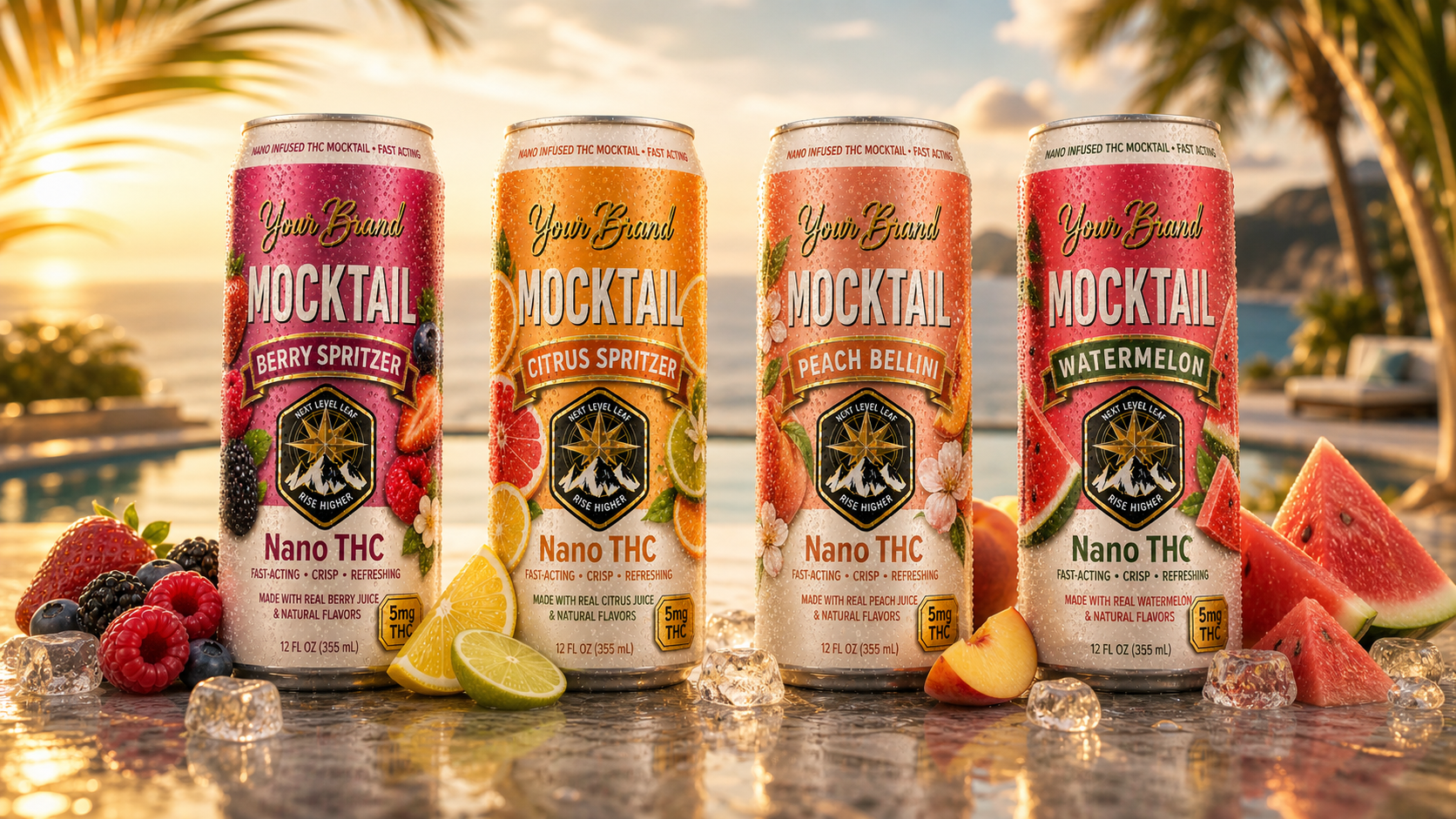
Flavor directions for infused mocktails
Mocktails allow more room for flavor creativity than clean seltzers. They can be familiar enough for quick consumer understanding while still feeling premium and distinctive.
- Margarita: citrus, lime, salt, and classic cocktail recognition.
- Paloma: grapefruit, citrus, and refreshing adult positioning.
- Peach Bellini: bright fruit, brunch cues, and celebratory positioning.
- Pineapple Spritzer: tropical, sparkling, and approachable.
- Berry Spritzer: colorful, fruit-forward, and social.
- Citrus Spritzer: crisp, bright, and easy to pair with low-dose positioning.
- Strawberry or watermelon: familiar fruit profiles with broad consumer appeal.
For more flavor planning, read Best Flavors for THC Mocktails and Flavor Masking THC. If your brand needs a bolder, more nostalgic flavor-forward lane, compare the Infused Sodas format as well.
Formulation considerations for THC mocktails
Mocktails can provide more flavor masking room than seltzers, but they still require careful formulation. THC is naturally oil-soluble, so the product needs a water-compatible cannabinoid system designed for beverages.
Founders should think through:
- Water-soluble or nano-emulsified THC input.
- Dose strategy and onset expectations.
- Sweetness, acidity, aroma, and mouthfeel.
- Carbonated vs still mocktail format.
- Flavor masking and cannabinoid off-notes.
- Shelf life, packaging, and finished-product testing.
For the formulation foundation, read water-soluble THC explained, flavor masking THC, and beverage stability and shelf life.
Low-dose THC mocktails
Mocktails can work well at low and moderate doses because they are often consumed in social contexts. A 2.5mg or 5mg THC mocktail can feel approachable and occasion-based, while a 10mg mocktail may be positioned as a stronger single-can experience where appropriate for the market.
Dose strategy should match the product promise. A brunch-style bellini, evening margarita, refreshing spritzer, or bar replacement beverage may each call for a different dose and flavor intensity.
For related dose strategy, read low-dose THC drinks and cannabinoid selection for THC beverages.
Compliance and adult-oriented presentation
Mocktails need especially thoughtful branding because cocktail-inspired beverages can be exciting, colorful, and flavor-forward. The presentation should remain adult-oriented, responsible, and compliance-aware.
Founders should plan for clear cannabinoid labeling, appropriate warnings, batch documentation, finished-product COAs, responsible claims, and state-by-state market review.
Visit the state resources hub and compliance page for broader planning support.
White-label vs custom THC mocktails
A white-label mocktail path can help a brand move faster by starting with proven flavor directions, production-ready systems, and existing manufacturing pathways. This can be useful when speed to market matters.
Custom mocktail development may be better when the brand wants a signature flavor, special functional ingredient stack, unique mouthfeel, or more differentiated market position.
The right path depends on launch timeline, budget, MOQ, flavor goals, and how unique the product needs to be.
How infused mocktails connect to beverage manufacturing
Infused mocktails require the same manufacturing discipline as any serious THC beverage: cannabinoid delivery, flavor architecture, dose strategy, packaging, stability, testing, COAs, compliance review, and production planning.
If you are ready to explore a mocktail, seltzer, soda, coffee, tea, or broader infused beverage line, you can explore beverage manufacturing here, use the THC Beverage Launch Checklist, or move directly to the White Label Information Request.
Related beverage strategy guides
Infused Sodas
Explore a flavor-forward, nostalgic THC beverage format built around cola, orange, grape, root beer, cream soda, and black cherry positioning.
Explore sodas →Infused Seltzers
Explore clean, low-dose, sparkling THC beverage strategy.
Explore seltzers →Seltzer vs Soda
Compare two major carbonated infused beverage formats.
Compare formats →THC Beverage Formulation
Understand the delivery, flavor, stability, and manufacturing decisions behind infused drinks.
Explore formulation →Flavor Masking THC
Learn how flavor architecture can balance cannabinoid bitterness and off-notes.
Explore flavor masking →Bioavailability in THC Drinks
Understand onset, dose perception, and delivery-system strategy.
Explore bioavailability →Infused Coffee
Compare another high-interest THC beverage format with its own flavor and positioning advantages.
Explore infused coffee →Cost to Start
Understand the budget drivers behind white-label and private-label THC beverages.
Review costs →THC Beverage MOQ
Learn how production quantity affects pricing, launch planning, and inventory risk.
Understand MOQ →Start a THC Beverage Brand
Move from product idea to launch strategy, cost, MOQ, packaging, and quote readiness.
Start the journey →Launch Checklist
Organize your product direction before requesting a quote.
Use checklist →Request a Quote
Share your concept so the project can be scoped around format, dose, flavor, packaging, testing, and timing.
Complete the form →Frequently asked questions
Ready to explore a white-label infused mocktail?
Share your product idea and we’ll help you think through mocktail format, flavor, dose, cannabinoid delivery, packaging, testing, compliance, MOQ, and production strategy.