

THC Mocktail Manufacturing
THC mocktail manufacturing gives brands a way to launch premium, non-alcoholic, cocktail-inspired beverages with adult flavor architecture and a clear social drinking occasion.
The strongest mocktail products are not just sweet THC drinks. They are carefully formulated beverages with cannabinoid delivery, layered flavor, dose strategy, packaging, testing, compliance, and shelf-life planning built into the production path.
THC mocktail manufacturing is the process of producing a non-alcoholic, cocktail-inspired infused beverage using a stable cannabinoid delivery system, premium flavor architecture, clear dose strategy, appropriate packaging, finished-product testing, and batch documentation. The goal is to create a ready-to-drink product that feels adult, social, polished, and commercially credible.
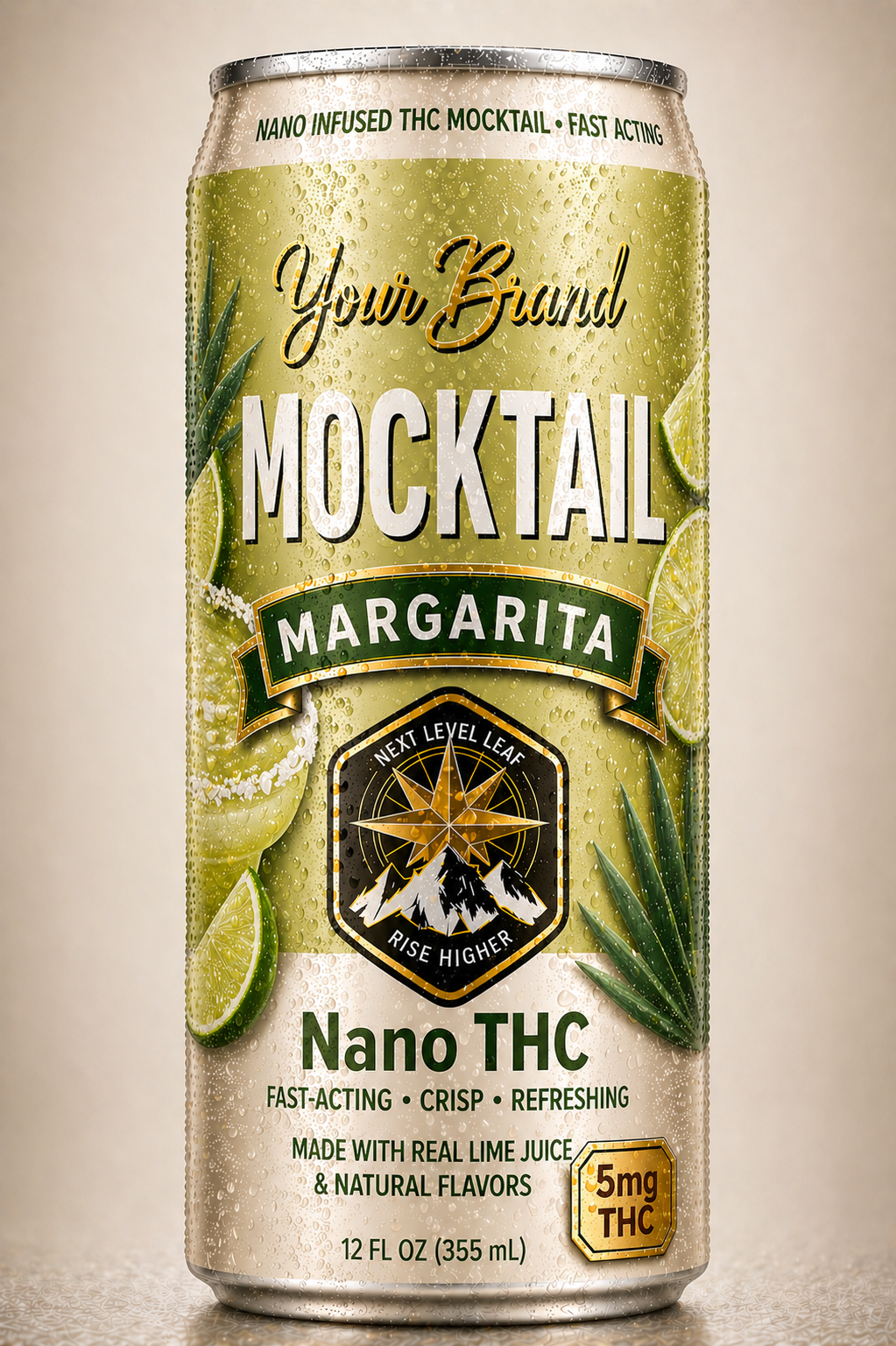 Margarita
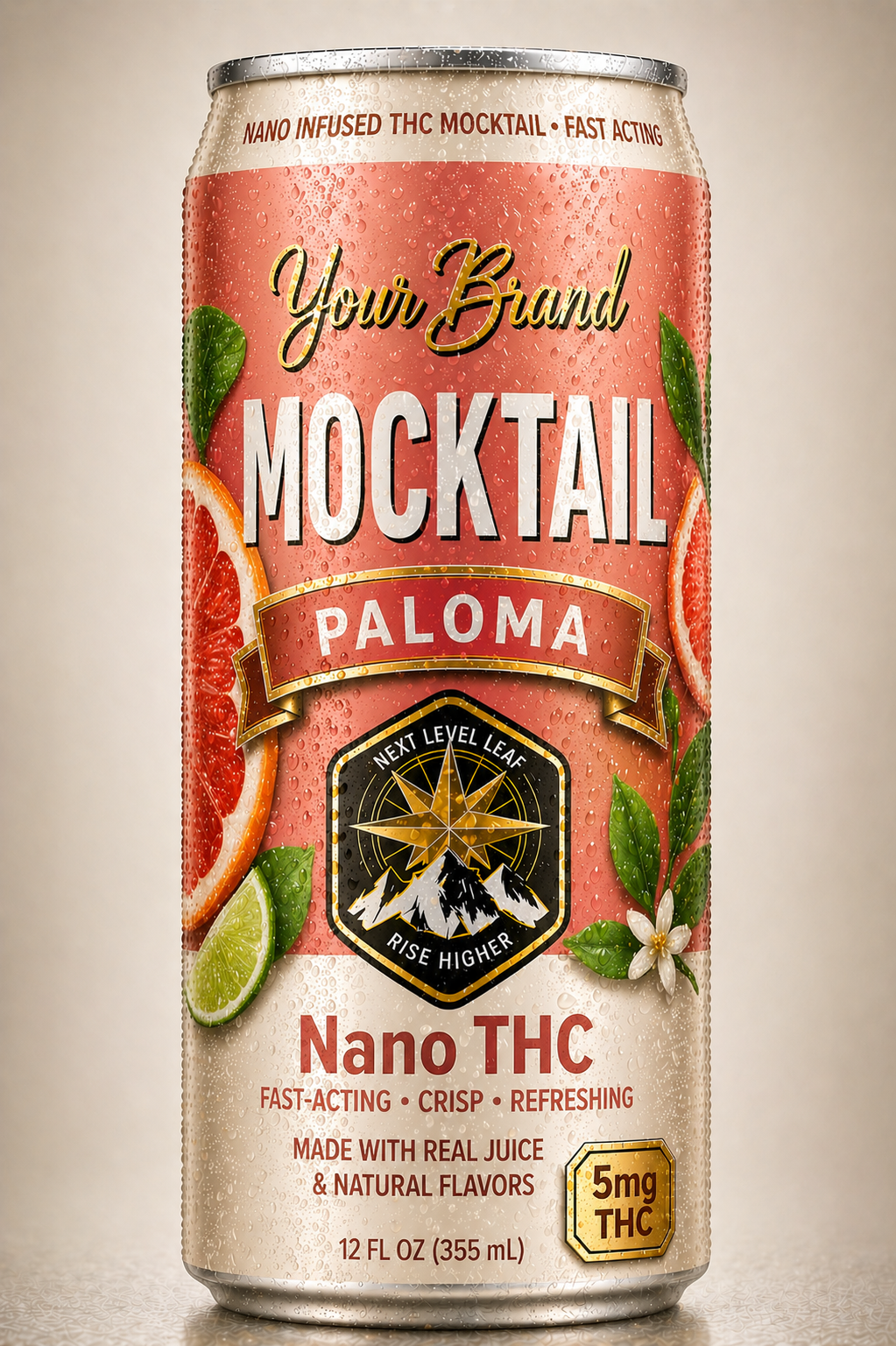 Paloma
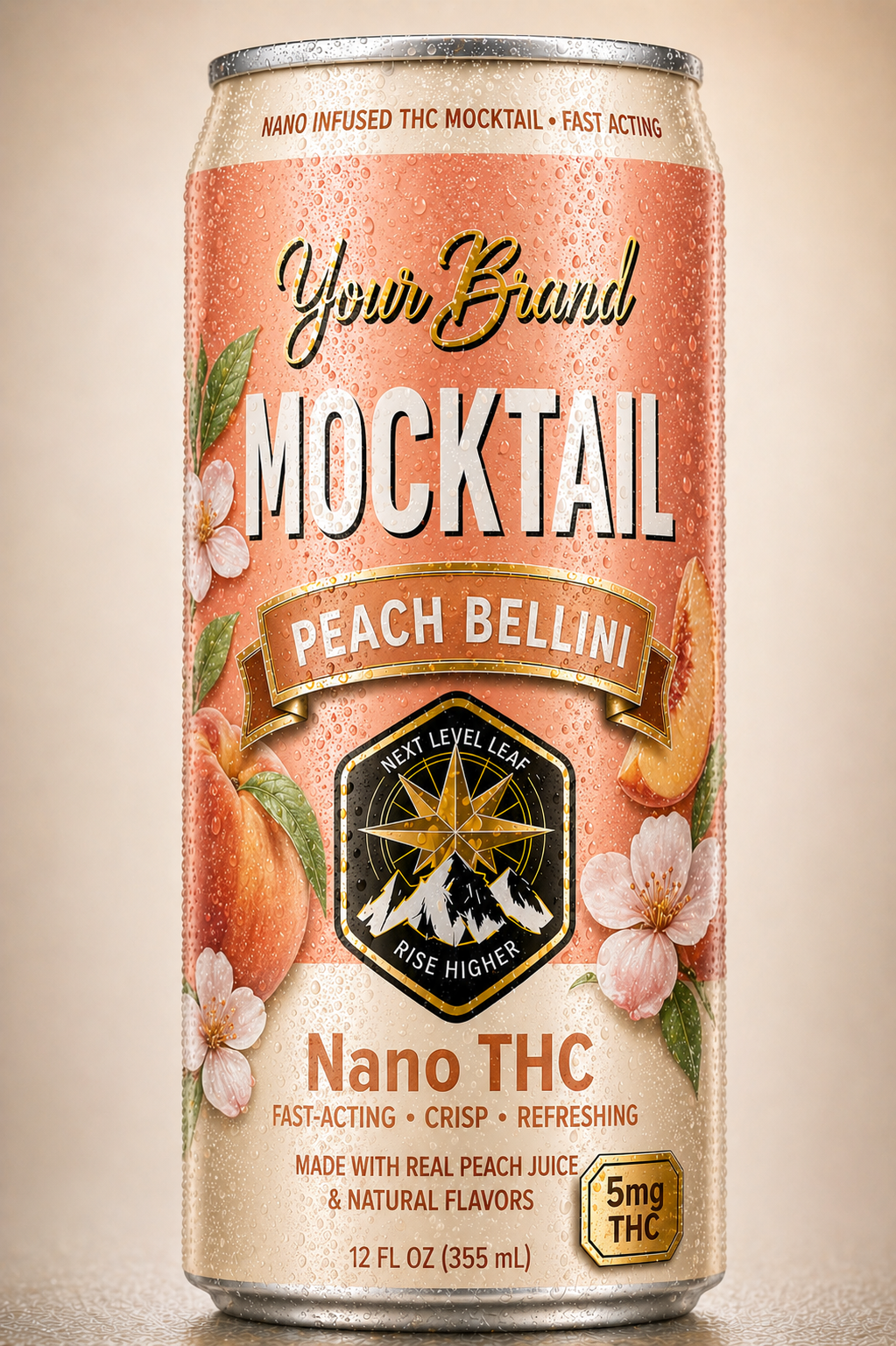 Peach Bellini
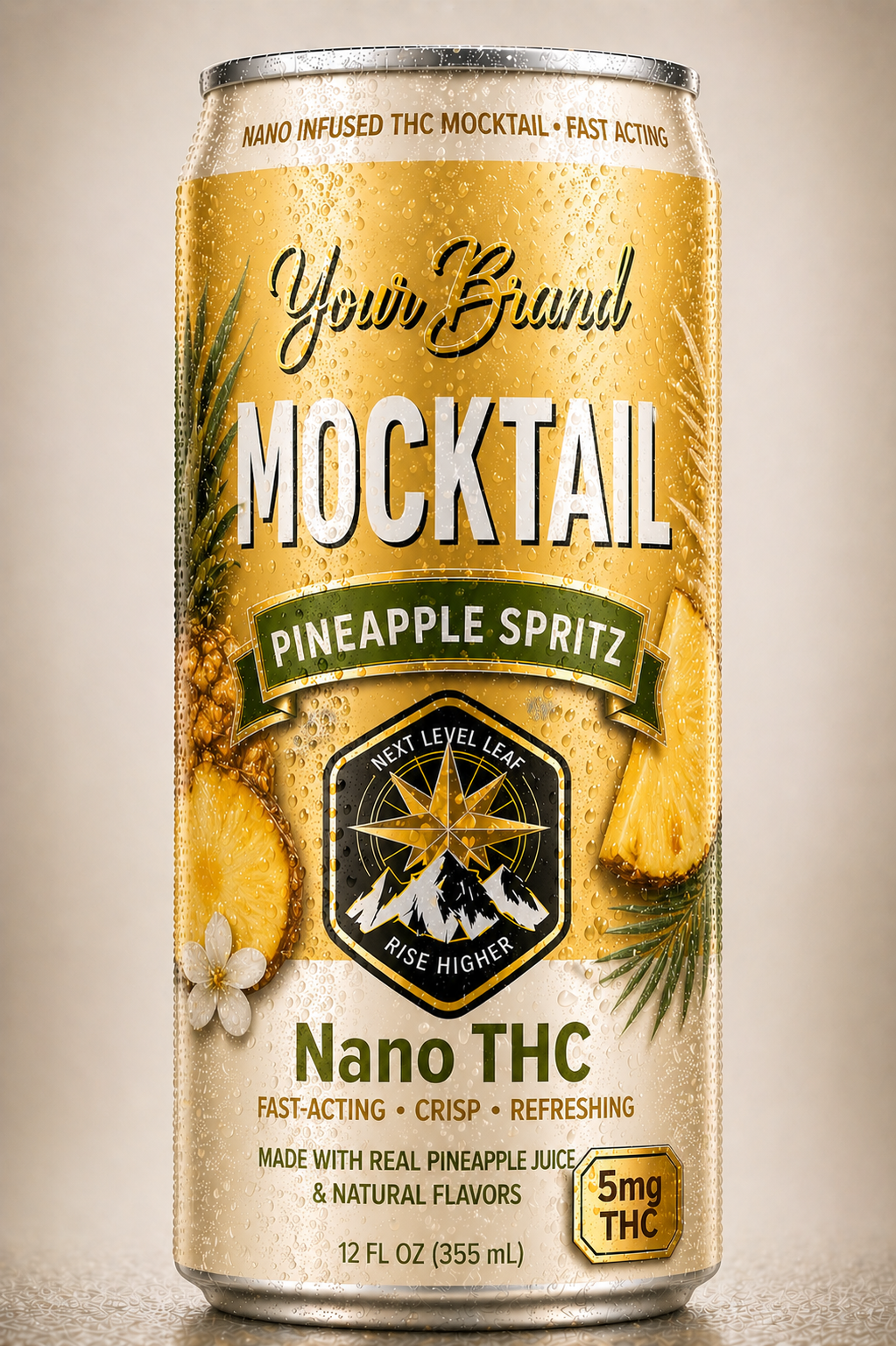 Pineapple Spritzer
Why THC mocktails are different from basic infused drinks
A THC mocktail has to deliver more than refreshment. It needs to feel like an occasion. Consumers may compare it to a margarita, paloma, bellini, spritzer, or bar-style non-alcoholic drink, so the flavor system has to feel intentional.
This makes mocktails a strong format for brands that want to occupy the premium alcohol-alternative space rather than compete only on dose or novelty.
The core manufacturing steps
Every project is different, but THC mocktail manufacturing usually moves through a similar set of decisions.
Define the concept
Choose the drink style, target customer, use occasion, dose, and whether the product is white-label or custom.
Build the formula
Balance flavor, sweetness, acidity, mouthfeel, cannabinoid input, and carbonation or still format.
Validate production
Confirm packaging, stability, testing, COAs, label needs, MOQ, and commercial production path.
Flavor architecture matters more in mocktails
Mocktails often use more layered flavor systems than seltzers or sodas. Citrus, fruit, botanicals, spice, sweetness, acidity, aroma, and mouthfeel all help create the cocktail-inspired experience.
That complexity creates opportunity, but it also adds formulation variables. The product still needs to be stable, manufacturable, and consistent from batch to batch.
- Citrus profiles can support margarita, paloma, and spritzer concepts.
- Fruit profiles can support peach bellini, berry spritzer, watermelon, strawberry, and tropical directions.
- Botanical notes can create a more adult, bar-replacement feel.
- Acidity and sweetness need to feel balanced, not syrupy or harsh.
Founder takeaway: Mocktail manufacturing is strongest when the beverage is built around a real drinking occasion. The product should feel like something a customer would choose instead of alcohol, not just a THC can with cocktail words on the label.
Cannabinoid delivery for THC mocktails
THC is naturally oil-soluble, while mocktails are water-based beverage systems. That means the product needs a water-compatible cannabinoid input that can disperse consistently in the finished drink.
Many modern THC mocktails use beverage-ready emulsions or nano-emulsions to support consistency, onset expectations, and dose uniformity. The best system depends on the formula, pH, flavor, dose, packaging, and shelf-life goals.
For the formulation foundation, read water-soluble THC explained, nano vs emulsion, and bioavailability in THC drinks.
Dose strategy for THC mocktails
Mocktails can work at low, moderate, or stronger dose positions, depending on the brand and market. Many brands may prefer 2.5mg or 5mg for social, sessionable, alcohol-alternative use. A 10mg mocktail may be positioned as a more direct single-can experience where appropriate.
The dose should fit the occasion. A brunch-style bellini, evening margarita, sparkling paloma, and tropical spritzer may each support different consumer expectations.
For related thinking, read low-dose THC drinks.
Carbonated vs still THC mocktails
Some THC mocktails work best as sparkling beverages. Others may work better as still or lightly carbonated drinks with more body. The choice affects flavor, packaging, mouthfeel, shelf life, and consumer expectation.
Bright and social
Best for spritzers, palomas, margarita-style refreshment, and lighter alcohol-alternative occasions.
Richer and more layered
Can fit juice-forward, tea-forward, botanical, or cocktail-inspired formats where body matters more than bubbles.
Packaging and label considerations
Cans are often a strong format for ready-to-drink THC mocktails because they are portable, scalable, and familiar to beverage consumers. However, mocktail branding needs careful adult-oriented presentation.
Because mocktails can be colorful and cocktail-inspired, founders should avoid design choices that feel youth-oriented or confusing. Labeling should clearly communicate cannabinoid content, serving information, warnings, and any state-specific requirements.
For broader planning, visit the state resources hub and compliance page.
Testing, COAs, and finished-product documentation
Professional THC mocktail manufacturing should include finished-product testing and batch documentation. Input COAs are useful, but the finished beverage is what needs to match the label and perform consistently.
- Potency testing helps verify cannabinoid levels.
- Batch-specific COAs support traceability.
- Finished-product documentation strengthens retailer and distributor confidence.
- Stability review helps confirm the product can hold up beyond the first sample.
White-label vs custom THC mocktail manufacturing
A white-label path can help brands move faster by using production-ready beverage systems and proven flavor directions. This can be a strong fit when the goal is speed to market, lower development complexity, or a more practical first launch.
Custom development may be better when the brand needs a signature flavor, functional ingredient stack, specialty mouthfeel, or highly differentiated market position.
What founders should prepare before requesting a quote
A stronger quote starts with a clearer product scope. Before requesting a quote, prepare:
- Target dose per can or serving.
- Mocktail flavor direction.
- Carbonated, lightly sparkling, or still preference.
- White-label vs custom formulation need.
- Target launch state or region.
- Packaging format and label readiness.
- Testing, COA, and compliance expectations.
- MOQ and timeline expectations.
How this connects to beverage manufacturing
THC mocktail manufacturing sits at the intersection of premium flavor, adult beverage positioning, cannabinoid delivery, production discipline, and compliance-aware documentation.
If you are ready to explore a mocktail concept, you can explore beverage manufacturing here or return to the infused mocktails hub.
Related mocktail and formulation guides
Infused Mocktails
Start with the mocktail hub and explore the category opportunity.
Visit the hub →Non-Alcoholic THC Drinks
Explore how THC beverages fit the alcohol-alternative movement.
Planned guide →Ready-to-Drink THC Mocktails
Learn why canned RTD formats can simplify mocktail launches.
Planned guide →Frequently asked questions
Ready to explore THC mocktail manufacturing?
Share your product idea and we’ll help you think through flavor, dose, cannabinoid delivery, sparkling vs still format, packaging, testing, compliance, MOQ, and production strategy.