

How to Launch a THC Mocktail Brand
A THC mocktail brand gives consumers the ritual, flavor, and social feel of an adult beverage without alcohol. For founders, the opportunity is to build a product that feels premium, intentional, and modern, not just a can with THC added to it.
This guide walks through the customer journey behind a THC mocktail brand: positioning, format, dose, flavor strategy, packaging, testing, COAs, MOQ, cost, and the next step toward a white-label or private-label quote.
A THC mocktail brand sells non-alcoholic, cocktail-inspired beverages infused with THC and positioned around adult social occasions. The strongest brands are not built around THC alone. They are built around a clear customer, a memorable drinking occasion, a strong flavor system, reliable manufacturing, finished-product testing, and packaging that feels retail-ready.
For many new brands, a white-label or private-label THC mocktail path can reduce early complexity while still creating a premium alcohol-alternative product with strong customer appeal.
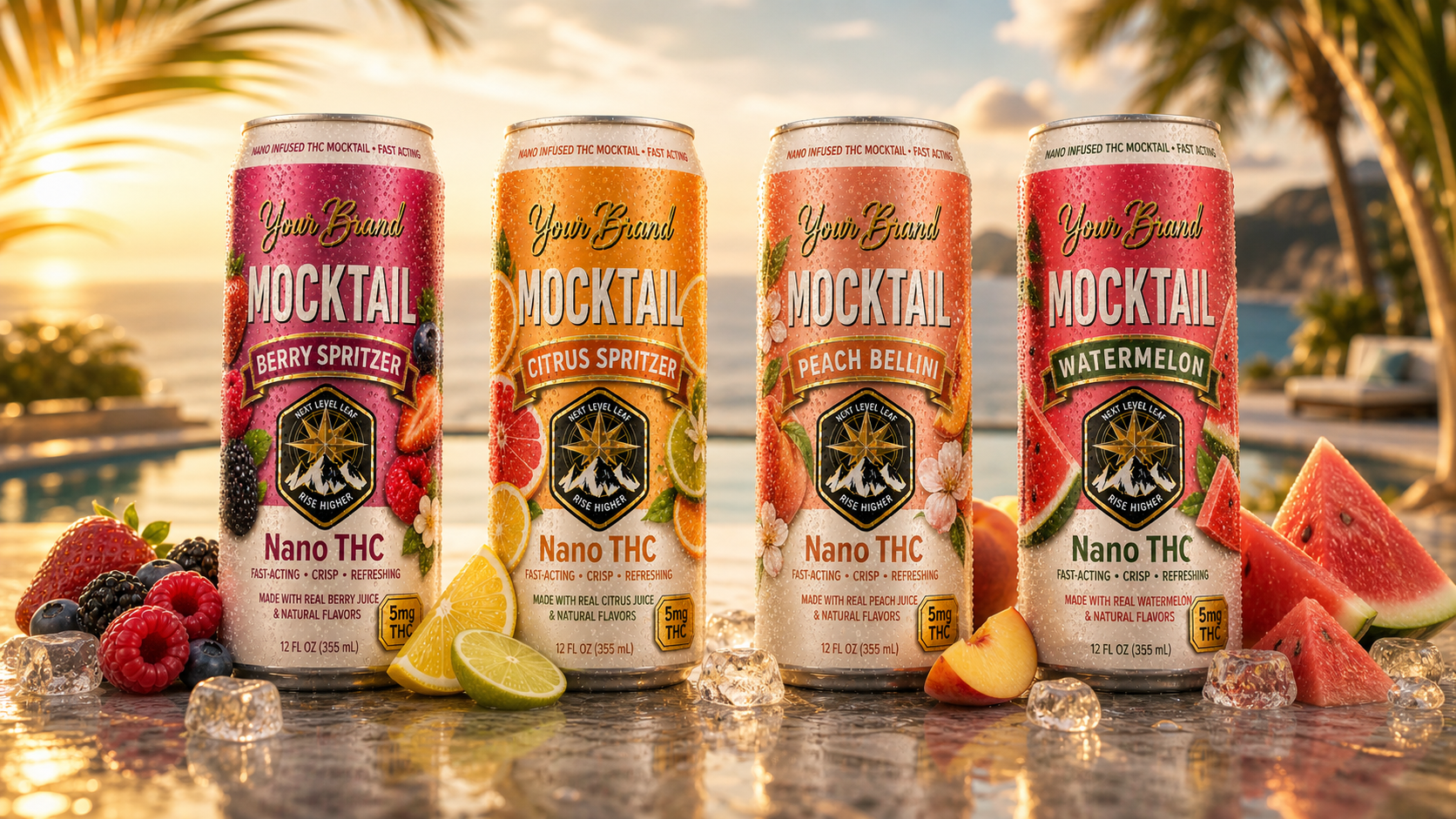
Why THC mocktails are a strong brand opportunity
Consumers are increasingly looking for social beverages that do not require alcohol. That creates a powerful opening for THC mocktails: they can satisfy the ritual of a cocktail, the refreshment of a ready-to-drink beverage, and the controlled experience of a low-dose infused product.
Unlike a basic seltzer, a mocktail gives the brand more room for flavor identity. Citrus, botanical, berry, ginger, tropical, spice, tea, lemonade, and cocktail-inspired profiles can all make the drink feel more intentional and premium.
Alcohol alternative
Mocktails fit evening rituals, social gatherings, dinner occasions, events, and adult beverage replacement moments.
Premium flavor story
More flavor architecture gives founders room to build a brand around taste, occasion, and lifestyle.
Clear shelf identity
A mocktail can stand out visually and verbally when the packaging explains the drink quickly.
Step 1: Define the mocktail occasion
The best THC mocktail brands begin with an occasion, not an ingredient list. The question is not simply “what cannabinoids do we add?” The better question is: “When does the customer reach for this drink?”
A product designed for a Friday night dinner should feel different from a poolside spritz, a low-dose social can, a post-work unwind drink, or a premium cocktail replacement. The occasion determines dose, sweetness, acidity, flavor, can design, sales language, and retail pitch.
Social sipping
Low-dose, approachable, easy to drink, and built for sharing.
Cocktail replacement
More adult flavor cues, premium packaging, and stronger ritual identity.
Evening unwind
Calmer flavor profiles, lower sugar expectations, and relaxed positioning.
Event beverage
Simple explanation, strong visual identity, and retailer/event-friendly packaging.
Step 2: Choose the mocktail style
THC mocktails can be built around many familiar beverage cues. The goal is to choose a style that is easy to understand, scalable to manufacture, and consistent with the brand identity.
| Mocktail Style | Brand Feel | Flavor Direction | Launch Notes |
|---|---|---|---|
| Margarita-inspired | Bright, social, citrus-forward | Lime, orange, salt, agave-style notes, tropical fruit | Strong fit for summer, events, and alcohol-alternative positioning |
| Mojito-inspired | Fresh, botanical, refreshing | Lime, mint, cucumber, botanical accents | Can bridge seltzer and mocktail formats well |
| Paloma-inspired | Grapefruit, citrus, premium social | Grapefruit, lime, orange, herbal notes | Good fit for adult beverage consumers and spritz-style positioning |
| Mule-inspired | Bold, ginger-forward, memorable | Ginger, lime, spice, citrus | Strong flavor can help with cannabis bitterness management |
| Lemonade spritz | Approachable, refreshing, broad appeal | Lemonade, berry, tea, tropical, botanical | Good entry point for mainstream consumers |
If you want a lighter sparkling format, review THC Spritzers. If you want a cleaner sparkling-water style format, review Infused Seltzers.
Step 3: Decide white-label, private-label, or custom
A THC mocktail brand can launch through a white-label, private-label, or custom development path. The right path depends on how quickly you want to move, how specific the flavor concept is, and how much development work is required.
White-label
Best when speed, cost control, and market testing are more important than a fully proprietary formula.
Private-label
Best when the brand wants more control over dose, flavor direction, packaging, and product story while using a proven production path.
R&D development
Best when the product requires a unique flavor system, ingredient stack, functional positioning, or technical development work.
Founder takeaway: A first mocktail launch does not need to be overly complex. The best early product is often the one that is easy to explain, manufacturable, retail-ready, and strong enough to learn from.
Step 4: Choose the dose and cannabinoid profile
Mocktails can work well with low-dose THC because they are designed around social drinking occasions. A 2.5mg or 5mg beverage can support sessionability, while a 10mg can may fit a stronger single-can experience where appropriate.
The dose should support the product promise. A sophisticated social spritz may not need a high dose. A stronger evening unwind product may justify a different approach. If additional cannabinoids or functional ingredients are used, they should make the drink easier to understand, not harder to explain.
- 2.5mg THC: very approachable, light, sessionable, social.
- 5mg THC: strong mainstream low-dose position for alcohol-alternative drinks.
- 10mg THC: stronger single-can experience where that dose fits the market and channel.
- CBD, CBG, CBN, THCV, terpenes, or functional ingredients: useful only when they support a clear product story.
For deeper planning, review Cannabinoid Selection for THC Beverages and Low-Dose THC Drinks.
Step 5: Build a flavor system that feels adult
Mocktail consumers expect more than fruit flavor and carbonation. They expect a beverage that feels intentionally designed. Acidity, sweetness, bitterness, aroma, botanicals, spice, and mouthfeel all shape the experience.
That does not mean the formula needs to be complicated. In many cases, a clean citrus or botanical profile with the right sweetness level can feel more premium than an overloaded ingredient stack.
Bright and social
Lime, lemon, orange, grapefruit, and yuzu-style profiles create a familiar adult beverage base.
Premium cues
Mint, basil, rosemary, cucumber, ginger, and herbal notes can elevate the brand beyond basic fruit flavor.
Approachable appeal
Berry, peach, mango, pineapple, watermelon, and passionfruit can broaden appeal and support retail sampling.
For technical flavor planning, review Flavor Masking THC and Beverage Stability and Shelf Life.
Step 6: Plan packaging that communicates quickly
THC mocktail packaging has to do several things at once. It must feel premium, communicate the flavor, make the THC dose clear, avoid child-appealing design, and give retailers confidence that the product is professionally documented.
The package should make the customer immediately understand the occasion: cocktail replacement, social spritz, evening unwind, sober-curious beverage, or adult functional refreshment.
- Make the flavor easy to understand.
- State THC amount clearly.
- Use adult-oriented design.
- Use QR-code COA access when appropriate.
- Avoid medical, disease, or exaggerated effect claims.
- Keep the front label focused on what the beverage is and why it matters.
Step 7: Build around testing, COAs, and retailer confidence
A THC mocktail brand needs more than good taste. Serious buyers want documentation. Finished-product testing, batch-specific COAs, potency verification, lot traceability, and clear label language all support retailer confidence.
This is especially important for premium beverage brands. A mocktail may look like a lifestyle product, but it still needs the documentation discipline of a serious infused beverage.
Review the Next Level Leaf Compliance Approach and State Resources as you plan your target markets.
Step 8: Think through MOQ, cost, and launch quantity
Mocktails can involve more flavor complexity than basic seltzers, so it is important to match the first production run to the launch strategy. A founder testing a concept locally does not need the same quantity as a brand entering multiple states with distributor interest.
Cost will depend on beverage format, flavor complexity, cannabinoid dose, packaging, testing, freight, MOQ, and whether the product is white-label or custom.
Cost to Start
Understand the main budget drivers behind THC beverage launches.
Review cost guide →THC Beverage MOQ
Learn how production quantity affects pricing and inventory strategy.
Understand MOQ →Launch Checklist
Organize the product details needed before requesting a quote.
Use the checklist →What to prepare before requesting a THC mocktail quote
A quote becomes much easier when the core product direction is clear. You do not need a finished product spec, but you should be able to describe the mocktail you want to create.
- Desired mocktail style or flavor direction.
- Target THC dose per can.
- Target states and sales channels.
- White-label, private-label, or custom development preference.
- Can size and packaging status.
- Estimated launch quantity or sales goal.
- Timeline and any event, retail, or seasonal deadline.
- Whether you need samples, pilot production, or custom R&D.
Best next step: Complete the White Label Information Request so the project can be scoped around flavor, dose, packaging, MOQ, testing, COAs, and production timing.
Where to go next
If you are comparing formats, start with the mocktail hub and spritzer guide. If you are ready to think through launch steps, use the start-a-brand pages.
Infused Mocktails
Explore the broader mocktail category and alcohol-alternative beverage strategy.
Explore mocktails →THC Spritzers
Explore a lighter premium format that sits between seltzers and mocktails.
Explore spritzers →Start a THC Beverage Brand
Move from product idea to launch strategy, cost, MOQ, and quote readiness.
Start the journey →Infused Seltzers
Compare cleaner low-dose sparkling THC beverage formats.
Explore seltzers →THC Beverage Formulation
Understand nano THC, flavor, cannabinoid selection, stability, and onset strategy.
Explore formulation →Request a Quote
Share your product direction so the project can be scoped.
Complete the form →Frequently asked questions
Ready to explore a THC mocktail brand?
If you are serious about launching a THC mocktail, spritzer, seltzer, soda, tea, lemonade, coffee, or functional beverage, the next step is to share your product direction so the project can be scoped around format, dose, flavor, packaging, testing, MOQ, pricing, and production timing.