

Cannabinoid Selection for THC Beverages
Choose a cannabinoid formula that customers can understand and your brand can responsibly produce, test, label, and scale.
Start with the beverage, buyer, sales channel, and planned markets. Then decide whether THC alone or a carefully chosen blend gives the product a clearer reason to exist.
Updated August 25, 2026
Short answer: Choose cannabinoids in this order: product format, THC amount, target customer, flavor, sales channel, planned markets, and price position. Add CBD, CBG, CBN, CBC, THCV, or terpenes only when each ingredient has a clear product purpose.
A longer ingredient list does not automatically create a better beverage. It can increase cost, flavor work, testing needs, label complexity, and claim risk.
Start with the product, not an effect promise
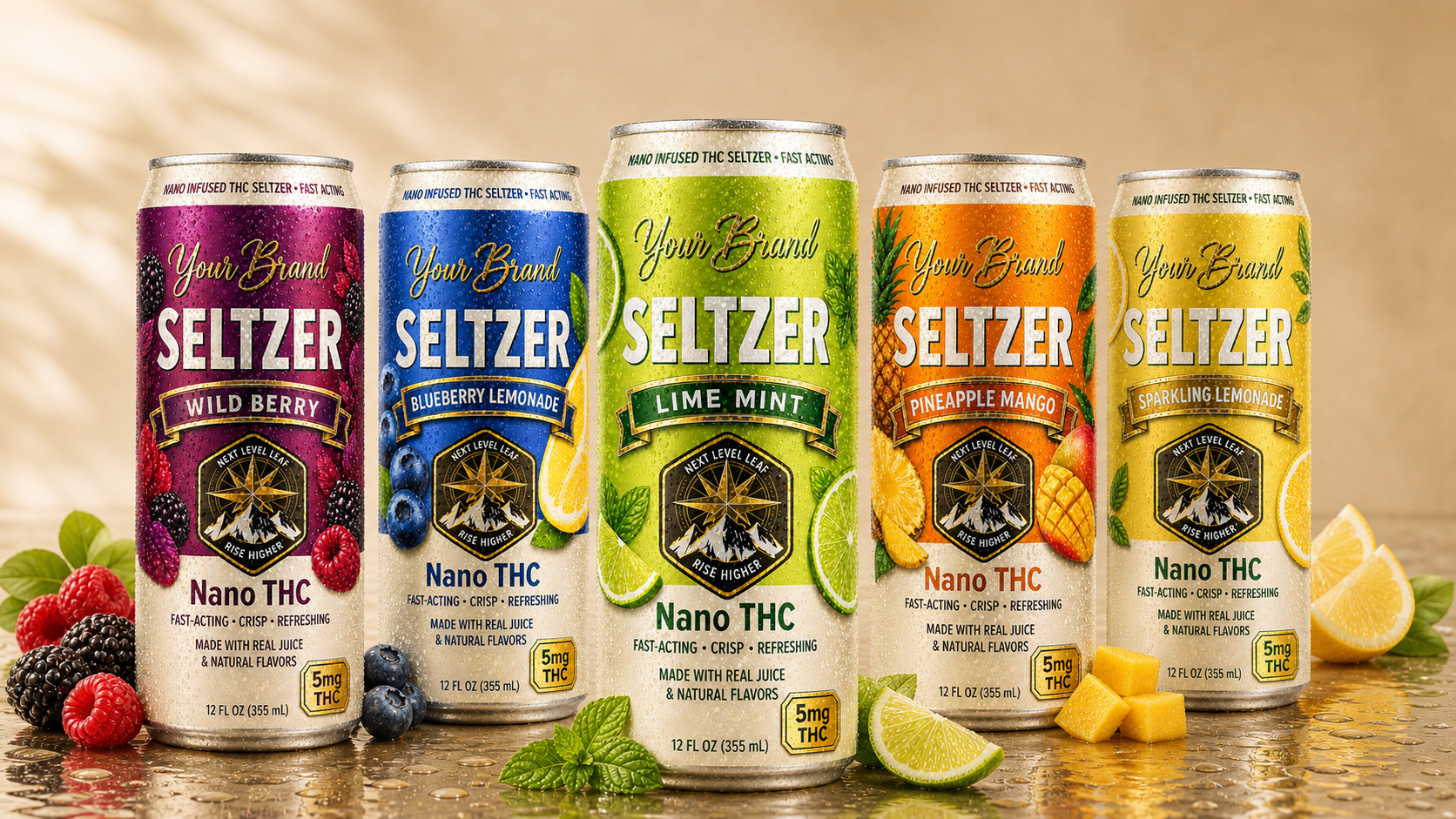
A buyer needs to understand what the beverage is, who it is for, how it fits a retail set, and why someone would choose it again. That story should be clear before the formula grows more complicated.
Begin by defining the beverage type, intended THC amount, flavor, package, sales channel, planned jurisdictions, price position, and launch volume. Then ask whether another cannabinoid makes the product easier to understand or merely gives the label more ingredients.
A useful rule: if the team cannot explain why an ingredient belongs in one plain sentence, it may not belong in the first formula.
What each cannabinoid changes
This comparison is for product planning. It is not a promise that a cannabinoid will create a specific physical, mental, or health outcome.
Delta-9 THC
The primary intoxicating cannabinoid in most hemp-derived THC beverages. Its amount affects labeling, testing, customer expectations, channel fit, and jurisdiction review.
CBD
A non-intoxicating cannabinoid used in some blended formulas. It can affect flavor, cost, sourcing, testing, labeling, and where the product may be sold.
CBG
Sometimes included in daytime product concepts. Its presence does not substantiate focus, clarity, or performance claims.
CBN
Commonly seen in evening product concepts. Its presence does not substantiate sleep, insomnia, or relaxation claims.
CBC
May distinguish a more complex blend, but it adds sourcing, testing, cost, and customer-education considerations without an established beverage benefit.
THCV
May support a differentiated concept, but appetite, energy, or metabolic claims should not be used without reliable substantiation and legal review.
Simple formula or multi-cannabinoid blend?
| Decision | Simple THC formula | Multi-cannabinoid formula |
|---|---|---|
| Customer explanation | Usually easier to understand quickly | Needs a clear reason for every added ingredient |
| Flavor work | Fewer active inputs to manage | May require more masking and iteration |
| Cost and sourcing | Usually simpler to price and procure | More inputs, specifications, and supplier records |
| Testing | Fewer target compounds | More label-relevant compounds to verify |
| Claims | Still requires careful review | More opportunity for unsupported effect claims |
| Best use | A clear flagship or broad retail concept | A differentiated product with a defensible purpose |
Choose the THC amount with the market plan
There is no universal best amount of THC for every beverage. The appropriate formula depends on the package, customer, retail channel, and rules that apply where the product will be made and sold.
Do not select an amount only because it appears in another brand's product or because it is permitted in one jurisdiction. A product intended for several markets may need a different plan from one created for a single state or channel. Review the relevant state resources, then confirm the product-specific requirements before production.
Plan flavor and cannabinoid inputs together
Cannabinoid ingredients and terpenes can introduce bitterness, earthiness, aroma, or other sensory changes. Adding more actives can require more flavor development and may affect sweetener, acid, and aroma decisions.
Terpenes can also influence aroma and flavor, but they should not be used to imply a therapeutic effect that the brand cannot support. Read the guide to flavor masking THC for the practical formulation issues.
The delivery system still has to work
Choosing cannabinoids is only part of formulation. The selected inputs must disperse in the beverage, remain consistent through the intended shelf life, and deliver repeatable potency from batch to batch.
That is why cannabinoid selection should connect to water-dispersible THC, nano versus conventional emulsion, bioavailability, and beverage stability and shelf life.
Verify the finished beverage
An ingredient certificate of analysis does not confirm the amount in the finished drink. The testing plan should match the formula, label, batch, target jurisdictions, and sales channels.
- Keep supplier specifications and certificates for cannabinoid inputs.
- Use batch-specific finished-product testing appropriate to the product.
- Confirm label-relevant potency in the finished beverage.
- Maintain lot and batch traceability.
- Review whether the package needs a QR code or another way to provide test information.
More active ingredients usually mean more compounds to source, control, test, and explain.
Keep claims separate from product concepts
Words such as daytime, evening, social, or botanical can describe a product concept. Statements that promise focus, sleep, appetite control, pain relief, anxiety relief, or another health outcome are claims that require substantiation and legal review.
The FDA states that federal food and drug requirements still apply to cannabis-derived compounds and has challenged unapproved therapeutic claims. State rules and enforcement priorities can add further requirements. Review the FDA's cannabis-derived products guidance and obtain product-specific advice for the formula, label, marketing, channel, and jurisdictions.
This page provides general product-development information and is not legal, medical, or regulatory advice.
A practical selection checklist
- Define the beverage format and target buyer.
- Choose the intended THC amount and package configuration.
- List the states and channels where the product is expected to sell.
- Give every additional cannabinoid a clear product purpose.
- Check ingredient documentation, availability, cost, and flavor impact.
- Plan the water-dispersible delivery system and shelf-life work.
- Define finished-product testing and traceability.
- Review the label and every consumer-facing claim.
- Confirm that the formula can move from launch into repeat production.
Build for launch and growth
The standard commercial starting point is approximately 1,200 cans per flavor and dose. From there, Next Level Leaf can help qualified brands plan multi-pallet orders, recurring production, additional flavors, and expanding product lines.
A selective 360-can prototype option may be available for qualified projects when a smaller validation run is the right next step. It is not the limit of our production capability.
Good scale planning connects formula, ingredient lead times, packaging, testing, inventory, and release schedules before demand increases.
Move from selection to a production plan
If the cannabinoid profile is still unclear, start with custom THC beverage formulation. If the concept is defined, review the broader THC beverage manufacturing process, pricing factors, and beverage manufacturing capabilities.
Formulation Hub
Move up to the complete formulation learning path.
Explore formulationCommon Formulation Mistakes
See what can derail taste, stability, testing, and production.
Review the mistakesDiscuss Your Beverage
Share the formula stage, package, quantity, and production goals.
Request a quoteRelated beverage formats
Frequently asked questions
Turn the formula into a product plan
Tell us what you want to make, the cannabinoid direction you are considering, your target quantity, packaging, and sales plan. We can help map the next steps from formulation through commercial production and repeat runs.