

I know what I want to sell
Bring the beverage type, target customer, flavor direction, cannabinoid amount, package idea, markets, and launch goal.
Review custom formulationSee what happens from your first product decision through formulation, packaging, production, testing, delivery, and the next order.
The right path depends on where you are today. You may need to shape an early concept, develop a custom formula, transfer an existing formula, or prepare a proven product for larger recurring runs.
Updated August 25, 2026
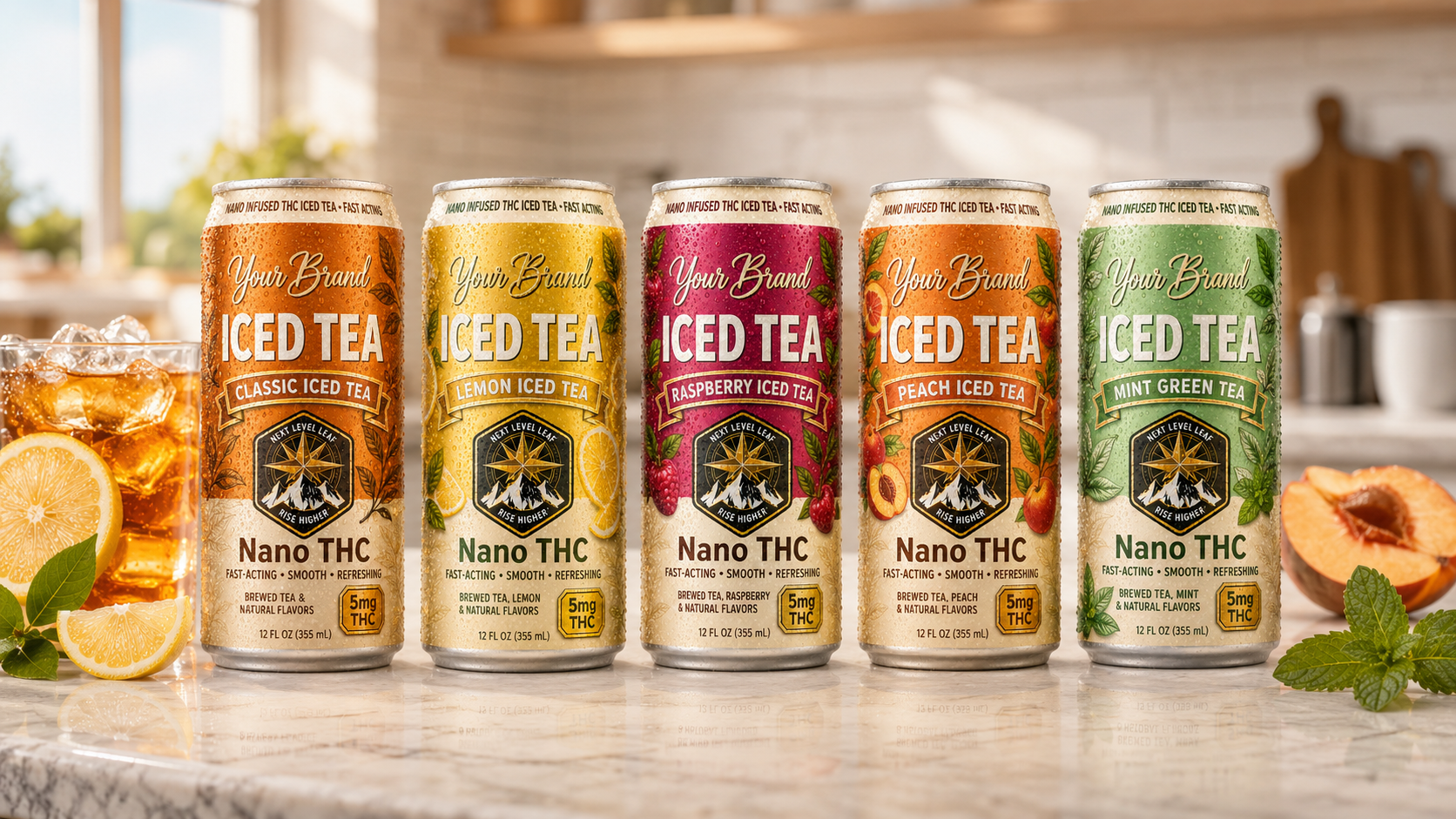
A successful production run starts with a product, package, quantity, and sales plan that the manufacturer can execute.
Short answer: a THC beverage moves from a defined product brief into the right formulation and manufacturing path, followed by packaging preparation, material coordination, production, finished-product testing, release, freight, and reorder planning.
The process should fit the stage of the business. A first launch needs clarity and risk control. An established brand may need capacity, repeatability, reliable scheduling, and a plan for larger volumes.
Find your starting point
Use the stage that best describes your project. You do not need to solve every production detail before starting the conversation.
Bring the beverage type, target customer, flavor direction, cannabinoid amount, package idea, markets, and launch goal.
Review custom formulationChoose a near-ready beverage and adapt the flavor, dose, label, and package to the project when the available options fit.
Compare production pathsProvide the formula, specifications, process needs, packaging plan, and prior testing so production feasibility can be reviewed.
Review capabilitiesPlan ingredients, packaging, testing, inventory, freight, release timing, and forecasts for multi-pallet and recurring production.
Plan for scaleThe details change by beverage and package, but the major decisions follow a practical sequence.
Confirm the beverage type, buyer, flavor, cannabinoid amount, package, sales channel, planned markets, and business goal.
Decide whether an existing production option, custom formulation, or formula-transfer review fits the project.
Address taste, sweetness, acidity, cannabinoid delivery, ingredient compatibility, stability, and production feasibility.
Confirm the container, label method, artwork, case pack, carriers, required statements, and batch identification.
Confirm quantities, pricing, materials, testing, freight assumptions, customer signoffs, and the production schedule.
Batch the beverage, add the cannabinoid system according to the production specification, fill, close, label, code, and case the product.
Complete the planned finished-product testing, review batch documentation, and release inventory when requirements are satisfied.
Coordinate freight, monitor sales and inventory, capture market feedback, and prepare the reorder before stock runs low.
A useful first conversation does not require a finished specification. It does require enough information to identify the right path and the important unknowns.
If some answers are not settled, say so. A manufacturer can help identify the next decision, but cannot responsibly quote an undefined product as if every variable were known.
A promising bench sample still has to work in a commercial batch. The formula must account for the beverage base, cannabinoid input, sweetness, acidity, carbonation or nitrogen, flavor masking, processing, package, and intended shelf life.
That is why product development should connect to THC beverage formulation, cannabinoid selection, water-dispersible THC, and stability and shelf life.
The goal is not simply to make one good batch. It is to create a beverage that can be produced, tested, packed, delivered, sold, and made again.
The container and decoration method influence material lead time, line fit, label review, case configuration, freight, storage, and retail presentation. Pressure-sensitive labels can provide a practical commercial launch path. Sleeves, digitally printed cans, and printed cans may require different quantities, costs, and lead times.
Artwork should be built from the correct production template and reviewed before printing. The brand remains responsible for obtaining appropriate legal and regulatory review for its label and claims.
Review the THC beverage manufacturing hub before committing to artwork or ordering materials.
Production includes more than filling cans. The beverage is batched to the agreed specification, processed for the format, filled and closed, decorated or labeled as planned, coded for traceability, packed into the agreed configuration, and documented by lot.
Afterward, the planned finished-product testing must be completed and reviewed before release. Freight, storage, sales timing, and customer communication should be coordinated around the release plan, not an assumed production-day ship date.
Review beverage quality control for the connection between specifications, batch records, finished-product testing, certificates of analysis, packaging checks, and issue tracking.
A clear decision owner, timely feedback, and one current product specification help keep the work moving.
The standard commercial starting point is approximately 1,200 cans per flavor and dose. This provides a practical entry into commercial production while giving the brand inventory to sell, sample, and evaluate.
A selective 360-can prototype option may be available for qualified projects when a smaller validation run is the right next step. It is considered after the standard commercial path and is not the limit of our production capability.
Next Level Leaf can also help qualified brands plan multi-pallet runs, larger-volume orders, recurring production, additional flavors and doses, and expanding product lines. Growth-stage planning focuses on forecasts, materials, production windows, testing, inventory, freight, and dependable reorders.
| Your stage | Best next resource | What to do |
|---|---|---|
| You are shaping the product | Custom formulation | Clarify the formula, sample path, package, and manufacturing fit. |
| You are comparing manufacturing models | Co-packing versus white label | Choose the operating path that matches your formula and resources. |
| You need budget context | Pricing | Review the factors that affect development, packaging, testing, and production cost. |
| You need to confirm production fit | Capabilities | Review formats, project stages, and growth support. |
| You have enough detail to scope the project | Request a quote | Share the product, package, quantity, markets, and timeline. |
Related resources
Move up to the manufacturing hub, across to the next operational decision, or down to a quote request.
Review the complete manufacturing path, project types, packaging, quality, and scale.
Explore the manufacturing hubUnderstand specifications, testing, batch records, certificates, and release.
Review quality controlPlan reorders, larger runs, materials, inventory, freight, and product-line growth.
Plan for scaleSee the broader customer journey from the first conversation through production.
Review the processResolve common questions about projects, manufacturing, and working with Next Level Leaf.
Read the FAQShare the details that are already decided and identify what still needs to be solved.
Start the quote requestFAQ
These answers cover the decisions buyers most often need to make before a first run or larger reorder.
Tell us your beverage type, flavor, cannabinoid amount, package, target quantity, markets, timing, and current stage. We can help identify the right next step for a first commercial run or a larger recurring program.