


Launch with a sellable run
The standard starting point is approximately 1,200 cans per flavor and dose. Use the run to establish real sales, customer feedback, account interest, and replenishment timing.
Review the production processBuild a production plan that can support the first commercial run, multi-pallet orders, recurring schedules, and an expanding product line.
The goal is not simply to make more cans. It is to keep the right products available while protecting cash, quality, margin, and the ability to reorder reliably.
Updated August 25, 2026
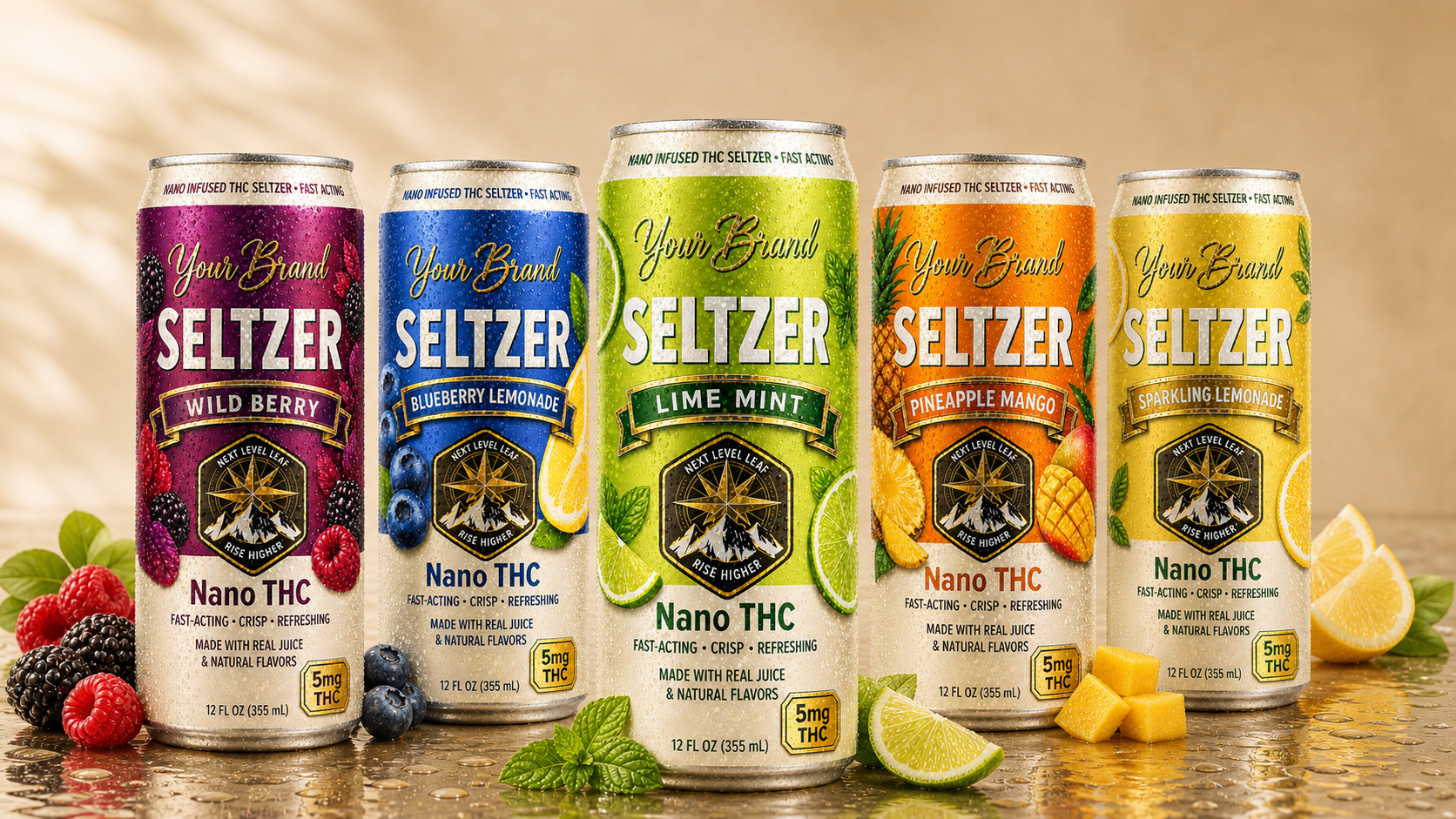
Next Level Leaf supports qualified brands from commercial entry through larger-volume orders and repeat production.
Short answer: scale when sales velocity, confirmed account demand, reorder history, available cash, storage, and production consistency support more inventory.
Approximately 1,200 cans per flavor and dose is the standard commercial starting point. It is not a production ceiling or a signal that Next Level Leaf serves only small brands. Established and growing brands can scope larger first orders, multi-pallet runs, recurring production, and expanding product lines.
Choose the right production stage
Your production quantity should match what the business can sell, fund, store, distribute, and reorder.
The standard starting point is approximately 1,200 cans per flavor and dose. Use the run to establish real sales, customer feedback, account interest, and replenishment timing.
Review the production processUse sell-through and lead-time information to reorder before inventory becomes a sales constraint. Protect the strongest SKUs and reduce avoidable changes.
Build a reorder planPlan multi-pallet orders, recurring production, broader distribution, more flavors, and additional doses around forecasts, materials, quality, freight, and working capital.
Review production capabilitiesA 1,200-can commercial run is an accessible entry point, not a required limit for every customer. An established brand with confirmed accounts, a proven formula, adequate working capital, and a distribution plan may be ready to scope a larger initial order.
The production conversation should include both the immediate order and the expected program. Share the current forecast, account commitments, planned launch markets, likely order frequency, packaging needs, and product-line roadmap so materials and scheduling can be considered together.
Use the quantity that fits the demand plan. Do not undersupply a proven launch, and do not create excess inventory only to chase a lower unit cost.
Inventory is moving through customers and accounts, not only leaving the warehouse for samples or initial placements.
Retailers, distributors, or direct customers provide enough evidence to forecast the next production need.
The brand understands product, packaging, testing, freight, storage, sales, and financing costs.
The company can fund the run and operate while inventory moves through the channel.
The team knows where product will go, how it will be stored, and who will manage deliveries.
Formula, package, artwork, testing, and quality expectations are clear enough to repeat.
The team accounts for materials, scheduling, production, testing, release, and freight before inventory runs low.
Additional flavors or doses answer a real buyer or channel need instead of adding complexity without demand.
A first run should produce more than revenue. It should give the team enough evidence to plan the next order.
Separate real sales from free samples, internal transfers, or initial placements. Scaling decisions should be based on repeatable demand.
A useful starting calculation is:
Expected sales during the complete replenishment period, plus appropriate safety stock, equals the working reorder point.
The replenishment period includes more than production days. Account for formula or specification changes, ingredient availability, packaging printing, production scheduling, batching, finished-product testing, release, and freight.
Review the reorder point regularly as sales velocity, account mix, and production timing change. A distributor launch or large new account can make an old forecast obsolete.
More flavors can create interest, but every SKU also creates separate ingredients, packaging, testing, inventory, forecasting, and sales work. Protect the variants that generate repeat demand before expanding the line.
| Evidence | Likely decision | Reason |
|---|---|---|
| Strong repeat sales and account reorders | Protect and consider more volume | Demand is supported by behavior. |
| Good trial but weak repeat purchase | Investigate product, price, or positioning | More inventory may not solve the underlying issue. |
| One channel performs and another does not | Forecast by channel | A blended average can hide the real opportunity. |
| Slow SKU with strategic account value | Keep selectively or produce less often | The product may serve a narrow but useful role. |
| New flavor without confirmed demand | Defer or validate | Line expansion adds cost and operational complexity. |
Larger orders may improve some ingredient purchasing, packaging efficiency, production setup, freight utilization, and unit economics. They may also make supply and account planning more predictable.
Not every cost falls at the same rate. Cannabinoid content, specialty ingredients, testing, decoration method, storage, financing, and delivery still affect the economics. Compare the full landed and operating cost, not only the production price per can.
Review beverage pricing factors before choosing volume primarily for a lower unit price.
A larger run should reduce supply risk without creating an avoidable cash, inventory, or quality problem.
The formula and package need one controlled specification. Supplier documentation, batch records, lot traceability, finished-product testing, packaging checks, retain practices, and issue follow-up should support consistent repeat production.
When a formula, ingredient, package, artwork file, or testing requirement changes, identify the new version before the next run. Quiet changes create confusion and make it harder to compare batches.
Read beverage quality control and the beverage production process before building a recurring schedule.
For a larger or recurring program, provide:
This helps the production team evaluate more than a single run. It creates the beginning of a repeatable supply plan.
The standard commercial starting point remains approximately 1,200 cans per flavor and dose. Larger-volume and recurring programs can be scoped according to the product, package, forecast, and production plan.
A selective 360-can prototype option may be available for qualified projects when a smaller validation run is genuinely the right step. It follows the standard commercial path in this discussion because Next Level Leaf is not positioned as a prototype-only or low-volume manufacturer.
| Your situation | Next resource | Action |
|---|---|---|
| You are preparing the first commercial run | Production process | Confirm the product, package, materials, testing, timing, and delivery path. |
| You are comparing manufacturing models | Co-packing versus white label | Choose the path that matches your formula, team, and scale needs. |
| You are evaluating production fit | Capabilities | Review project stages, formats, and growth support. |
| You are planning a larger or recurring order | Request a quote | Share the SKUs, volume, frequency, packaging, markets, and production window. |
Related resources
Move up to the manufacturing hub, across to quality and production planning, or down to a larger-volume quote.
Review manufacturing paths, formulation, packaging, quality, and commercial production.
Explore the manufacturing hubSee how a product moves from a defined brief through release and delivery.
Review the production processConnect specifications, testing, documentation, packaging checks, and release.
Review quality controlSee how Next Level Leaf supports early development and larger-volume programs.
Review capabilitiesUnderstand the factors that shape production and landed product economics.
Review pricing factorsShare the current production need and the expected growth plan.
Request a production quoteFAQ
These answers cover production volume, reorder timing, inventory risk, costs, quality, and larger recurring programs.
Share the SKUs, cannabinoid amounts, packaging, expected volume, order frequency, target markets, forecast, production window, and freight destination. We can help scope a first commercial run, a larger order, or recurring production.