What does a THC beverage co-packer do?
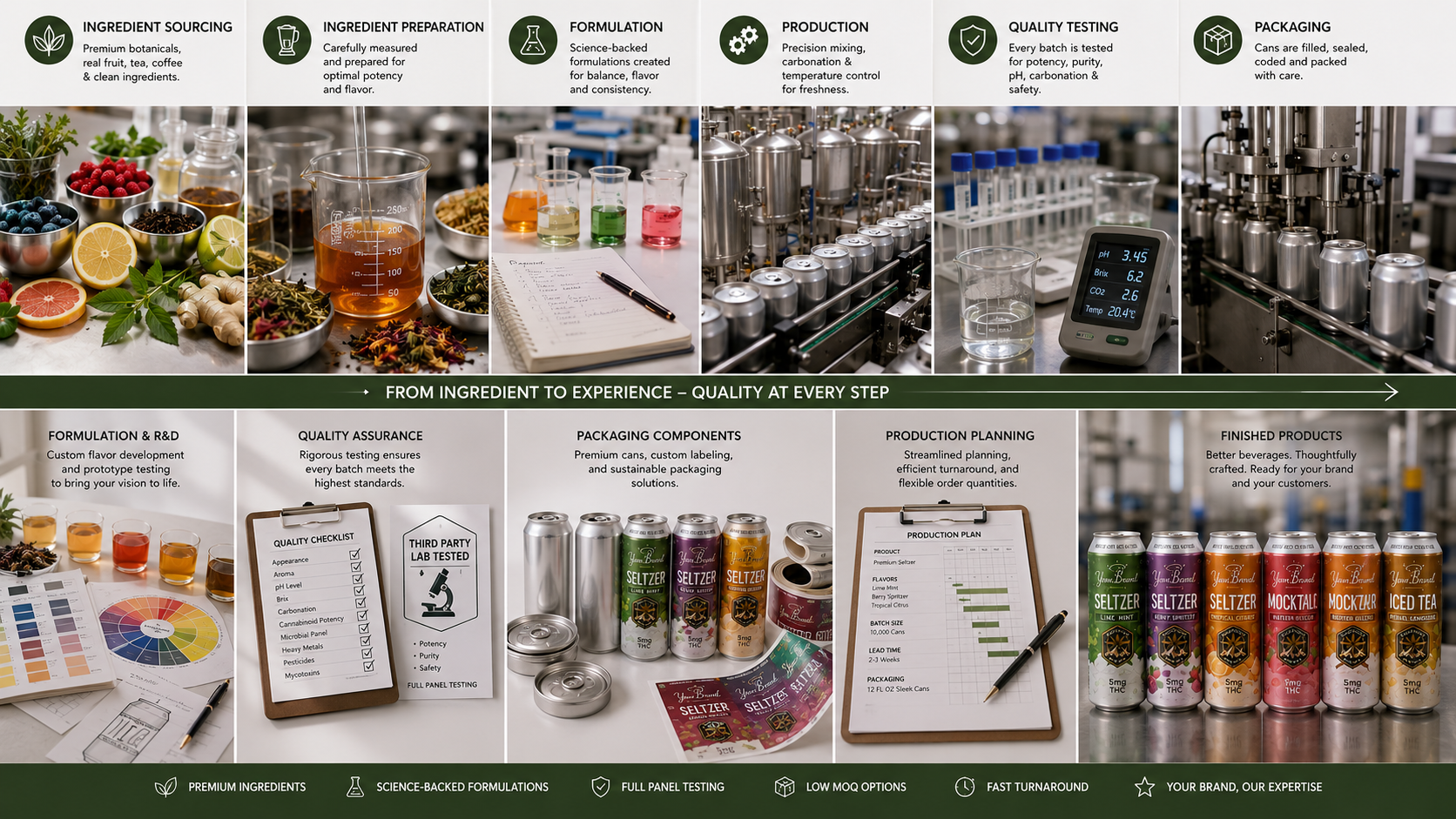
A co-packer turns a defined beverage plan into repeatable commercial production. For THC drinks, that may include formula transfer and scale-up, cannabinoid and ingredient coordination, batching, carbonation or still-beverage processing, filling, seaming, labeling, case packing, finished-product testing, documentation, and freight preparation.
The exact scope matters. Some facilities only run a finished formula supplied by the brand. Others can help develop the beverage, select packaging, plan testing, and prepare a commercial production run. That distinction is more useful than the word co-packer by itself.
Which production path fits your starting point?
Co-packing, white label, private label, and custom formulation solve different problems. The best path depends on what is already complete and how much control, speed, and differentiation the brand needs.
Direct co-packing
Confirm scale-up, ingredients, packaging, testing, run size, and production schedule.
White label
Select an established beverage profile, then define the dose, branding, package, and quantity.
Private label
Scope the permitted flavor, dose, ingredient, or packaging adjustments before quoting.
Custom development
Complete formulation, bench review, ingredient sourcing, production validation, and packaging planning.
Facilities use these terms differently, so a useful proposal should define exactly what is included: formula ownership, development work, ingredient purchasing, cannabinoid input, packaging procurement, label application, testing, freight, storage, and production timing.
What makes a co-packing quote accurate?
A generic per-can number is rarely enough to compare production partners. Cost changes with the beverage format, formula status, dose, cannabinoid inputs, ingredients, packaging, testing, volume, freight, and schedule. A stronger quote begins with a clear production brief.
- Product: beverage format, flavor, sweetener, carbonation, functional ingredients, and SKU count
- Formula: finished formula, formula in development, existing white-label base, or concept only
- Infusion: target THC dose, other cannabinoids, input format, documentation, and who supplies each ingredient
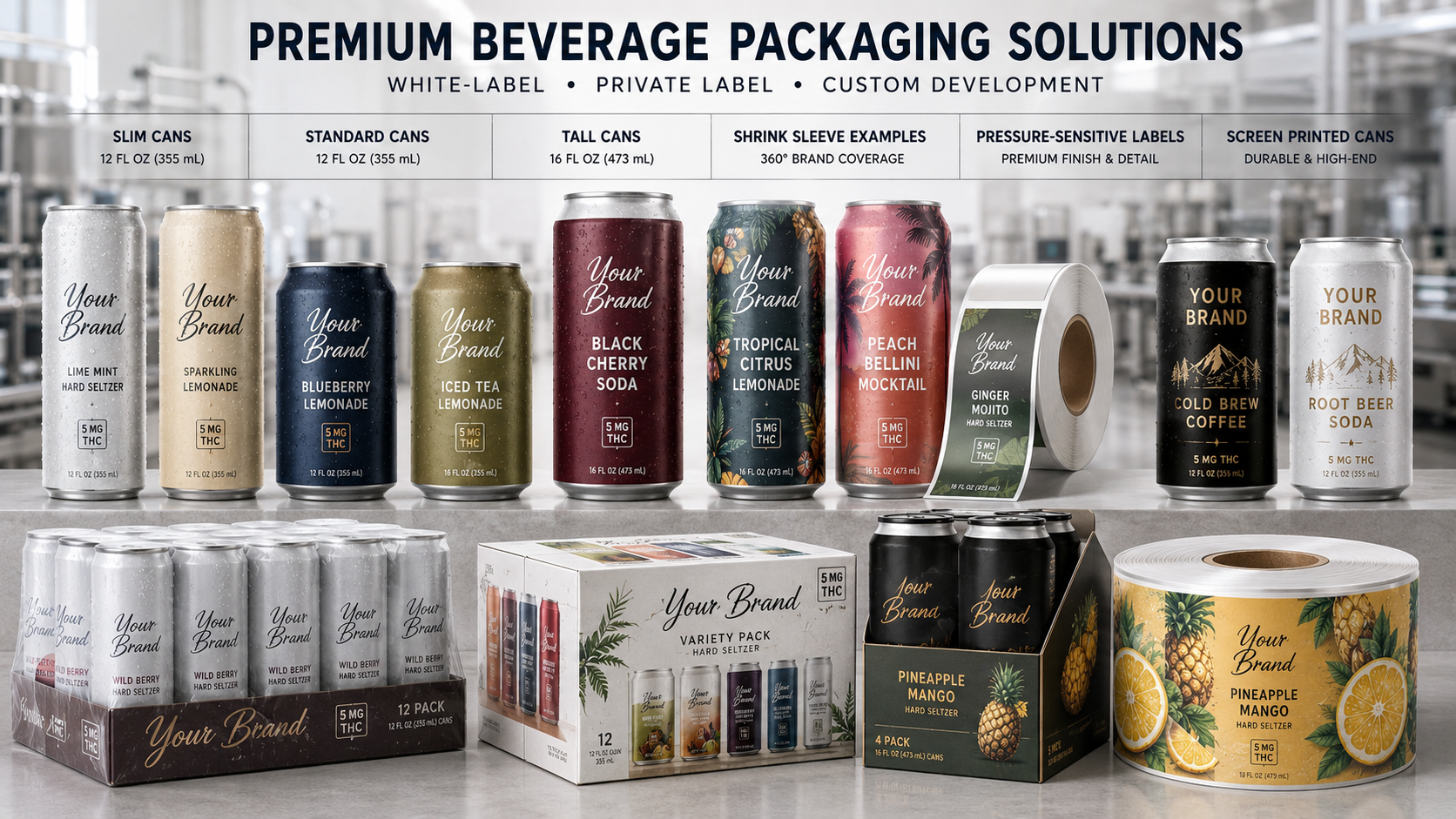
- Packaging: can size, label or decoration method, case pack, artwork status, and packaging inventory
- Markets: target states or channels, label-review needs, testing plan, COAs, and required documentation
- Volume: first-run quantity by SKU, expected reorder cadence, annual forecast, and growth plan
- Logistics: target launch date, shipping destination, receiving requirements, freight, and storage plan
You can start before every detail is final. Share what you already know about your beverage, packaging, expected order volume, and target timing. Open questions can be discussed while developing a product-specific quote.
What can increase cost or slow the schedule?
Custom formulation, specialized ingredients, higher cannabinoid loads, multiple SKUs, nonstandard packaging, long-lead printed cans or sleeves, expanded testing, and rush timing can all change cost or scheduling. Freight and packaging inventory also affect landed cost even when the production price looks competitive.
That is why serious buyers should compare the full scope, not just the lowest initial per-can estimate. The THC beverage startup cost guide and MOQ guide explain how production, packaging, logistics, and working capital fit together.
What should established brands and distributors provide?
Larger or recurring production plans should include the expected volume per SKU, reorder schedule, packaging, delivery locations, inventory needs, and target timing. These details help shape a practical production and delivery plan.
Planning a larger order? Share your expected quantity, product lineup, packaging, delivery locations, and anticipated reorders through the quote request.