Private Label THC Beverages for Retailers
Retailers already have something many new beverage brands do not: customer traffic, merchandising space, and a direct path to purchase.
A private-label THC beverage can help a retailer test the category, create a differentiated cooler item, and build a store-branded product without creating a beverage manufacturing operation from scratch.
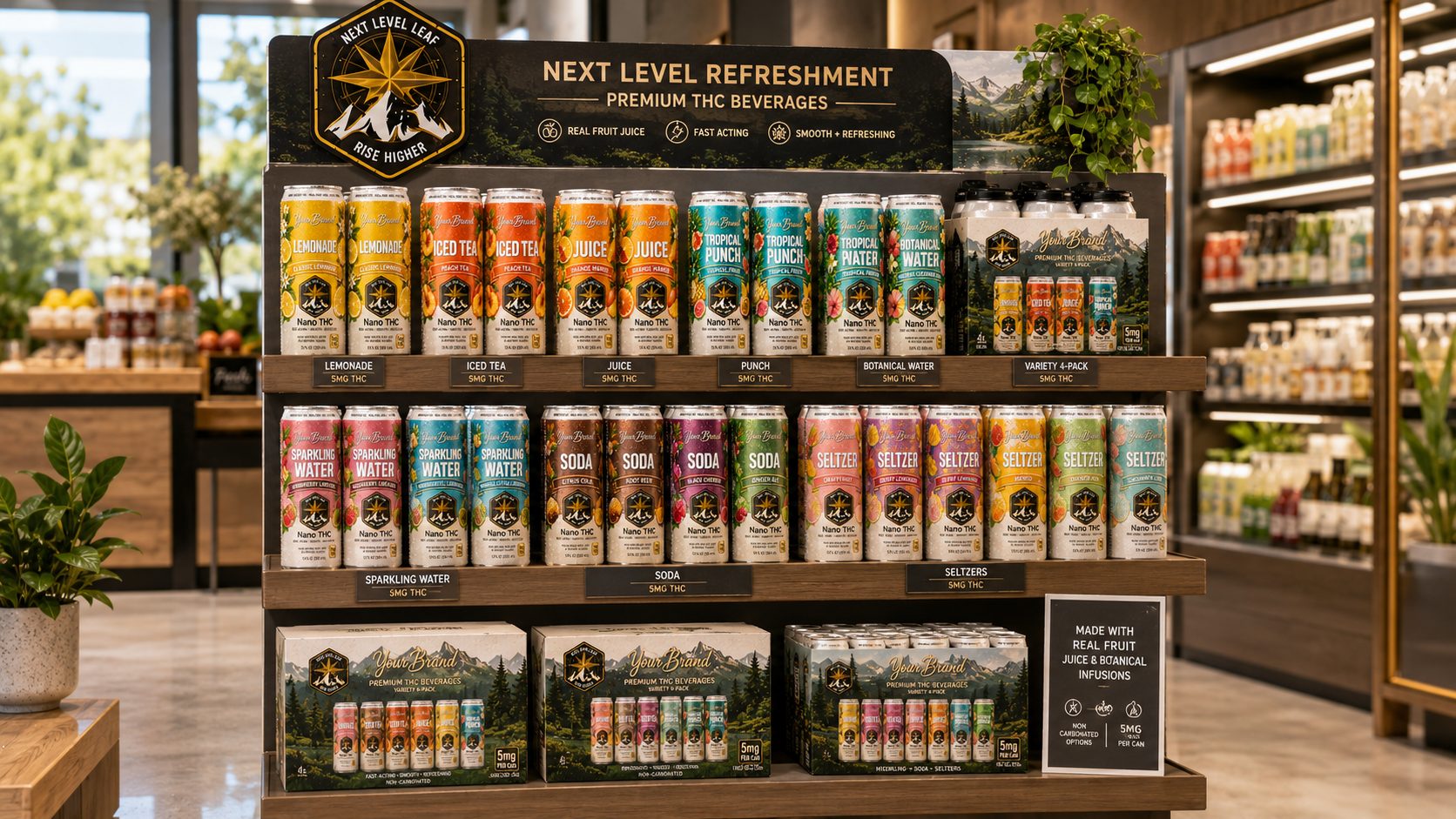
Private label THC beverages for retailers can make sense when the store already has adult customers, cooler space, and a reason to offer a differentiated beverage under its own brand. The strongest retail concepts are usually easy to understand, responsibly labeled, supported by COAs, and built around a product format customers already recognize, such as seltzer, soda, mocktail, tea, lemonade, or real-fruit beverage.
Best starting formats
THC seltzers, sodas, mocktails, teas, lemonades, and real-fruit drinks are familiar, easy to merchandise, and simple for customers to understand.
Retailer advantage
Store traffic, cooler space, local trust, and repeat shoppers can make private-label beverages easier to test than launching a brand from scratch.
Key tradeoff
A store-brand beverage can create differentiation, but it needs careful dose, packaging, compliance, and inventory planning.
Why retailers are a strong fit for private-label THC drinks
A retailer does not have to start from zero. The store already has customer flow, product categories, pricing expectations, and merchandising habits. That makes the beverage question more practical: what product would fit the cooler, the shelf, the customer, and the state market?
Private-label THC beverages may be especially useful for retailers that want a branded product they control more directly than a third-party SKU. The product can support store identity, repeat purchase, and differentiation from nearby competitors.
Product formats that can work well for retailers
For many retailers, the cleanest starting point is a low-dose canned drink. Seltzers, sparkling lemonades, teas, sodas, mocktails, and real-fruit drinks are familiar enough for customers to understand quickly. A retail product should not require a long explanation.
The best format depends on the store. A liquor store may lean toward alcohol-alternative seltzers or mocktails. A specialty market may prefer real-fruit or low-sugar drinks. A hemp retailer or dispensary-style shop may want a wider potency range, depending on state rules and customer expectations.
Practical planning note: The best first product is usually not the most complicated one. It is the product your customer can understand quickly, your channel can sell responsibly, and your first production run can support realistically.
Retail decisions that affect the quote
Before scoping a private-label retail beverage, clarify the likely dose, number of flavors, packaging style, first-run quantity, state market, and merchandising plan. A single-store test can be very different from a regional retail rollout.
It also helps to know whether the retailer already has label art, brand guidelines, UPC needs, case-pack preferences, and any state-specific documentation requirements from buyers or regulators.
Compliance, COAs, and retailer confidence
Retailers should treat documentation as part of the product, not as an afterthought. Batch-specific COAs, clear THC disclosure, adult-use positioning, QR-accessible documentation, and responsible packaging can make the product easier to trust.
This is not legal advice. State rules vary, and retail channels may have their own standards. The practical goal is to build a beverage that looks credible, sells clearly, and can support responsible placement.
What to prepare before requesting a quote
Bring the practical details you already know: beverage type, target dose, flavor direction, number of SKUs, preferred can size, target state or states, expected first order size, label status, and where the product will be sold.
If some details are still unclear, that is normal. A good quote conversation can help narrow the path, but it is easier to scope MOQ, pricing, timeline, and production needs when the business opportunity is clearly defined.
Related paths
Explore connected resources for product planning, manufacturing, compliance, pricing, and the next step toward a quote.
Frequently asked questions
Ready to explore a THC beverage opportunity?
Share the business type, target customer, beverage format, dose direction, flavor ideas, target states, and first-run goals. We can help you think through the next practical step.