THC Beverages for Grocery Stores and Big-Box Retailers
Grocery and big-box retail can be a major opportunity for low-dose THC beverages, but the product has to look credible, documented, and easy to merchandise.
This page helps retail operators and beverage brands think through mainstream retail readiness: dose, packaging, documentation, category fit, merchandising, and the longer sales cycle that larger channels often require.
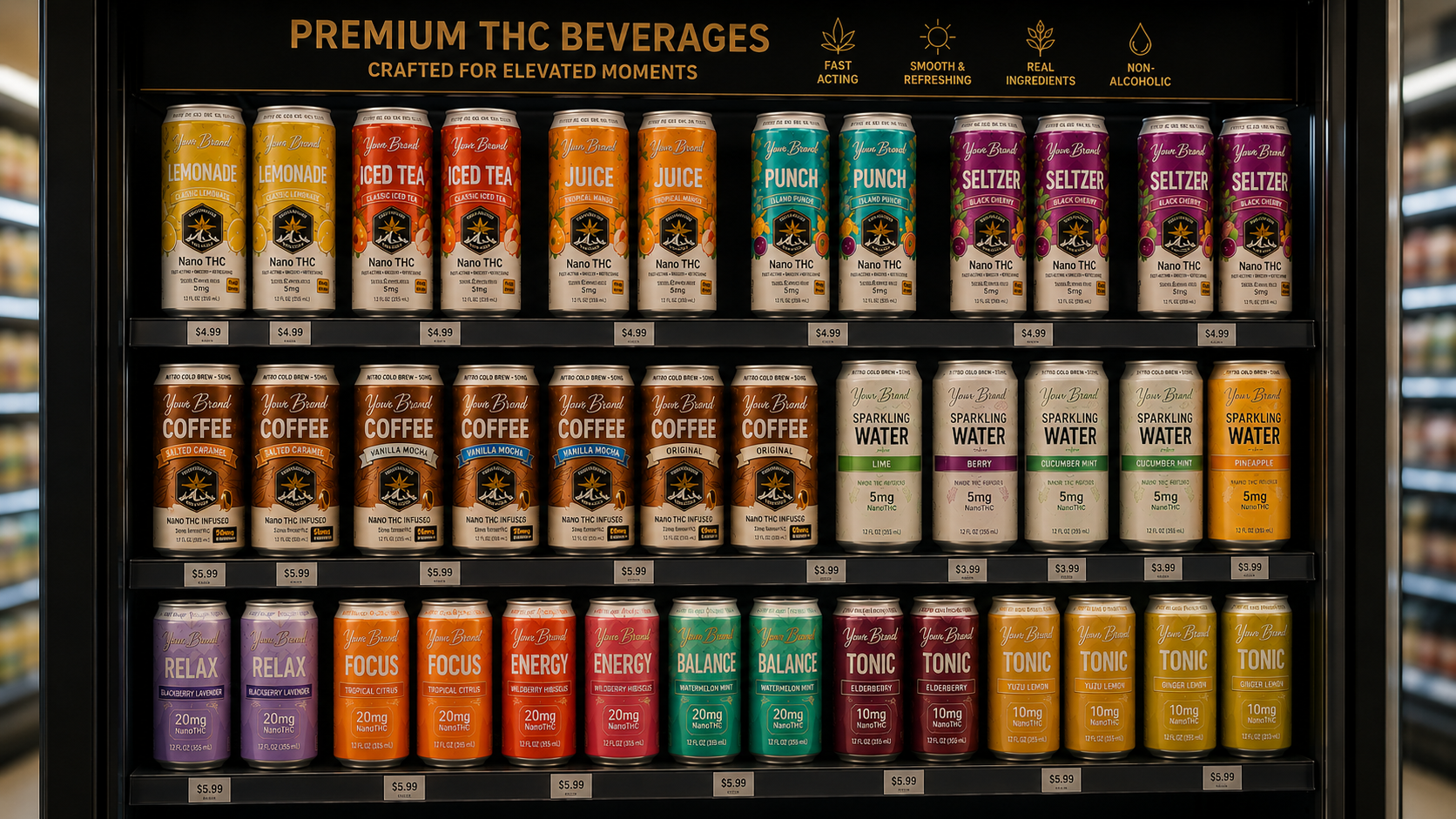
THC beverages for grocery stores and big-box retailers are usually strongest when they are low-dose, clearly labeled, adult-oriented, well documented, and easy for buyers to understand as a beverage category. Mainstream retail can offer large upside, but it also requires more discipline around packaging, COAs, state compliance, merchandising, pricing, and customer education.
Best starting formats
Low-dose seltzers, real-fruit drinks, teas, mocktails, sparkling lemonades, and clean-label-style adult beverages.
Retail advantage
Mainstream retail can create scale, repeat purchase, and category legitimacy when the product is ready for buyer scrutiny.
Key tradeoff
The upside is large, but buyer expectations, compliance review, documentation, and merchandising standards are higher.
Why mainstream retail is attractive
Grocery and big-box retailers are powerful because they shape everyday buying behavior. When a beverage reaches mainstream retail, it can become part of regular shopping instead of only a novelty purchase.
That does not mean every THC beverage is ready for grocery. Larger retailers often need stronger documentation, clearer positioning, more conservative packaging, and a product that can fit a responsible adult-use merchandising plan.
What kind of THC beverage fits grocery retail?
Low-dose seltzers, real-fruit drinks, sparkling lemonades, teas, mocktails, and better-for-you formats may be easier to evaluate than confusing or overly aggressive products. The product should feel like a beverage first.
A grocery buyer needs to understand who the product is for, where it belongs, how it is labeled, how it is documented, and why it will not create unnecessary friction for the store.
Practical planning note: The best first product is usually not the most complicated one. It is the product your customer can understand quickly, your channel can sell responsibly, and your first production run can support realistically.
Why documentation matters more in mainstream retail
Batch-specific COAs, clear THC disclosure, QR-accessible documentation, age-gated handling expectations, and adult-oriented packaging can make a product easier to evaluate. Documentation is not only about compliance. It is also about buyer confidence.
For larger retail, the product needs to look organized before the first sales conversation. That includes dose strategy, ingredient clarity, packaging discipline, and a plan for the states where the product may be offered.
Longer sales cycles and smarter first steps
Grocery and big-box retail can have longer sales cycles than independent retailers. A brand may need to start with smaller regional accounts, specialty retailers, hemp-aware markets, or distributor relationships before approaching larger buyers.
A first production run should be realistic. The goal is to build traction, prove repeat purchase, refine the product, and gather the documentation needed for larger channel conversations.
What to prepare before requesting a quote
Bring the practical details you already know: beverage type, target dose, flavor direction, number of SKUs, preferred can size, target state or states, expected first order size, label status, and where the product will be sold.
If some details are still unclear, that is normal. A good quote conversation can help narrow the path, but it is easier to scope MOQ, pricing, timeline, and production needs when the business opportunity is clearly defined.
Related paths
Explore connected resources for product planning, manufacturing, compliance, pricing, and the next step toward a quote.
Frequently asked questions
Ready to explore a THC beverage opportunity?
Share the business type, target customer, beverage format, dose direction, flavor ideas, target states, and first-run goals. We can help you think through the next practical step.