THC Beverages for Liquor Stores
Liquor stores are already built around adult beverage discovery, cooler placement, repeat purchase, and social drinking occasions.
For the right market, a low-dose THC beverage can give liquor stores an alcohol-alternative product that fits how adult customers already shop for seltzers, mocktails, sodas, and ready-to-drink beverages.
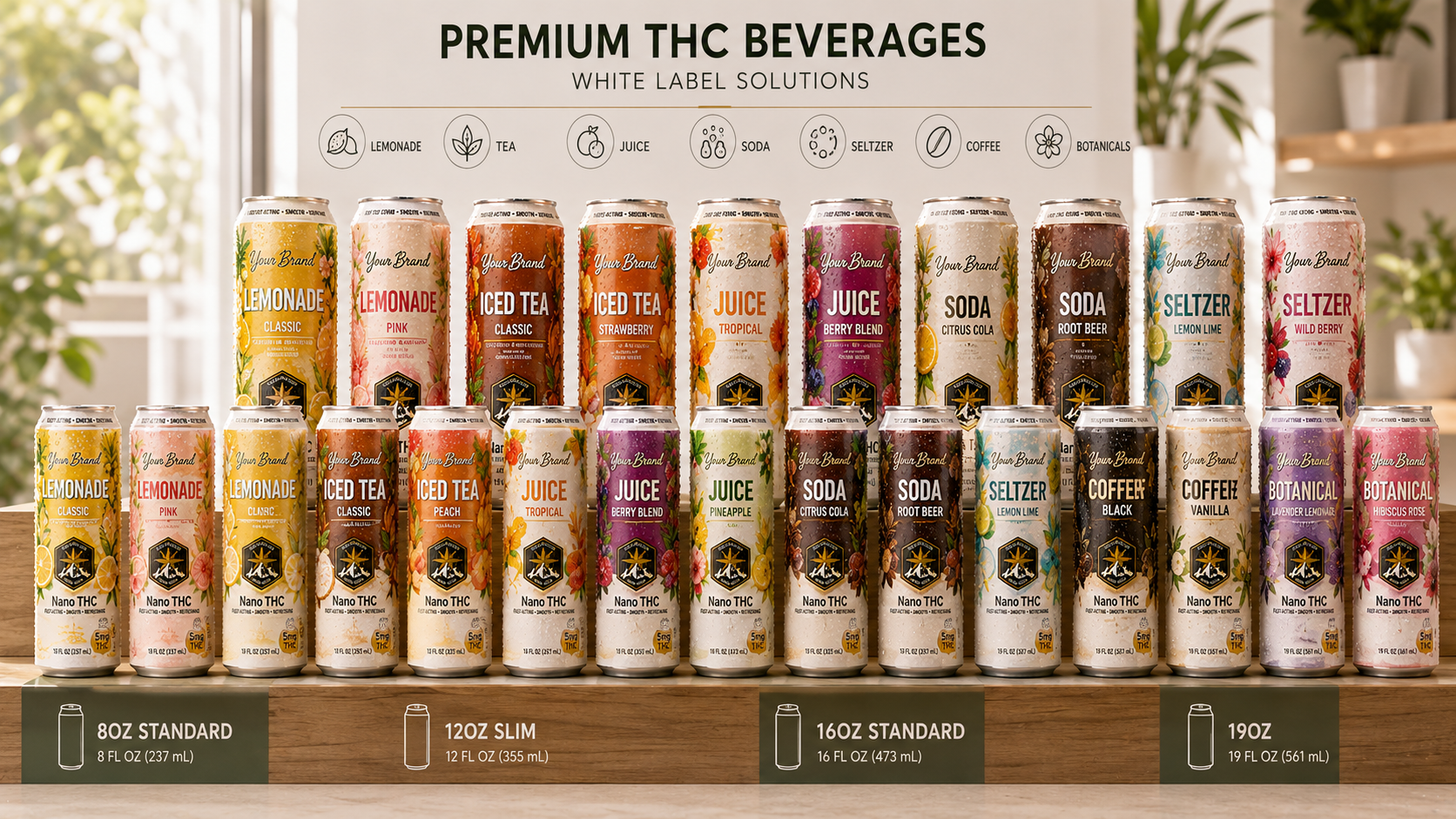
THC beverages for liquor stores can make sense when the product is positioned as an adult-use, low-dose, alcohol-alternative drink for social occasions. The strongest liquor-store concepts usually look like credible beverage products first: clear dose, adult-oriented packaging, strong flavor, simple serving size, and documentation that supports responsible retail placement.
Best starting formats
Low-dose seltzers, mocktails, spritzers, sodas, real-fruit drinks, and lemonades fit familiar liquor-store buying occasions.
Best customer story
A credible adult beverage for people who want a social drink, but not necessarily alcohol.
Key tradeoff
The opportunity is strong, but channel rules, state restrictions, and local retail comfort matter.
Why liquor stores are a natural channel for THC beverages
Liquor stores already serve adults who are shopping for beverage occasions: weekend plans, parties, dinners, gifting, game days, beach trips, and social nights. That makes THC beverages easier to understand than many other hemp products.
A THC drink can sit in the customer’s mind next to hard seltzer, canned cocktails, non-alcoholic beer, mocktails, premium soda, or ready-to-drink beverages. The product still has to follow state and channel rules, but the retail behavior is familiar.
The strongest liquor-store product directions
Low-dose seltzers, mocktails, spritzers, sodas, and real-fruit drinks are often the most intuitive formats. They are easy to display, easy to explain, and easy for customers to connect with social occasions.
A liquor store does not necessarily need a high-dose product. In many cases, a 5mg to 10mg beverage architecture may be better aligned with sessionable adult use, broader retail comfort, and future regulatory expectations.
Practical planning note: The best first product is usually not the most complicated one. It is the product your customer can understand quickly, your channel can sell responsibly, and your first production run can support realistically.
What liquor stores need to think through
The key questions are practical: Which customers would buy this? What states or local markets can support it? Does the store want a private-label product or a curated third-party assortment? Should the first SKU be a seltzer, mocktail, lemonade, or soda?
From there, the quote conversation can focus on flavor direction, dose, can format, order size, packaging, documentation, and launch timeline.
Responsible retail presentation
A liquor-store THC beverage should be built for adults, not for children. Clear THC content, responsible labeling, QR-accessible COAs, age-gated retail practices, and non-copycat branding all matter.
The goal is not to make the product look clinical or boring. The goal is to make it look like a legitimate adult beverage that a buyer, retailer, and customer can understand quickly.
What to prepare before requesting a quote
Bring the practical details you already know: beverage type, target dose, flavor direction, number of SKUs, preferred can size, target state or states, expected first order size, label status, and where the product will be sold.
If some details are still unclear, that is normal. A good quote conversation can help narrow the path, but it is easier to scope MOQ, pricing, timeline, and production needs when the business opportunity is clearly defined.
Related paths
Explore connected resources for product planning, manufacturing, compliance, pricing, and the next step toward a quote.
Frequently asked questions
Ready to explore a THC beverage opportunity?
Share the business type, target customer, beverage format, dose direction, flavor ideas, target states, and first-run goals. We can help you think through the next practical step.