THC Beverages for Breweries
Breweries already understand flavor, beverage culture, cans, adult-use branding, taproom education, and local customer loyalty.
A THC beverage can give a brewery a way to serve alcohol-alternative demand, test new adult beverage occasions, and extend its brand into hemp-derived drinks where the state market allows.
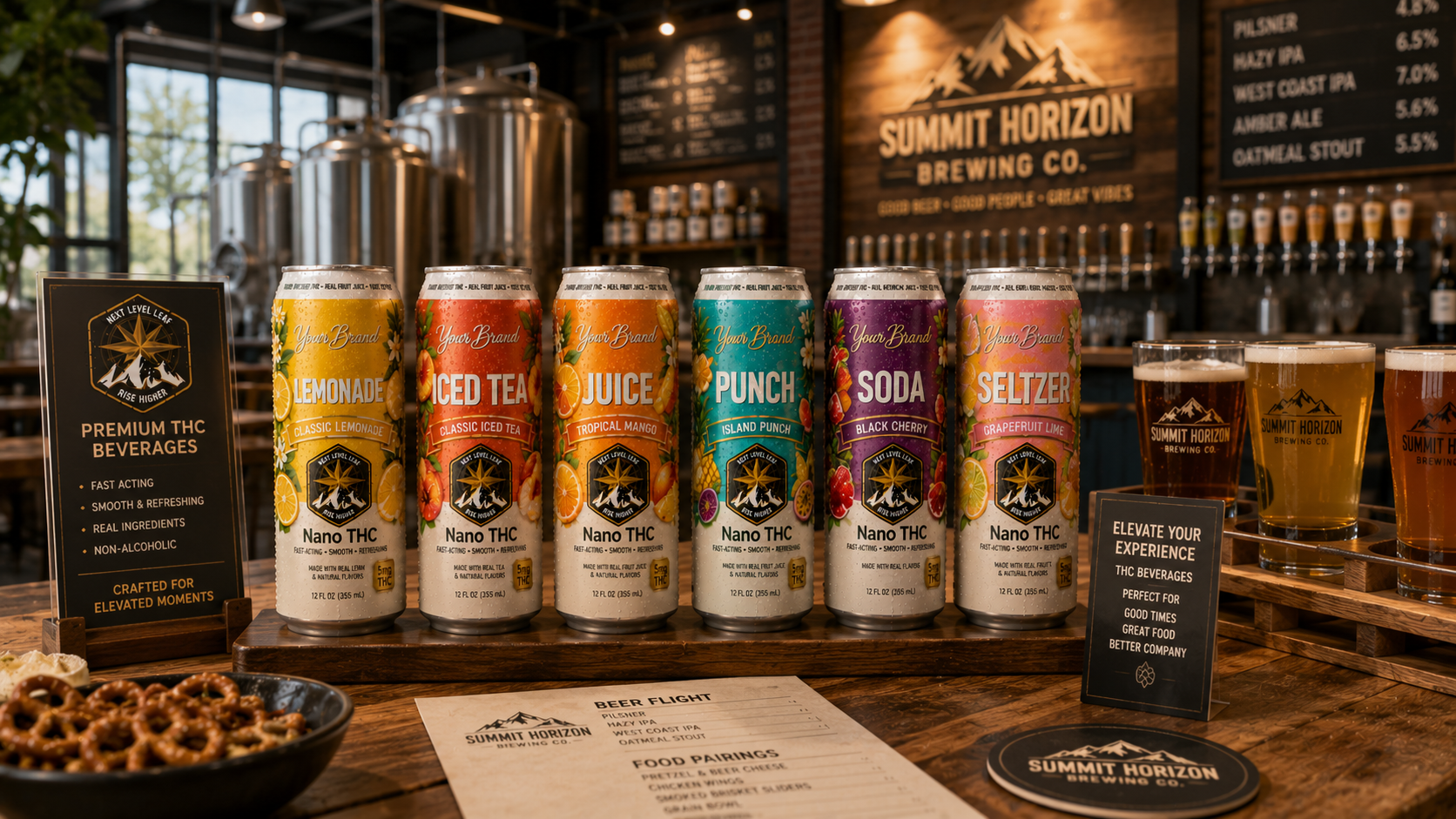
THC beverages for breweries can be a strong opportunity when the drink fits the brewery’s brand, state market, and adult beverage audience. Breweries may be especially well positioned for THC seltzers, hop-water-style beverages, mocktails, lemonades, teas, and other low-dose drinks that support social occasions without relying only on alcohol.
Best starting formats
THC seltzers, hop-water-style drinks, botanical spritzers, mocktails, sparkling lemonades, iced teas, and real-fruit beverages.
Brewery advantage
Breweries already have beverage credibility, brand loyalty, flavor knowledge, and adult customers who understand canned beverage innovation.
Key tradeoff
The opportunity is strong, but THC beverage production, compliance, documentation, and retail channels may differ from beer.
Why breweries are well positioned
Breweries already know how to build trust around flavor, craft, cans, taproom experiences, and adult beverage discovery. Many also have a loyal local audience that is willing to try new beverages when the brand makes the product feel credible.
A THC beverage does not have to replace beer. It can expand the menu for people who want something lighter, non-alcoholic, sessionable, or different. That can matter for taprooms, retail accounts, events, and brand extensions.
Product directions that fit brewery brands
The strongest brewery paths often include THC seltzers, hop-water-style beverages, botanical spritzers, mocktails, sparkling lemonades, iced teas, and real-fruit drinks. A brewery can lean crisp and refreshing, or build something more flavor-forward and cocktail-inspired.
The product should still be simple. A customer should be able to understand the drink quickly: what flavor it is, how many milligrams it contains, when they might drink it, and why it fits the brewery’s brand.
Practical planning note: The best first product is usually not the most complicated one. It is the product your customer can understand quickly, your channel can sell responsibly, and your first production run can support realistically.
Production and launch considerations
A brewery exploring THC beverages needs to think through production pathway, dose, flavor, packaging, state compliance, label language, COAs, and where the product will be sold. Depending on the market, the right production path may be different from traditional beer production.
The quote conversation should focus on first-run size, number of SKUs, whether the brewery wants a white-label path or custom development, and how the product will be positioned to existing customers.
Practical planning note: The best first product is usually not the most complicated one. It is the product your customer can understand quickly, your channel can sell responsibly, and your first production run can support realistically.
How breweries can use THC beverages strategically
A THC beverage can help a brewery test alcohol-alternative demand, create a new retail SKU, support event occasions, reach non-beer drinkers, or build a product that travels beyond the taproom.
The key is to avoid treating it like a novelty. The strongest brewery THC beverages feel like serious adult drinks with clear flavor, clean packaging, transparent dosing, and responsible documentation.
What to prepare before requesting a quote
Bring the practical details you already know: beverage type, target dose, flavor direction, number of SKUs, preferred can size, target state or states, expected first order size, label status, and where the product will be sold.
If some details are still unclear, that is normal. A good quote conversation can help narrow the path, but it is easier to scope MOQ, pricing, timeline, and production needs when the business opportunity is clearly defined.
Related paths
Explore connected resources for product planning, manufacturing, compliance, pricing, and the next step toward a quote.
Frequently asked questions
Ready to explore a THC beverage opportunity?
Share the business type, target customer, beverage format, dose direction, flavor ideas, target states, and first-run goals. We can help you think through the next practical step.