Brewery THC Seltzer Opportunities
Breweries already understand beverage production, adult occasions, flavor, branding, cans, retail coolers, and local community demand.
That makes THC seltzer one of the most natural hemp beverage opportunities for breweries exploring alcohol alternatives or non-alcoholic adult-use extensions.
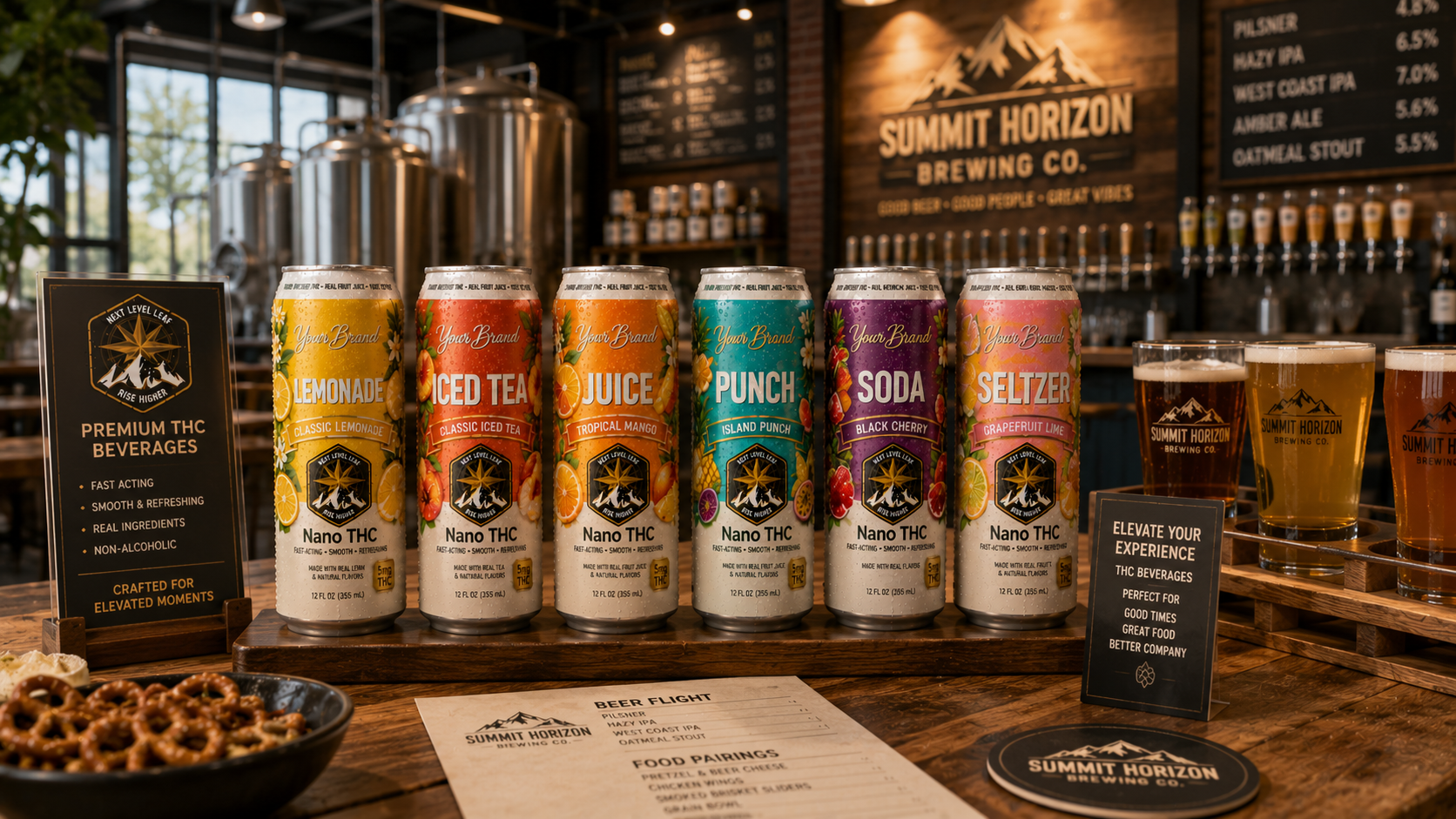
A brewery THC seltzer can be a strong product direction when the brand wants a light, crisp, low-dose adult beverage that fits social occasions without alcohol. The product should be scoped around dose, flavor, carbonation, packaging, compliance documentation, target states, and whether it will be sold through taproom, retail, distribution, or private-label channels.
Alcohol alternative
THC seltzer can sit close to hard seltzer and non-alcoholic beer occasions while giving customers a different adult-use experience.
Crisp and low-dose
Lime, berry, citrus, tropical, lemonade, and hop-water-style profiles can work well in brewery-adjacent THC beverage concepts.
Brand or private label
A brewery can explore its own branded THC seltzer, a separate adult-use sub-brand, or private-label production for partners.
Why THC seltzer fits breweries
Breweries already know how important cans, flavor, local identity, sampling, taproom education, and distribution relationships can be. THC seltzer builds on that same beverage culture while moving into a non-alcoholic adult-use category.
A seltzer can be light, crisp, lower sugar, and easy to understand. It can also give a brewery a way to participate in the hemp beverage market without making another beer.
What kind of brewery THC seltzer works best?
The strongest concepts usually start with simple, refreshing flavors and moderate dosing. Lime mint, berry lemonade, pineapple mango, wild berry, citrus, and hop-water-inspired profiles can all make sense depending on the brewery brand.
A brewery should also decide whether the product should feel like a taproom extension, a retail cooler item, an alcohol alternative, or a new standalone adult-use brand.
Practical planning note: THC seltzer should be easy to describe in one sentence. If customers need too much explanation, the first product may be too complicated.
Production and compliance considerations
THC seltzer needs careful planning around emulsion, flavor masking, carbonation, dose, COAs, label claims, state-by-state rules, and finished-product testing. The drink also needs packaging that looks adult-oriented and credible.
Breweries should not assume that beer rules and THC beverage rules work the same way. The sales channel, state rules, and product documentation need to be evaluated before launch.
What to prepare before requesting a quote
Useful details include target dose, flavor direction, can size, number of SKUs, brand name, label status, target states, estimated first run, and whether the brewery is looking for a house brand, private-label option, or custom development.
Related paths
Explore connected resources for product planning, manufacturing, compliance, pricing, and the next step toward a quote.
Frequently asked questions
Ready to scope the beverage opportunity?
Share the business type, sales channel, target customer, beverage format, dose direction, flavor ideas, target states, and first-run goals. We can help you think through the next practical step.