THC Beverage Opportunities for Coffee Shops and Roasters
Coffee shops and roasters already have daily ritual, flavor credibility, repeat customers, and a reason to explore ready-to-drink beverage extensions.
The right product might be infused coffee, functional coffee, tea, lemonade, seltzer, or another adult-use beverage that fits the brand and the customer occasion.
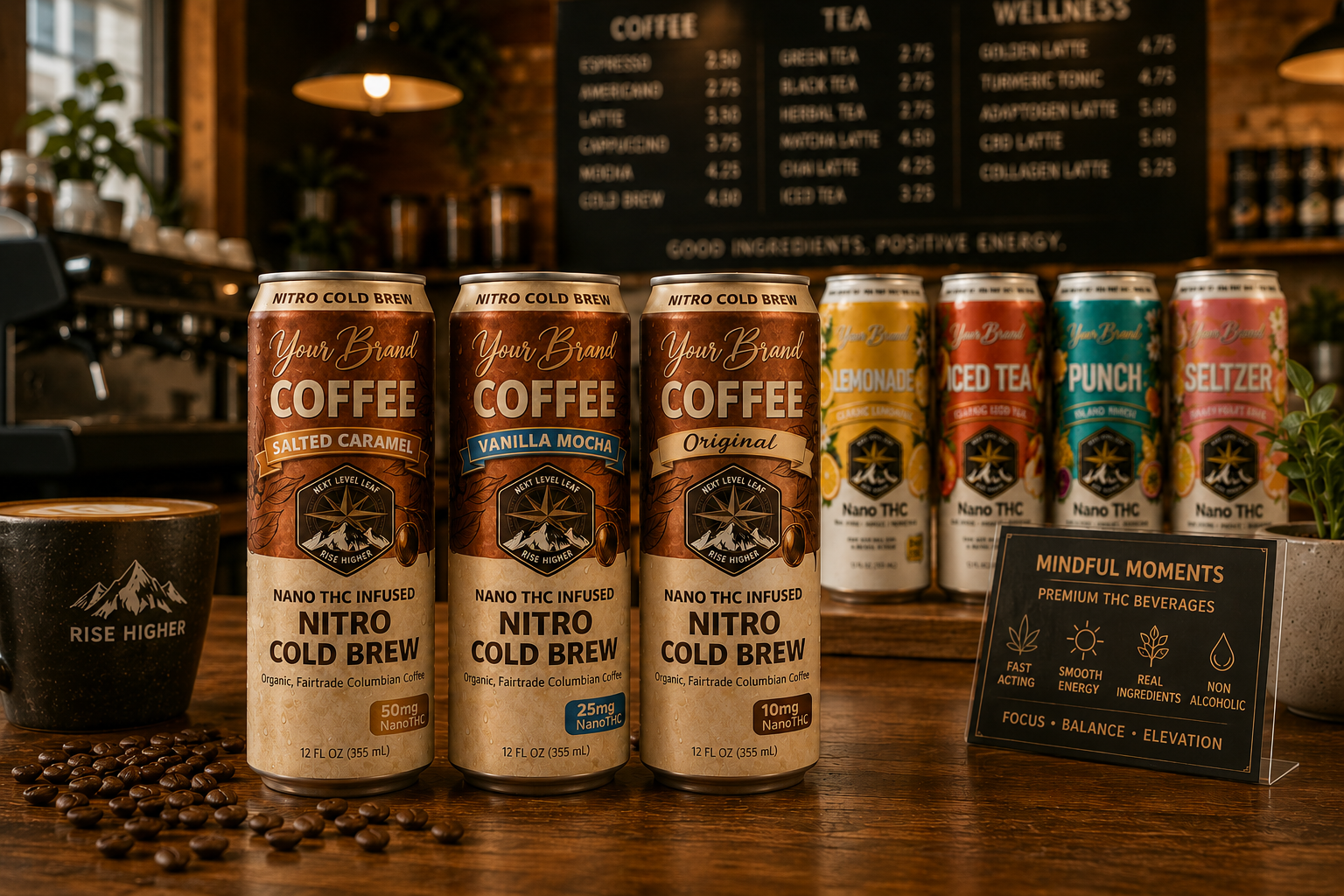
THC beverages for coffee shops and roasters can make sense when the product builds on an existing beverage ritual and gives customers a clear reason to try a ready-to-drink extension. Infused coffee is the obvious path, but coffee brands can also explore functional beverages, tea, seltzers, lemonades, and low-dose social drinks depending on the customer and sales channel.
Existing beverage ritual
Coffee shops and roasters already sell a daily beverage habit, which can make new ready-to-drink products easier for customers to understand.
Coffee and functional drinks
Infused cold brew, nitro coffee, mushroom coffee, adaptogenic drinks, tea, and low-dose seltzers can all fit different brand directions.
Morning or adult-use occasion
A coffee brand should decide whether the product is built around coffee ritual, daytime functionality, evening unwind, or social sipping.
Why coffee businesses are a strong fit
Coffee shops and roasters already have beverage credibility. Customers trust them for flavor, ritual, energy, craft, and daily habit. That trust can make a ready-to-drink product feel more natural than if it came from a brand with no beverage background.
The opportunity is not limited to one product type. A coffee company can explore THC coffee, functional coffee, low-dose canned drinks, tea-based products, or even an alcohol-alternative beverage that fits its local audience.
Infused coffee and functional beverage paths
Infused coffee is the most direct path for many roasters because it builds on an existing category. Nitro cold brew, flavored coffee, and ready-to-drink coffee cans can all create a clear customer story.
Functional coffee and functional beverages may also make sense. Ingredients such as mushrooms, adaptogens, caffeine, B vitamins, electrolytes, or botanicals can support a beverage concept when the product is designed carefully and without overclaiming.
Practical planning note: A coffee brand does not have to choose only between regular coffee and THC coffee. It can also explore non-intoxicating functional drinks, low-dose adult beverages, or a broader beverage line.
When coffee shops should consider a non-coffee THC drink
Not every coffee brand extension has to be coffee. A cafe may have customers who want afternoon refreshment, evening alternatives, tea, lemonade, sparkling water, or low-dose social beverages.
A non-coffee THC drink can sometimes avoid the tension between caffeine and THC while still giving the shop or roaster a branded ready-to-drink product.
Documentation, dosing, and brand fit
Coffee brands should think carefully about dose, caffeine, serving size, label clarity, COAs, and the state market. A THC coffee may feel very different from a THC seltzer or mocktail, and the customer expectation needs to be clear.
This is not legal advice. It is practical product planning: the drink should tell a clear story, have responsible documentation, and fit the channel where it will be sold.
What to prepare before requesting a quote
Useful details include whether the product is coffee-based or non-coffee, target dose, caffeine direction, flavor profile, can size, number of flavors, retail environment, state market, label status, and whether the product should be white-label, private-label, or custom.
Related paths
Explore connected resources for product planning, manufacturing, compliance, pricing, and the next step toward a quote.
Frequently asked questions
Ready to explore a THC beverage opportunity?
Share the business type, target customer, beverage format, dose direction, flavor ideas, target states, and first-run goals. We can help you think through the next practical step.