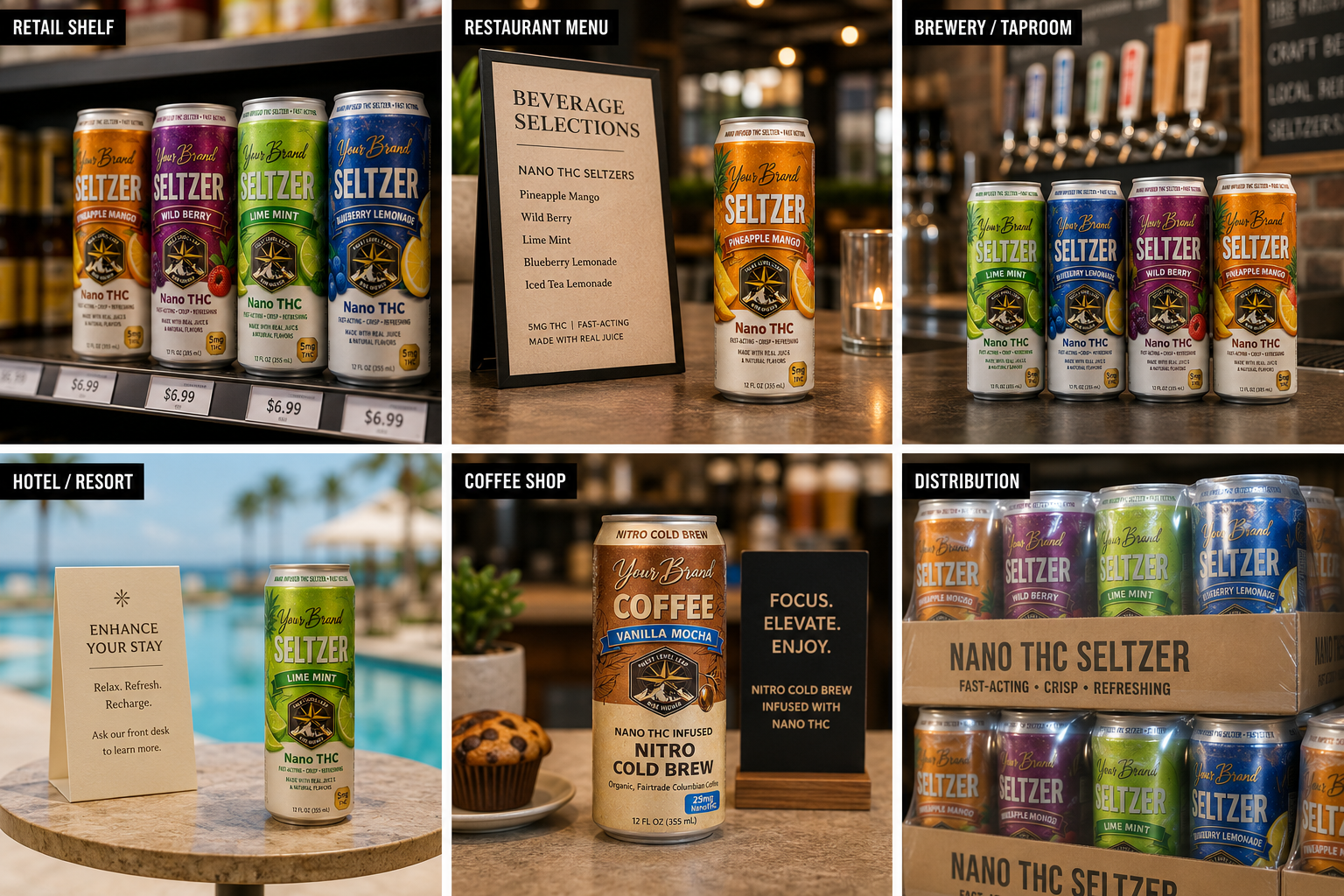
White-label and private-label infused beverage manufacturingBusiness opportunity planning
Commercial Opportunity Planning

THC Beverage Business Opportunities

Find the product and manufacturing path that fits your customer, channel, brand, and growth plan.

Explore opportunities for retailers, distributors, beverage companies, hospitality operators, alcohol businesses, specialty stores, creators, and destination brands. Each path connects the business model to an actual beverage, sales plan, production quantity, and next step.

Updated August 26, 2026

Business owners evaluating commercial THC beverage opportunities

The strongest THC beverage opportunity begins with an existing advantage: customers who trust the business, a channel that can sell packaged beverages, a clear adult-use occasion, or distribution that can support repeat orders.

Start by defining who will buy the drink, where it will be sold, why it belongs in that setting, and what the business can realistically fund, stock, support, and reorder.

Is this opportunity ready to evaluate?

A promising concept does not need every answer today, but it should have a path to answering these questions.

Customer

Who will buy it?

Identify the existing audience, adult customer, occasion, need, and reason the product fits the brand.

Channel

Where will it sell?

Define the stores, accounts, direct channel, venue, distributor route, or hospitality setting.

Product

What belongs there?

Choose a beverage format, flavor, cannabinoid amount, package, price position, and simple product story.

Operations

Can the business support it?

Plan manufacturing, artwork, testing, inventory, storage, freight, staff education, sales, and reorders.

Retail and distribution opportunities

These businesses already control shelf space, customer access, account relationships, or a route to market.

Retail strategy

Private Label THC Beverages for Retailers

Build an owned beverage around the retailer, customer base, cooler, margin, and reorder plan.

Read the guide
Liquor retail

THC Beverages for Liquor Stores

Evaluate adult alcohol-alternative beverages for an established retail customer and cooler set.

Read the guide
High-intent detail

Liquor Store Private Label THC Drinks

Plan a retailer-owned THC beverage with clear product, packaging, inventory, and staff needs.

Read the guide
Wholesale

Distributors and Wholesalers

Evaluate house-brand and supplier opportunities around real accounts, routes, documents, and velocity.

Read the guide
Mainstream retail

Grocery and Big Box Retailers

Connect category demand to buyers, shelf placement, documentation, inventory, and repeat supply.

Read the guide
High-intent detail

Grocery Store Hemp THC Beverages

Review a grocery-specific program for product selection, merchandising, documentation, and replenishment.

Read the guide
Convenience retail

Convenience Stores

Evaluate grab-and-go demand, cooler placement, route service, price, and repeat purchase.

Read the guide
High-intent detail

C-Store THC Drinks

Build a focused convenience-channel product and inventory plan.

Read the guide
Specialty retail

Specialty Food Markets

Explore premium cooler opportunities for gourmet, natural, and specialty food customers.

Read the guide
Specialty retail

Specialty Retailer THC Beverages

Plan a product for a defined niche audience, assortment, store experience, and margin need.

Read the guide

Hospitality and adult-beverage opportunities

These operators can connect a packaged beverage to an existing adult occasion, guest experience, or alcohol-alternative program.

Hospitality

Restaurants and Bars

Evaluate packaged THC beverages around menu fit, service, guest education, inventory, and channel rules.

Read the guide
Restaurant detail

Restaurant THC Mocktails

Build a packaged mocktail concept around flavor, menu occasion, service, and responsible positioning.

Read the guide
Bar detail

Bar THC Drinks

Explore an alcohol-alternative beverage path for bar customers and off-premise packaged sales where appropriate.

Read the guide
Brewery

THC Beverages for Breweries

Use beverage experience, brand trust, and adult customers to evaluate a non-alcoholic product extension.

Read the guide
Brewery detail

Brewery THC Seltzer

Plan a brewery-branded seltzer for the right customer, channel, package, and production program.

Read the guide
Alcohol brands

Wineries, Distilleries, and Alcohol Brands

Evaluate a packaged alternative or brand extension without assuming the same channel rules as alcohol.

Read the guide
Hospitality

Hotels, Resorts, and Spas

Connect a packaged beverage to guest experience, food and beverage operations, retail, or events.

Read the guide
Hotel detail

Hotel and Resort THC Beverages

Plan an owned product for adult guests, appropriate outlets, inventory, service, and brand experience.

Read the guide
Events

Events and Venues

Evaluate packaged beverages for venue operations, sponsors, concessions, storage, and guest communication.

Read the guide
Membership

Private Clubs

Consider a member-focused beverage program built around the club setting and operating model.

Read the guide

Choose the manufacturing path after the business case

Once the customer and channel are clear, decide how much product development the concept actually needs.

Existing path

Use an available beverage

Choose a near-ready beverage, flavor, cannabinoid amount, and package when the existing options fit the customer and channel.

Private label

Create an owned product

Build the brand, artwork, package, merchandising, and inventory plan around the business or retail program.

Custom formulation

Develop a distinct beverage

Use custom development when the concept needs a formula or technical requirements that available options cannot provide.

Compare co-packing and white-label production, review custom THC beverage formulation, and use the production-process guide to understand what happens next.

Make the economics work beyond the first order

Evaluate the full product economics, including formulation, ingredients, cannabinoid amount, package, decoration, testing, cases, freight, storage, samples, selling expense, channel margin, promotions, and working capital.

A lower production price per can does not rescue a product with weak demand, poor margin, or slow inventory. Review pricing factors and build the forecast around realistic account and customer behavior.

Plan for commercial entry and growth

The standard commercial starting point is approximately 1,200 cans per flavor and dose. This is a starting path, not a production ceiling or a definition of customer size.

A selective 360-can prototype option may be available for qualified projects when a smaller validation run is genuinely appropriate.

Next Level Leaf can also help qualified businesses plan multi-pallet orders, larger-volume programs, recurring production, additional flavors and doses, and expanding product lines. Established businesses should share the larger opportunity and expected order frequency during the first production conversation.

Keep market review separate from opportunity enthusiasm

A good business concept does not determine whether a specific product can be manufactured, labeled, shipped, displayed, served, or sold in every jurisdiction or channel.

Review the final formula, cannabinoid amount, ingredients, package, label, claims, testing, age controls, sales channel, and intended markets before launch. Use the state resources as a starting point, then obtain product-specific legal and regulatory advice.

This hub provides general business and product-development information. It is not legal, regulatory, financial, or investment advice.

Move through the buyer journey

Frequently asked questions

These answers cover opportunity fit, business types, manufacturing paths, quantities, scale, market review, and quote preparation.

Existing beverage companies, retailers, distributors, liquor stores, breweries, restaurants, bars, coffee shops, hospitality groups, specialty stores, wellness businesses, creators, and destination brands may have a viable path. The fit depends on their customer, channel, markets, product concept, operations, and ability to support repeat sales.
The strongest opportunities connect an existing audience or sales channel to a clear beverage occasion, credible brand position, workable margin, repeat-purchase potential, responsible market plan, and the operational ability to stock and support the product.
Yes. An established beverage company may already have brand trust, distribution, flavor knowledge, sales systems, and inventory experience. It still needs a cannabinoid formulation, production path, packaging and testing plan, and product-specific review for the intended markets and channels.
A retailer may use private-label or custom manufacturing to create an owned product for its stores or customer base. The retailer should evaluate customer demand, shelf or cooler placement, margin, staff education, documentation, inventory, and market-specific requirements.
Start with the accounts the distributor can realistically serve, the formats and cannabinoid amounts those buyers request, the required documents, expected velocity, freight, inventory ownership, and reorder timing. A house brand should solve a route and customer need rather than merely add another SKU.
An existing production path can be faster when the available beverage, flavor, cannabinoid amount, and package fit the concept. Custom formulation is more appropriate when the product needs a distinctive formula or technical requirements that cannot be met through the available options.
The standard commercial starting point is approximately 1,200 cans per flavor and dose. The exact scope depends on the beverage, package, ingredients, testing, and manufacturing path.
A selective 360-can prototype may be available for qualified projects after the standard commercial path is considered. Next Level Leaf can also help qualified brands plan multi-pallet orders, larger-volume programs, recurring production, and expanding product lines.
No. The guides help evaluate the business model. The final formula, cannabinoid amount, package, label, claims, testing, age controls, sales channel, and jurisdictions require product-specific legal and regulatory review.
Share the business type, target customer, beverage format, flavor, cannabinoid amount, package, quantity, planned markets and channels, desired timing, artwork status, and whether the goal is a first commercial run, a larger launch, or recurring production.

Turn the opportunity into a production brief

Share the business type, target customer, beverage format, flavor, cannabinoid amount, package, quantity, markets, timing, and expected growth. We can help identify the most practical next step.