THC Beverages for Specialty Food Markets
Specialty food markets already curate premium products, local brands, functional items, and higher-quality beverage choices for customers who want something different.
That makes low-dose THC beverages an interesting retail opportunity when the product feels adult-oriented, premium, documented, and aligned with the store’s customer base.
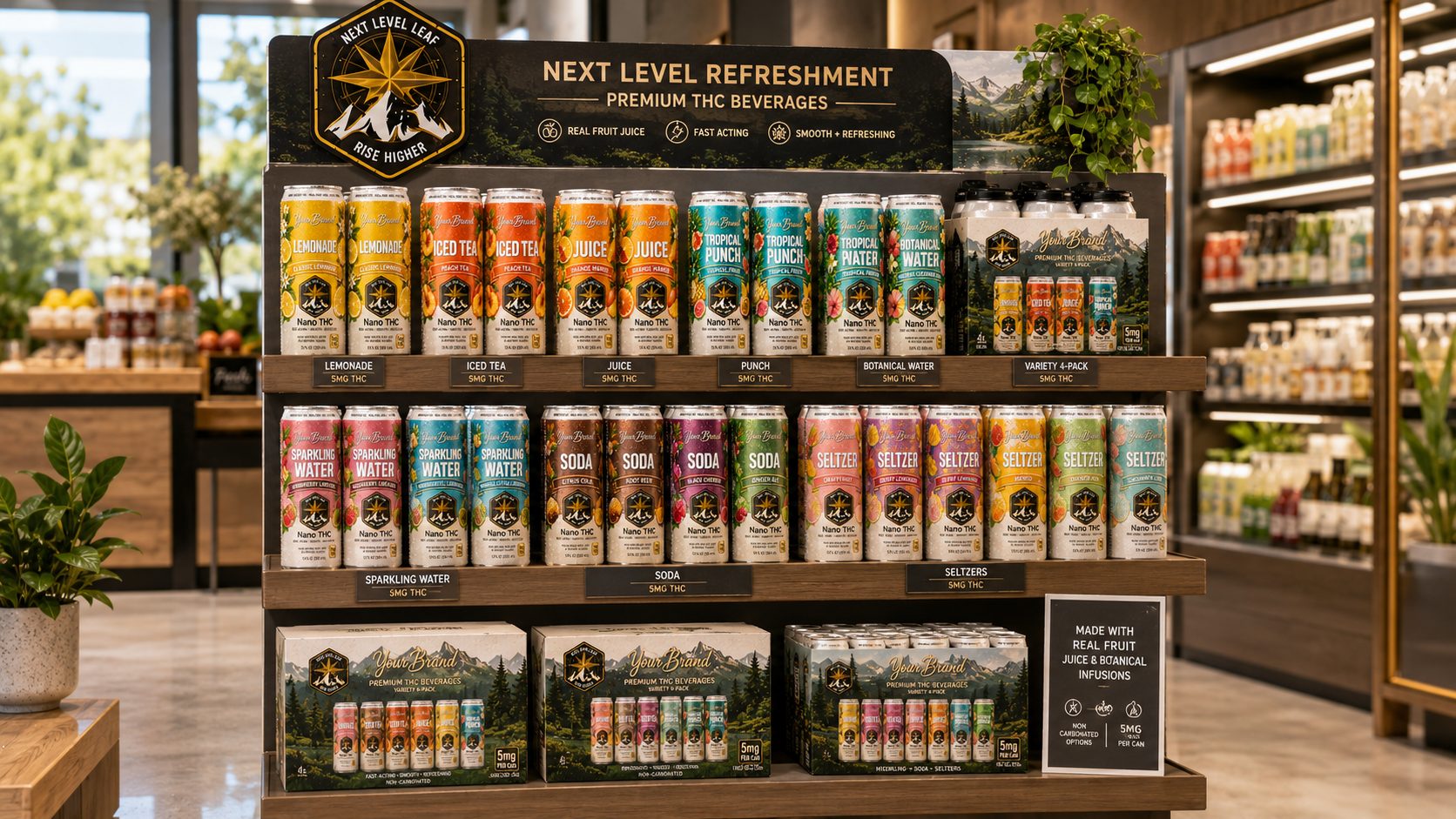
THC beverages can fit specialty food markets when they are positioned as premium adult-use retail items with clear dosing, strong packaging, COAs, and a flavor story that fits the store. The best product path may be a curated third-party brand, a private-label store brand, or a small set of premium beverage SKUs designed for the local customer base.
Curated retail
Specialty markets can use product selection and staff education to introduce customers to better adult-use beverage options.
Premium refreshment
Real-fruit drinks, teas, seltzers, mocktails, and low-sugar products can fit specialty retail more naturally than novelty products.
Trust and curation
Customers already rely on specialty stores to find interesting products, which can help credible THC beverages stand out.
Why specialty markets should evaluate THC beverages
Specialty food markets are built around discovery. Customers visit these stores for interesting products, better ingredients, local brands, premium packaging, and items that feel more curated than mass-market options.
A low-dose THC beverage can fit that environment when it looks credible, tastes good, and gives the retailer a clear reason to put it in the cooler.
What kind of THC beverage fits specialty retail?
The strongest specialty market products usually have a clean flavor story and a premium look. Real-fruit drinks, citrus spritzers, tea lemonades, mocktails, and low-sugar seltzers can all make sense.
The product should not look like candy or a cheap novelty item. It should feel like an adult beverage that belongs next to premium non-alcoholic drinks, functional beverages, tea, soda, or specialty mixers.
Practical planning note: For specialty food markets, packaging and product credibility matter as much as the beverage type.
Private-label and local-market options
Some specialty markets may want to carry existing brands first. Others may eventually explore a private-label beverage that reflects the store’s own identity or regional customer base.
A private-label product can make sense when the store has a strong local following, multiple locations, or a clear customer demand signal.
What to prepare before requesting a quote
Useful details include store count, customer type, desired product format, dose direction, flavor style, packaging preference, target states, and whether the product is intended as a store brand or a curated branded item.
Related paths
Explore connected resources for product planning, manufacturing, compliance, pricing, and the next step toward a quote.
Frequently asked questions
Ready to evaluate the beverage opportunity?
Share the business type, sales channel, target customer, beverage format, dose direction, flavor ideas, target states, and first-run goals. We can help you think through the next practical step.