


Real-fruit THC drinks for retailers
Real-fruit THC drinks can give retailers a more premium, familiar, and flavor-forward way to enter the infused beverage category. They can work for specialty retailers, liquor stores, grocery-style operators, hemp retailers, dispensaries, convenience retail concepts, and private-label retail brands that want a product customers can quickly understand.
The opportunity is not just putting a THC drink on a shelf. It is building a beverage that fits the retail channel, has a clear dose, carries adult-oriented packaging, uses retailer-ready documentation, and gives the customer a reason to choose it over basic seltzers or generic infused drinks.
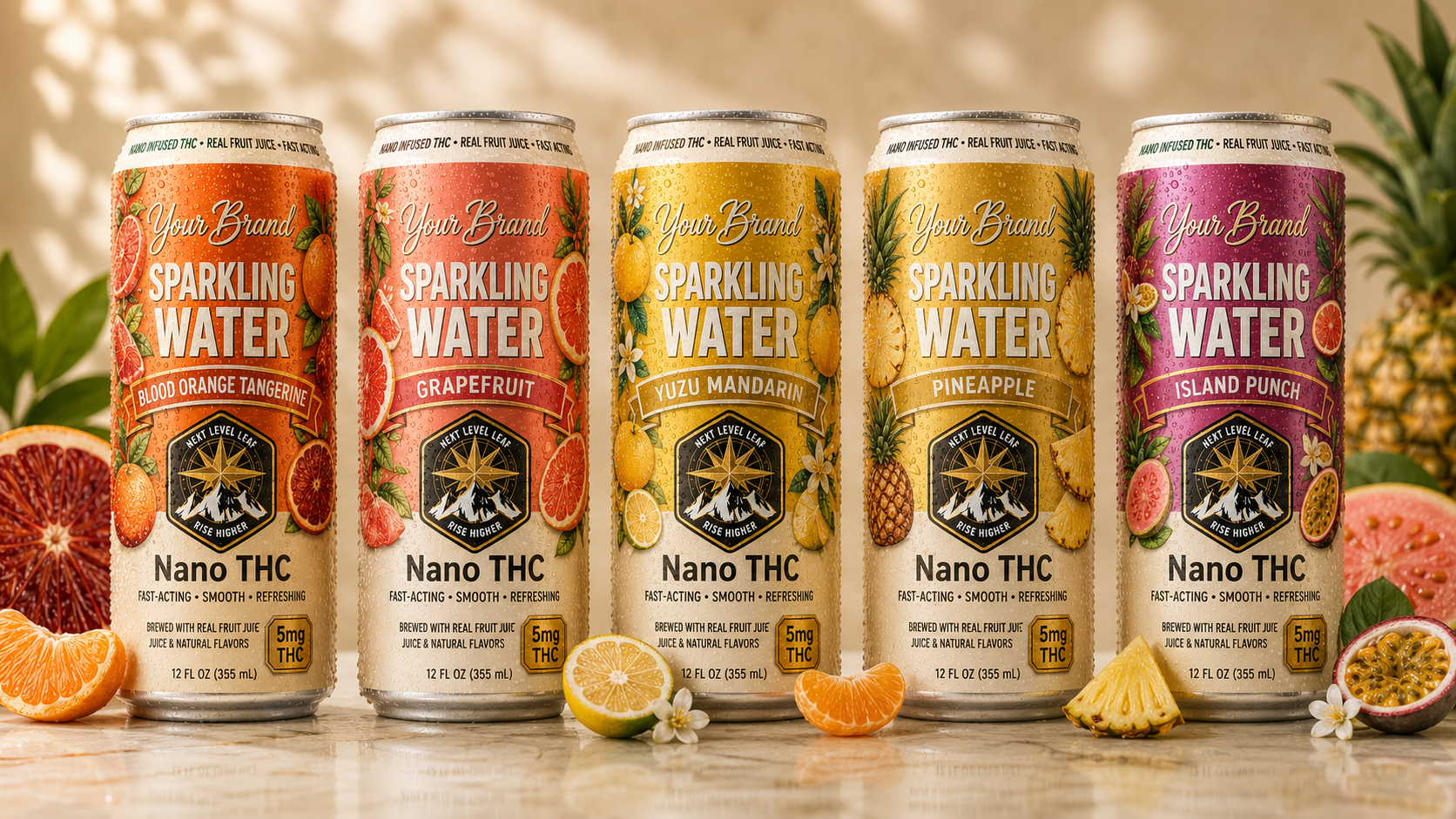
Real-fruit THC drinks can help retailers build a more premium infused beverage set when the product is easy to understand, clearly dosed, adult-oriented, and supported by strong documentation. For many retail operators, fruit-forward formats such as citrus spritzers, berry lemonades, tropical drinks, still lemonades, and juice-inspired THC beverages can feel more familiar than a plain THC seltzer while still fitting a modern adult beverage strategy.
Why retailers are paying attention to real-fruit THC drinks
Retailers are used to selling beverages. Customers already understand canned drinks, coolers, fruit flavors, lemonades, sparkling waters, teas, juices, and low-dose social products. That makes THC beverages easier to explain than many other infused products, especially when the drink looks premium and the product story is simple.
Real-fruit positioning adds another advantage. A fruit-forward beverage can feel more intentional than a basic flavored seltzer. It gives the retailer a clearer way to merchandise the product around flavor, occasion, seasonality, and adult beverage alternatives.
For retailers, the best product is usually not the most complicated one. The best product is the one a customer can understand quickly: what flavor it is, how many milligrams it contains, when they might drink it, and why it belongs in their cart.
What makes a real-fruit THC drink retail-ready?
A retail-ready THC beverage needs more than a good flavor. The product has to make sense on the shelf, in the cooler, at checkout, and in the buyer conversation. That means the drink should have a clear product identity, adult-oriented packaging, readable dosing, and documentation that helps the retailer evaluate quality and consistency.
- Clear THC dose per can or serving
- Flavor that reads quickly on shelf
- Adult-oriented design and packaging
- Batch-specific documentation and COAs
- Readable warnings and product details
- Format that fits the retail channel
- Pricing and margin logic that make sense
- Brand story that customers can remember
Best real-fruit THC drink directions for retailers
Real-fruit THC beverages can be built in several directions. The right choice depends on the retailer, the customer, the state, the dose strategy, and the product position.
Citrus spritzers
Citrus flavors can feel bright, clean, and familiar. Grapefruit, blood orange, mandarin, yuzu, lemon, lime, and tropical citrus directions can work well for retailers that want a premium adult beverage alternative with a crisp flavor profile.
Berry lemonades
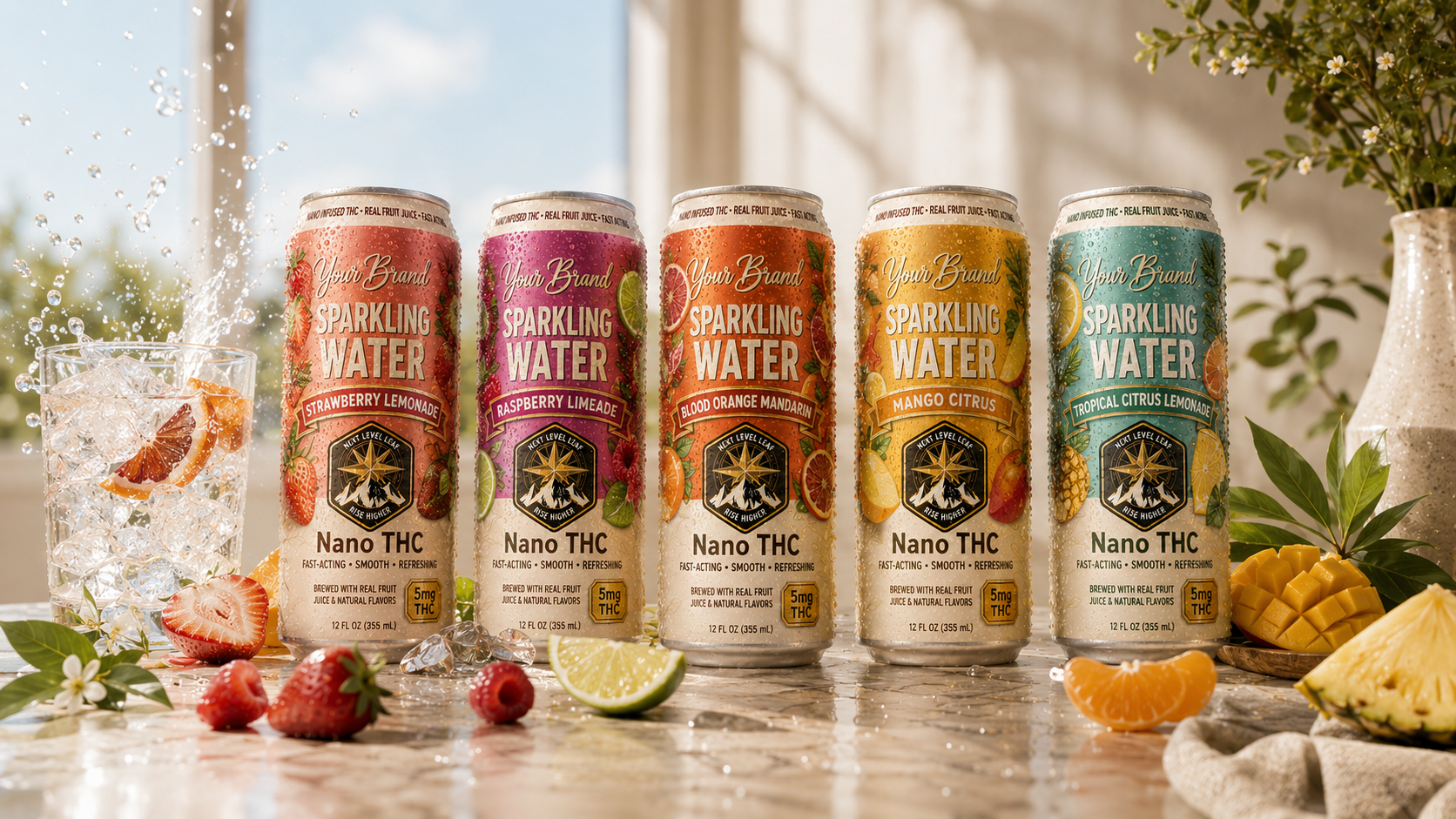
Berry lemonade concepts can work because they are easy to understand. Raspberry lemonade, strawberry lemonade, blueberry lemonade, and mixed berry lemonade give the customer a familiar flavor promise with enough color and sweetness to feel more substantial than a plain seltzer.
Tropical fruit drinks
Tropical concepts can work well for brands that want a vacation, resort, beach, or social occasion story. Pineapple, mango, passion fruit, guava, island punch, and tropical citrus can create a more flavor-forward retail drink.
Still fruit drinks and lemonades
Not every retail beverage needs carbonation. Still THC lemonades, tea-lemonade blends, fruit drinks, and juice-inspired beverages can appeal to customers who want a smoother, less bubbly drink experience.
How dose changes the retail strategy
Dose is one of the biggest decisions a retailer will make. A 5mg drink, a 10mg drink, and a higher-dose drink are not the same product. They can speak to different customers, different channels, and different use occasions.
Many mainstream retail concepts are easier to position around a lower-dose architecture, often around 5mg to 10mg per can depending on the market and rules. Lower-dose products can feel more approachable for adult beverage customers who are comparing THC drinks to alcohol alternatives, sparkling waters, mocktails, teas, and functional drinks.
Higher-dose products may make sense in some retail environments, but they usually require a more specific customer, stronger education, clear packaging, and a channel that can support that type of product. For broad retail, the first question should be what dose the customer can understand and what format the retailer can support responsibly.
White-label vs private-label retail beverages
A retailer does not always need to start with a fully custom beverage. In many cases, the fastest path is to start with an existing production-ready beverage direction, then customize the dose, label, packaging, and first-run quantity.
A white-label path can be useful when speed, lower complexity, and a proven beverage direction matter most. A private-label or more custom path can make sense when the retailer wants a more specific flavor system, sweetness profile, real-fruit identity, brand story, ingredient stack, or premium positioning.
The best path depends on how much control the retailer needs, how fast the product needs to launch, how much development work is required, and whether the brand is testing the category or building a long-term house beverage line.
Documentation helps retailers move with more confidence
Retailers need to know what they are putting on the shelf. Strong documentation can make the product easier to evaluate internally and easier to explain to buyers, operators, and retail teams.
For a THC beverage, useful documentation may include batch-specific COAs, ingredient details, finished-product testing, label review, packaging specifications, dose information, and lot traceability. Requirements vary by state and channel, and this page is not legal advice. The practical point is that better documentation can make the product feel more credible and retail-ready.
The strongest retail programs usually do not treat compliance, testing, and documentation as afterthoughts. They build the product with those expectations in mind from the beginning.
Key decisions before requesting a retail THC beverage quote
These decisions shape MOQ, pricing, formulation, packaging, testing, production timing, and whether the launch should be white-label, private-label, or custom.
Choose the retail channel
Specialty retail, liquor store, grocery-style retail, hemp retail, dispensary, convenience retail, or private-label retail brand.
Choose the format
Sparkling fruit drink, still lemonade, juice-inspired beverage, spritzer, tea-lemonade blend, or low-sugar fruit drink.
Choose the dose
Many retail programs start with approachable low-dose architecture, often around 5mg to 10mg per can depending on the market.
Choose the production path
White-label, private-label, or custom formulation depending on speed, control, budget, and product goals.
Retailers can use THC beverages to learn the market early
A first beverage run can help a retailer learn which dose, flavor, package, price point, merchandising strategy, and customer segment actually responds. That learning can be valuable before the category becomes more crowded.
The goal is not to rush. The goal is to build responsibly, test demand, and create a product that can hold up in a serious retail conversation.
What this means for retail operators
Retailers already understand how beverage categories are built: flavor, packaging, margin, cooler placement, repeat purchase, customer education, and product trust. THC beverages add cannabinoid formulation, documentation, state rules, and age-gated adult positioning to that same retail logic.
That is why real-fruit THC drinks can be a useful direction. They are familiar enough for customers to understand, but differentiated enough to feel more premium than a basic flavored seltzer. They can also connect naturally to other formats, including real fruit THC drinks, sparkling fruit THC drinks, infused teas, THC seltzers, and mocktail-style THC beverages.
Once the product direction is clear, the next practical step is to scope the beverage around dose, flavor, package size, MOQ, label needs, testing, documentation, and production timeline. That is where a quote conversation becomes useful.
Keep planning the retail beverage line
Use these related resources to compare real-fruit drinks with other formats, formulation paths, and manufacturing considerations.
Common questions about real-fruit THC drinks for retailers
Ready to scope a real-fruit THC beverage for retail?
Send the flavor direction, target dose, package size, launch state, retail channel, and first-run goals. Next Level Leaf can help translate the concept into a practical white-label or private-label beverage path.