THC Beverage Opportunities for Convenience Stores
Convenience stores are built around grab-and-go behavior, cold beverages, repeat visits, and high-traffic retail moments.
Where state rules and retail policies allow, low-dose THC drinks may become a meaningful adult-use cooler category for stores that want a differentiated beverage offering.
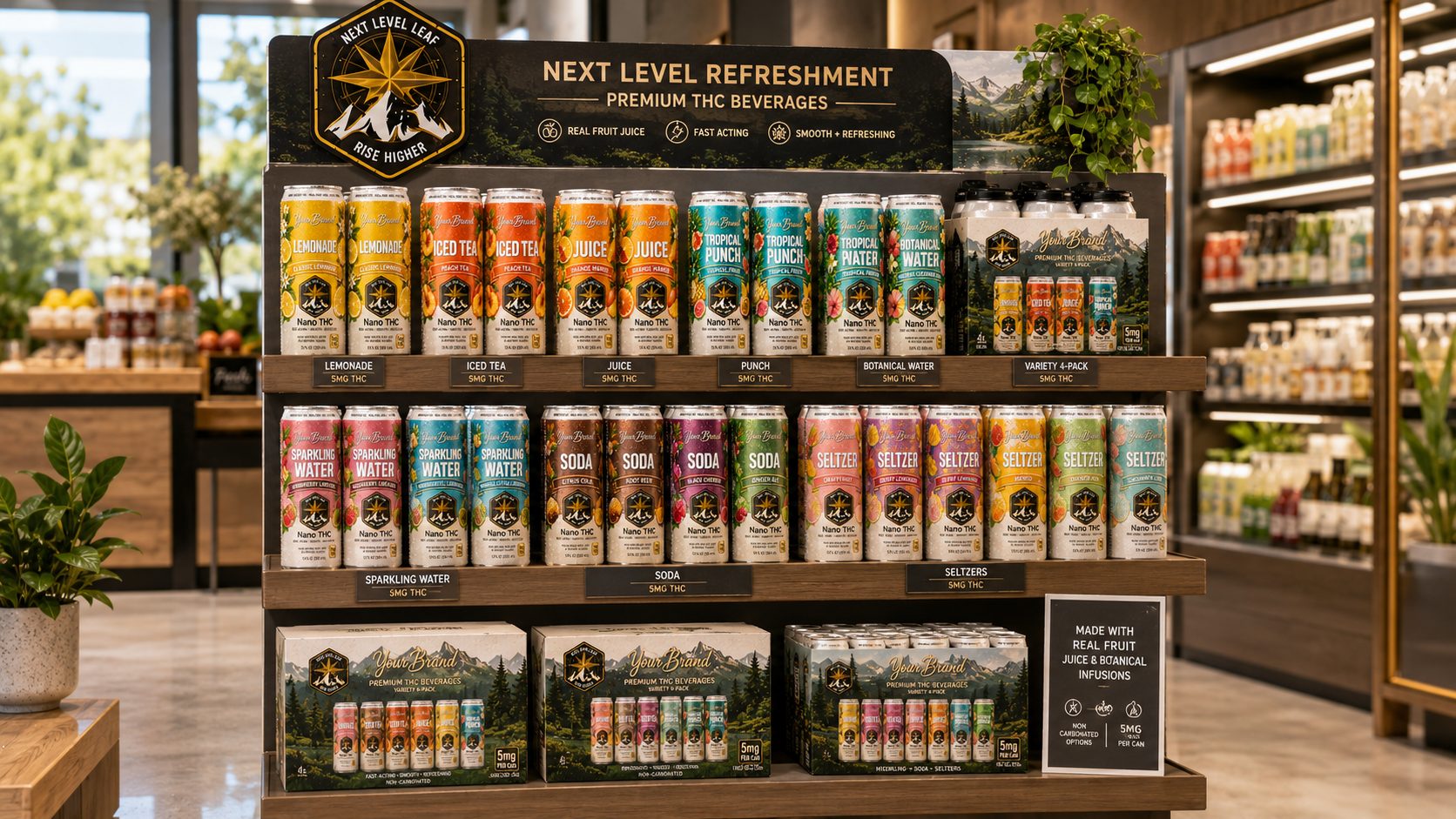
THC beverages for convenience stores can make sense when the product is retail-ready, clearly labeled, responsibly dosed, well documented, and built for grab-and-go adult customers. The strongest c-store concepts are usually familiar canned formats such as seltzers, sodas, lemonades, teas, real-fruit drinks, and functional beverages that can be merchandised clearly in a compliant retail setting.
Grab-and-go coolers
Convenience stores already sell cold single-serve beverages, which can make THC drinks easier to test when rules and retail policies allow.
Soda, seltzer, tea, lemonade
C-store customers understand familiar drink formats, especially when the label, dose, and use occasion are clear.
Retail-ready documentation
COAs, age-gating, labeling, state-market review, and distributor confidence matter more in mainstream retail environments.
Why convenience stores are watching THC beverages
Convenience stores have strong beverage traffic. Customers already use the channel for cold drinks, energy products, sodas, teas, hydration, and grab-and-go purchases. That makes THC beverages a natural category to evaluate where the legal and retail environment allows it.
For operators, the question is not only whether THC drinks are popular. It is whether the product can be merchandised responsibly, supported by documentation, and sold through a channel that makes sense for the state.
Product formats that fit c-store behavior
The strongest convenience-store products are usually simple and recognizable. THC seltzers, sodas, lemonades, teas, real-fruit drinks, and functional beverages can all fit a cooler set when the product story is clear.
C-store products should not require a long explanation. The label should clearly communicate what the drink is, how much THC it contains, and the adult-use nature of the product.
Practical planning note: For convenience retail, the best first product is usually a clear, familiar, repeatable cooler item rather than an overly complex beverage concept.
Private-label and house-brand opportunities
A c-store operator or regional retail group may explore a private-label drink when it wants a differentiated product, stronger margin control, or a branded item that competitors do not carry.
A house-brand THC beverage can also help a retailer learn the category before scaling into a wider product family. That first product should be scoped around realistic first-run volume, state market, and merchandising plans.
Compliance, age-gating, and buyer confidence
Convenience stores should think about THC beverages as adult-use products. Age-gating expectations, clear THC disclosures, responsible packaging, QR-accessible COAs, and state-by-state retail rules can all shape the path.
This is not legal advice. The practical takeaway is that a c-store THC beverage should look credible enough for store owners, distributors, employees, and customers to understand quickly.
What to prepare before requesting a quote
Useful details include number of stores, target state or states, expected cooler placement, beverage format, dose direction, flavor ideas, number of SKUs, packaging preferences, first-run quantity, and whether the product is meant to be a private-label house brand or a branded wholesale item.
Related paths
Explore connected resources for product planning, manufacturing, compliance, pricing, and the next step toward a quote.
Frequently asked questions
Ready to explore a THC beverage opportunity?
Share the business type, target customer, beverage format, dose direction, flavor ideas, target states, and first-run goals. We can help you think through the next practical step.