Grocery Store Hemp THC Beverages
Grocery and larger retail channels can be meaningful long-term opportunities for low-dose hemp-derived THC beverages where rules and retail policies allow.
The path is more demanding than a small retail pilot, but the upside can be meaningful for brands that build around documentation, adult-use positioning, and mainstream beverage expectations.
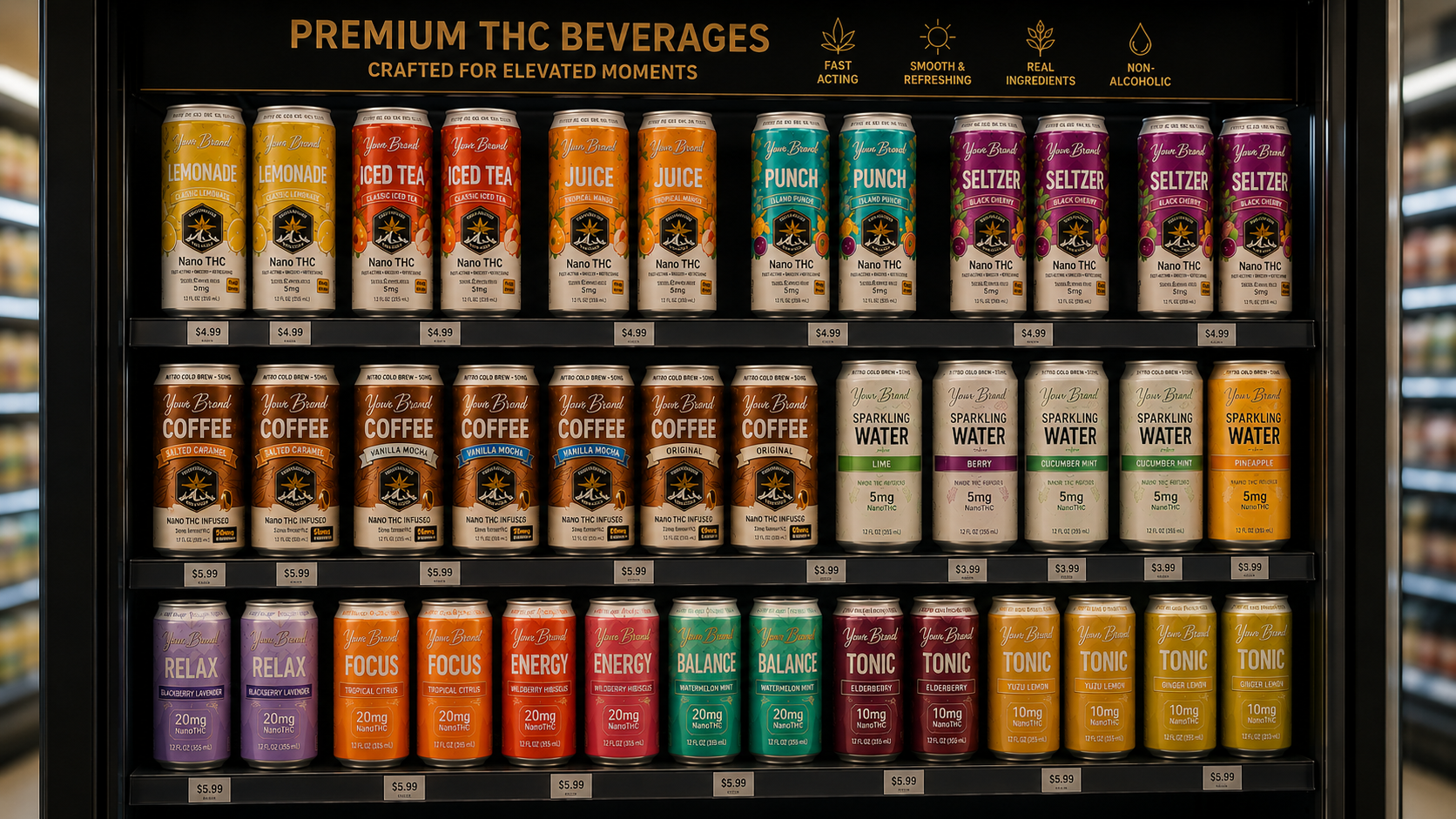
Grocery store hemp THC beverages need to be built for retailer confidence, not just consumer excitement. That means moderate dosing, clear THC disclosure, adult-oriented packaging, finished-product COAs, responsible claims, and a beverage format that fits the cooler, shelf, or specialty set.
Mainstream-ready products
Grocery stores need beverages that feel credible, documented, and easy to place in a defined category.
Low-dose and familiar
Seltzers, teas, lemonades, mocktails, sodas, and real-fruit drinks can make sense when the product is approachable.
Retail policy and state rules
Larger retailers may require stricter documentation, clearer policies, and more careful category review before adding THC products.
Why grocery is different
Grocery stores are not the same as smoke shops, small specialty retailers, or experimental channels. Buyers may need stronger documentation, clear age-gating policies, adult-use packaging, insurance expectations, COAs, and a product that fits a defined category.
That does not make the opportunity impossible. It means the product should be built with mainstream retail expectations in mind from the start.
What products may fit grocery channels?
The most realistic grocery-friendly concepts are usually familiar beverage formats: seltzers, teas, lemonades, real-fruit drinks, mocktails, sodas, and low-dose functional beverages. These formats help the customer understand the product quickly.
A mainstream retail product should avoid confusing names, child-oriented imagery, unclear dosing, unsupported claims, or packaging that makes the buyer uncomfortable.
Practical planning note: For grocery, the product has to satisfy both the customer and the buyer. Documentation and presentation matter as much as flavor.
Documentation and retailer confidence
Finished-product COAs, lot traceability, potency testing, clear labels, QR-code access, responsible claims, and state-specific planning can all help a product look more retailer-ready.
A grocery buyer may not want to be educated from zero. The product should answer obvious concerns before they become objections.
What to prepare before requesting a quote
Useful details include the retail channel, target state or region, beverage format, target dose, flavor direction, number of SKUs, can size, packaging expectations, estimated first run, and whether the product is for a retailer, brand, distributor, or private-label program.
Related paths
Explore connected resources for product planning, manufacturing, compliance, pricing, and the next step toward a quote.
Frequently asked questions
Ready to scope the beverage opportunity?
Share the business type, sales channel, target customer, beverage format, dose direction, flavor ideas, target states, and first-run goals. We can help you think through the next practical step.