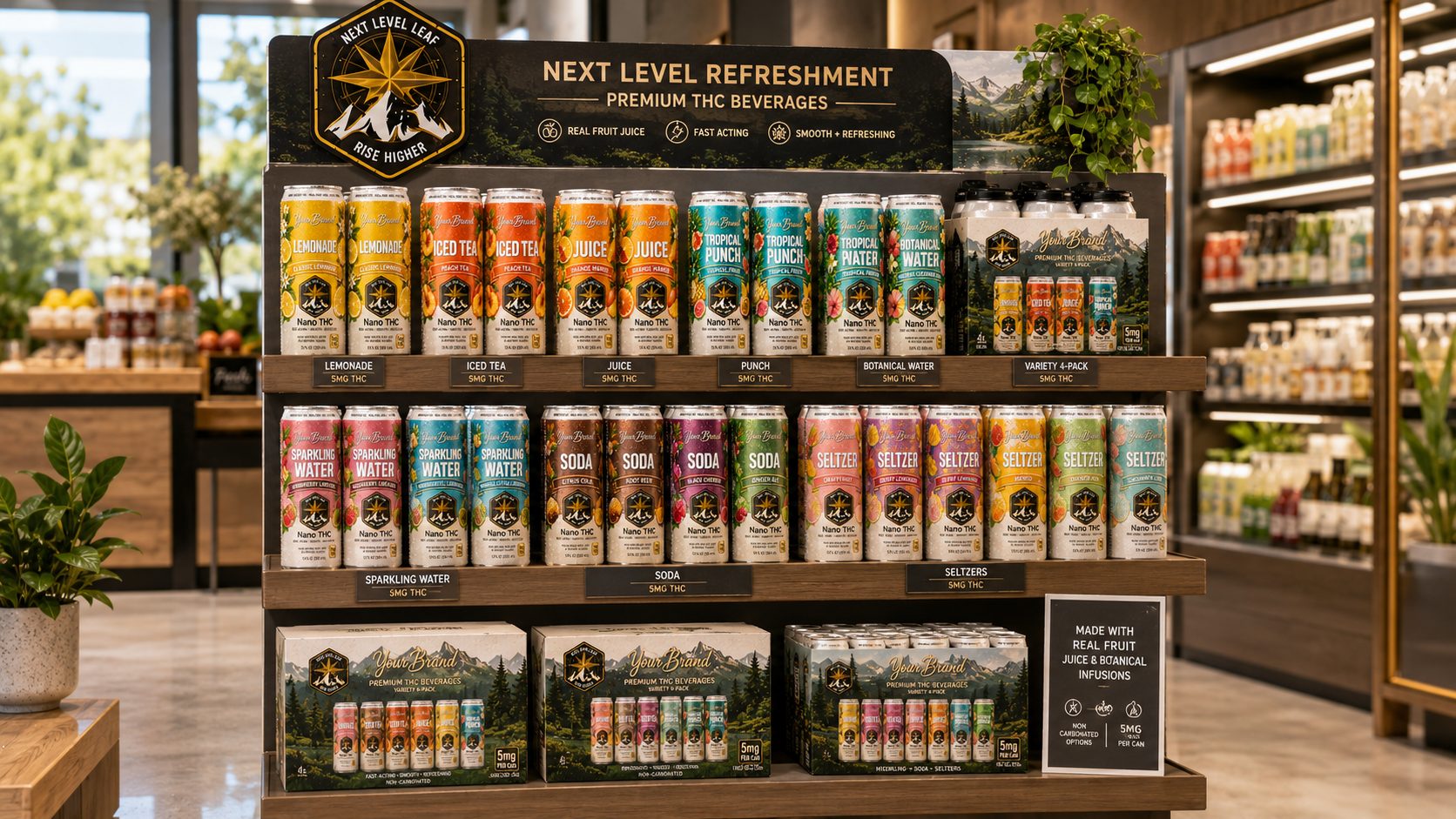
THC Beverage Opportunities for Convenience Stores
Build a grab-and-go beverage program around store access, cooler placement, account service, replenishment, and repeat orders.
Convenience stores can evaluate branded THC beverages, distributor-supported products, dedicated cooler programs, or retailer-owned private label where the product and channel are permitted.
Updated September 4, 2026

THC beverages can fit convenience retail because the channel already depends on cold single-serve drinks, frequent visits, and immediate purchase decisions. The opportunity becomes commercially stronger when the business has a clear placement route, a focused product assortment, retail-ready documentation, and someone responsible for stocking and supporting each account.
Earn visible cooler space
Choose the existing cold vault or an approved dedicated refrigerator and define where the product will appear.
Keep the choice clear
Use familiar beverage formats, focused flavors, clear cannabinoid amounts, and packaging customers can understand quickly.
Own replenishment
Assign delivery, inventory, rotation, out-of-stock correction, cooler checks, and store contact.
Measure before expanding
Track store-level movement and repeat orders before adding locations, products, or equipment.
Four ways to build a convenience-store beverage program
The route determines who controls the brand, store relationship, equipment, inventory, replenishment, and economics.
Existing cold-vault placement
The product enters the store's current refrigerated set. This avoids separate equipment but requires the beverage to earn limited space beside established categories.
Dedicated branded cooler
A brand, distributor, retailer, or program partner provides or funds an approved refrigerator for a defined beverage assortment and placement.
Distributor-supported rollout
A distributor uses its routes and account relationships to place, deliver, replenish, and support a retail-ready beverage.
Retailer-owned private label
A convenience-store operator or regional group develops a house-brand product for its stores, customers, margin goals, and expansion plan.
A dedicated cooler is a distribution strategy, not only a display
Providing a refrigerator can give a beverage brand a practical way to secure approved space without displacing products in the main cold vault. It can also make the assortment more visible and give the program a defined location inside the store.
The cooler itself does not create sell-through. The placement works only when the brand, distributor, or retailer also supports inventory, account relationships, replenishment, and performance review.
Plan the equipment investment around the route: compare the purchase or lease cost, graphics, delivery, installation, electrical requirements, service, expected store count, product margin, and time required to recover the investment. Do not assume that a cooler is justified merely because a store will accept one.
Put the cooler agreement in writing
Before equipment is delivered, the parties should define who owns the refrigerator, where it will be placed, how much space and electricity it uses, which graphics are approved, who insures and maintains it, who owns the inventory, and who may enter the store to stock it.
The agreement should also address performance expectations, damaged or unsold inventory, repair response, store relocation, termination, and who removes the cooler if the program ends.
Assign the operating responsibilities before the first delivery
A convenience-store program needs repeatable account service. These responsibilities should belong to named people or partners.
Stock and rotate
Replenish the right products, rotate older inventory forward, watch dating, and address damaged or unsold units.
Inspect the cooler
Confirm that the refrigerator is operating, clean, correctly placed, properly branded, and accessible to the intended adult customer.
Maintain store contact
Know the manager and staff, answer questions, correct out-of-stocks, and learn what the account needs.
Track store-level movement
Record units delivered, on-hand inventory, sell-through, returns, and the time between replenishment visits.
Adjust the product mix
Use actual movement to decide which flavors, formats, or cannabinoid amounts should be reordered, replaced, or removed.
Add stores deliberately
Expand only after the team can repeat the placement, service, and replenishment process without weakening current accounts.
Choose a product that works in a fast retail environment
Convenience-store customers and employees should not need a long explanation. The beverage format, flavor, cannabinoid amount, package, price, and adult-use presentation should be easy to understand.
Familiar formats such as seltzers, sodas, lemonades, teas, still fruit drinks, coffee, and qualified functional beverages can fit a refrigerated retail program. The best starting assortment is usually focused enough to make inventory and repeat demand easy to measure.
Plan the assortment around stores and reorders
Too many flavors, cannabinoid amounts, or product types can divide early demand across slow-moving inventory. Begin with the number of SKUs the first store group can reasonably support, then match case quantities to the location count and expected replenishment schedule.
Define which stores receive each product, how often inventory will be reviewed, and what result will justify a reorder or expansion. This turns the first placement into a commercial test rather than an open-ended shipment.
Compare a branded wholesale product with private label
An existing or new beverage brand can sell across independent stores and chains when the brand has a route to market and can support account service. A retailer-owned private-label product may be more appropriate when the store group wants an exclusive item, greater control of the assortment, and a product built around its own customers.
Private label does not remove the need for product decisions, documentation, inventory planning, staff preparation, and repeat sales. It shifts more ownership of those decisions to the retailer.
Use a store pilot to decide whether to scale
A defined pilot can test the product, placement, service model, and economics before the business commits to a wider equipment or production program.
Define the market
Identify the target state, store group, sales channel, adult customer, placement route, and retail requirements.
Set the assortment
Choose the beverage format, flavor direction, cannabinoid amount, number of SKUs, package, and price position.
Run the stores
Assign delivery, equipment, inventory, stocking, rotation, maintenance, account visits, and issue follow-up.
Review the result
Use store-level movement and repeat orders to expand, adjust, reorder, or discontinue the program.
Prepare for retail buyer and distributor review
A mainstream retail buyer or distributor may expect the product to arrive with a clear specification, finished-product testing, batch identification, readable cannabinoid disclosures, packaging information, and a sales plan that fits the intended market.
The final formula, cannabinoid amount, package, label, claims, age controls, sales channel, and jurisdictions require product-specific legal and regulatory review. An attractive can or available cooler does not replace that review.
Plan production for the first stores and the next order
The primary commercial starting point is approximately 1,200 cans per flavor and cannabinoid amount. A selective 360-can prototype may be available for a qualified project when product validation is the right first step.
Next Level Leaf can also help qualified brands, distributors, and retail groups plan multi-pallet orders, larger-volume programs, recurring production, and expanding product lines. The first production quantity should reflect store count, initial inventory per location, expected movement, warehouse space, freight, working capital, and reorder timing.
What to prepare before requesting a quote
Share the target stores and states, placement route, beverage format, flavor direction, cannabinoid amount, number of SKUs, package, first-run quantity, replenishment plan, desired timing, artwork status, and whether the product will be an existing brand, a new wholesale brand, or retailer-owned private label.
Related paths
Continue from the convenience-store route into product, manufacturing, distribution, pricing, compliance, and production planning.
Frequently asked questions
Ready to plan a convenience-store beverage program?
Share the target stores, states, placement route, beverage format, flavor direction, cannabinoid amount, number of SKUs, first-run quantity, and whether the project is for an existing brand or private label.
Want to see more Next Level Leaf beverage business insights in Google?
Add Next Level Leaf as a Preferred Source so our newest THC beverage business, retail, distribution, and manufacturing updates are easier to find in supported Google Search and AI experiences.
Your Google source preferences stay under your control and can be changed at any time.