
THC Beverage Opportunities for Restaurants and Bars
Restaurants and bars already understand adult beverage occasions, food pairing, menus, hospitality, and social settings.
That makes low-dose THC drinks an interesting category for operators exploring alcohol alternatives, mocktail-style products, retail cans, or branded beverage extensions where state rules and channel requirements allow.
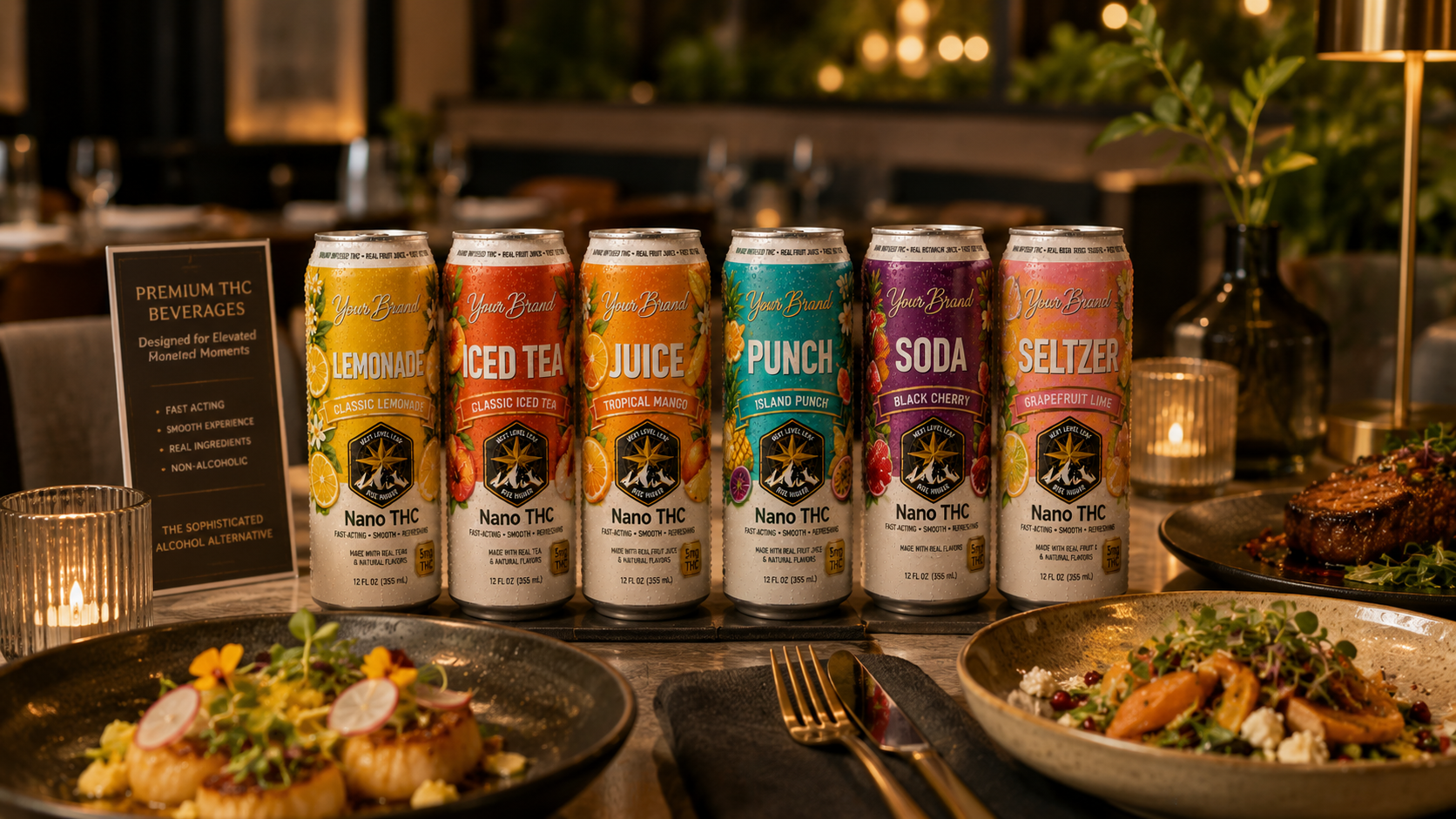
THC beverages for restaurants and bars can make sense when the product is built around adult-use social occasions, responsible serving expectations, and a clear sales channel. The strongest concepts are usually easy to understand: THC mocktails, seltzers, spritzers, teas, lemonades, sodas, or real-fruit drinks that fit the customer, menu, and local market.
Social beverage occasions
Restaurants and bars already own occasions where customers are looking for flavorful adult beverages, food pairing, and non-alcoholic alternatives.
Mocktails and seltzers
THC mocktails, seltzers, spritzers, lemonades, teas, and sodas can fit social settings without requiring a complicated product story.
State and channel rules
On-premise service, retail takeaway, age-gating, and beverage handling rules can vary, so the launch pathway must be scoped carefully.
Why restaurants and bars are looking at THC drinks
Restaurants and bars are already in the adult beverage business. They know how drinks create margin, atmosphere, repeat visits, and menu identity. THC beverages can fit that conversation when customers are looking for alcohol alternatives, lower-alcohol occasions, or something new to drink socially.
The opportunity is not only to add another canned product. It is to create a beverage that fits the venue's customer, food, service model, and brand experience.
Product formats that can work for hospitality
THC mocktails, seltzers, spritzers, lemonades, teas, sodas, and real-fruit drinks can all make sense for restaurants and bars. Some concepts feel premium and cocktail-inspired. Others feel light, crisp, refreshing, or easy to pair with food.
A venue does not necessarily need a complex product. A low-dose branded canned drink can be easier to explain, easier to control, and easier to merchandise than an overly complicated menu concept.
Practical planning note: For restaurants and bars, the best beverage is usually the one guests can understand quickly and staff can explain responsibly.
Menu, cooler, and brand-extension paths
Depending on the market, a restaurant or bar might think about THC beverages as a menu item, a branded retail can, an event beverage, a private-label product, or an alcohol-alternative extension. Each path has different operational and compliance questions.
A bottled or canned format can also create consistency. The dose, flavor, label, serving size, COA, and product information can be defined before the product reaches the customer.
Compliance and responsible service considerations
Age-gating, state rules, local rules, on-premise restrictions, alcohol-channel restrictions, labeling, COAs, and staff training expectations may all matter. This is not legal advice, but it is a reason to plan the product around the real sales environment from the beginning.
A responsible THC beverage should look like an adult-use product, clearly disclose the THC content, avoid child-oriented presentation, and be supported by documentation that buyers and operators can review.
What to prepare before requesting a quote
Useful details include venue type, target state, whether the drink is for retail cans or hospitality service, target dose, flavor direction, number of SKUs, brand status, estimated first-run quantity, and whether the product is meant to be mocktail-style, seltzer-style, soda-style, tea-based, or fruit-forward.
Related paths
Explore connected resources for product planning, manufacturing, compliance, pricing, and the next step toward a quote.
Frequently asked questions
Ready to explore a THC beverage opportunity?
Share the business type, target customer, beverage format, dose direction, flavor ideas, target states, and first-run goals. We can help you think through the next practical step.