What does white label THC coffee mean?
White label THC coffee starts with a coffee recipe and manufacturing process that are already in place. You do not need your own brewery, canning line, infusion equipment or finished recipe. You choose the coffee, THC dose and package, then sell the finished beverage under your own brand.
You still decide who the coffee is for, what the can should say, where you plan to sell it and how you will move the first run. We help turn those choices into finished, tested cases that are ready to ship.
White label is usually the fastest choice when one of the available coffees already fits what you want to sell. If you want a different coffee base, a new flavor or a complex mix of ingredients, private-label or custom development may be a better fit.
White label, private label or custom coffee?
These terms are often used differently, but the main question is simple: how much do you want to change the coffee?
| Option | Where you start | Best fit | What happens next |
|---|
| White label | An existing ready-to-drink coffee | A brand that wants the fastest way to launch THC coffee | Choose the coffee and dose, add your label, confirm testing, schedule production and arrange shipping |
| Private label | An existing coffee that can be changed in approved ways | A brand that wants a more distinct flavor, ingredient mix or product | Review the changes, make samples, gather feedback and approve the final recipe |
| Custom | A new coffee idea | A brand that needs a unique coffee, flavor or group of ingredients | Develop the recipe, make and revise samples, test it and prepare it for a full production run |
Read the Private Label THC Coffee guide if you want to make more changes to an existing coffee, or compare the options in White Label vs. Custom Infused Coffee. The broader THC Coffee Manufacturer page explains how a manufacturer can help with the entire project.
Production-ready white label coffee options
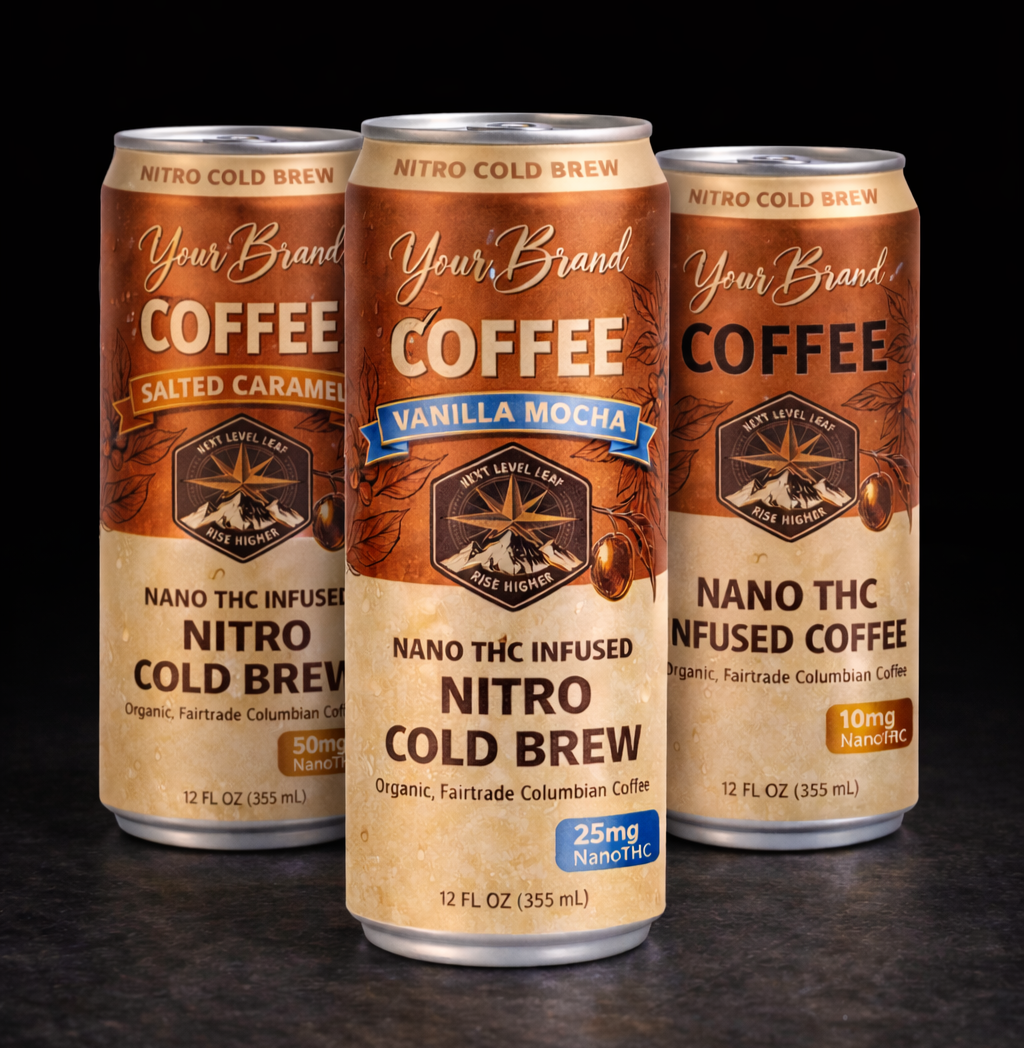
You can begin with one of three existing coffees. This keeps the first conversation simple and lets you focus on the product that best fits your brand and customer.
Coffee-ForwardBlack Nitro Cold Brew
A bold, coffee-first option with the smooth texture and cascading pour people expect from nitro cold brew.
CoffeehouseVanilla Mocha
A familiar coffeehouse flavor that combines coffee, chocolate and vanilla in a sweeter, easy-to-understand product.
Dessert-InspiredSalted Caramel
A richer, sweeter coffee with a familiar caramel flavor and a light salty finish.
Before production, we still need to confirm the THC dose, any other cannabinoids, sweetener, ingredients, package, testing and states where you plan to sell the coffee. If organic coffee or another specific type of coffee matters to you, tell us at the beginning so we can confirm what is available.
To compare coffee styles and learn how the product is made, read Nitro Cold Brew THC Coffee and How THC Coffee Is Made.
What can be customized in a white label project?
White label does not mean every can looks the same. You can build the brand, artwork and customer message around the coffee. The main limit is that you are starting with an existing recipe rather than changing every part of the beverage.
| What you choose | What usually works for white label | When it may require more work |
|---|
| Brand and artwork | Your brand name, product name, design, flavor description and required label information | Special can decoration, an unusual package or a label request the production line cannot support may add time or increase minimums |
| Coffee | Black Nitro Cold Brew, Vanilla Mocha or Salted Caramel | A different roast, brewing method, dairy system or new flavor may require private-label or custom development |
| THC dose | A dose that fits your customer, product and target market | Each different dose is usually a separate product with its own batch, label and testing |
| Other cannabinoids | CBD, CBG, CBN or other available options can be discussed | A more complex cannabinoid ratio or an ingredient that does not work well in the coffee may require more development |
| Functional ingredients | Some functional ingredients may be possible when they fit the coffee and can be used responsibly on the label | A long or difficult group of ingredients may require private-label or custom development |
| Package | A 12-ounce slim can with a pressure-sensitive label is a common first-run option | Printed cans, different can sizes or special package parts may add time and increase the quantity you need to buy |
How does the white label manufacturing process work?
- Tell us what you want to make. Share who the coffee is for, where you plan to sell it, the THC dose you are considering and when you want to launch.
- Choose the coffee. Decide whether Black Nitro Cold Brew, Vanilla Mocha or Salted Caramel is the best fit for your brand.
- Choose the dose and package. Confirm the THC dose, any other ingredients, the number of products, the can and the testing you will need.
- Finish the artwork. Complete the label or printed-can file, including the UPC, ingredients, dose and other required information.
- Approve the quote and production date. Confirm the deposit, number of cans, materials, delivery address and any special receiving needs.
- Make, can and test the coffee. The coffee is produced and packaged, then the agreed finished-product testing and batch records are completed.
- Ship the cases and plan the next order. Watch how quickly the coffee sells and reorder before inventory runs low.
What is the white label THC coffee MOQ?
A typical first production run is about 1,200 cans for each flavor and dose. That equals about 50 cases of 24 cans. Manufacturers often call each separate flavor and dose a SKU. Each one is usually made as its own batch and needs its own ingredients, label, setup and finished-product testing.
- One flavor and dose: about 1,200 cans or 50 cases.
- Two flavors or doses: about 2,400 total cans or 100 cases when each has its own 1,200-can run.
- Prototype run: a 360-can run, or about 15 cases, may be possible once the recipe is ready.
- Larger or recurring programs: established brands, retailers and distributors can plan around their sales forecast, available capacity, materials, can and label inventory, and preferred production schedule.
A prototype can give you samples for buyers or let you test a small idea, but it is not always the best way to launch. A 1,200-can run usually has a better cost per can and gives you enough inventory to learn how the product sells. Read the Infused Coffee MOQ guide for a closer look at the options.
How should a brand budget the first run?
The production invoice is only one part of the launch budget. Also plan for cannabinoids, cans and labels, artwork, UPCs, testing, freight, storage, samples, sales and the cash you will need for the next order.
- Coffee profile, ingredients, sweetener and THC dose
- Additional cannabinoids or functional ingredients
- 12-ounce slim cans, labels or printed cans, carriers, trays and cases
- Finished-product testing, the batch COA and production records
- Number of flavors and doses, total cans and any production changeovers
- Freight and whether delivery needs a liftgate or appointment
- Samples, sales materials, storage and money for the next order
A focused first run is usually easier to sell and manage. One coffee, one dose, one package and one clear customer can teach you more than spreading the budget across several flavors and strengths.
Continue with Cost to Start an Infused Coffee Brand and the THC Coffee Pricing guide.
Packaging a white label THC coffee
The package has to work on the canning line, protect the coffee, clearly show the THC dose and hold up during shipping and retail handling. A common first run uses a 12-ounce slim can with a pressure-sensitive label applied to a blank can. This looks professional and gives you more flexibility than buying a larger quantity of printed cans.
- Pressure-sensitive labels: often the easiest choice for a first run and easier to change later.
- Digitally printed cans: print the design directly on the can but may take longer and require you to buy more cans.
- Retail information: includes the product name, flavor, amount in the can, THC dose, serving information, ingredients, UPC and information required for the target market.
- Cases and carriers: includes how many cans are packed in each case, any multipack handles, trays and the pallet plan.
- Lot code: connects the cans and cases to the batch in which they were made.
Artwork should not be finalized until the can size, print template, ingredient statement, dose language, UPC and target-market requirements are confirmed.
Testing, COAs and product release
A COA for the raw THC ingredient does not replace testing the finished coffee. The final cans should be tested under the plan agreed on for the product. That may include potency and other tests required for quality or the states where the coffee will be sold. The batch COA and lot code connect the finished cans to the batch in which they were made.
Keep the finished-product COA, final recipe, lot code, production records, label version and ingredient documents for every batch. These records help answer questions from retailers and distributors and make the next production run easier.
Decide where you plan to sell the coffee before the recipe and label are finished. THC dose, package information, testing, registration and allowed sales channels can vary by state. Read the THC Coffee Compliance guide, then confirm the current rules for every state where you plan to sell.
Timing and shelf-life planning
Production may be scheduled in about three weeks after the deposit, final artwork, ingredients, packaging and production date are confirmed. Printed cans, missing materials, label changes or changes to the coffee can take longer.
Many ready-to-drink coffee programs plan around an approximate 12-month shelf life, but the final shelf life depends on the recipe, production process and package. The coffee, sweeteners, flavors, other ingredients, can and storage conditions can all affect it. Read THC Coffee Shelf Life before making promises to retailers or distributors.
Freight, reorders and scaling
A 1,200-can run fills about 50 cases, so we need the delivery address and receiving details before quoting freight. Tell us whether the location has a loading dock, forklift or pallet jack and whether delivery needs a liftgate, curbside service or an appointment. Freight is normally quoted separately because the distance and type of delivery affect the final cost.
After launch, track how many cases sell each week, how much inventory is left and how long production, testing and shipping take. Also watch the cans and labels already on hand. Established brands, retailers and distributors can use that information to plan larger multi-pallet orders, recurring manufacturing, and enterprise production schedules before inventory becomes constrained. If you plan to sell through wholesalers, read THC Coffee Distribution.
What should you prepare for a white label THC coffee quote?
- Your company, what you currently sell and who will buy the coffee
- The state or states where you plan to sell and when you want to launch
- Whether you prefer Black Nitro Cold Brew, Vanilla Mocha or Salted Caramel
- The THC dose and any other cannabinoids you want to discuss
- How many flavors or doses you want and how many cans you need
- Your can and label preference and whether the artwork and UPC are ready
- The delivery address and whether the location can receive a pallet
- Whether one of the existing coffees fits or you want to change the recipe
Tell us about the coffee you want to launch
Share the coffee, THC dose, states where you plan to sell, number of cans, label status and delivery location. We can tell you whether white label fits or whether your idea needs private-label or custom work.
Request a White Label Coffee Quote