

THC Coffee Compliance
Build a THC coffee with the right label, testing, package, and production plan for the places where you intend to sell it.
Federal food rules, state requirements, cannabinoid content, storage, and retail expectations all affect the finished product. Start with your target market, then build the coffee around what that market actually requires.
Reviewed August 22, 2026 · Information is not legal advice
THC coffee compliance depends on the finished recipe, THC dose, label, testing, packaging, target state, and the rules that apply to food and cannabinoid products. A hemp ingredient, a laboratory report, or a low dose does not automatically make a beverage lawful in every market.
What does THC coffee compliance include?
Start with the actual coffee you want to make. The flavor, THC dose, ingredients, can, label, storage instructions, and states where it will be sold all affect the project.
A first-time founder, an established beverage company, a retailer, and a distributor may need different information. Each buyer should understand the product, its testing, and the rules that apply to its intended market.
Clear product information
Customers and retail buyers should be able to understand the coffee, ingredients, cannabinoid amount, serving details, and applicable warnings.
Useful laboratory reports
Testing and certificates of analysis can help verify the product's cannabinoid content and support retailer or distributor review.
Market-specific planning
Where the coffee can be sold depends on the product, state, sales setting, packaging, and applicable federal rules.
What should a THC coffee label include?
The exact label depends on the product and the market where it will be sold. Common items to review include the product name, net contents, ingredients, allergen information, cannabinoid amount, serving details, warnings, batch identification, and responsible business information.
Nutrition information may also be required, depending on the product and applicable rules. If the coffee contains milk, a creamer, or another major food allergen, the ingredient and allergen information needs special attention.
The FDA's Food Labeling Guide and food allergen guidance explain the broader food-labeling rules. State cannabinoid labels may have additional requirements.
Keep the label clear: Customers should understand what the coffee contains, how much is in the package, and any instructions or warnings required for the market.
Why does testing matter for THC coffee?
Testing can help confirm the amount of THC or other cannabinoids in the finished coffee. Depending on the product, state, and buyer, additional testing may be needed for contaminants, product stability, or other quality concerns.
A certificate of analysis, commonly called a COA, is a laboratory report for a specific sample. Retailers and distributors may ask for a batch-specific report so they can review the product they are receiving.
Confirm the cannabinoid amount
Check whether the finished beverage matches the amount shown on the label and the rules for the market where it will be sold.
Keep the right batch records
Know which laboratory results, product information, and batch records a retailer, distributor, or state may request.
Are THC coffee rules the same in every state?
No. States can differ on permitted cannabinoids, THC limits, package size, age restrictions, retailer licensing, testing, child-resistant packaging, online sales, and where the product may be sold.
A coffee that fits one market may need a different dose, label, package, or sales setting somewhere else. Confirm the rules for each state you intend to serve before ordering labels or scheduling production.
Use the State Resources hub to review each state separately. Do not assume that a state rule, age limit, or packaging requirement applies nationwide.
Why federal hemp rules and FDA food rules are different
USDA's hemp program addresses hemp production and preharvest testing. Its familiar 0.3% dry-weight threshold does not automatically authorize a finished THC beverage or replace state product rules. The USDA hemp program FAQ explains that its testing requirements apply to the hemp crop.
The FDA separately states that introducing food with added THC or CBD into interstate commerce is prohibited under its current interpretation of the Federal Food, Drug, and Cosmetic Act. Review the FDA's cannabis and cannabis-derived products questions and answers before relying on a claim that a hemp ingredient makes a finished beverage lawful everywhere.
This page describes general product-planning issues. Your legal adviser should evaluate the particular product, state, and distribution plan.
| Question | What to review | What not to assume |
|---|---|---|
| Hemp ingredient | Source material, cannabinoid content, and current hemp rules. | A hemp ingredient automatically makes the finished coffee lawful. |
| Federal food rules | FDA's current position on THC or CBD added to food. | A state sales program removes federal food restrictions. |
| State market | Product limits, age rules, licenses, packaging, and retail settings. | One state's rules apply everywhere. |
| Label and testing | Ingredients, allergens, cannabinoid amount, batch records, and applicable warnings. | A COA or attractive label alone makes the product compliant. |
Track changes to federal hemp rules
As of August 22, 2026, Section 781 of Public Law 119-37 has a current federal effective date of November 12, 2026. Proposed legislation does not change current law unless it is enacted.
For current federal developments and the distinction between enacted law and pending proposals, review the Section 781 federal hemp deadline tracker.
What role does manufacturing play in compliance?
Your manufacturer needs to understand the recipe, THC dose, package, label, testing, storage, and order quantity. Those details should match the market where the coffee will be sold and the documentation your buyers expect.
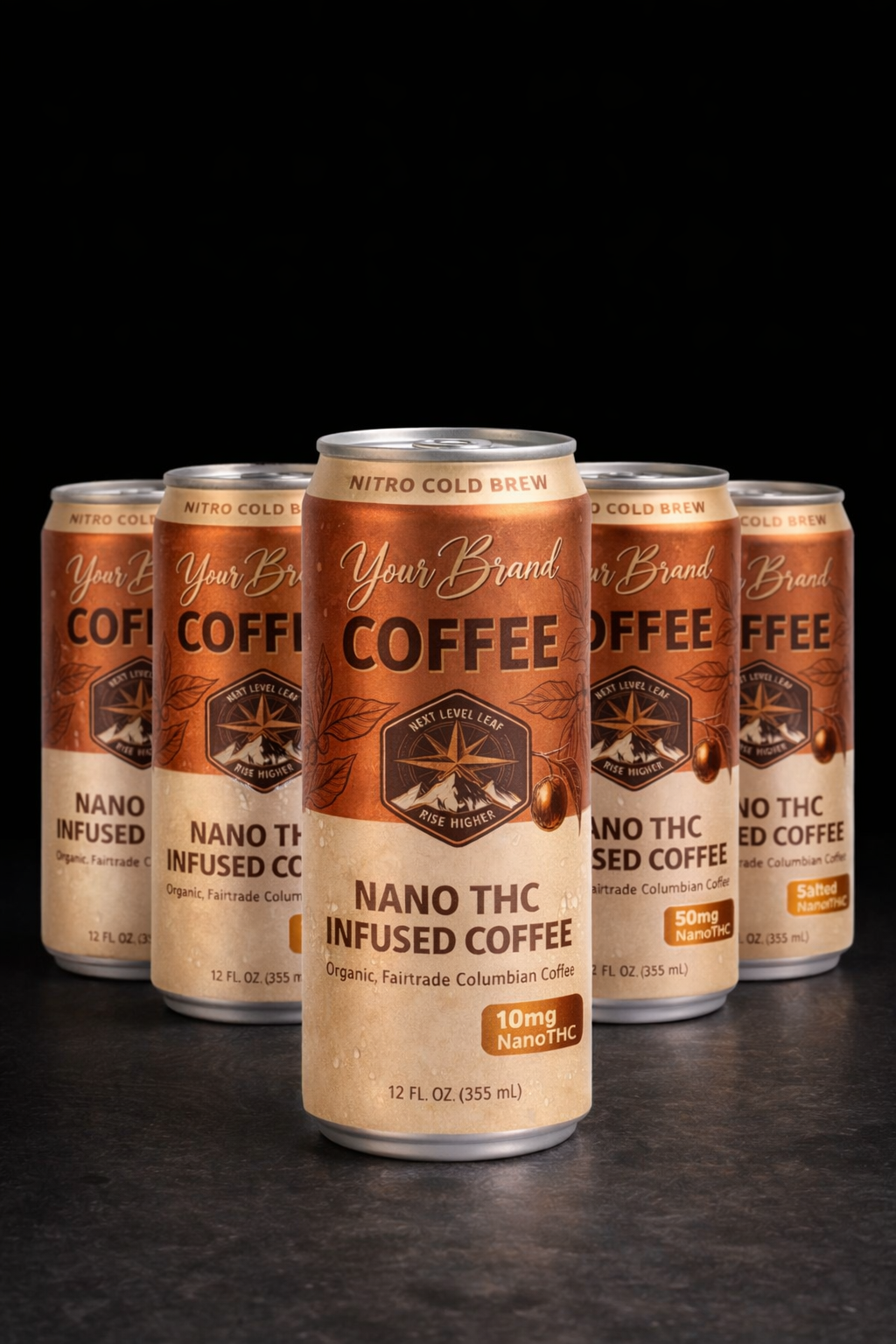
An existing recipe such as Black Nitro Cold Brew, Vanilla Mocha, or Salted Caramel can provide a practical starting point. Custom development may be useful when the brand needs a different flavor, ingredient combination, or product format.
Learn more about THC coffee manufacturing, white-label coffee, and white-label versus custom coffee.
How to plan the coffee before production
You do not need every detail finished before contacting us. Start with the product, the customer, and the states where you expect to sell it, then work through the remaining choices.
- Choose the coffee: Decide whether you want black coffee, nitro cold brew, Vanilla Mocha, Salted Caramel, or a custom recipe.
- Choose the dose: Match the cannabinoid amount to the product and the rules for the markets you plan to serve.
- Review the label: Check ingredients, allergens, serving details, warnings, and any state-specific requirements.
- Plan the testing: Identify the laboratory results and batch records your buyers or target markets may request.
- Set the order: Choose the package, quantity, storage plan, and delivery location.
This helps reduce avoidable packaging changes and gives retailers and distributors clearer information about the finished coffee.
Choose a production run that fits your business
The standard first run starts around 1,200 cans per SKU, equal to 50 cases of 24. One SKU means one flavor-and-dose combination. Established brands can also plan larger orders when the recipe, packaging, available capacity, schedule, and delivery needs support them.
Large recurring orders
Discuss runs of 50,000, 100,000, or 300,000 or more cans based on the product, capacity, schedule, and delivery plan.
Approximately 1,200 cans
Start with 50 cases of 24 for each flavor-and-dose combination.
Approximately 360 cans
A 15-case prototype may be available for a qualified project when production conditions allow it.
Avoid unsupported health and performance claims
Describe the coffee, flavor, ingredients, and intended use clearly. Do not claim that a THC coffee treats a condition, improves cognition, or delivers a specific health or performance result without the support and legal review those claims require.
The Federal Trade Commission explains that health-related advertising claims must be supported by appropriate evidence in its health claims guidance.
Important: This page is for general information and is not legal advice. Review the current rules with a qualified attorney for the product and markets you plan to serve.
Related THC coffee and compliance resources
Compare the product, shelf life, price, order size, manufacturing options, and state information that apply to your coffee.
Questions about THC coffee compliance
Ready to build THC coffee with compliance in mind?
Tell us what coffee you want to make, where you expect to sell it, and how many cans you need. We can help you plan the recipe, packaging, testing, and production.