


THC coffee shelf life
Build a THC coffee that can move from production to storage, retail shelves, and repeat orders without relying on an unsupported shelf-life claim.
Shelf life depends on the recipe, can, processing, testing, storage, and delivery plan. Whether you need a first run or a much larger recurring order, those decisions should fit the customer and the product.
Updated August 22, 2026 · Reviewed by Next Level Leaf
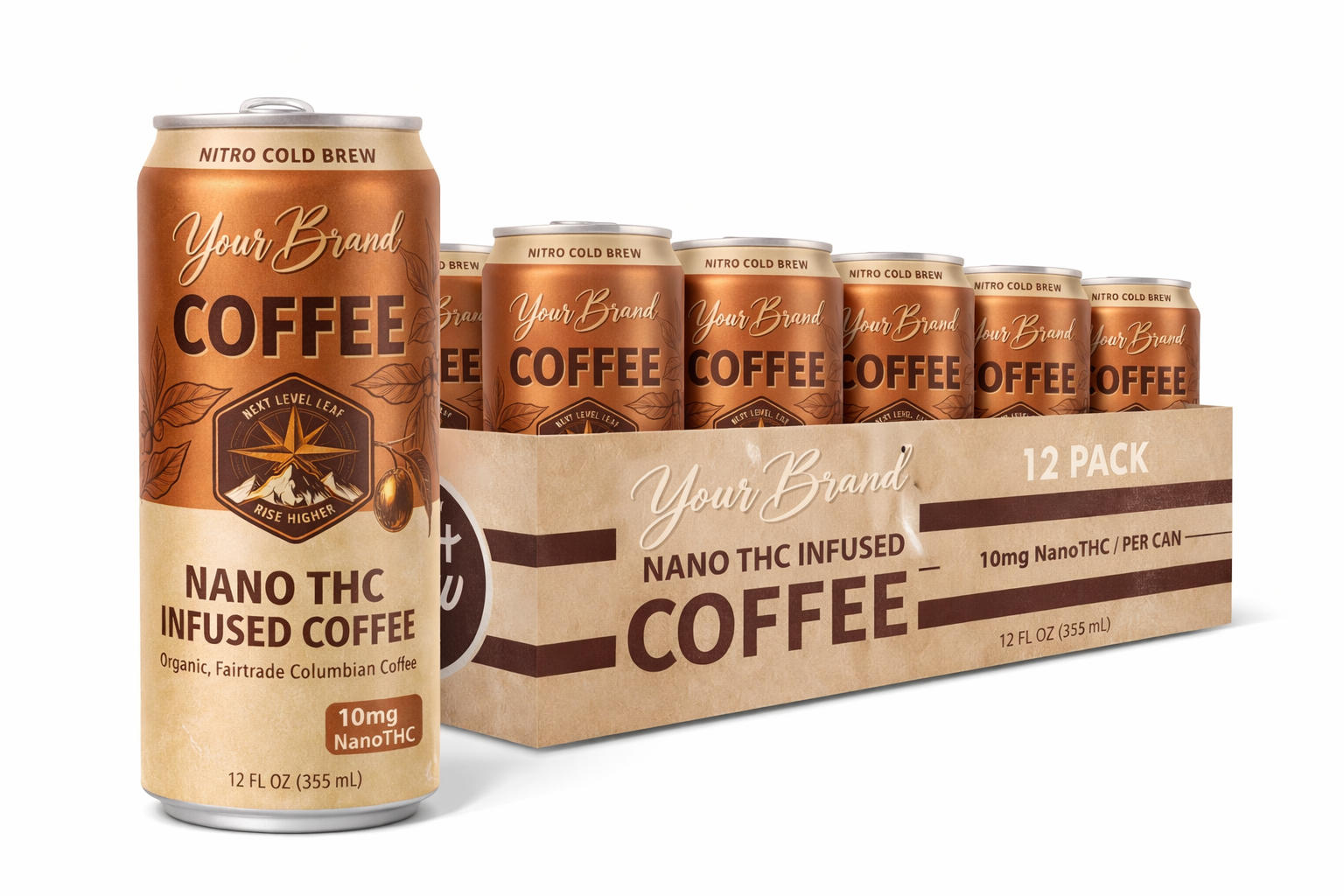
Some shelf-stable canned THC coffee products are developed around an approximately 12-month shelf-life target. The actual shelf life depends on the recipe, processing, packaging, storage, and testing for the finished product. A can does not make coffee shelf-stable by itself, and refrigerated coffee may need a different storage and delivery plan.
What determines THC coffee shelf life?
Shelf life is the amount of time a finished coffee can maintain its expected quality when it is stored as directed. It depends on more than the coffee itself.
The recipe, THC ingredient, can, seal, production process, temperature, and testing all matter. For a beverage brand, shelf life also affects how much inventory to make, how far the product can travel, and how long stores have to sell it.
Coffee and THC consistency
The coffee recipe and THC emulsion need to work together so the finished product remains consistent under its stated storage conditions.
Oxygen and light control
The can, seal, and handling process help protect flavor and product quality during shipping, storage, and time on the shelf.
Storage and handling
Heat, poor handling, and unsuitable storage can shorten the useful life of a coffee that was otherwise developed correctly.
Cold brew THC coffee vs shelf-stable THC coffee
Start by deciding how the coffee will be stored and sold. A refrigerated product and a shelf-stable canned product can both make sense, but they create different costs, delivery needs, and inventory timelines.
Refrigerated THC coffee
Refrigerated coffee may fit a local cafe, a nearby retail group, or a product that is meant to stay cold. The brand and its buyers need a dependable plan for chilled storage, transportation, and time on the shelf.
Shelf-stable canned THC coffee
Shelf-stable coffee may be easier to warehouse, ship, and sell across multiple stores when the finished product has been developed and tested for that storage condition. It can be useful for established brands, distributors, retailers, and larger recurring orders.
| Decision | Refrigerated coffee | Shelf-stable coffee |
|---|---|---|
| Storage | Requires a cold-storage plan from production through sale. | May be stored at room temperature only when the finished product is developed and tested for it. |
| Delivery | Often fits local or carefully managed refrigerated distribution. | Can fit wider shipping and distribution when the product supports it. |
| Retail fit | May work for cafes, local stores, and refrigerated displays. | May work for broader retail, warehouse storage, and recurring wholesale orders. |
| Shelf life | Depends on the specific recipe and cold-storage conditions. | Depends on the recipe, package, processing, testing, and storage conditions. |
Start with the customer: Decide where the coffee will be sold, how it will be stored, how far it needs to travel, and how quickly you expect buyers to reorder.
Why the can and packaging matter
Packaging affects more than how the coffee looks. A properly selected can and seal can help protect the product from light and limit oxygen exposure. The package also has to hold up during handling, shipping, and storage.
The label should explain the product clearly, and the case should work for the stores or distributors receiving it. Printed cans and pressure-sensitive labels can serve different order sizes, brand goals, and production schedules.
For a deeper look at how the product is made, see THC coffee manufacturing and nitro cold brew THC coffee.
What to check before you produce the coffee
- The coffee recipe: Black coffee, Vanilla Mocha, and Salted Caramel may have different ingredients and production needs.
- The THC dose: The cannabinoid ingredient should fit the beverage and remain consistent under the intended storage conditions.
- Dairy or creamers: Milk, plant-based creamers, sweeteners, and flavor ingredients can change how the coffee must be processed and stored.
- The can and seal: Packaging should protect the coffee and fit the order size, shipping plan, and retail presentation.
- Storage temperature: A shelf-stable product and a refrigerated product need different handling instructions.
- Testing: Ask how product stability, cannabinoid content, labels, and certificates of analysis will be handled.
An existing coffee recipe can make these choices easier to discuss. Explore white-label THC coffee, private-label coffee, and white-label versus custom coffee.
How shelf life affects retailers and distributors
Retailers need enough time to receive the coffee, place it on the shelf, sell it, and decide whether to reorder. Distributors also need time for warehousing, delivery, account placement, and replenishment.
A product with a short or uncertain shelf-life window can put pressure on every step. A realistic storage and inventory plan helps brands avoid ordering more coffee than their buyers can move.
See how these decisions connect to THC coffee distribution and THC coffee pricing.
Common shelf-life mistakes to avoid
A good-looking can is not enough. The coffee also needs a storage plan that matches the recipe, product testing, order size, and the way buyers will actually handle it.
- Assuming every canned coffee can be stored at room temperature
- Using another brand's shelf-life claim for your own recipe
- Ordering more inventory than stores can reasonably sell
- Overlooking the effect of dairy, creamers, heat, or packaging
- Skipping the testing and product documents buyers may request
- Planning a large order before confirming storage and delivery
Choose an order size that fits the shelf life
A standard first production run starts around 1,200 cans per SKU, or 50 cases of 24. One SKU means one flavor-and-dose combination. The right order depends on expected sales, storage, delivery, and the finished product's confirmed shelf life.
Large and recurring orders
Discuss 50,000, 100,000, or 300,000 or more cans when the recipe, packaging, available capacity, schedule, and delivery plan support the order.
Approximately 1,200 cans
Start with 50 cases of 24 for each flavor-and-dose combination and choose a quantity that your customers can reasonably move.
Approximately 360 cans
A 15-case prototype may be available for a qualified project when the recipe, packaging, and production schedule allow it.
Plan the coffee around the way you will sell it
Start with the customer, the stores or accounts you want to reach, the expected price, and whether the product needs refrigerated or shelf-stable storage. Then choose the flavor, THC dose, package, first order, and delivery plan.
Black Nitro Cold Brew, Vanilla Mocha, and Salted Caramel can each support a different product. We can help you compare an existing recipe with custom development based on your brand and production needs.
Ready to talk? Tell us the coffee you want to make, your estimated order size, and where it needs to go. We can help you work through the storage, packaging, and production details.
Questions about THC coffee shelf life
Ready to build a stable THC coffee product?
Tell us what you want to make, where it will be sold, and how many cans you need. We can help you choose the recipe, packaging, storage plan, and production volume that fit your business.