Choose a production program that fits your business
An established beverage company with an existing distribution plan has different needs than a founder preparing a first commercial run. Choose the production scope based on approved formulation, projected demand, sales channels, packaging, available capacity, and delivery requirements.
Established brands and enterprise programs
Discuss approved production of 50,000, 100,000, or 300,000 or more cans, including recurring multi-pallet programs, when available capacity, formula, packaging, scheduling, and delivery requirements support that volume.
Commercial launch quantities
A common commercial starting point is approximately 1,200 cans per approved product, or about 50 cases of 24, subject to the coffee format, ingredients, packaging, and manufacturing scope.
Selective qualified prototypes
Approximately 360 cans, or about 15 cases of 24, may be considered selectively for a qualified prototype after formula approval when packaging, available capacity, and project objectives support a limited run.
Production volume, project timing, ingredients, testing, freight, and delivery are confirmed as part of the approved manufacturing plan.
Start with positioning, not just product
One of the biggest mistakes founders make is starting with features before they start with positioning. The beverage itself matters, but the product needs a reason to exist in the market.
Ready-to-drink coffee offers a recognizable format and a familiar customer occasion. A brand can explore approved coffee styles, flavors, cannabinoids, or functional ingredients when those choices fit the intended customer, formula, packaging, manufacturing requirements, and sales channel.
- It supports a stronger, more unique and differentiated beverage position.
- It is associated with a different use occasion
- It helps you avoid looking like another generic product
- It gives the launch a more unique selling proposition
A strong coffee program starts with a clear customer, an approved product concept, and a production plan that fits the intended sales channel.
Choose the right first product
Your first product should have a clear customer, approved formulation, appropriate packaging, and a practical manufacturing scope. Coffee sourcing, ingredients, testing, certifications, and labeling must be confirmed for the specific project.
Think in terms of a lead concept
For most businesses, the best starting point is one clear concept rather than too many SKUs. A focused launch tends to create better clarity in brand messaging, more efficient production planning, and go-to-market execution.
You can begin with an approved coffee format and later evaluate additional flavors, cannabinoid options, or functional ingredients. Ingredient feasibility, caffeine content, product claims, testing, and packaging are confirmed during formulation review.
A focused approved coffee concept can help clarify the customer proposition, but the right schedule should be based on product readiness, packaging, testing, production capacity, and the actual launch plan.
Pick a direction that fits your brand
The product needs to match your customer and intended sales channel. Some brands may explore an approved lower-dose nitro or still cold brew, while others may evaluate non-infused or functional coffee concepts. Final ingredients, potency, testing, and labeling must fit the approved project.
Other programs may focus on approved flavored coffee, brand-specific ingredients, a different coffee profile, or another formulation direction. Each formula, ingredient, caffeine level, potency, and package must be reviewed before a product or production plan is confirmed.
These are all market segments that serve a niche market within the infused beverages category. Start with the end in mind. Focus on your target customer, and build your first beverage to serve them, and you will be more successful. Scale up and expand from there.
Keep the first run practical
A serious launch does not require unnecessary complexity. It requires the right balance between ambition and operational realism. Think it through, don't make emotional decisions. We'll help you!
Coordinate the production early
Once the concept is clearer, the next step is to map the launch timeline around the production schedule. This is where businesses need to decide whether to launch with a MOQ or more.
Has the label design been considered?
Is the formulation going to be a custom formula, or does it make sense to launch with a house formulation to get to market faster? R&D for a custom formula takes more time, but it is a great way to set yourself apart.
Working from an approved existing coffee formulation can simplify development when it fits the project. Confirm the formula, ingredient sourcing, production quantity, packaging, testing plan, batch documentation, available capacity, and delivery requirements before setting launch expectations.
What needs to line up
- the beverage format
- minimum order quantity
- packaging direction
- production schedule
- the actual launch plan
Reviewing these requirements together can help prevent mismatches among product scope, order size, budget, production timing, packaging, and the intended sales channel.
The practical launch sequence
Here is the simplest way to think about the launch process for a white-label infused coffee brand.
Step 01
Define the coffee concept
Choose a direction with clear positioning, such as a premium nitro cold brew concept or a flavored coffee.
Who is your target customer? Make the beverage for them.
Are you creating an infused coffee with THC? If so, is it high or low dose? Then, create your label and marketing for that specific target customer.
Step 02
Clarify the launch strategy
Decide how the product will enter the market. What is the goal of your first run? What would you consider a successful first run?
Step 03
Determine order size. MOQ or more?
Make sure your initial production run makes sense operationally and financially for the stage of your business.
Step 04
Build the brand-facing presentation
Make sure the packaging and visual identity support the premium coffee-first positioning you want to communicate.
Established brands can start with existing customer feedback and distribution needs. Newer brands can define the customer, sales channel, and initial order goals before finalizing packaging and positioning.
Step 05
Launch with focus
Enter the market with a clear concept and learn from the response before expanding SKUs too quickly.
Step 06
Refine and expand
Use customer and sales-channel feedback to evaluate additional approved flavors, formulas, production quantities, replenishment schedules, or packaging options when they fit the manufacturing plan.
Why a white-label approach can be the smarter path
White-label manufacturing can provide an approved existing product starting point, allowing a brand to focus on packaging, customer fit, distribution, and commercial execution. Private-label or custom development may be more appropriate when approved changes to the formulation, ingredients, or product experience are needed.
For many founders, this is the difference between actually launching and staying stuck in theory.
What businesses should understand before moving forward
Before launching, make sure you are clear on three things:
- What makes the product differentiated
- What kind of first run makes sense
- What production path gives you the best balance of speed, practicality, and brand quality
If those are clear, the launch becomes much more manageable.
Match the coffee program to your customer and sales channel
Established brands and beverage companies
Start with the existing customer base, target production volume, delivery needs, packaging requirements, and replenishment schedule. Larger recurring programs should be evaluated against the approved formula, available manufacturing capacity, production timing, and distribution plan.
Retailers, distributors, and wholesalers
Plan around store count, territory, private-label branding, expected sales, order frequency, freight, and finished-product documentation. Your coffee program should fit the customer experience and inventory needs of the intended channel.
New commercial coffee brands
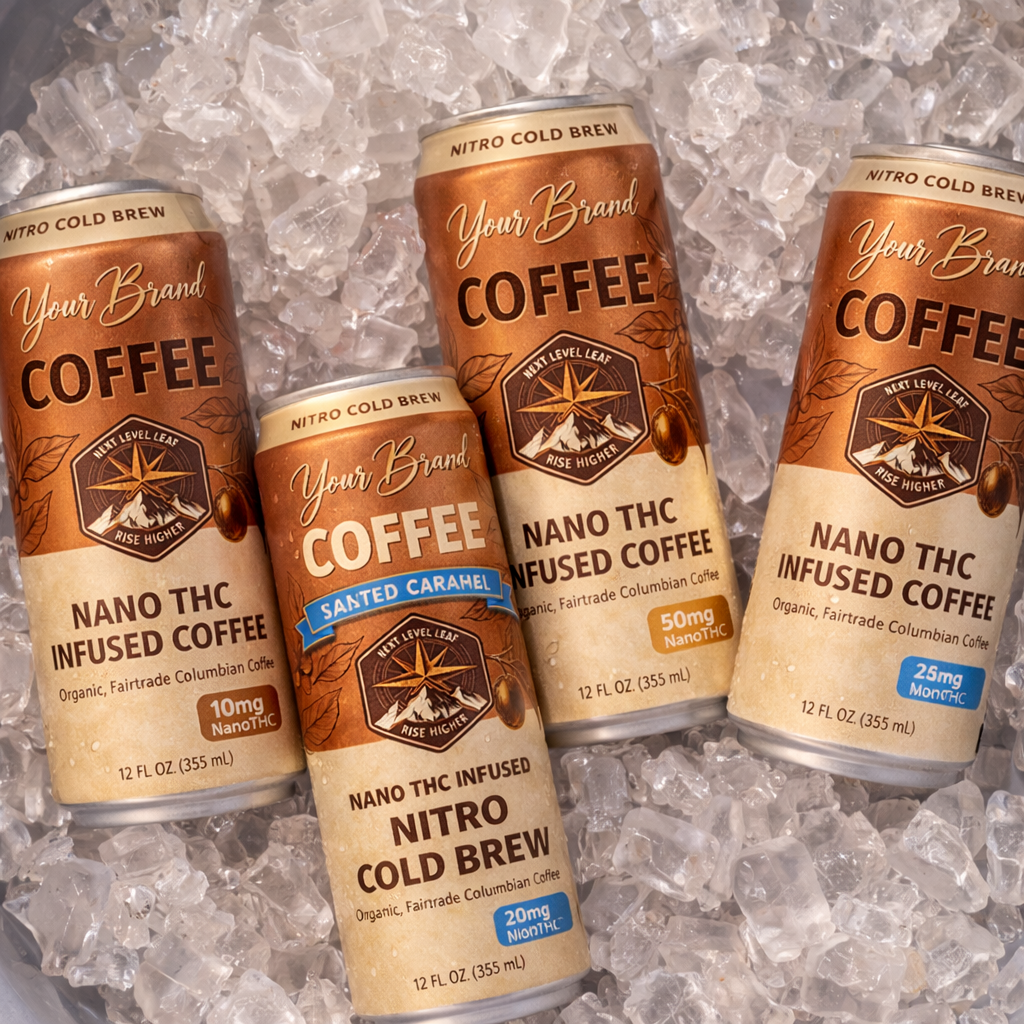
Choose an approved first product, confirm the commercial order quantity, develop packaging, and prepare the quote details before expanding into additional formulas. Black Nitro Cold Brew, Vanilla Mocha, and Salted Caramel may be discussed as starting points, subject to project approval and availability.
Move from planning to a production decision
Compare white-label, private-label, and custom manufacturing; review coffee pricing factors and order quantities; and prepare the information required for a project-specific quote.