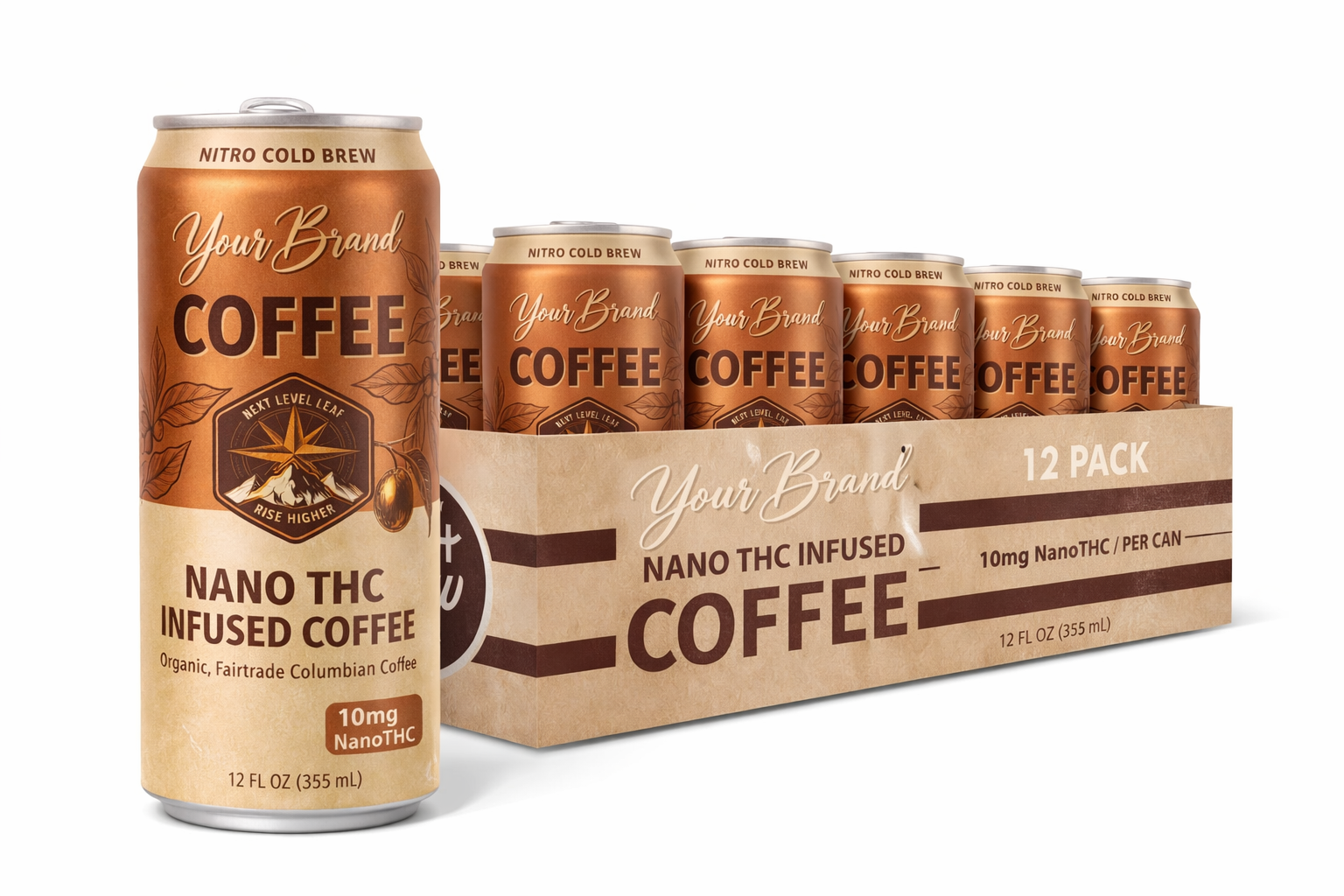
Choose a coffee production quantity that fits the business
Order size affects total manufacturing spend, materials, packaging, freight, inventory commitments, and per-can economics. Start with actual sales demand and distribution needs; then select an approved production plan.
Established brands and enterprise programs
Discuss approved programs of 50,000, 100,000, or 300,000 or more cans, including recurring multi-pallet orders, when formula approval, packaging, available capacity, scheduling, and delivery requirements support that volume.
Commercial production runs
A common commercial entry point is approximately 1,200 cans per approved product, or about 50 cases of 24. Final quantities depend on the coffee format, ingredients, packaging, and production scope.
Selective prototype programs
A qualified prototype run of approximately 360 cans, or about 15 cases of 24, may be considered selectively after formula approval when materials, production capacity, and project objectives support a limited run.
Larger order sizes do not guarantee any specific per-can price. Approved pricing, production capacity, project timing, packaging, testing, freight, and delivery are confirmed through the manufacturing quote.
Build a practical infused coffee budget
A manufacturing quote is only one part of the financial picture. Separate one-time development or artwork costs from recurring production expenses, and confirm what the approved quote includes before comparing projects.
1. Coffee and approved ingredients
Coffee format, flavor, sweetener, cannabinoid or functional ingredients, formula complexity, and ingredient availability can affect the project.
2. Development and samples
White-label, private-label, and custom development require different amounts of formulation work, approved samples, revisions, and project preparation.
3. Cans, labels, and packaging
Can selection, pressure-sensitive labels, printed cans, carriers, cases, artwork, and packaging minimums influence both unit and total project cost.
4. Production and testing
Production quantity, manufacturing setup, approved testing requirements, finished-product records, and the number of individual products shape the scope.
5. Freight and delivery
Delivery distance, pallet count, freight scheduling, liftgate requirements, receiving appointments, and destination access can change the landed cost.
6. Working capital and reorders
Account for inventory, samples, customer acquisition, channel requirements, sell-through assumptions, and the cash needed to replenish approved products.
Compare landed cost, not only quoted manufacturing cost
Landed cost per can = applicable manufacturing + packaging + testing + freight + delivery costs, divided by the number of finished cans.
Track one-time development separately when comparing repeat orders. Retailer, distributor, and direct-sales economics should be evaluated against the actual customer channel; no public per-can price or profit margin can be assumed without an approved project-specific quote.
What actually drives the cost of starting an infused coffee brand
A lot of people ask this question as if there is one flat number. In reality, startup costs are made up of a few major decisions that can significantly move your first run up or down.
1. Minimum order quantity
Order quantity affects total production volume, ingredient purchasing, packaging requirements, manufacturing setup, and freight efficiency. Compare a common approximately 1,200-can commercial starting point with larger approved orders based on your actual sales channels, projected demand, working capital, and available production capacity.
2. Beverage format
Still cold brew, nitro coffee, flavor direction, approved ingredients, and packaging can create different development and production requirements. Coffee sourcing, certifications, formulation, testing, and product claims must be confirmed for the specific approved project.
Additional approved cannabinoids, functional ingredients, flavor changes, or customized coffee profiles can add formulation, testing, packaging, and production considerations. Evaluate those requirements before comparing total project cost.
If you are deciding where to start, compare approved Black Nitro Cold Brew, Vanilla Mocha, and Salted Caramel directions against your customer, packaging requirements, available capacity, timing, and overall project budget.
3. Formulation path
An approved white-label coffee format may require less formulation work than a private-label or custom project. Compare the needed development, sample rounds, approved ingredients, packaging, production quantity, and timing before selecting the manufacturing path.
4. Packaging and brand presentation
Packaging has a big effect on both cost and perception. Can style, label quality, printed packaging elements, and overall visual execution all shape how premium the product feels and how much you spend to get there.
5. Freight and logistics
Freight is easy to underestimate. Shipping finished beverage inventory is not a minor afterthought, and it should be considered early, especially if you are comparing multiple production paths or running a smaller initial order.
Cost is important, but making a decision on price alone is a mistake.
Compare the approved product, packaging, testing plan, production quantity, delivery requirements, and overall landed cost before evaluating competing manufacturing options.
The biggest mistake is thinking only in terms of “What does it cost?” instead of “What are the main variables shaping the first run?”
Why infused coffee can be a smarter launch category
Ready-to-drink coffee offers a recognizable beverage format and a familiar customer occasion. Whether it fits the brand depends on the target audience, approved formula, packaging, projected demand, intended sales channel, and complete manufacturing economics.
Brands can evaluate approved coffee formats, flavors, non-infused concepts, or permitted project-specific ingredients. Final formulation, caffeine content, cannabinoid potency, product claims, packaging, and testing must be reviewed for the individual project.
That matters because crowded categories often make new brands look interchangeable. Coffee can create a stronger wedge. Instead of launching another generic product, a founder can build around a more specific use occasion and a unique experience.
- Coffee has a built-in consumer ritual and familiarity
- Nitro and cold brew formats can feel premium quickly
- Coffee-first branding can be more differentiated than broader infused beverages like seltzers
- The category has expansion potential into functional blends and related formats
Where founders often overspend early
Early overspending can occur when the formula, packaging, product count, or order quantity is more complex than the intended sales plan supports. Established brands should also assess inventory commitments, recurring demand, and delivery requirements.
Trying to perfect everything on the first run
A first run should usually validate positioning, packaging direction, and product-market response. It does not need to carry the full burden of an eventual scaled brand architecture.
Overcomplicating the concept
Additional flavor, ingredient, and packaging variables can increase development, testing, and production requirements. Choose a scope that fits the approved business plan, available working capital, and intended sales channel.
Ignoring the role of positioning
Sometimes, founders think they need more features when what they really need is clearer positioning. Coffee itself can be a powerful differentiator. A strong category angle can sometimes do more for perceived value than extra complexity.
How to think about your first production run
A smart first run is usually less about building the perfect forever product and more about launching a serious, brand-ready product that lets you enter the category intelligently and quickly.
- Choose a coffee concept that is differentiated but still practical
- Align your MOQ with your actual launch plan, not just your ambition
- Keep the packaging premium, but controlled
- Use a white-label or semi-structured path when speed and cost discipline matter
- Build for credibility first, then expand
That is one reason white-label infused coffee can be such a strong starting point. It can reduce friction, speed up the path to market, and allow the founder to focus on the brand instead of getting trapped in unnecessary operational drag.
What most founders should do next
If you are seriously evaluating an infused coffee concept, the next questions are usually not abstract. They are practical.
- What is the MOQ?
- What kind of coffee format makes sense?
- How custom should the first run be?
- What path gets you to market with the right balance of quality and efficiency?
That is why the next two most important articles on this topic are the MOQ article and the launch article.
Use the budget that matches your customer and sales channel
Established beverage brands
Plan the approved formula, order quantity, packaging commitments, delivery schedule, multi-pallet freight, and recurring replenishment around existing customers and realistic sales forecasts.
Retailers, distributors, and wholesalers
Consider store count, territory, branded packaging, order frequency, inventory requirements, freight, receiving constraints, and the documentation needed for the intended sales channel.
New commercial coffee brands
Start with an approved commercial production quantity, select the appropriate white-label or private-label format, and set aside the working capital needed for inventory, packaging, freight, and a future reorder.