

Distribution starts with the product itself
Retail and wholesale planning starts before the first account conversation. The buyer needs to understand what the coffee is, who it is for, how it is packaged, which product documentation applies, and whether the program fits the intended channel and jurisdiction.
A distribution-ready manufacturing plan connects the approved coffee formula, flavor direction, case configuration, labeling, testing where applicable, order quantity, delivery destination, and reorder expectations. It does not assume that a particular retailer, distributor, or market will accept the product.
A strong sales conversation becomes easier when the approved product, package, documentation, commercial scope, and buyer-facing story match the intended account.
Choose the channel before you overbuild the product
A specialty retailer, existing beverage brand, wholesale buyer, coffee-oriented account, or distributor-supported program may have different requirements for product positioning, packaging, case quantities, documentation, and delivery.
Channel availability, licensing, sales permissions, product eligibility, and downstream distribution obligations must be evaluated for the specific jurisdiction and business model. A channel mentioned here is a planning example, not a representation that every route is available in every market.
Direct account development
When permitted, an approved brand may work with specific retail accounts to understand product fit, packaging requirements, buyer questions, and reorder behavior.
Retail and private label
Retailers and established brands can evaluate approved private-label programs around their customer, shelf position, product requirements, and commercial volume.
Distributor and wholesale planning
Wholesale buyers can evaluate approved product specifications, documentation, case configuration, volume, delivery, and the supply requirements of actual accounts.
Self-distribution can be the smartest first move
Direct account development can help an emerging brand learn what buyers ask, how staff describe the product, which package format fits the account, and whether a reorder conversation develops. This approach is appropriate only where the jurisdiction, licensing structure, product, and sales channel allow it.
Some established buyers may already have a permitted sales organization, active account relationships, or approved wholesale infrastructure. Their next step may be defining product specifications and recurring production requirements rather than starting with a small local test.
Practical boundary: Brands and their approved commercial partners remain responsible for licensing, account outreach, sales permissions, retailer acceptance, and downstream distribution. Next Level Leaf supports the manufacturing and product-planning side of the program.
Retailers need a one-sentence product story
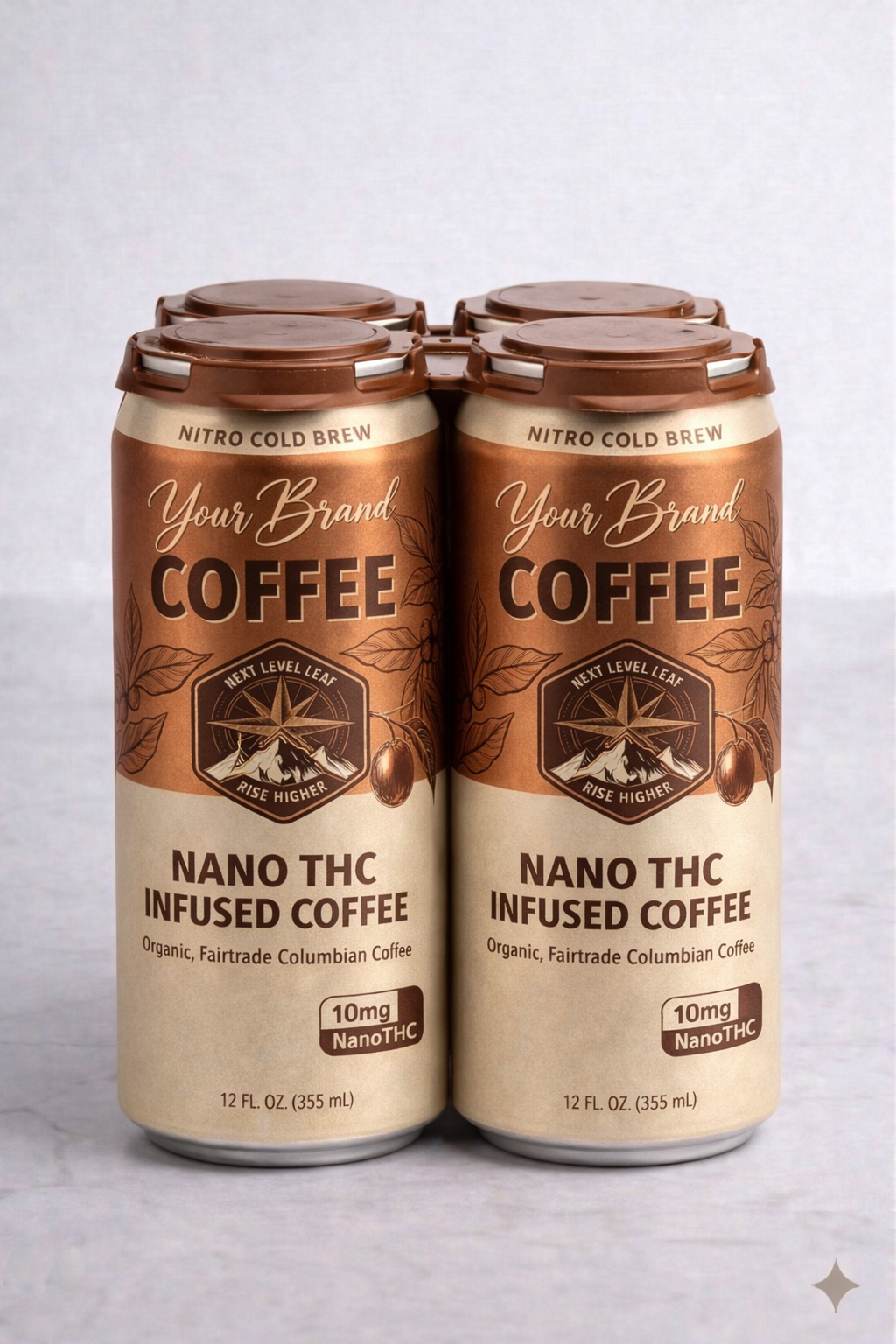
Buyers should be able to explain the approved product simply: what coffee format it uses, what flavor direction it offers, which adult audience it serves, and what makes the package appropriate for the intended channel.
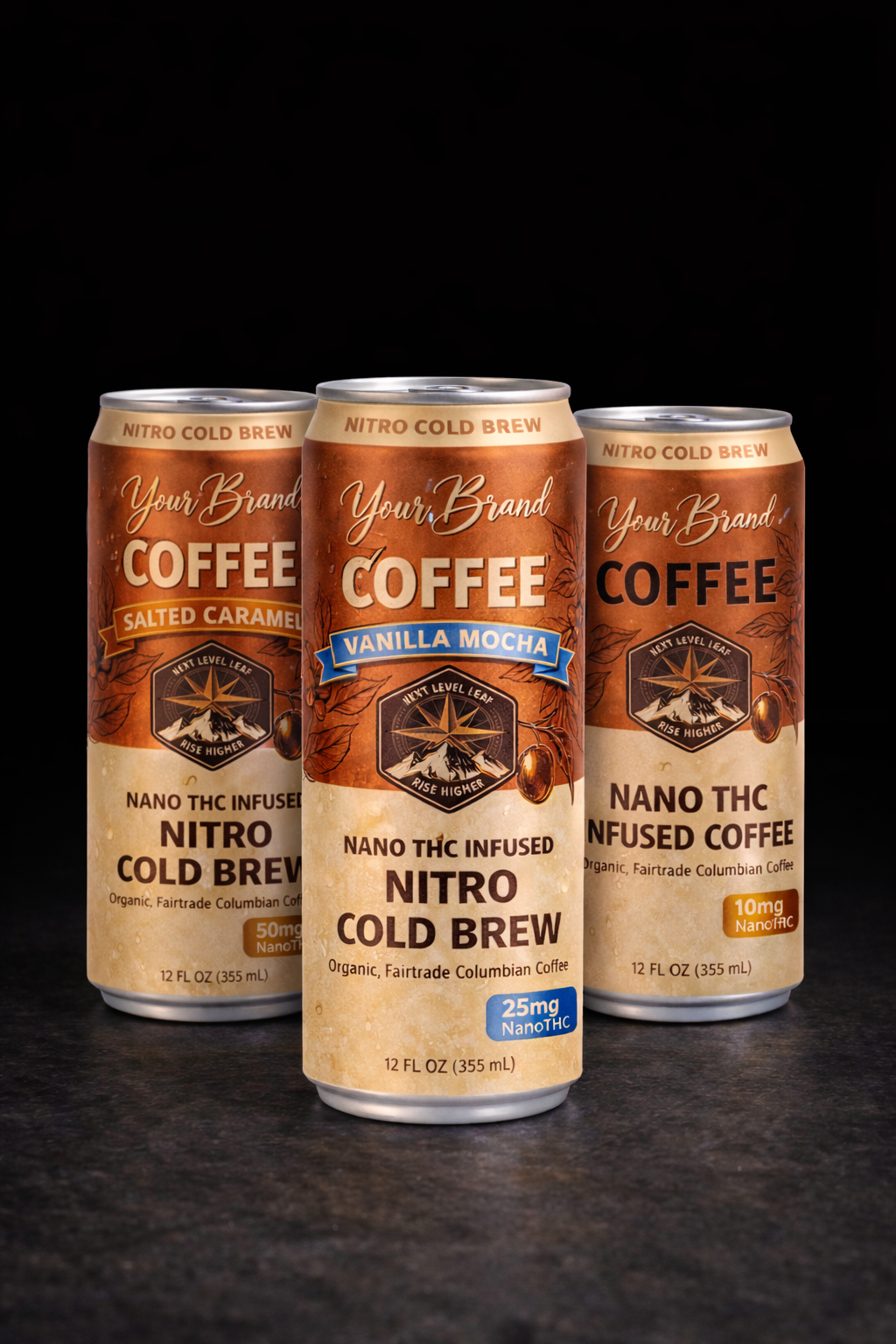
Examples such as Black Nitro Cold Brew, Vanilla Mocha, and Salted Caramel can help communicate approved product directions without inventing an unverified dosage, performance benefit, or guaranteed retail outcome.
A product story should stay aligned with the final approved formula, product label, documentation, and applicable market requirements.
Dose affects distribution
The approved cannabinoid specification is one input in channel and product planning. Its relevance depends on the final product, jurisdiction-specific requirements, buyer expectations, labeling, and intended customer.
Do not assume that a particular strength is permitted, appropriate for a specific account, or likely to produce a specific sales outcome. Confirm the product requirements and commercial scope before finalizing manufacturing details.
Documentation supports serious retail conversations
Depending on the product, buyer, jurisdiction, and approved scope, relevant documentation may include product specifications, finished-product testing, certificates of analysis, packaging information, label review, and case details.
Documentation supports clearer buyer diligence and product communication. The exact material required varies by account, product, jurisdiction, and channel; it should not be presented as one uniform nationwide checklist.
Target-state planning should happen early
The intended market can affect product eligibility, labeling, testing expectations, licensing, channel permissions, packaging, and downstream sales obligations. Brands should identify the markets they plan to serve and obtain the appropriate legal or regulatory guidance for those jurisdictions.
Next Level Leaf can use the intended product and market information to scope manufacturing-related requirements. It does not determine whether a customer may distribute into a specific state, promise regulatory approval, or provide legal advice.
For jurisdiction-specific reference materials, review State Resources and the broader beverage compliance resources.
What distributors usually want to see
Distributor and wholesale buyers often need a clear picture of the product, packaging, documentation, account fit, inventory requirements, delivery plan, and ability to support appropriate reorders. Requirements vary with the buyer and approved market.
Product readiness
- Approved coffee format and flavor direction
- Product specification and accurate label information
- Packaging and case configuration appropriate to the account
- Applicable testing and certificates of analysis
- Defined manufacturing quantity and delivery needs
- Pricing and commercial terms addressed privately
Commercial readiness
- Defined target buyer and intended jurisdiction
- Clear and supportable product story
- Retailer or distributor requirements where applicable
- Account, sales, and licensing responsibilities
- Realistic inventory and delivery assumptions
- Reorder planning based on verified demand
Match production volume to the actual opportunity
A standard commercial starting point is approximately 1,200 cans per approved SKU, or 50 cases of 24. Each approved product or flavor is generally planned separately. Larger established brands, retailers, and distributors may need a materially different program based on existing account demand and verified ordering requirements.
Established brands and larger programs
Discuss 50,000, 100,000, or 300,000+ can planning scenarios, subject to formula, packaging, available capacity, scheduling, and delivery requirements.
Approximately 1,200 cans per SKU
Start with an approved 50-case program, defined account objectives, suitable packaging, and a practical delivery or reorder plan.
Approximately 360 cans per SKU
A limited qualified prototype of 15 cases of 24 may be considered when the product, packaging, schedule, and manufacturing scope support it.
Production scenarios are planning discussions rather than guaranteed capacity, lead times, retail placement, distributor relationships, or sales performance.
THC coffee may need education, but it should not feel confusing
Some buyers may need help understanding the approved coffee format, flavor, packaging, intended adult audience, product documentation, and merchandising fit. Education should make the product easier to evaluate without adding unsupported wellness, performance, or timing claims.
Keep the product description grounded in its approved formula and label. A clear coffee story, accurate packaging, relevant documentation, and channel-specific sales plan are more useful than unverified promises about effects or sales velocity.
Distribution planning can shape your first quote
A better production brief connects account requirements to manufacturing details. Share the information needed to scope the actual product without assuming that a quote includes distributor placement or retail sales execution.
| Buyer stage | What to prepare | Manufacturing question to answer |
|---|---|---|
| Product readiness | Coffee format, approved formulation, flavor, packaging, documentation, and number of SKUs. | What finished product needs to be manufactured? |
| Channel selection | Intended market, permitted account type, buyer requirements, case configuration, and sales responsibilities. | How should the approved package and production scope fit the channel? |
| Manufacturing plan | Quantity per approved SKU, production requirements, available capacity, delivery location, and requested timing. | What commercial or larger-scale program can be evaluated? |
| Sell-in readiness | Accurate product story, applicable documentation, private pricing terms, account materials, and delivery expectations. | What information does the brand need to present an approved product? |
| Reorder planning | Actual demand, inventory movement, packaging availability, reorder volume, and manufacturing schedule. | How should recurring production be scoped without promising outcomes? |
Request a useful quote: Provide the approved coffee format, intended market, number of SKUs, expected volume, packaging needs, delivery location, and whether the opportunity is an initial launch or larger recurring program.
The simplest recommendation
Build an approved coffee product around a real buyer, a defined channel, accurate documentation, appropriate production volume, and a delivery plan that matches the commercial opportunity.
Next Level Leaf supports manufacturing, production planning, packaging coordination, and production-related readiness. It does not provide distributor placement, guarantee retail accounts, assure sell-through, or determine downstream sales authorization.
To discuss your actual product and production scope, request a project-specific manufacturing quote.
Move through the buyer journey
Choose the coffee direction
Start with the Infused Coffee hub, evaluate nitro cold brew, and review THC coffee manufacturing.
Plan launch, price, and volume
Compare THC coffee pricing, commercial MOQ, and launch planning.
Review account-specific programs
Explore private-label coffee, retailer programs, and distributor and wholesale programs.