

Start with the customer’s expectation
Start with the person who will buy the coffee. A national beverage brand, a retailer building a private-label line, a distributor, and a first-time founder may need very different products.
Think about what the customer expects to taste, how much they will pay, where they will buy it, and what the package should communicate. Those answers will help you choose a premium or lower-cost direction.
The strongest product connects the coffee, customer, packaging, price point, order size, and delivery plan.
The real difference between premium and budget THC coffee
The difference is not simply what the product costs to make. It is whether the flavor, package, price, and overall experience feel right to the customer.
Premium THC coffee
Choose this direction when customers will pay more for a distinctive coffee and polished presentation.
- Strong coffee and flavor experience
- Consistent dose and clear product information
- Packaging that supports a premium shelf price
- Testing and sales documents buyers can review
- Production volume matched to expected demand
Value-focused THC coffee
Choose this direction when a simpler recipe and practical package can deliver a good product at a more accessible price.
- Focused recipe with fewer costly extras
- Efficient labels, cans, and case packaging
- Clear labeling and necessary testing
- Order size based on realistic demand
- Pricing quoted privately for your product
Why premium usually fits THC coffee better
THC coffee already sits in a specialty category. Many customers expect good coffee, clear dosing, attractive packaging, and a product that feels worth seeking out.
That often supports a premium position. A lower-cost approach can still work for a value-minded customer, high-volume retailer, or distributor when the coffee remains enjoyable, accurately labeled, and professionally presented.
Black coffee and nitro cold brew can support premium positioning
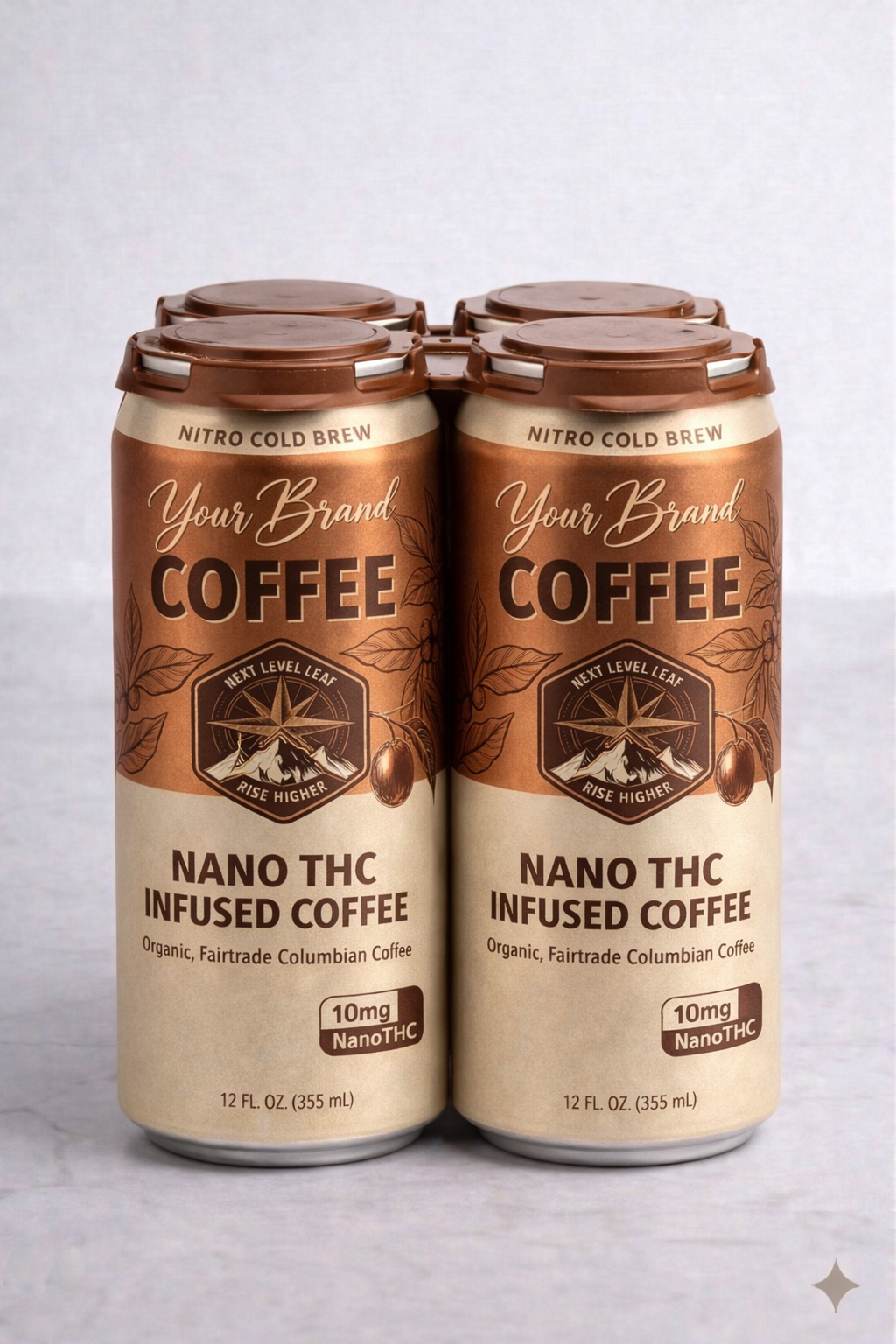
Black Nitro Cold Brew can support a coffee-forward brand that wants a clean, recognizable product. Nitro adds a distinct drinking experience, but the format alone does not make the coffee premium.
Compare the flavor, mouthfeel, package, shelf price, and customers you want to reach before choosing black coffee or nitro.
For more context, review Nitro Cold Brew THC Coffee and How THC Coffee Is Made.
Flavored coffee can still be premium
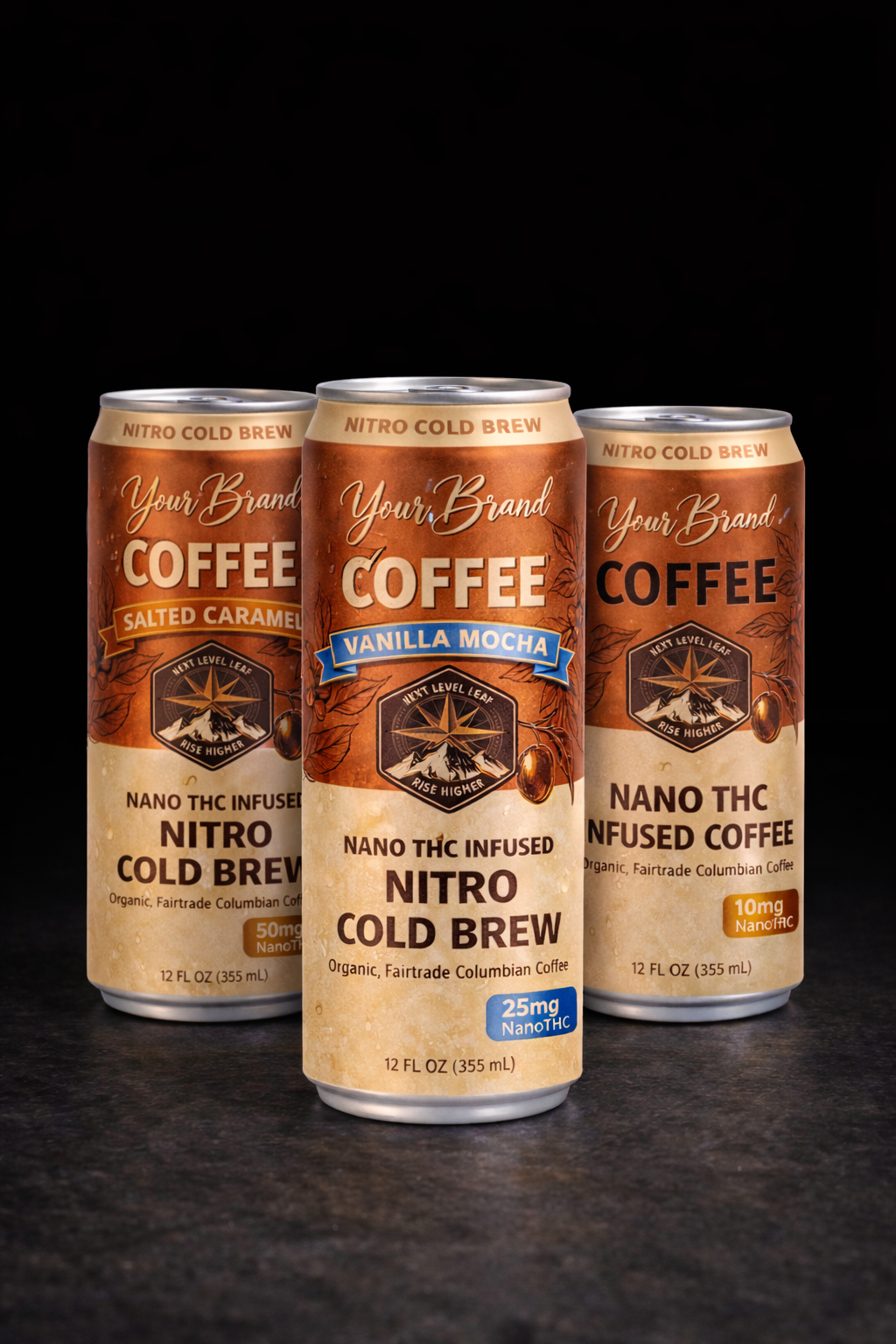
Vanilla Mocha and Salted Caramel can also support a premium brand. A familiar flavor may be easier for some customers to understand and can make the coffee feel more indulgent. Black coffee is not automatically more premium than flavored coffee.
Coffee-forward direction
Consider black or nitro coffee when customers value coffee flavor, a less sweet profile, and a clean presentation.
Familiar flavored direction
Consider Vanilla Mocha or Salted Caramel when customers want a sweeter, more familiar ready-to-drink coffee experience.
Dose also affects the price conversation
The THC dose affects ingredient cost, flavor balancing, labels, testing, and where the product may be sold. It also shapes how customers compare the coffee with other infused beverages.
Choose the dose based on the product and customer, then confirm the rules for every market where you plan to sell it.
For related product-direction questions, review THC vs CBD Coffee and Best Cannabinoids for Coffee.
Testing and COAs are not where to cut corners
Testing confirms what is in the product and supports accurate labels. Certificates of analysis and finished-product information may also be important to retailers and distributors.
A lower price should come from smart recipe and packaging choices, not from skipping the testing or information needed to sell the product responsibly.
Packaging changes how the customer reads the product
The can, label, case, and shelf presentation shape the customer's first impression. Premium coffee usually needs a more polished presentation, while a value product may benefit from simpler packaging that still looks professional.
Pressure-sensitive labels can offer flexibility for smaller runs. Printed cans may make more sense at larger volumes. We can compare the options once we know your order size and where the coffee will be sold.
Keep it honest: Packaging should clearly represent the coffee. It should not make unsupported quality, wellness, legal, or performance claims.
Where a value-driven THC coffee can work
A value-focused coffee may fit a retailer's private-label line, a distributor serving price-sensitive accounts, an established beverage company, or a founder with a clear customer and price target.
The goal is a good coffee at the right price. A focused recipe and practical package can control costs without making the product feel cheap.
Do not overbuild the product just to make it feel premium
A more complicated recipe does not automatically create a stronger product. Good coffee, a suitable flavor, clear dosing, and the right package may matter more than adding ingredients customers do not understand or value.
If functional ingredients or a custom recipe are important to your brand, we can review how they affect flavor, cost, testing, and production.
For additional product-direction context, review Functional Ingredient Coffee Stacks.
Compare the choices that matter
| Decision factor | Premium-focused approach | Value-focused approach |
|---|---|---|
| Target customer | Customers willing to pay more for distinctive coffee and polished presentation. | Customers looking for an enjoyable coffee at a more accessible price. |
| Coffee format | Black Nitro Cold Brew, Vanilla Mocha, or Salted Caramel can all work. | Choose the format that delivers the right flavor without unnecessary complexity. |
| Packaging | Use packaging that supports the brand story and expected shelf price. | Use a practical can, label, and case that still look professional. |
| Production | Match the recipe, testing, quantity, capacity, and delivery plan to demand. | Match the recipe, testing, quantity, capacity, and delivery plan to demand. |
| Next step | Request a quote based on your coffee, package, quantity, and delivery location. | Request a quote based on your coffee, package, quantity, and delivery location. |
Choose a production volume that fits your business
The standard starting point is approximately 1,200 cans per SKU, equal to 50 cases of 24. One SKU means one flavor-and-dose combination. We can also support established brands, retailers, and distributors that need much larger recurring orders.
50,000 to 300,000+ cans
Plan a larger run or recurring orders around your recipe, packaging, forecast, available capacity, schedule, and delivery needs.
Approximately 1,200 cans per SKU
Start with 50 cases of 24 for each flavor-and-dose combination, with packaging chosen for your brand and customer.
Approximately 360 cans per SKU
A 15-case prototype may be available for a qualified project when the recipe, packaging, and schedule allow it.
Final quantities, pricing, timing, and delivery depend on your recipe, package, order details, and production schedule.
What to share when requesting a quote
You do not need every detail finished. The following information will help us give you useful options and a more accurate quote.
- Who do you expect to buy the coffee?
- Do you want a premium or more value-focused product?
- Which coffee format and flavor interest you?
- What THC dose and package do you want?
- How many flavors and doses are you considering?
- How many cans do you need for each product?
- Where should the finished coffee be delivered?
- Is this a first run or an ongoing production need?
Next step: Tell us what you want to make, how many cans you need, and where they are going. We can help you work through the remaining choices.
The simplest recommendation
Choose a premium direction when customers will notice and pay for stronger coffee, distinctive flavor, and polished packaging. Choose a value direction when a focused recipe and practical package better fit the customer and shelf price.
Black Nitro Cold Brew, Vanilla Mocha, and Salted Caramel can each support either strategy when the coffee, package, and price make sense together.
Review Infused Coffee Product Ideas, then request a THC coffee manufacturing quote.
Plan your THC coffee
Compare product ideas
Explore the Infused Coffee hub, nitro cold brew, and how manufacturing works.
Review pricing and volume
Compare THC coffee pricing, minimum order quantities, and launch costs.
Compare production options
Review white-label versus custom, private-label coffee, and distribution planning.