

Start with the person who will buy the coffee
Choose the customer before choosing the cannabinoid. An adult who wants a THC beverage, a coffee drinker who prefers a non-intoxicating option, and a buyer interested in a more specialized ingredient are looking for different products.
Your target customer helps determine the coffee format, cannabinoid content, serving size, packaging, intended sales channels, and price point.
A useful formula gives customers a clear reason to choose the product without requiring a complicated explanation.
Compare the most practical cannabinoid options
THC, CBD, and straightforward combinations are often easier to explain than a long list of specialty ingredients. Match the formula to the buyer, label, intended markets, and production goals.
THC Coffee
For adults who want a coffee containing an intoxicating cannabinoid.
- Clearly identify the THC amount
- Choose a serving size that fits the customer
- Consider the intended sales channels
- Avoid promising a specific individual effect
CBD Coffee
For customers interested in cannabinoid coffee without a THC-focused product.
- Identify the amount of CBD
- Build the product around great coffee and flavor
- Check the requirements of each target market
- Avoid unsupported health or medical claims
THC + CBD Coffee
For customers who want both ingredients in one clearly labeled coffee.
- Show the amount of each cannabinoid
- Keep the ratio easy to understand
- Remember that THC can still intoxicate
- Choose the formula for a clear customer need
When THC fits the product
THC can be a practical direction when your brand serves adults who are already interested in infused beverages and want a coffee option instead of a soda or seltzer.
The amount should fit the customer and the markets where you plan to sell. A lighter serving can support a more approachable product, while a stronger option usually targets a more experienced adult audience.
Caffeine and THC are separate ingredients, and people respond differently. Describe what the coffee contains without guaranteeing how an individual will feel.
Low-dose THC coffee
A possible fit for brands seeking a lighter serving and a more approachable adult-oriented coffee.
Higher-dose THC coffee
A more specialized direction for experienced adults, subject to the intended market and product requirements.
When CBD fits the product
CBD can fit a coffee concept aimed at customers who want a cannabinoid ingredient without a THC-centered product. The coffee should still stand on flavor, quality, packaging, and a clear brand identity.
Select ingredients and testing that match the product you intend to sell. A CBD-only concept should not be marketed as a medical treatment or presented as automatically acceptable in every market.
Compare the broader differences on our THC vs. CBD coffee page.
When a THC + CBD combination fits
A combined coffee can make sense when your customers understand both ingredients and the label can explain the formula clearly. A simple ratio, such as 1:1, may be easier to communicate than a complex blend.
State the amount of THC and CBD separately. A coffee containing THC should not be described as non-intoxicating simply because CBD is also present.
Keep the customer-facing explanation short enough for a retailer or buyer to understand at a glance.
Where CBG, CBN, THCV, and other cannabinoids may fit
Less common cannabinoids can support a more specialized concept when the ingredient is available, the formula is practical, the intended markets support the product, and the customer understands why it is included.
CBG, CBN, THCV, and CBC should be evaluated individually. Availability, cost, serving size, testing, labeling, and the intended sales channel can differ between ingredients.
Do not promise that any cannabinoid improves focus, produces relaxation, treats a condition, or creates another guaranteed outcome. The product should make sense as coffee first.
CBG
An optional ingredient for a differentiated coffee when sourcing, label clarity, formula cost, and the intended market support it.
CBN
A specialty option that requires a clear product rationale. A caffeinated coffee should not promise sleep or relaxation based on CBN.
THCV
A more specialized option that should be assessed for ingredient cost, availability, dose, target market, and customer understanding.
Keep the formula easy to understand
A long ingredient list does not automatically create a better coffee. Every additional cannabinoid can affect cost, labeling, sourcing, testing, and the explanation your customer needs.
Choose the simplest formula that serves the product you want to make. A customer should be able to identify the coffee style, main cannabinoid, amount per serving, and overall brand direction without confusion.
Established brands with a clear customer base may have a reason to offer a broader line or more specialized formulas, but each product still needs a distinct job.
Match the cannabinoid to the coffee format
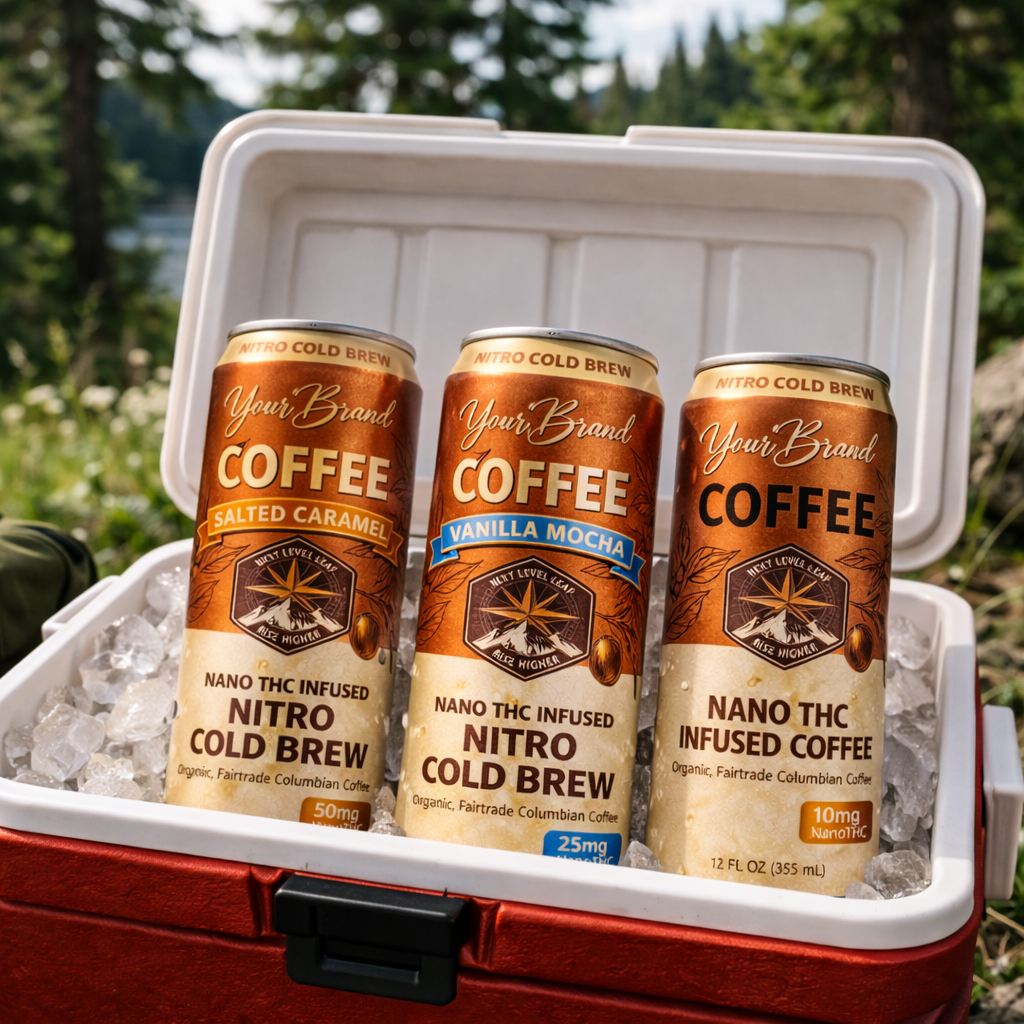
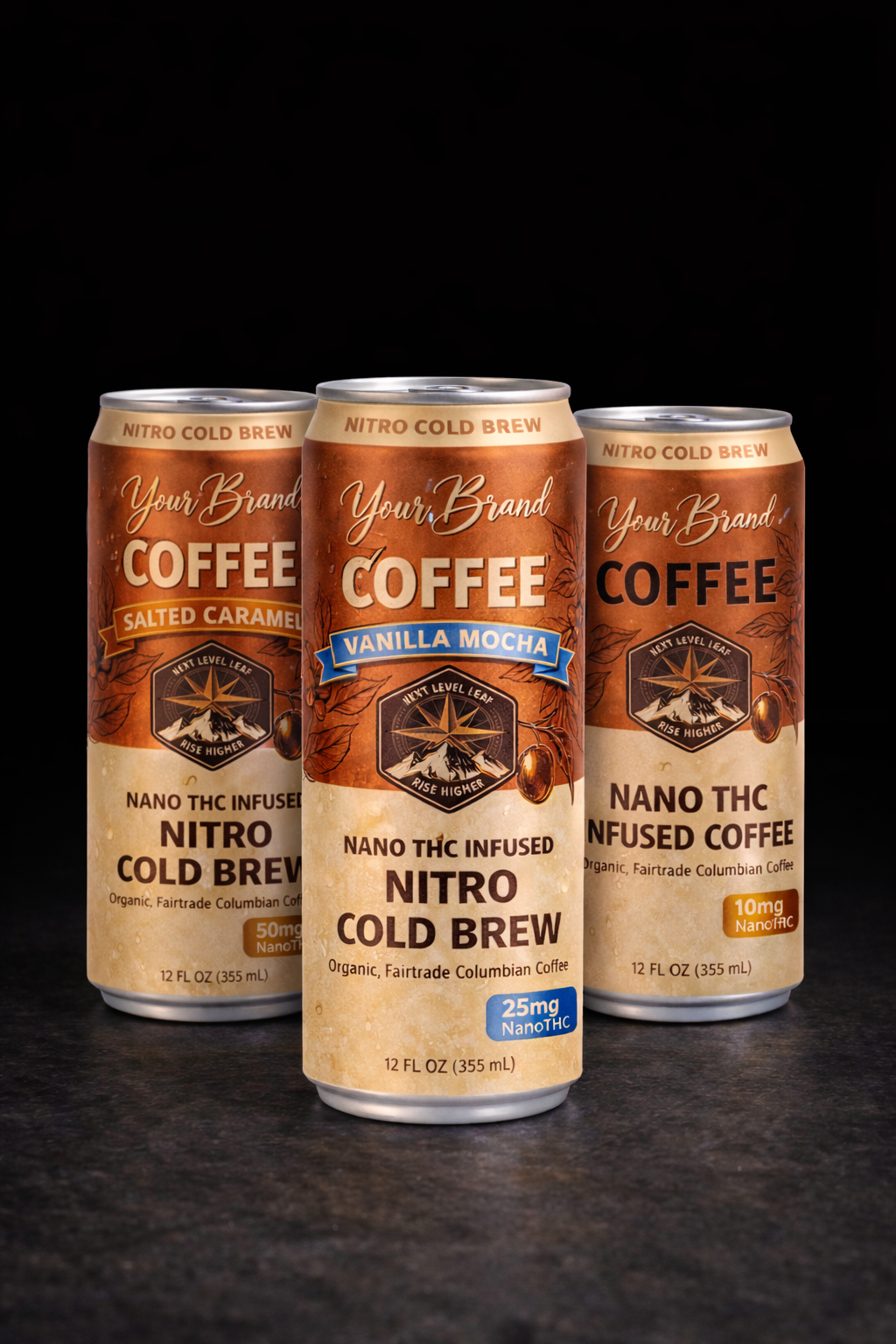
The cannabinoid choice should also make sense with the coffee itself. A black nitro cold brew, vanilla mocha, salted caramel coffee, and functional coffee stack each create a different customer expectation.
- Black coffee: works best when the product is clean, simple, and coffee-forward.
- Vanilla mocha: works well when the goal is familiar, approachable, and easy to understand.
- Salted caramel: can support a more indulgent or premium coffee experience.
- Nitro cold brew: may pair well with a premium positioning and smoother mouthfeel.
- Functional coffee: Consider additional ingredients only when they fit the recipe, customer, label, and supported product claims.
If you are considering additional ingredients, review functional ingredient coffee combinations and custom beverage formulation.
Consider ingredient cost and sourcing
Some cannabinoid ingredients cost more or require a more specialized supply chain. The amount per can, ingredient availability, testing, and formula complexity can all affect the project.
Before adding a less common cannabinoid, decide whether it supports a clear customer need and whether the expected selling price can support the added cost.
Compare your options against the broader THC coffee pricing and premium versus budget coffee decisions.
Make labeling, testing, and market fit clear
Cannabinoid choice can affect labeling, testing, the intended sales channel, and whether a product fits a particular market. A formula suitable for one location should not be assumed to work everywhere.
The label should clearly communicate what cannabinoids are in the product and how much is in each can. It should avoid unsupported medical claims, disease claims, or vague language that makes the product harder to evaluate.
Appropriate testing, clearly stated cannabinoid amounts, supporting product documentation, and suitable packaging can help prepare a coffee for retail or wholesale discussions.
Review THC coffee compliance, THC coffee distribution, and our state resources when planning your intended markets.
Choose the right production volume
The standard commercial starting point is approximately 1,200 cans per SKU, or 50 cases of 24. Each distinct flavor-and-dose combination is generally planned as a separate product.
Established brands, retailers, and distributors can also plan larger orders and recurring production around their demand, packaging, available capacity, delivery requirements, and schedule.
A selective prototype of approximately 360 cans per SKU may be available for a qualified project when the formula, packaging, and production schedule support it.
Compare infused coffee minimum order quantities and our manufacturing capabilities before choosing your production volume.
What to share when requesting a quote
You do not need every technical detail finalized. Tell us what kind of coffee you want to make, who it is for, and how much you expect to produce.
- Your preferred coffee style and flavor.
- The cannabinoid or combination you are considering.
- The approximate amount you want in each can.
- Your intended markets and sales channels.
- The number of products and approximate cans per product.
- Your packaging, delivery location, and whether you need a first run or recurring production.
Share the product you want to make, the customer you want to reach, and your expected order size. We can help you compare practical coffee and production options.
Choose the cannabinoid that fits the product
Choose THC when your customer wants an adult-oriented coffee containing an intoxicating cannabinoid. Consider CBD for a concept that is not built around THC intoxication. Add CBG, CBN, THCV, CBC, or a combination only when the ingredient supports a clear, practical product idea.
Keep the coffee, flavor, serving size, label, price point, and order volume aligned with the customer you want to serve.
Compare THC and CBD coffee, explore THC coffee manufacturing, or request a quote when you are ready to discuss your project.