


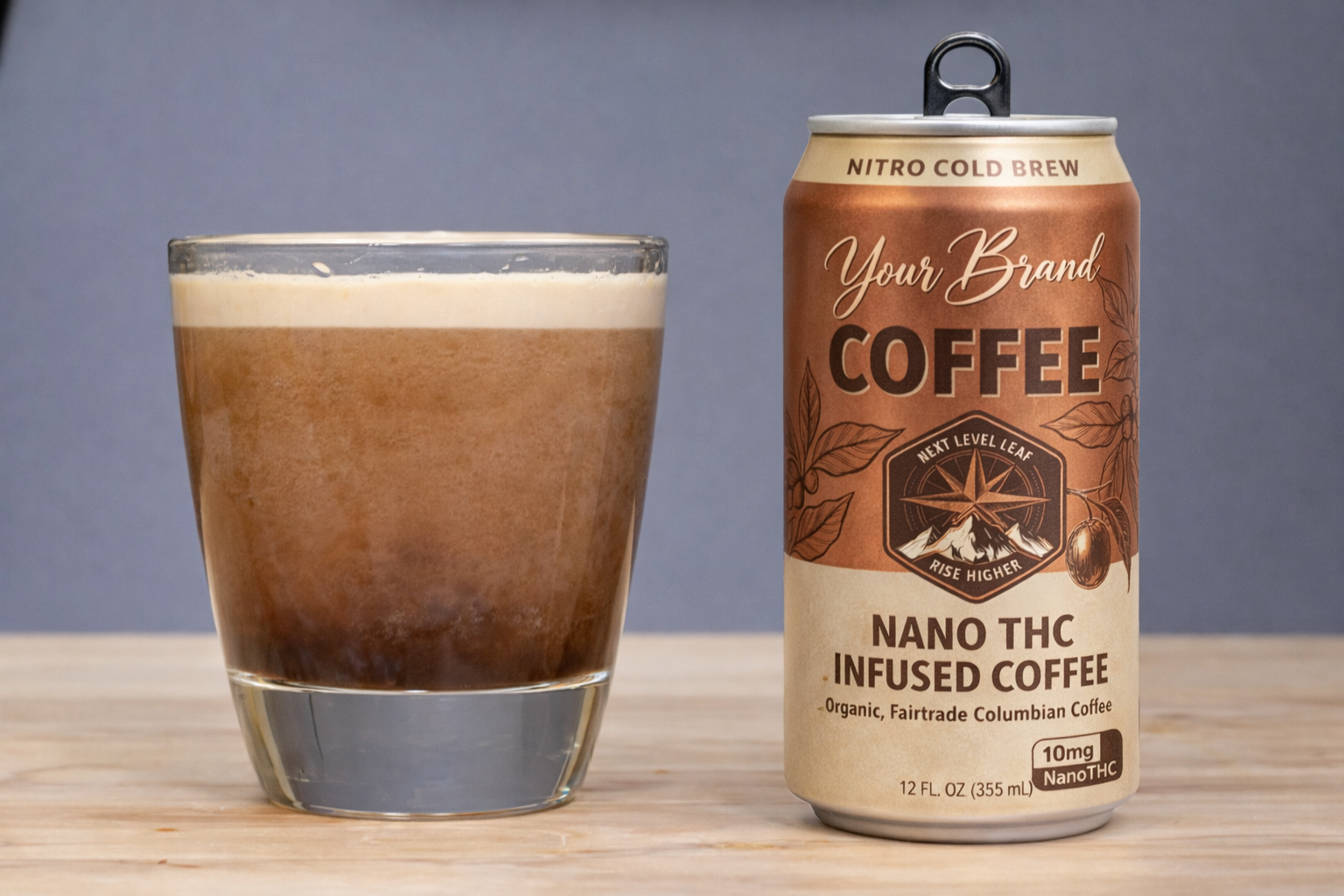
What nano THC means in a coffee beverage
THC is oil-based, while brewed coffee is primarily water-based. Simply adding cannabinoid oil to coffee does not establish a suitable commercial beverage. A nanoemulsion or another beverage-compatible dispersion may help distribute an oil-based cannabinoid ingredient through a particular coffee formula.
The word nano is also a commercial description, not proof of a specific particle or droplet size. Ask for the supplier's ingredient specifications, supporting documentation, and any relevant characterization before assuming an ingredient has particular properties.
An emulsion does not turn THC into a chemically water-soluble ingredient. Whether it works in your coffee depends on the actual formula, mixing process, packaging, storage conditions, and finished-product testing.
What a cannabinoid emulsion may help address
Dispersion
A beverage-compatible emulsion can help distribute an oil-based ingredient through a specific water-based coffee formulation.
Consistency
Appropriate mixing, documented batch procedures, and finished-product potency testing help evaluate the intended cannabinoid amount.
Flavor and appearance
The ingredient should be evaluated for its effect on the coffee's taste, aroma, appearance, mouthfeel, and overall formula.
Manufacturing fit
The ingredient must fit the coffee format, packaging, production process, intended markets, and planned commercial volume.
What nano does not prove
Calling an ingredient nano does not establish a faster onset, higher absorption, greater bioavailability, guaranteed uniform distribution, or a specific shelf life. Those claims require appropriate support for the actual finished product, not assumptions based on an ingredient category.
Consumer response can vary, and a supplier's certificate of analysis does not replace testing the beverage you intend to sell. If your brand is considering experience-related claims, review fast-onset THC coffee and distinguish marketing language from substantiated product evidence.
How nano THC fits into coffee manufacturing
Start with the coffee format, flavor direction, target cannabinoid amount, packaging, intended markets, and production volume. Then evaluate the cannabinoid ingredient as part of the complete finished beverage. The practical sequence includes coffee preparation, ingredient compatibility, mixing, filling, package selection, finished-product testing, and batch documentation.
Coffee formats to evaluate
- Brewed coffee: a familiar ready-to-drink format that should be assessed against the intended formula and packaging.
- Cold brew: a distinct extraction and flavor direction that must be evaluated with the selected cannabinoid ingredient.
- Nitro cold brew: a specialized coffee format that adds additional product, packaging, and manufacturing considerations.
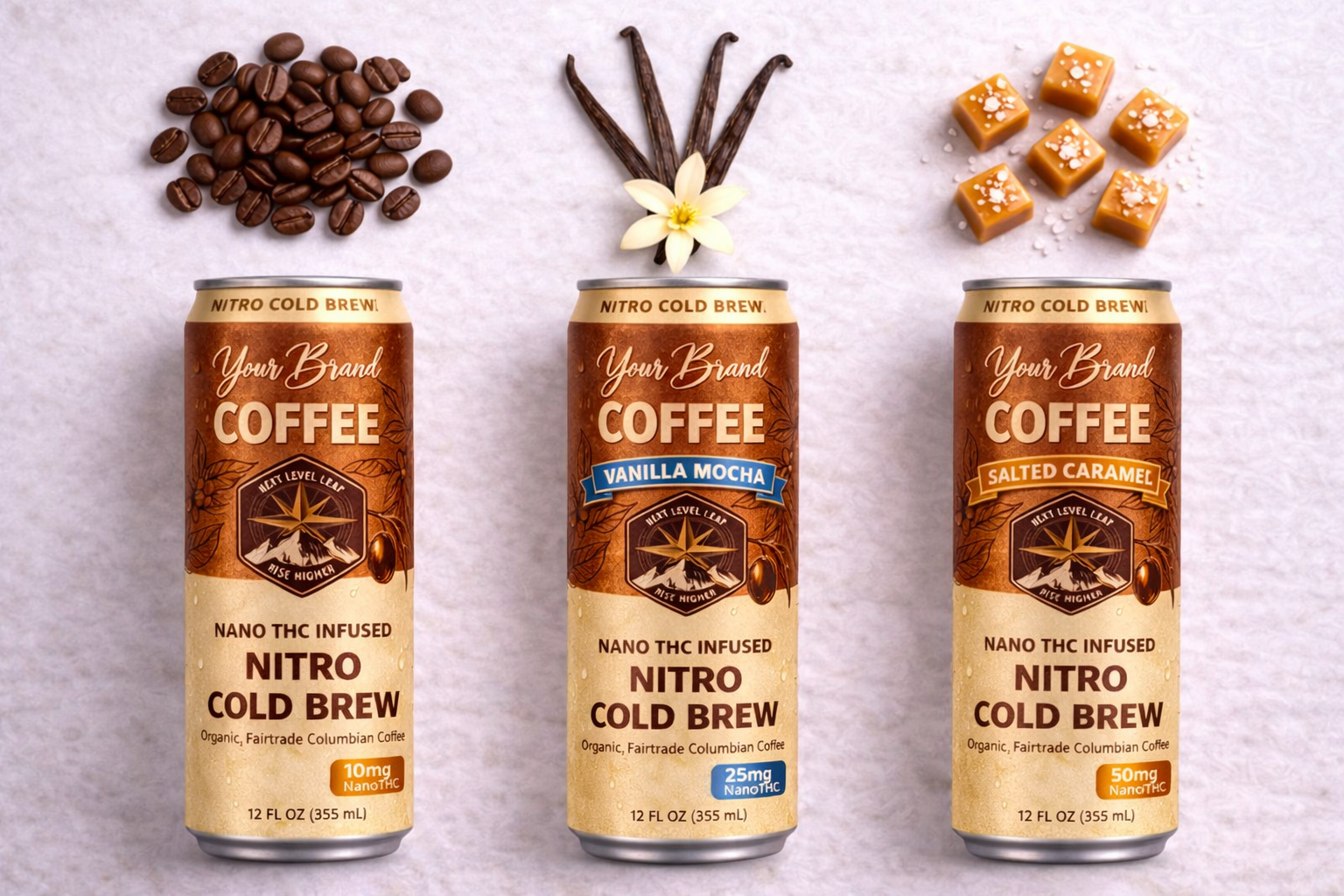
Black coffee, vanilla mocha, and salted caramel provide clear starting points for discussing flavor. Customer-supplied coffee may also be evaluated when its roast, extraction requirements, ingredient compatibility, and order volume fit the production process. See how THC coffee is made for the broader manufacturing sequence.
Check the ingredient against the finished coffee flavor
A cannabinoid emulsion can influence flavor, aroma, appearance, bitterness, finish, and mouthfeel. Evaluate the actual ingredient in the actual coffee concept. A black coffee, vanilla mocha, or salted caramel profile may respond differently to the same cannabinoid input and target serving amount.
Consider how the selected ingredient interacts with:
- coffee roast profile
- brew strength
- sweetness level
- any additional flavor or functional ingredients
- the target cannabinoid amount per can
- package size and storage conditions
- the finished coffee's appearance and mouthfeel
Compare infused coffee flavor options and functional coffee ingredients before expanding a formula beyond what the finished beverage can support.
Evaluate testing, documentation, and storage
Review the cannabinoid supplier's specifications and certificate of analysis, but do not treat ingredient paperwork as proof that the finished coffee meets its target. The final project should account for finished-product potency testing, batch identification, labeling, packaging, intended markets, and any appropriate stability evaluation.
Storage and shelf-life expectations should reflect the actual formula and package. Learn more about THC coffee shelf life, THC beverage formulation, and the manufacturing production process.
Choose a production plan that can grow
Approximately 1,200 cans per SKU is the standard commercial starting point. Established brands can plan larger orders, multiple SKUs, recurring production, and retail or distribution programs around their actual demand. A selective 360-can prototype may be available for qualified projects when an initial product-learning run is appropriate.
Existing coffee profiles can provide a more direct white-label starting point, while custom formulation requires a project-specific evaluation. Compare white-label and custom infused coffee, infused coffee production volumes, and overall manufacturing capabilities.
Emerging brands
Start with a clear coffee format, flavor, cannabinoid amount, and commercial production target.
Established brands
Plan larger production volumes, multiple flavors, and recurring orders around retail and distribution demand.
Coffee companies
Evaluate an established coffee profile or determine whether your own coffee fits the intended manufacturing process.
Questions to answer before requesting a quote
Share the practical details that affect formulation, packaging, testing, production volume, and project pricing.
- Your preferred coffee format and flavor direction.
- The cannabinoid ingredient and target amount per can.
- Your package size, artwork status, and intended markets.
- Whether you prefer an existing coffee profile or custom formulation.
- Whether you want your own coffee evaluated for manufacturing fit.
- Your initial order volume, larger production needs, and expected reorder schedule.
When you have those details, request a manufacturing quote or learn more about working with a THC coffee manufacturer.
Build the product around evidence, not buzzwords
The best cannabinoid ingredient is the one that fits your actual coffee, flavor, packaging, testing requirements, and commercial production plan. Ask clear questions about supplier documentation, finished-product testing, and unsupported performance claims before choosing an input.
Return to the infused coffee hub, compare white-label THC coffee, or review THC coffee pricing before planning your next step.