

Functional coffee should start with a clear product idea
A functional coffee project should start with the customer, the intended coffee experience, and a product concept that can be explained clearly. Ingredient selection comes after those decisions.
Mushroom coffee, botanical coffee, nootropic coffee, THC coffee, and THC plus CBD coffee each create different formulation, flavor, labeling, testing, and production considerations.
Start with three practical questions: Who is the customer, what coffee format do they expect, and what ingredient direction makes the concept different from a standard ready-to-drink coffee?
Keep the formula simple enough for the customer to understand and specific enough for the manufacturer to evaluate. Each ingredient should have a clear product reason, appropriate documentation, and a realistic path into the finished beverage.
Six functional coffee directions to evaluate
These examples show different ways to position a functional or infused coffee. They are starting points for formulation review, not promises that every ingredient is available or appropriate for every project.
Mushroom Coffee
A coffee-first concept that features one mushroom extract or a carefully selected mushroom blend.
- Lion’s mane
- Reishi
- Cordyceps
- Chaga
- Turkey tail
Adaptogenic Coffee
A botanical coffee concept that requires careful review of ingredient status, serving amounts, flavor, and labeling.
- Rhodiola
- Ashwagandha
- Holy basil
- Schisandra
- Eleuthero
Nootropic Coffee
A coffee concept that explores selected ingredients often discussed in the nootropic category, without promising specific outcomes.
- L-theanine
- Lion’s mane
- Bacopa
- Citicoline
- Alpha-GPC
THC Coffee
A ready-to-drink coffee concept with a clearly labeled THC amount and a defined target customer.
- Low-dose THC
- Clearly labeled THC serving amounts
- Premium black coffee
- Nitro cold brew
- Flavored THC coffee
THC + CBD Coffee
A two-cannabinoid coffee concept with clearly identified THC and CBD amounts.
- 1:1 THC:CBD
- Low-dose THC + CBD
- CBD-forward coffee
- Functional cannabinoid coffee
- Simple ratio-based positioning
Functional + Cannabinoid Coffee
A more customized coffee concept that combines selected functional ingredients and cannabinoids after formulation review.
- THC + lion’s mane
- CBD + L-theanine
- THCV + coffee
- CBG + adaptogens
- Low-dose THC + nootropic stack
Mushroom coffee: choose ingredients that fit the product
Mushroom coffee can give a brand a clear ingredient-based concept. Common product ideas include lion's mane coffee, reishi coffee, cordyceps coffee, and selected mushroom blends.
The customer should be able to identify the coffee format and the featured mushroom ingredient without sorting through an overcrowded supplement-style label.
The ingredient must also fit the finished beverage. Review the extract specification, serving amount, sourcing, flavor, solubility, stability, documentation, and labeling before it becomes part of the production plan.
Common mushroom directions
- Lion's mane: a recognizable mushroom ingredient to evaluate for coffee compatibility.
- Cordyceps: a mushroom ingredient that requires project-specific sourcing and formulation review.
- Reishi: a mushroom option that should be reviewed for flavor and finished-product suitability.
- Chaga: a possible ingredient for a clearly defined mushroom coffee concept.
Best product fit
- Functional coffee brands
- Clearly positioned mushroom coffee concepts
- Premium daily-use coffee
- Low-sugar coffee products
- THC or CBD coffee with a functional angle
Mushroom coffee may be explored with or without cannabinoids, depending on the formula and intended market. A simple coffee with one clearly identified mushroom ingredient is generally easier to evaluate than a crowded blend of several cannabinoids, mushrooms, botanicals, and nootropics.
Botanical and adaptogenic coffee: review the whole formula
Botanical coffee can offer a distinct product direction when the chosen ingredient fits the brand, coffee profile, intended customer, and finished beverage.
Ingredients marketed as adaptogens still require careful review. Sourcing, ingredient specifications, serving amounts, flavor, stability, safety considerations, labeling, and target-market requirements can all affect whether a concept is suitable for production.
Rhodiola, ashwagandha, holy basil, schisandra, and eleuthero are examples of ingredients a brand might ask a manufacturer to evaluate. Their inclusion should never be assumed before the complete beverage formula is reviewed.
Common adaptogenic directions
- Rhodiola: evaluate sourcing, ingredient status, and coffee compatibility.
- Ashwagandha: review serving amount, safety considerations, and labeling.
- Holy basil: consider flavor, documentation, and the finished product.
- Schisandra: assess sourcing, formulation fit, and ingredient cost.
- Eleuthero: review the proposed extract, flavor, and target markets.
Best product fit
- Premium functional coffee
- Clearly positioned botanical coffee
- Coffee with a focused ingredient story
- CBD coffee concepts
- Lower-dose THC coffee with a defined formulation plan
Avoid vague promises. The customer should understand the coffee format, featured ingredient, cannabinoid content if applicable, and the product's actual label language without being promised a medical or physiological result.
Nootropic coffee: keep the ingredient plan specific
A nootropic coffee concept combines a coffee base with ingredients a brand wants to evaluate for a clearly defined product position. The product must remain a well-formulated beverage rather than becoming an overcrowded supplement-style concept.
The challenge is that nootropic formulas can quickly become too technical. If the product reads like a supplement label instead of a beverage, the average coffee customer may lose interest.
Keep the ingredient list understandable and aligned with the coffee profile, flavor, packaging, price position, and the project's manufacturing requirements.
Common nootropic directions
- L-theanine: a proposed ingredient that requires review alongside caffeine and the full beverage formula.
- Lion's mane: an ingredient that may overlap with mushroom coffee positioning.
- Bacopa: evaluate documentation, flavor, serving amount, and market requirements.
- Citicoline: review sourcing, suitability, cost, and the intended finished product.
- Alpha-GPC: assess ingredient status, formulation fit, and label considerations.
Best product fit
- Workday coffee
- Clearly positioned functional coffee
- Ingredient-forward coffee concepts
- Functional cold brew
- Premium office or creator-focused beverage brands
Product categories can overlap. A mushroom ingredient may appear in either a mushroom coffee or a nootropic coffee concept, while a botanical may shape another product direction. Keep the label and product explanation clear enough that the customer understands the lead idea.
The customer does not need a technical explanation of every ingredient. They need to understand the product, the coffee format, the featured ingredients, the flavor, and what makes it different from standard coffee.
THC coffee: a clear formula can stand on its own
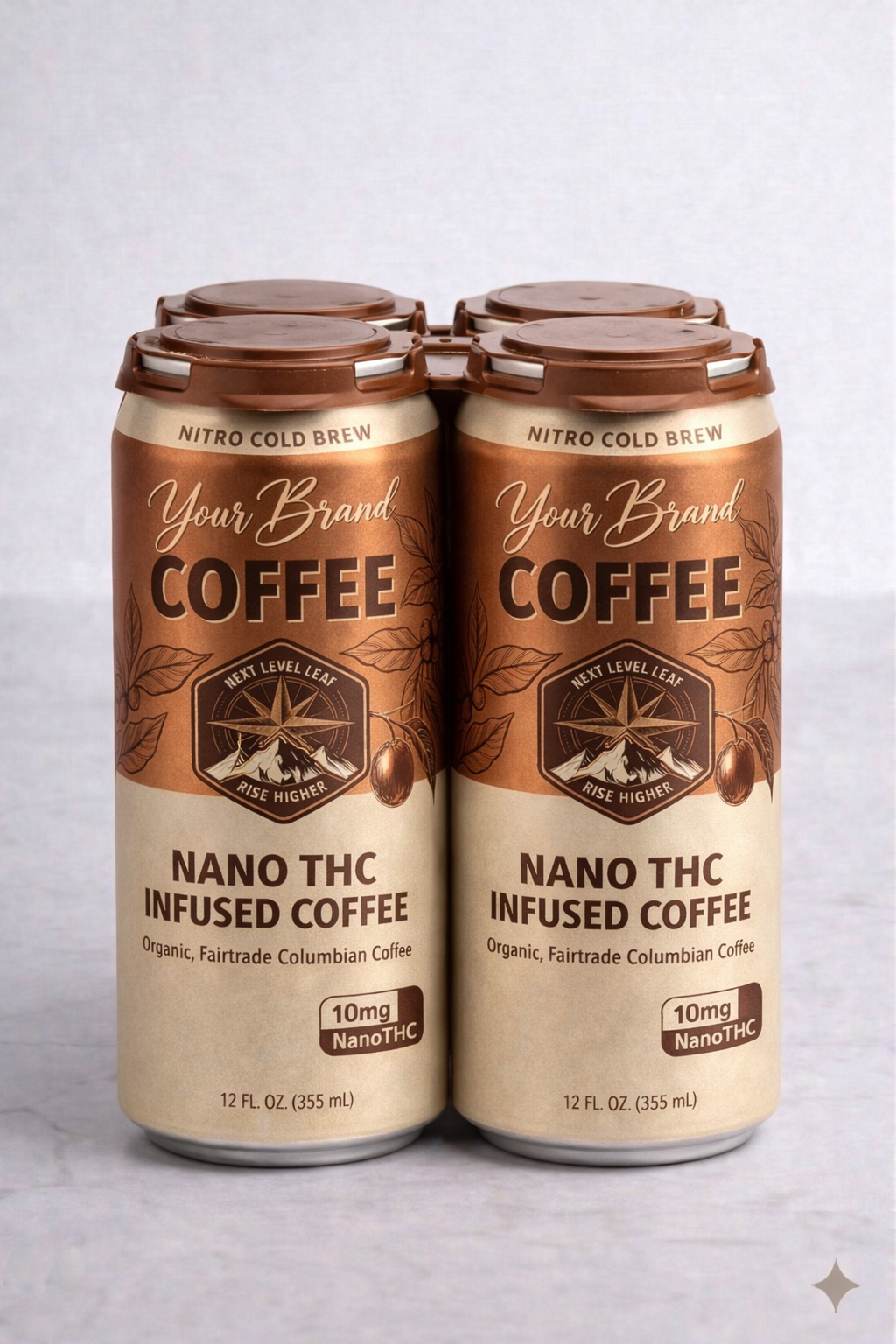
THC coffee does not always need mushrooms, adaptogens, or nootropics to be compelling. In many cases, the strongest product is simple: great coffee, a clear THC dose, a clean label, finished-product testing, COAs, and packaging that feels premium.
A THC coffee already has a clear product distinction when the coffee format and amount of THC are plainly identified. The main product decisions are the intended customer, target dose, flavor, packaging, testing, and sales channel.
A lower-dose or higher-dose concept should be selected according to the target customer and intended market. The amount per can should be easy to understand, and the finished product should be evaluated for the channels where it will be sold.
Simple THC coffee
- Black THC coffee
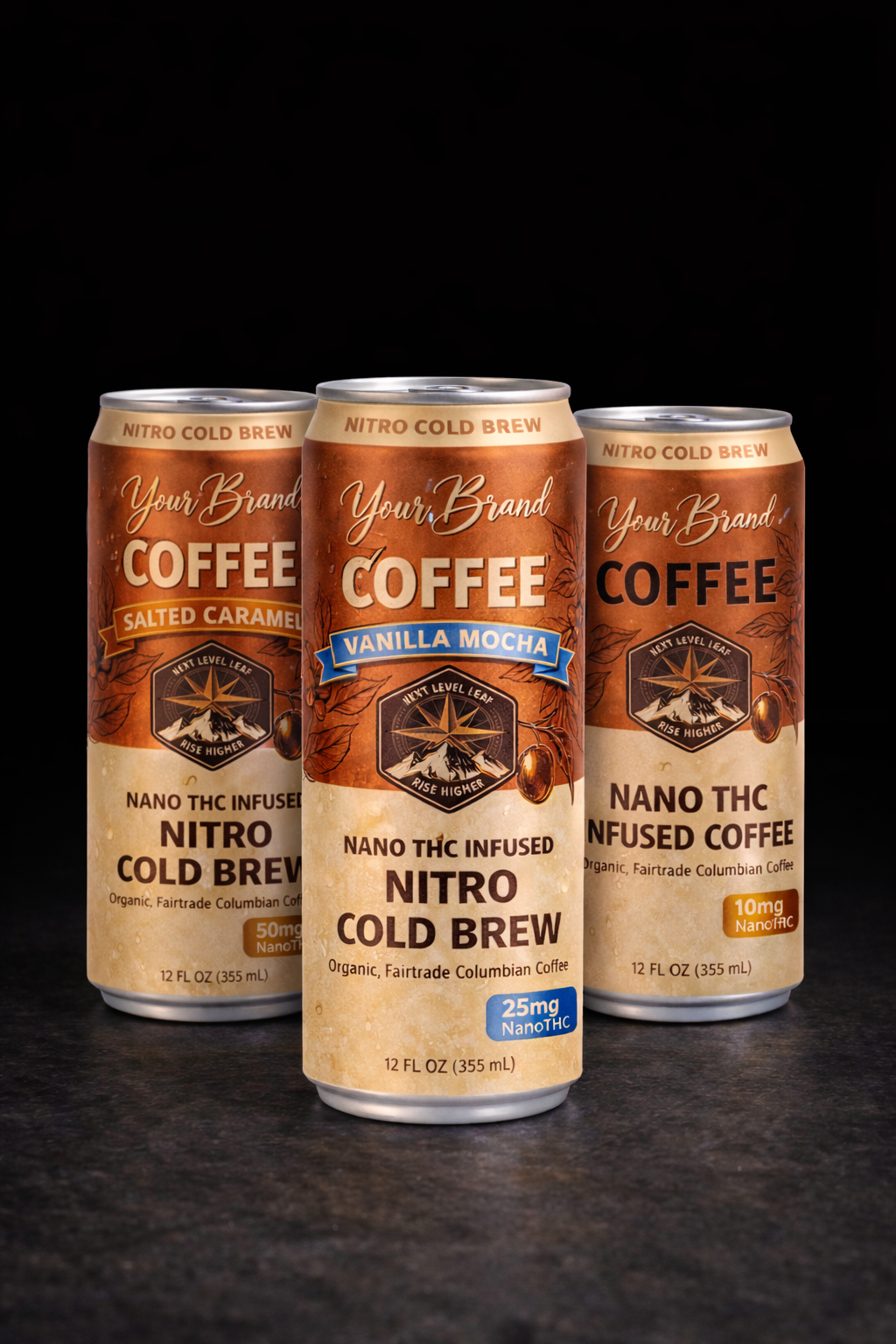
- Nitro THC cold brew
- Vanilla mocha THC coffee
- Salted caramel THC coffee
- Clearly labeled lower-dose THC coffee
Best product fit
- Adult-use coffee brands
- Alcohol-alternative beverage brands
- Premium RTD coffee concepts
- Brands that want a simple launch path
- Retailers that need a clear product explanation
If you are choosing between THC and CBD, review THC vs CBD Coffee. If you are still choosing the cannabinoid direction, review Best Cannabinoids for Coffee.
THC and CBD coffee: keep the cannabinoid ratio clear
A THC and CBD coffee can make sense when a brand wants both cannabinoids identified in one clearly labeled beverage. The customer should understand the amount of each cannabinoid without being promised a specific outcome.
A simple 1:1 THC:CBD coffee is much easier for customers to understand than a formula with THC, CBD, CBG, CBN, THCV, mushrooms, adaptogens, nootropics, and multiple botanicals.
The label should clearly identify the THC amount, CBD amount, relevant product warnings, and the information required for the intended market.
A ratio-based coffee can feel premium and intentional. A crowded cannabinoid stack can feel confusing. The difference is how quickly the customer understands the product.
Where functional ingredients and cannabinoids can work together
Functional ingredients and cannabinoids can work together when they support one product idea. For example, a low-dose THC coffee with lion’s mane could be positioned differently than a CBD coffee with L-theanine or a black nitro THC coffee with no additional functional ingredients.
The key is to avoid stacking ingredients just because they are available. Every ingredient should support the product direction.
THC + Lion’s Mane
A possible mushroom-and-cannabinoid coffee concept that requires full ingredient, dose, flavor, and labeling review.
CBD + L-Theanine
A possible coffee concept combining two proposed ingredients, subject to formulation and target-market review.
THCV + Coffee
A more specialized cannabinoid coffee concept that may need careful cost, supply, dose, and positioning review.
THC + CBD + Coffee
A simple ratio-based cannabinoid coffee that may be easier to explain than a more complex functional stack.
Reishi + CBD Coffee
A proposed mushroom-and-cannabinoid coffee concept that requires careful review of flavor, caffeine, labeling, and market fit.
Black Nitro THC Coffee
A clean premium option when the brand wants the coffee and THC dose to be the main story.
Flavor can make or break a functional coffee stack
Functional ingredients can create real flavor challenges. Mushrooms can taste earthy. Adaptogens can taste herbal or bitter. Some nootropics can be sharp or difficult to hide. Cannabinoid inputs can also affect flavor depending on the format and quality.
That is why flavor strategy matters early. Black coffee can work, but it gives you less room to hide strong ingredient notes. Vanilla mocha, salted caramel, mocha, or cream-forward coffee profiles may make certain functional stacks easier to balance.
The flavor should not feel like a cover-up. It should feel like part of the product.
Compare practical coffee and flavor directions in Infused Coffee Brand Examples and Best Flavors for Infused Coffee.
Do not ignore cost and supply
Some functional ingredients are inexpensive and easy to source. Others can increase cost quickly, especially if they require meaningful serving sizes, standardized extracts, specialty sourcing, or more complex formulation work.
This matters because a functional coffee stack has to make sense economically. If an ingredient increases cost but does not make the product more appealing, more understandable, or more valuable to the customer, it may not belong in the first launch.
For many brands, a focused first formula is better than an expensive formula that tries to do everything.
Review the cost drivers in THC Coffee Pricing and Beverage Manufacturing Pricing.
Choose an established coffee base or custom formulation
The right production path depends on how far the proposed formula moves beyond an established coffee profile. A white-label project may start with an existing black coffee, nitro coffee, vanilla mocha, or salted caramel direction. A project that introduces new mushroom extracts, botanicals, nootropics, or multiple cannabinoids usually requires additional formulation review.
Established coffee production
- Start with an existing coffee and flavor direction
- Identify the cannabinoid amount and packaging plan
- Use approximately 1,200 cans per SKU as the commercial entry point
- Plan larger and recurring production as demand develops
Custom functional formulation
- Evaluate each proposed ingredient and supplier document
- Review flavor, solubility, stability, and serving amounts
- Confirm testing, labeling, packaging, and target markets
- Build a production plan that supports commercial and larger-volume orders
Approximately 1,200 cans per SKU is the standard commercial starting point. Next Level Leaf also supports larger and recurring production programs. A selective 360-can prototype may be available for qualified projects when an initial product-learning run is appropriate.
Compare white-label and custom coffee development, review manufacturing capabilities, or explore the full production process.
Compliance and label language matter
Functional coffee products need careful language. Mushrooms, adaptogens, nootropics, botanicals, cannabinoids, and other functional ingredients can create claim risk if the product is marketed carelessly.
Avoid disease claims, medical claims, and exaggerated wellness promises. The product should be described in a way that is clear, responsible, and aligned with the customer experience.
Finished-product testing, certificates of analysis, ingredient documentation, target-market planning, and label review can all affect the production plan. Ingredient availability and suitability must be confirmed for the specific formula.
For broader planning, review Compliance and State Resources.
What to decide before requesting a quote
You do not need to have the full formula finalized before reaching out. But it helps to know which functional direction you are most interested in.
- Are you interested in mushroom coffee, adaptogenic coffee, nootropic coffee, THC coffee, or THC+CBD coffee?
- Do you want the product to be black coffee, nitro cold brew, flavored coffee, or another format?
- Do you want THC, CBD, THC+CBD, THCV, CBG, or no cannabinoids?
- Are there specific ingredients you already want to explore?
- Do you want the product to feel premium, coffee-forward, ingredient-focused, or flavor-led?
- What flavor direction are you considering?
- What dose or serving size are you considering?
- What states or sales channels are you planning to target?
- Are you planning approximately 1,200 cans per SKU, a larger order, or a recurring production program?
Share the coffee format, proposed ingredients, cannabinoid direction, flavor, and order volume you are considering. We can identify the formulation questions that must be resolved before the product moves toward production.
The simplest recommendation
If you are building a functional coffee, start with one lead idea. Mushroom coffee, adaptogenic coffee, nootropic coffee, THC coffee, and THC+CBD coffee can all work, but the product should not try to be all of them at once.
A practical first formula combines a clear coffee concept, a short list of suitable ingredients, a workable flavor, responsible label language, appropriate testing, and packaging that customers can understand.
If you are still exploring product directions, review Infused Coffee Brand Examples. If you are choosing your cannabinoid direction, compare Best Cannabinoids for Coffee. If you are ready to discuss manufacturing, request a quote.